Yellowtail flounder in United States — Massachusetts: ≥13 in · no possession limit · year round — Massachusetts state waters.
Yellowtail Flounder Min: 13" Year Round No Limit
Quoted from Recreational saltwater fishing regulations
Regulation guide
Official sourcesThree stocks under one management plan
Yellowtail flounder (Limanda ferruginea) is managed in U.S. waters as three stocks: Gulf of Maine/Cape Cod, Georges Bank, and Southern New England/Mid-Atlantic. NOAA Fisheries and the New England Fishery Management Council manage the Gulf of Maine/Cape Cod and Southern New England/Mid-Atlantic stocks under the Northeast Multispecies Fishery Management Plan. Georges Bank yellowtail flounder is managed jointly with Canada because the stock crosses the international boundary.
The stocks are not in the same condition. The Cape Cod/Gulf of Maine stock is not overfished and rebuilt to its target population level under a rebuilding plan put in place in 2004. The Southern New England/Mid-Atlantic stock is overfished, with a rebuilding plan target date of 2029. The Georges Bank stock is also overfished, with a rebuilding target date of 2032.
NOAA Fisheries notes that yellowtail flounder are not commonly encountered by the recreational fishery. The species is still covered by recreational minimum sizes and possession limits, and it sits inside the wider groundfish rules that apply in New England.
Federal waters: 13 inches, no possession limit
In federal Atlantic waters the recreational season for yellowtail flounder is open all year. The minimum size is 13 inches and the possession limit is unlimited, according to NOAA Fisheries' recreational regulations table for the Greater Atlantic region.
Filleting at sea is allowed. Fillets must have some skin left on and must be consistent in size with fillets taken from a legal-sized fish. Recreational vessels remain subject to the Whaleback Cod Spawning Protection Area.
The federal table is written for federal waters. State waters have their own tables, and Massachusetts, Rhode Island and New York each publish separate limits for the waters they manage.
Source: NOAA Fisheries: Recreational Fishing Regulations by Species
Massachusetts: state waters and the groundfish group
Massachusetts lists yellowtail flounder at a 13-inch minimum, year-round, with no possession limit. The state treats yellowtail flounder as one of its regulated groundfish species in state waters.
The state's groundfish table separates Gulf of Maine from Southern New England for some species, but yellowtail flounder carries the same 13-inch minimum and no limit in both areas. The limits in the table apply to state waters only.
Massachusetts also states that vessels fishing lawfully in federal waters may possess and land fish in accordance with federal rules. A boat that fished federal waters is therefore not automatically held to the state table when it lands, but a boat fishing inside state waters is.
Source: Massachusetts Division of Marine Fisheries: Recreational Saltwater Fishing Regulations
Rhode Island: a May-to-April fishing year
Rhode Island sets a 13-inch minimum for recreational yellowtail flounder, a fishing year that runs from May 1 through April 30, and an unlimited possession limit. The commercial minimum in the same rule is 12 inches, so the recreational and commercial sizes are not the same.
The Rhode Island rule is written as a fishing year rather than a short open season. That means retention is allowed across the year, but the May 1 start date still matters for how the year is counted and for any in-season adjustment.
Anyone taking finfish recreationally from Rhode Island marine waters needs a valid recreational saltwater fishing licence or a qualifying reciprocal licence or national registration. Recreationally taken finfish may not be sold or offered for sale.
New York: 13 inches, all year
New York's recreational saltwater table lists yellowtail flounder at a 13-inch minimum, no possession limit, and an all-year open season. The table applies in New York's Marine and Coastal District.
New York measures total length as the longest straight line from the tip of the snout, with the mouth closed, to the longest lobe of the tail, with the lobes squeezed together and the fish laid flat on the measuring device.
Anglers 16 and older fishing in the Marine and Coastal District must enrol in the Recreational Marine Fishing Registry when angling for the listed species. The registry is separate from the state's freshwater licence.
Source: New York DEC: Recreational Saltwater Fishing Regulations
Measuring the fish and leaving evidence of size
All three states and the federal table use a minimum size of 13 inches, but the measurement is taken on the whole fish. Lay the fish flat, close the mouth, and measure to the longest part of the tail with the lobes squeezed together where the state defines total length that way.
If the fish is filleted at sea, the federal rule requires skin to remain on the fillets and requires the fillets to be consistent in size with fillets from a legal fish. That is the enforcement check that replaces the whole fish at the dock.
A fillet with no skin, or a fillet set that is obviously larger than a 13-inch fish would produce, can turn a legal trip into a violation even when the fish was measured before filleting.
Source: NOAA Fisheries: Recreational Fishing Regulations by Species · New York DEC: Recreational Saltwater Fishing Regulations · Massachusetts Division of Marine Fisheries: Recreational Saltwater Fishing Regulations
Before you keep a yellowtail flounder
First establish where the boat is fishing. Federal waters allow 13 inches with no possession limit all year. Massachusetts, Rhode Island and New York all use 13 inches as well, so the size minimum is consistent across this batch, but the season language and the licence or registry requirement are not. In this species the states are not stricter on size or bag; the differences sit in season wording, licensing and the treatment of fish taken in federal waters.
Rhode Island's fishing year starts on May 1. New York requires registry enrolment for anglers 16 and older. Massachusetts applies its table to state waters only and recognises federal rules for fish taken lawfully in federal waters.
Measure the whole fish before filleting, and leave skin on any fillets kept at sea. None of these jurisdictions allows recreationally caught finfish to be sold, and Rhode Island states that explicitly in its finfish rule.
Source: NOAA Fisheries: Recreational Fishing Regulations by Species · Massachusetts Division of Marine Fisheries: Recreational Saltwater Fishing Regulations · Rhode Island DEM: Finfish, 250-RICR-90-00-3 · New York DEC: Recreational Saltwater Fishing Regulations
Official pages: NOAA Fisheries: Yellowtail Flounder · NOAA Fisheries: Recreational Fishing Regulations by Species · Massachusetts Division of Marine Fisheries: Recreational Saltwater Fishing Regulations · Rhode Island DEM: Finfish, 250-RICR-90-00-3 · New York DEC: Recreational Saltwater Fishing Regulations
Yellowtail flounder regulations at a glance
4 jurisdictions| Jurisdiction | Area | Size | Bag | Season / closure | Closed area | Other |
|---|---|---|---|---|---|---|
| United States — Massachusetts | Massachusetts state waters | ≥13 in · no possession limit · year round | — | — | — | — |
| United States — New York | New York Marine and Coastal District | ≥13 in · no possession limit · all year | — | — | — | — |
| United States — Rhode Island | Rhode Island state waters | ≥13 in · unlimited possession · fishing year May 1 – Apr 30 | — | — | — | — |
| United States — federal (Atlantic) | Federal Atlantic waters (Greater Atlantic) | ≥13 in · unlimited possession · all year | — | — | — | — |
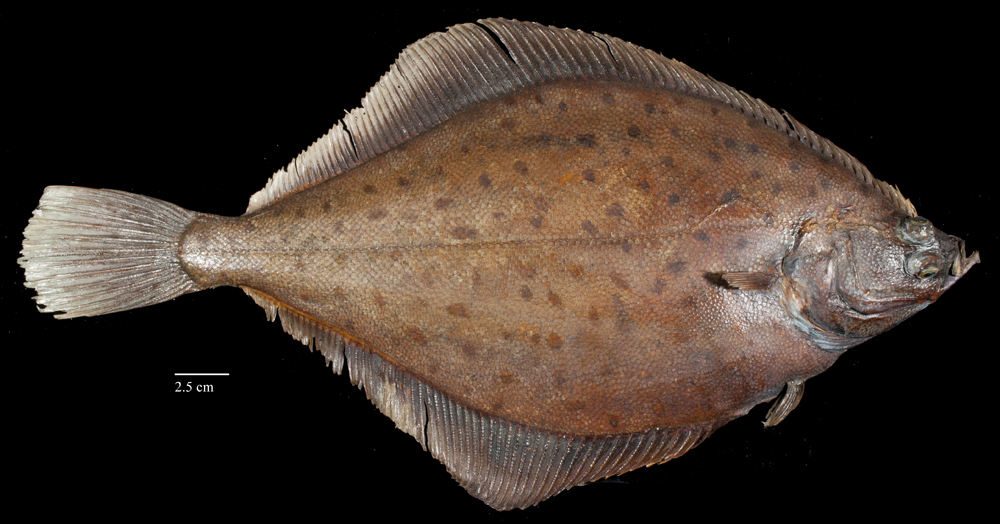
Yellowtail flounder
Limanda ferruginea · Pleuronectidae
Yellowtail flounder is a right-eyed flatfish of the northwest Atlantic, from southern Labrador down to Chesapeake Bay. It is a temperate shelf fish caught between 27 and 364 m on a diet of crustaceans, fish and worms. Adults reach 64 cm TL and 1.5 kg and live about 12 years. March to August is the season here, and the reddish-brown upper surface with yellow fins is the field mark to check.
- Family
- Pleuronectidae
- Max length
- 64 cm TL
- Max weight
- 1.5 kg
- Max age
- 12 years
- Depth
- 27–364 m
- IUCN
- VU
- Climate
- Temperate
- Diet
- crustaceans, fishes, worms
Yellowtail flounder (Limanda ferruginea) is a fish of the family Pleuronectidae. FishBase gives its range as: Northwest Atlantic: southern Labrador, Canada to Chesapeake Bay, USA. A right-eyed flatfish: both eyes sit on the upper, right-hand side of the body, the upper surface is reddish brown, the underside is pale, and the fins are yellow. It is recorded from 27 to 364 m, in temperate water. The recorded maxima are 64 cm TL, 1.5 kg, 12 years. Diet includes crustaceans, fishes and worms. IUCN status: Vulnerable (VU). Chinese name: .
Seasonality
Other US-MA regulations
Same jurisdictionBefore you keep a fish
- Read the recorded value. It is copied from the notice; if the number and the notice disagree, the notice wins.
- Check the area. Federal, state and local waters can set different limits for the same fish.
- Check the date. Seasons, quotas and closures change; confirm the current notice before you go.
Common questions
- What is the minimum size for Yellowtail flounder in United States — Massachusetts?
- ≥13 in · no possession limit · year round
- Where does this regulation apply?
- Massachusetts state waters
- When was it checked?
- 2026-11-18, against Recreational saltwater fishing regulations.
- Do other jurisdictions set different limits?
- Yes. This register lists 4 jurisdictions for Yellowtail flounder; compare them in the table above.