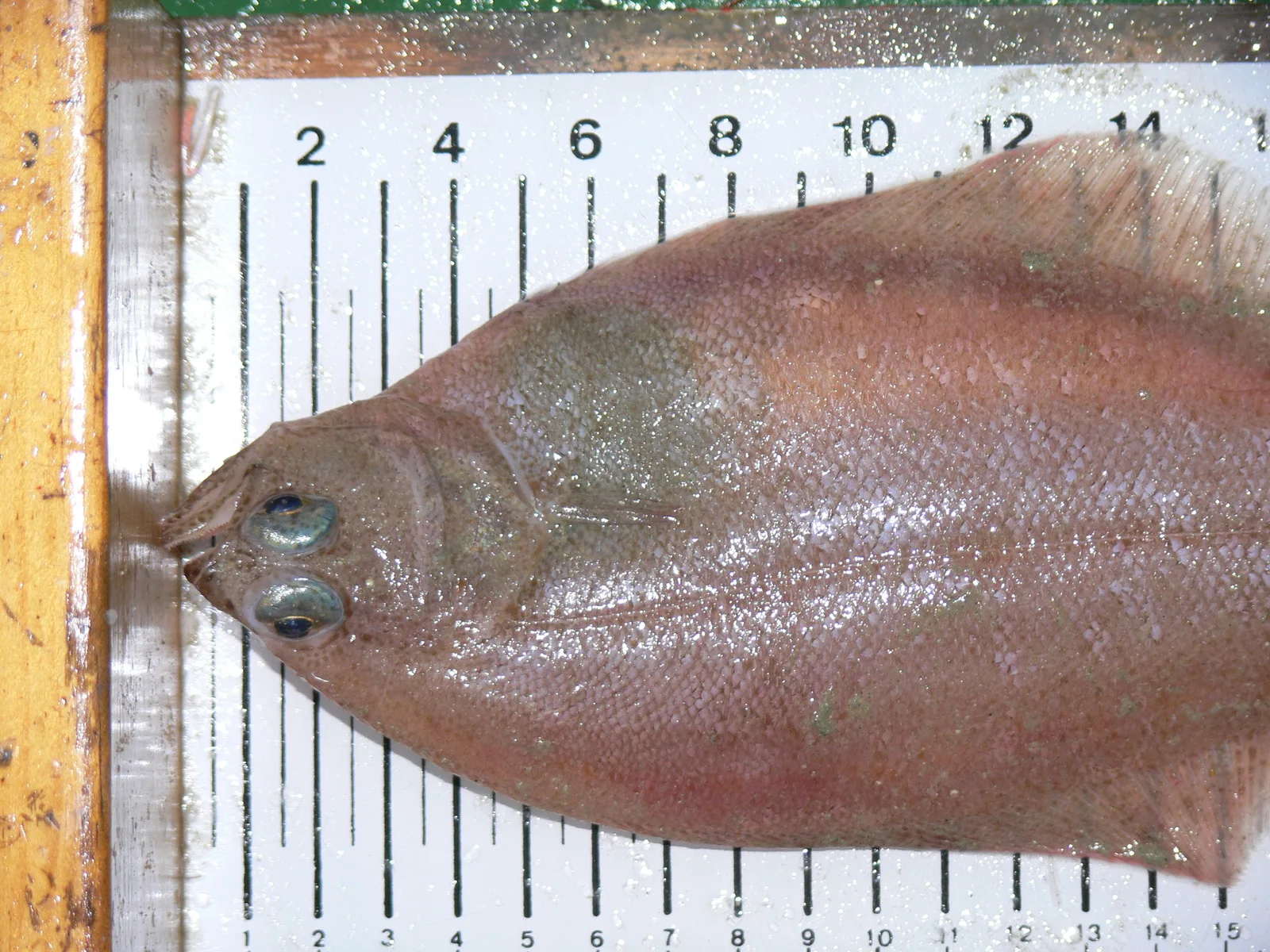
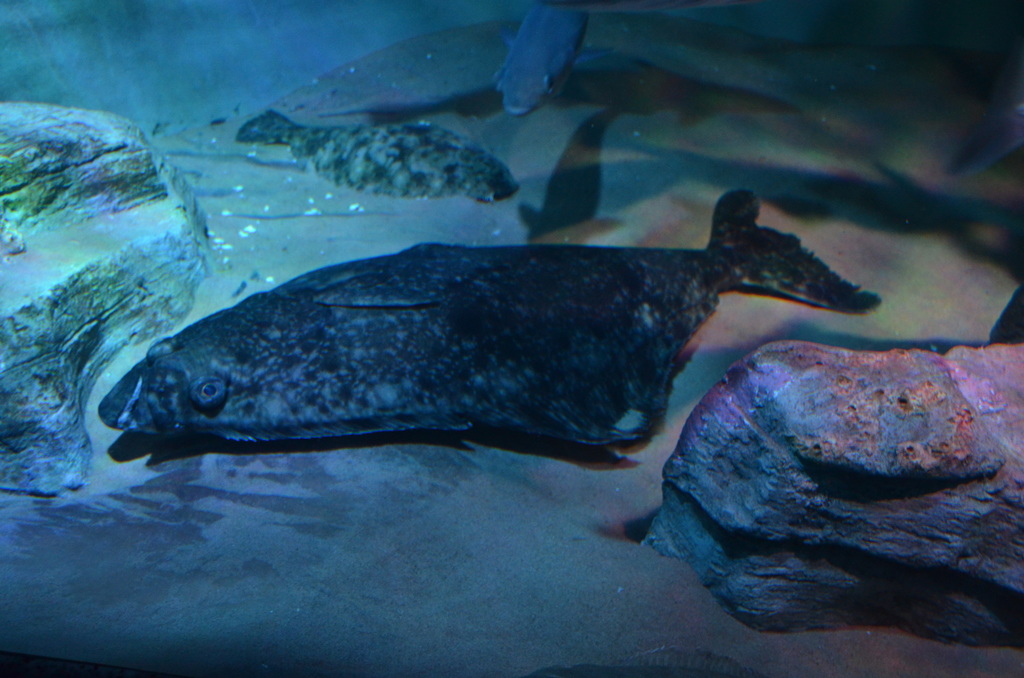
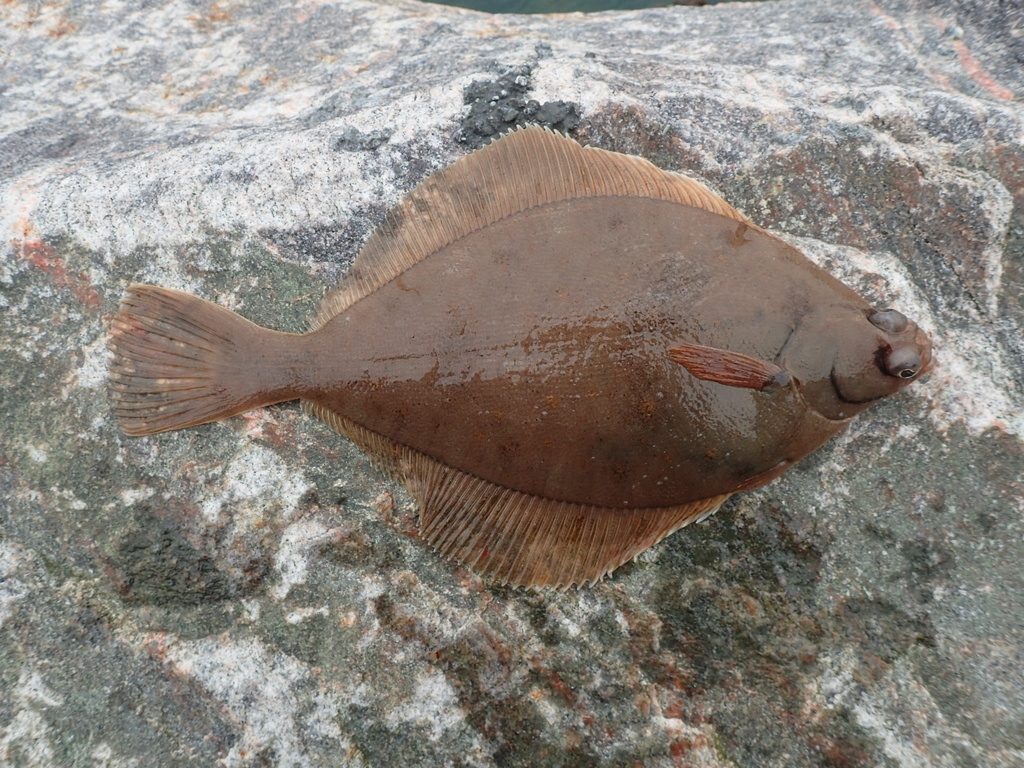
Yellowtail flounder (Limanda ferruginea) is a fish of the family Pleuronectidae. FishBase gives its range as: Northwest Atlantic: southern Labrador, Canada to Chesapeake Bay, USA. A right-eyed flatfish: both eyes sit on the upper, right-hand side of the body, the upper surface is reddish brown, the underside is pale, and the fins are yellow. It is recorded from 27 to 364 m, in temperate water. The recorded maxima are 64 cm TL, 1.5 kg, 12 years. Diet includes crustaceans, fishes and worms. IUCN status: Vulnerable (VU). Chinese name: .
Identification
A right-eyed flatfish: both eyes sit on the upper, right-hand side of the body, the upper surface is reddish brown, the underside is pale, and the fins are yellow. Maximum length is 64 cm total, maximum published weight 1.5 kg, maximum reported age 12 years, and first maturity is 29.8 cm. The yellow fins and the right-side eyes are the quick check; a left-eyed flatfish with the same colour is a different species. At 64 cm and 1.5 kg the record is modest, while 12 years is the long end of the life span and 29.8 cm is where maturity begins.
Habitat and distribution
Of the jurisdictions on the record, Canada and the contiguous United States are joined by Saint Pierre and Miquelon, within a Northwest Atlantic range that runs from southern Labrador to Chesapeake Bay. Depth runs 27–364 m, usually 36–91 m, in temperate water between 54°N and 37°N. The bottom keywords are sand and mud, and the prey list runs through crustaceans, fishes and worms. Start from the usual band: 36–91 m is the shelf, 27 m is the inshore edge and 364 m is the outer tail of the distribution rather than the place to start.
Season and fishing approach
Spawning is recorded from March to August, with Cape Sable to Block Island fish spawning in March–August and Gulf of Maine fish in June–August. The method follows the bottom. A flatfish lying on sand or mud is an ambush feeder, so the bait should sit on the bottom and move slowly rather than swing through the water. Work the seam where sand meets mud, because that edge is where worms and small crustaceans concentrate. A running ledger or a slow-jigged bait presented just above the bottom keeps the hook in the strike zone; the cost is snagging, so a light leader and a rod with a soft tip pay for themselves. A bait that buries in sand is found by feel, so keep it moving in short hops and stay in contact with the lead. The 29.8 cm maturity mark is the size at which the fish has spawned at least once.
Edibility and regulations
A commercial food fish, with experimental aquaculture. IUCN status is Vulnerable, assessed 12 February 2021; Wikipedia attributes the listing to overfishing. CITES and CMS each return Not Evaluated for the species. The size floor answers whether a fish may be retained; the season answers whether it may be hunted, and the three states set them independently. Vulnerable is a stock signal, not a prohibition, and the retention rule is still the minimum size.
Regulations before you keep it
These are the published regulations for this fish. Read the number first. The notice below it is the actual regulation.
Minimum size4
≥13 in · unlimited possession · all year
United States — federal (Atlantic) · US-FED-ATL
Federal Atlantic rules set a 13-inch yellowtail flounder minimum with unlimited possession.
Yellowtail Flounder
Open season: All year
Minimum size: 13 inches
Possession limit: Unlimited
≥13 in · no possession limit · year round
United States — Massachusetts · US-MA
Massachusetts sets a 13-inch minimum for yellowtail flounder with no possession limit.
Yellowtail Flounder Min: 13" Year Round No Limit
≥13 in · no possession limit · all year
United States — New York · US-NY
New York sets a 13-inch yellowtail flounder minimum with no possession limit.
Yellowtail flounder 13" No limit All year
≥13 in · unlimited possession · fishing year May 1 – Apr 30
United States — Rhode Island · US-RI
Rhode Island sets a 13-inch yellowtail flounder minimum with no possession limit.
3.27.1 Recreational
A.Minimum size: Thirteen inches (13”).
B.Fishing year: May 1 through April 30.
C.Possession limit: Unlimited.
Every record above names its source and the date it was retrieved. See the regulation register for the full list, or how to read these regulations.
Where these facts come from
Check these pages before you rely on a size, range or protection status.
-
FishBase — Limanda ferruginea
— FishBase · T2
-
GBIF — Limanda ferruginea occurrence records
— GBIF · T2
-
IUCN Red List — Limanda ferruginea
— IUCN · T1
-
Photo record — iNaturalist
— iNaturalist · T3