
American angler in United States — Maine: ≥17 in · no bag limit — Maine territorial waters.
MONKFISH (Lophius americanus) Size: Minimum size 17 inches Bag limit: none
Quoted from 2026 Maine Saltwater Recreational Fishing Regulations
Regulation guide
Official sourcesTwo stocks, one plan, and no directed recreational fishery
Monkfish (Lophius americanus), also called goosefish or angler, are managed as two stocks: Gulf of Maine/Northern Georges Bank and Southern Georges Bank/Mid-Atlantic. NOAA Fisheries and the New England Fishery Management Council, with the Mid-Atlantic Fishery Management Council, manage the fishery under the Monkfish Fishery Management Plan. The plan divides U.S. waters into a Northern and a Southern Fishery Management Area at Georges Bank.
Neither stock has an assessment that supports a formal overfished or overfishing determination. A 2022 index-based assessment method is used for catch advice, but NOAA states that it does not support stock status determinations, so the population level is treated as unknown and management measures remain in place.
NOAA describes no known directed recreational fishery for monkfish. Most monkfish are landed commercially, and the recreational rules exist mainly to cover incidental catch. The commercial fishery is managed with days-at-sea and trip limits; the recreational fishery is managed with a minimum size.
Federal waters: 17 inches whole or 11 inches tail
In federal Atlantic waters the recreational season is open all year, the minimum size is 17 inches for a whole fish or 11 inches for a tail, and there is no possession limit. The federal rule allows whole fish or tails to be landed.
Fish and fish parts must have skin on while on board and at landing, except for cheeks and livers. Skin-on means the entire portion of skin normally attached to the part possessed, so a skinned tail does not meet the rule.
A monkfish tail is measured from the anterior portion of the fourth cephalic dorsal spine to the end of the caudal fin, and tissue in front of that spine is ignored. If the fourth dorsal spine or the tail is not intact, the measurement is taken between the most anterior vertebra and the most posterior portion of the tail.
Source: NOAA Fisheries: Recreational Fishing Regulations by Species · NOAA Fisheries: Monkfish
Rhode Island: a weight limit, not a fish count
Rhode Island sets a 17-inch total length or 11-inch tail length minimum for recreational monkfish. The possession limit is 50 pounds of tail weight, or 166 pounds of whole weight, per person and per vessel per day.
This is a weight-based possession limit, not a daily bag count. An angler cannot keep counting fish until a number is reached; the trip limit is reached when the tail weight or whole weight threshold is met. The limit applies both to the person and to the vessel, so the vessel total is capped as well as each angler's share.
Rhode Island defines whole weight for this rule as the weight of gutted monkfish with the head and tail still attached. That definition matters because a headed and gutted fish weighs less than the whole weight used for the 166-pound threshold.
Massachusetts and Maine
Massachusetts includes monkfish in its regulated groundfish group but publishes no state minimum size and no possession limit for monkfish in state waters, with the fishery open year round. The federal 17-inch whole or 11-inch tail minimum still applies in federal waters, and the state table is expressly limited to state waters.
Maine's Chapter 34 sets a 17-inch total length recreational minimum for monkfish. The chapter does not set a recreational monkfish bag limit; its numeric recreational limits cover winter flounder, haddock, summer flounder and cod.
Maine also prohibits the sale, barter or trade of groundfish caught or landed by charter, party or recreational vessels. The same chapter prohibits retaining, killing or landing Atlantic wolffish, which is a separate zero-possession species.
Source: Massachusetts Division of Marine Fisheries: Recreational Saltwater Fishing Regulations · Maine Department of Marine Resources: Chapter 34, Groundfish
New York: 17 inches or 11 inches of tail
New York lists monkfish (goosefish) with a 17-inch minimum or an 11-inch tail minimum, no possession limit, and an all-year season. The rule applies in the Marine and Coastal District.
New York's table uses total length for the whole-fish minimum. For a tail, the state accepts the 11-inch tail measurement, which lets a vessel land tails rather than whole fish.
Anglers 16 and older must enrol in the Recreational Marine Fishing Registry when angling for the listed species in the Marine and Coastal District. The registry is not the same as a freshwater licence.
Source: New York DEC: Recreational Saltwater Fishing Regulations
Landing monkfish: skin, tails and evidence of size
The practical enforcement point for monkfish is the skin. Federal rules require skin on the fish or parts at landing, apart from cheeks and livers, so a tail that has been skinned cannot be measured or verified in the way the rule expects.
Tails are not measured like a whole fish. The measurement starts at the fourth cephalic dorsal spine, not at the front of the head, and runs to the end of the caudal fin. An angler who cuts the tail in front of that spine changes the measurement and may fall outside the 11-inch standard.
Rhode Island's weight limit sits on top of the size rule. A legal 17-inch fish still counts toward the 50-pound tail or 166-pound whole-weight ceiling, and the ceiling is shared between the angler and the vessel.
Source: NOAA Fisheries: Recreational Fishing Regulations by Species · Rhode Island DEM: Finfish, 250-RICR-90-00-3
Before you keep a monkfish
Decide whether the fish was caught in state or federal waters. Federal waters allow unlimited possession with a 17-inch whole or 11-inch tail minimum. Rhode Island adds a 50-pound tail or 166-pound whole-weight limit per person and vessel per day. Maine uses the 17-inch minimum without a bag limit. Massachusetts publishes no state minimum or limit and points to federal rules for federal waters.
Measure a whole fish to total length, or measure a tail from the fourth cephalic dorsal spine to the end of the caudal fin. Leave skin on the fish or parts, except cheeks and livers.
Carry the licence or registry enrolment required by the state where you fish. Rhode Island requires a recreational saltwater licence and prohibits sale; Maine prohibits sale of groundfish taken by recreational vessels.
Source: NOAA Fisheries: Recreational Fishing Regulations by Species · Rhode Island DEM: Finfish, 250-RICR-90-00-3 · Maine Department of Marine Resources: Chapter 34, Groundfish · Massachusetts Division of Marine Fisheries: Recreational Saltwater Fishing Regulations
Official pages: NOAA Fisheries: Monkfish · NOAA Fisheries: Recreational Fishing Regulations by Species · Massachusetts Division of Marine Fisheries: Recreational Saltwater Fishing Regulations · Rhode Island DEM: Finfish, 250-RICR-90-00-3 · New York DEC: Recreational Saltwater Fishing Regulations · Maine Department of Marine Resources: Chapter 34, Groundfish
American angler regulations at a glance
4 jurisdictions| Jurisdiction | Area | Size | Bag | Season / closure | Closed area | Other |
|---|---|---|---|---|---|---|
| United States — Maine | Maine territorial waters | ≥17 in · no bag limit | — | — | — | — |
| United States — New York | New York Marine and Coastal District | 17 in or 11 in tail length · no possession limit · all year | — | — | — | — |
| United States — Rhode Island | Rhode Island state waters | — | 17 in total length or 11 in tail length · 50 lb tail weight or 166 lb whole weight per person and vessel per day | — | — | — |
| United States — federal (Atlantic) | Federal Atlantic waters (Greater Atlantic) | 17 in whole or 11 in tail · unlimited possession · all year | — | — | — | — |
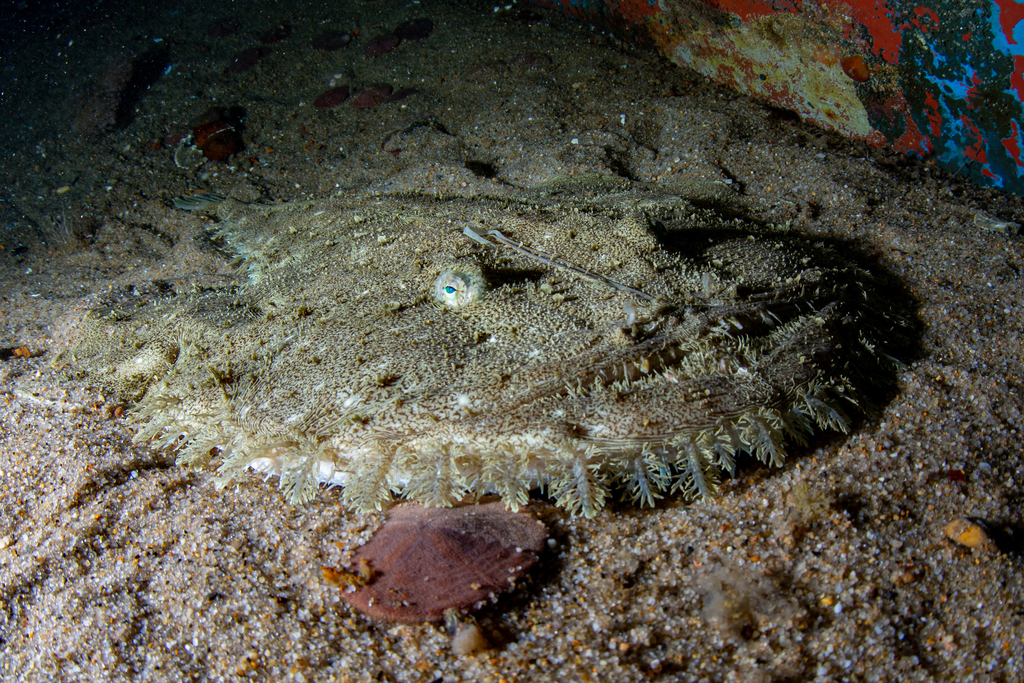
American angler
Lophius americanus · Lophiidae
Two numbers govern this fish, and they do not describe the same animal. Measured whole, an American monkfish has to reach 17 inches. Measured as a tail, it has to reach 11. Between the two numbers sit the head, the gill covers and the belly — roughly six inches of fish that a deck hand removes before anything goes into the hold. Almost every argument about keeping one starts at that difference, and so does this page.
- Family
- Lophiidae
- Max length
- 120 cm TL
- Max weight
- 22.6 kg
- Max age
- 30 years
- Depth
- 0–800 m
- IUCN
- NE
- Climate
- Temperate
Two numbers govern this fish, and they do not describe the same animal. Measured whole, an American monkfish has to reach 17 inches. Measured as a tail, it has to reach 11. Between the two numbers sit the head, the gill covers and the belly — roughly six inches of fish that a deck hand removes before anything goes into the hold. Almost every argument about keeping one starts at that difference, and so does this page.
Seasonality
Other US-ME regulations
Same jurisdictionBefore you keep a fish
- Read the recorded value. It is copied from the notice; if the number and the notice disagree, the notice wins.
- Check the area. Federal, state and local waters can set different limits for the same fish.
- Check the date. Seasons, quotas and closures change; confirm the current notice before you go.
Common questions
- What is the minimum size for American angler in United States — Maine?
- ≥17 in · no bag limit
- Where does this regulation apply?
- Maine territorial waters
- When was it checked?
- 2026-11-18, against 2026 Maine Saltwater Recreational Fishing Regulations.
- Do other jurisdictions set different limits?
- Yes. This register lists 4 jurisdictions for American angler; compare them in the table above.