
Crimson snapper in Australia — Queensland: ≥40 cm — Queensland tidal waters.
Crimson snapper (small-mouth nannygai) | Min: 40cm | Combined limit: 9 in total of crimson and saddletail snapper
Quoted from Queensland Government — Size and possession limits in tidal waters
The 9-fish combined possession limit covers crimson and saddletail snapper inside the 20 reef fin fish cap, with two five-day closures (8–12 October and 6–10 November 2026).
Regulation guide
Official sourcesHow crimson snapper is managed in Queensland
Crimson snapper (Lutjanus erythropterus) is a tidal-water species managed under Queensland's recreational fishing rules, which the Queensland Government publishes alongside material from the Department of Primary Industries. Those rules set size and possession limits, closed seasons and closed waters, and the lists of protected and no-take species.
Queensland lists the fish under two common names in the same table: crimson snapper and small-mouth nannygai. Anglers who know the fish by the nannygai name should look for the same row, because the limits attach to the species rather than to the name used on the boat.
The rules apply to tidal waters, defined as waters subject to tidal influence. That includes waters with mangroves, seagrasses, marine algae or salt marsh, waters with salt or brackish water, and waters with a tidal ebb and flow regardless of salinity.
Source: Queensland Government: Size and possession limits in tidal waters
The 40 cm minimum
Crimson snapper carries a minimum size of 40 cm. That is a size limit, not a possession restriction, and it applies across Queensland tidal waters.
Queensland measures fish from the tip of the snout to the end of the tail, and a fish must not be manipulated to increase or decrease its length. That is a total-length measurement, so a fish measured to the fork will read short.
An undersized fish has to go back immediately. The rules direct anglers to return undersized, oversized, no-take or closed-season species to the water straight away so the fish has the best chance of survival.
Source: Queensland Government: Size and possession limits in tidal waters · Queensland Government: Measure your catch
Nine fish shared with saddletail snapper
The possession limit for crimson snapper is a combined limit of nine in total of crimson and saddletail snapper. Keeping nine crimson snapper and then adding a saddletail would breach the combined cap, and the reverse is equally true.
A Queensland possession limit is not a daily limit. It is the total number of fish an angler may legally take and keep at any single time, and it includes fish held at home, including those in the freezer.
The practical effect is that the trip limit and the home supply are one allowance. An angler who already holds seven crimson snapper at home can add only two more before the combined limit of nine is reached.
Queensland also records the stock position on a separate page for the species, which lists the east coast Queensland and Gulf of Carpentaria stocks as sustainable in the 2023 status table.
Source: Queensland Government: Size and possession limits in tidal waters · Queensland Department of Primary Industries: Crimson snapper stock
The 20-fish coral reef fin fish cap
Crimson snapper is a coral reef fin fish, and Queensland applies a combined possession limit of 20 in total for all coral reef fin fish. The 20 is a ceiling across species rather than an allowance per species, so the snapper limit of nine sits inside it.
The cap matters on a mixed trip. A box holding crimson snapper, coral trout, red emperor and sweetlip is counted as one total against the 20, while the individual species limits within that total still apply.
The page links to the complete list of coral reef fin fish species in the Fisheries Regulation for the legal definition. That list is the document to check when a reef species is unfamiliar or when a fish might fall outside the named table entries.
Source: Queensland Government: Size and possession limits in tidal waters
Two five-day closures each year
Two five-day coral reef fin fish closed seasons fall in October and November each year. The 2026 closures run from 8 to 12 October and from 6 to 10 November, and the 2027 closures run from 26 to 30 October and from 25 to 29 November.
The closure area covers tidal waters from the northern tip of Cape York along a set of coordinates down the east coast to the mainland shore at latitude 24 degrees 50 minutes south. The department publishes a map of the closure boundaries.
Queensland advises that anglers should not target the closed species during a closed season. A separate closure from 15 July to 15 August applies to snapper and pearl perch on the east coast; that entry refers to the species listed as snapper, not to crimson snapper.
Source: Queensland Government: Closed seasons and waters · Queensland Department of Primary Industries: Closed seasons in tidal waters
Fillets and what may be on board
Reef fin fish may be kept on board whole and dead, gilled, gutted or filleted. Fillets must be at least 40 cm long and must keep skin and scales on.
A live fish may be kept on board only if it is going to be displayed in an aquarium, with exceptions for coral trout and redthroat emperor. Fillets of blue spotted coral trout may not be kept on board at all.
Because the fillet rule is a length rule, a legal 40 cm whole fish does not automatically yield a legal fillet. The measurement applies to the fillet itself once the fish is processed at sea.
Source: Queensland Government: Size and possession limits in tidal waters
Before you keep a crimson snapper
Crimson snapper can be confused with other tropical snappers and sea perch, which mostly carry a 25 cm minimum and a limit of five per species. The exceptions are listed by name, and crimson and saddletail share their own 40 cm row and combined limit.
The Qld Fishing 2.0 app is the state's recommended way to check current rules, and the department's Your Catch Counts program invites fishers to record their catches to support stock assessments.
Before a fish goes in the box, check the species against the table row, measure from snout to tail, count the fish already held against the combined limit of nine and the reef cap of 20, and confirm the date falls outside an October or November closure.
Source: Queensland Government: Size and possession limits in tidal waters · Queensland Department of Primary Industries: Your Catch Counts
Official pages: Queensland Government: Size and possession limits in tidal waters · Queensland Government: Measure your catch · Queensland Department of Primary Industries: Closed seasons in tidal waters · Queensland Department of Primary Industries: Crimson snapper stock
Crimson snapper regulations at a glance
1 jurisdictions| Jurisdiction | Area | Size | Bag | Season / closure | Closed area | Other |
|---|---|---|---|---|---|---|
| Australia — Queensland | Queensland tidal waters | ≥40 cm | — | — | — | — |
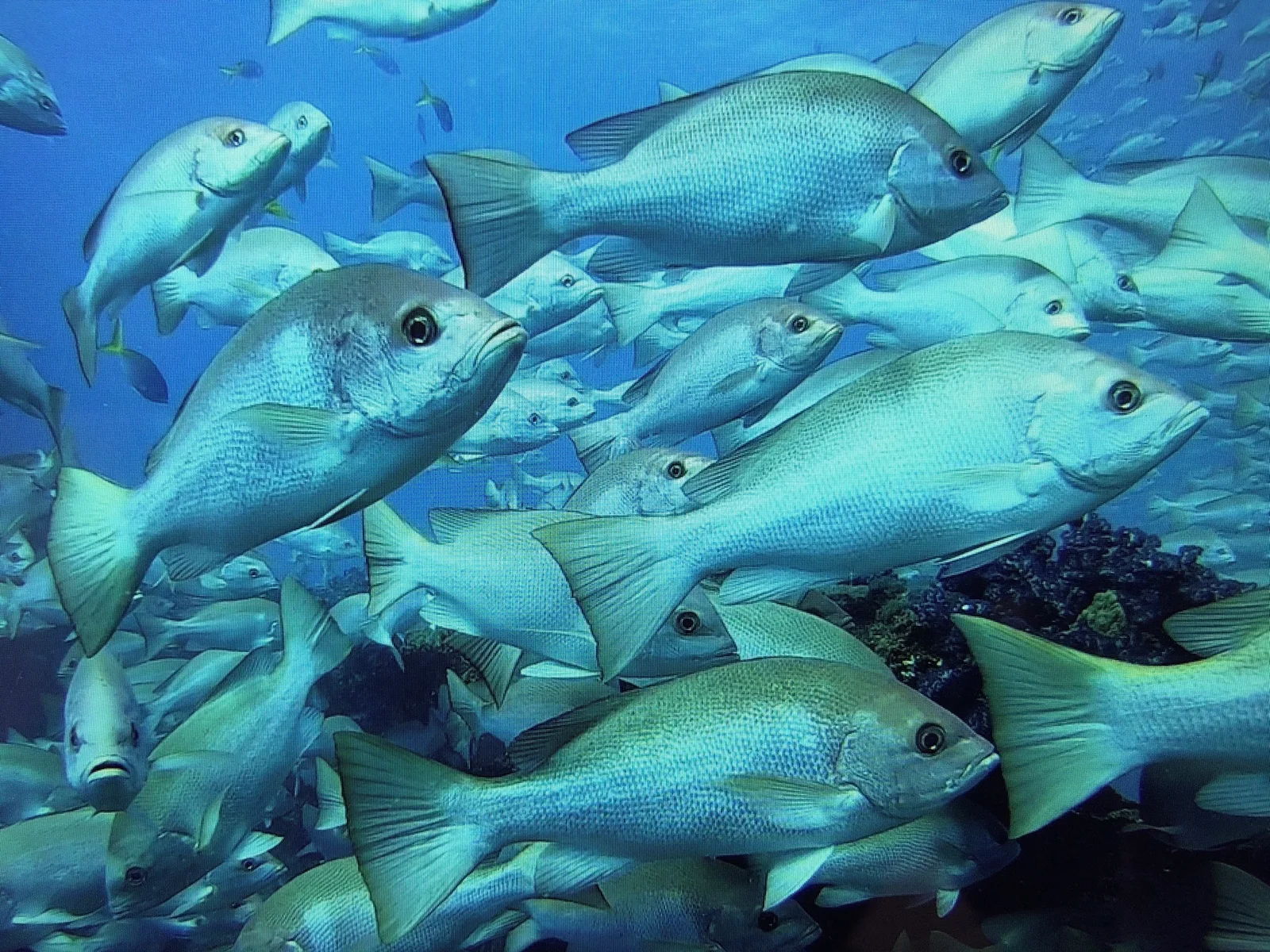
Crimson snapper
Lutjanus erythropterus · Lutjanidae
Crimson snapper is a medium-sized lutjanid of Indo-Pacific reefs, reaching 81.6 cm fork length, 45 cm common length and eight years. FishBase notes that many workers filed it as Lutjanus malabaricus or L. altifrontalis, and treats the Red Sea record as a misidentification. Boat bottom fishing is the usual approach, with the season running January to April and September to December.
- Family
- Lutjanidae
- Max length
- 81.6 cm FL
- Max age
- 8 years
- Depth
- 5–100 m
- IUCN
- LC
- Climate
- Tropical
- Diet
- crustaceans, fishes, molluscs
For decades, authors have filed it under two other names. FishBase records that many recent workers called it Lutjanus malabaricus (non Schneider) or L. altifrontalis, and labels the Red Sea record as a misidentification. A shopper or a logbook carrying either name may hold this fish, and a fish sold as "crimson snapper" may be one of the others. That is the line this page follows: not what the fish looks like, but which recorded name it is hiding behind.
Techniques
- Boat bottom fishing —
Seasonality
Other AU-QLD regulations
Same jurisdictionBefore you keep a fish
- Read the recorded value. It is copied from the notice; if the number and the notice disagree, the notice wins.
- Check the area. Federal, state and local waters can set different limits for the same fish.
- Check the date. Seasons, quotas and closures change; confirm the current notice before you go.
Common questions
- What is the minimum size for Crimson snapper in Australia — Queensland?
- ≥40 cm
- Where does this regulation apply?
- Queensland tidal waters
- When was it checked?
- 2026-11-18, against Queensland Government — Size and possession limits in tidal waters.