
Javelin fish in Australia — Queensland: 10 fish possession limit (Gulf: 10 whole fish or 20 fillets) — Queensland.
Barred javelin (spotted grunter) - Queensland east coast ... Limit: 10 ... Gulf of Carpentaria ... Limit: 10 whole fish, or 20 fillets
Quoted from Queensland Government — Size and possession limits in tidal waters
A possession limit is the total number of fish you may keep at any time, including fish at home or in the freezer; it is not a daily take limit.
Regulation guide
Official sourcesHow barred javelin is managed in Queensland
Barred javelin (Pomadasys kaakan), also called spotted grunter, is a tidal-water species in Queensland. Fisheries Queensland publishes separate entries for the Queensland east coast and the Gulf of Carpentaria.
Both entries sit in the tidal water size and possession limit table, with a minimum size and a possession figure, and neither entry carries a boat limit.
The species is fished in estuaries and coastal waters, and the rules apply to all tidal waters, meaning waters subject to tidal influence whether salt or brackish.
Queensland defines tidal waters to include waters with marine plants such as mangroves, seagrasses, marine algae or salt marsh, waters with salt or brackish water, and waters with a tidal ebb and flow regardless of salinity.
Freshwater size and possession limits are published separately and do not apply to this species, so estuary anglers work from the tidal table even where the water is brackish rather than fully saline.
Source: Queensland Government: Size and possession limits in tidal waters
Ten is a possession limit, not a daily bag limit
The possession limit for barred javelin is 10 fish on the east coast. In the Gulf of Carpentaria it is 10 whole fish or 20 fillets.
Queensland's possession limit is the total number of fish an angler may legally keep at any one time. It is not a daily limit, and it includes fish at home, including those in the freezer.
Once a species has its own entry in the table, the general possession limit of 20 that applies to unlisted tidal species does not apply to it.
The limit is a standing cap on what the angler holds, rather than a target to be filled each day.
Source: Queensland Government: Size and possession limits in tidal waters
East coast and Gulf rules
The east coast and the Gulf share the same size rule: 40 cm for a whole fish or a fish with head and tail removed, or a 26 cm fillet.
The Gulf entry allows the same 10 fish to be held as either 10 whole fish or 20 fillets.
Fillets must have skin left on while on board a boat so that the species can be identified.
Source: Queensland Government: Size and possession limits in tidal waters
How to measure a barred javelin
Queensland measures fish from the tip of the snout to the end of the tail. The fish must not be manipulated to increase or decrease its length.
A whole fish, or one with the head and tail removed, must reach 40 cm. A fillet must reach 26 cm.
Undersized fish must be returned to the water immediately, along with oversized, no-take and closed-season fish.
Source: Queensland Government: Measure your catch · Queensland Government: Size and possession limits in tidal waters
Gear and handling
Anglers in Queensland tidal waters may use up to three fishing lines with no more than six hooks in total. An artificial fly, lure, bait jig or gang hook counts as one hook.
A line may be handheld or attached to a rod and reel, but cross lines, drum lines, free-floating lines and set lines are prohibited. Anglers must stay with their lines at all times.
Jagging or foul hooking is prohibited, as is using underwater breathing apparatus other than a snorkel to catch fish.
Closed seasons and closed waters
Queensland's list of tidal closed seasons names Australian bass, barramundi, black jewfish, coral reef fin fish, snapper and pearl perch, Spanish mackerel, spanner crab and tropical rocklobster. Barred javelin is not on that list.
Closed waters are a separate control. They stop fishing or the use of particular gear in defined areas, for reasons that include threatened species, spawning gatherings, artificial barriers and fish passage.
A barred javelin angler therefore checks two things beyond the size and possession figures: whether the water itself is closed, and whether any local restriction applies to the gear being used.
Source: Queensland DPI: Closed seasons in tidal waters · Queensland Government: Closed seasons and waters
What to check before keeping a barred javelin
Confirm whether you are in the Gulf or on the east coast, then apply the right possession figure: 10 fish on the east coast, or 10 whole fish or 20 fillets in the Gulf.
Check 40 cm on the whole fish, or 26 cm on the fillet, and leave the skin on fillets while they are on the boat.
Count the fish you hold at home as well as the fish in the boat, because the limit of 10 is a possession limit rather than a daily catch, and it applies wherever the fish are stored.
If you are not keeping the fish, return it quickly and handle it as little as possible so that it has the best chance of survival.
The state publishes the current size and possession figures through its Qld Fishing 2.0 app, which carries the current fishing rules.
Source: Queensland Government: Size and possession limits in tidal waters · Queensland Government: Measure your catch
Official pages: Queensland Government: Size and possession limits in tidal waters · Queensland Government: Measure your catch · Queensland Government: Fishing gear · Queensland Government: Closed seasons and waters
Javelin fish regulations at a glance
2 jurisdictions| Jurisdiction | Area | Size | Bag | Season / closure | Closed area | Other |
|---|---|---|---|---|---|---|
| Australia — Queensland | Queensland | — | 10 fish possession limit (Gulf: 10 whole fish or 20 fillets) | — | — | — |
| Australia — Queensland | Queensland (including the Gulf of Carpentaria) | ≥40 cm whole or 26 cm fillet | — | — | — | — |
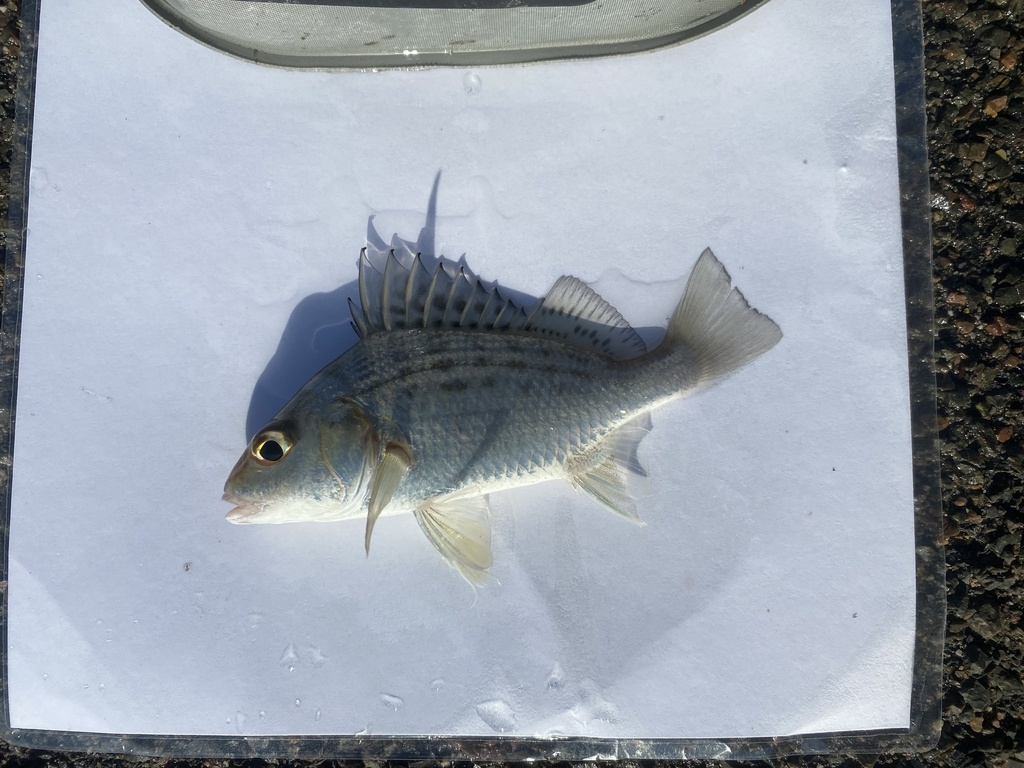
Javelin fish
Pomadasys kaakan · Haemulidae
Javelin fish is an Indo-West Pacific haemulid, from the Red Sea and East Africa to Southeast Asia, north to Taiwan region and south to Queensland, with a Persian Gulf record. It lives over turbid inshore sand and mud to 75 m, enters estuaries, tolerates low salinity and is often associated with inshore wrecks; it feeds on crustaceans and fish, and spawning shoals gather near river mouths in winter.
- Family
- Haemulidae
- Max length
- 80 cm TL
- Depth
- ≤ 75 m
- IUCN
- LC
- Climate
- Tropical
Javelin fish is an Indo-West Pacific haemulid, from the Red Sea and East Africa to Southeast Asia, north to Taiwan region and south to Queensland, with a Persian Gulf record. It lives over turbid inshore sand and mud to 75 m, enters estuaries, tolerates low salinity and is often associated with inshore wrecks; it feeds on crustaceans and fish, and spawning shoals gather near river mouths in winter. FishBase gives a maximum of 80 cm total length, a common length of 50 cm and maturity at about 35 cm. IUCN lists it as Least Concern, assessed in 2020.
Techniques
- Bottom fishing —
- Lure fishing —
Seasonality
Other AU-QLD regulations
Same jurisdictionBefore you keep a fish
- Read the recorded value. It is copied from the notice; if the number and the notice disagree, the notice wins.
- Check the area. Federal, state and local waters can set different limits for the same fish.
- Check the date. Seasons, quotas and closures change; confirm the current notice before you go.
Common questions
- What is the bag limit for Javelin fish in Australia — Queensland?
- 10 fish possession limit (Gulf: 10 whole fish or 20 fillets)
- Where does this regulation apply?
- Queensland
- When was it checked?
- 2026-11-18, against Queensland Government — Size and possession limits in tidal waters.
- Do other jurisdictions set different limits?
- Yes. This register lists 2 jurisdictions for Javelin fish; compare them in the table above.