
Red codling in New Zealand — South East: ≥25 cm — New Zealand — South-East fishing area.
Red cod | 10 | 25 | 100
Quoted from MPI — South-East area fishing rules
Regulation guide
Official sourcesHow red cod is managed in the South-East
Red cod (Pseudophycis bachus), called hoka in New Zealand, is covered by the recreational rules for the South-East fishing area published by the Ministry for Primary Industries.
The area runs along the east coast of the South Island from Clarence Point near Kaikoura to Slope Point in Southland. The Kaikoura area has separate rules and is called out on the South-East page.
Within the area there is a combined daily bag limit of 30 finfish per fisher, excluding specified baitfish and freshwater eels.
Commercially, red cod is managed in five quota management stocks: RCO 1 for Auckland, RCO 2 for the Central area, RCO 3 for the east coast of the South Island, the Chathams, Southland and the Subantarctic, RCO 7 for Challenger and RCO 10 for the Kermadecs.
Fisheries New Zealand notes that these boundaries reflect geography and commercial fishing patterns rather than biologically distinct stocks, and that stock structure is not well known.
The South-East recreational area covers the east coast of the South Island, the ground of RCO 3, which the review describes as the largest red cod fishery.
Source: MPI: South-East area fishing rules · Fisheries New Zealand: Commercial Landing Exception Review, Red Cod
Ten a day, 25 cm
The South-East table gives red cod a maximum daily limit of 10 per active fisher and a minimum fish length of 25 cm.
The same table sets a minimum set net mesh size of 100 mm for red cod, and 100 mm for all other finfish.
The individual limit applies within the combined limit of 30, so red cod cannot be used to push the total past the area cap.
How the combined limit works
The combined limit is a total across finfish species. The ministry gives the example of 10 kahawai, 10 blue moki and 10 red cod as a lawful mix within the 30.
Species with their own entries must stay within their individual limit even when the total is below 30. Bluenose, for example, is capped at 5.
Baitfish and freshwater eels sit outside the 30 and are counted against separate allowances.
Red cod biology
Fisheries New Zealand describes red cod as fast-growing and short-lived, living an average of three to four years with a maximum age of about six. It grows to about 25 cm total length in its first year.
Its range runs from the Three Kings Islands to south of the Sub-Antarctic Islands, with the highest concentration around the Canterbury Bight. Schools move inshore from November to June and into deeper water to spawn.
Size at sexual maturity is 45 to 55 cm total length. The species has soft, easily damaged flesh, sheds scales readily and is prone to barotrauma when caught at depth.
Source: Fisheries New Zealand: Commercial Landing Exception Review, Red Cod
Size, maturity and the state of the stock
A 25 cm minimum is roughly the length a red cod reaches in its first year, while the species matures at 45 to 55 cm total length.
The commercial fishery is based almost exclusively on two- and three-year-old fish and depends heavily on recruitment, and abundance fluctuates widely from year to year.
Red cod is listed on Schedule 2 of the Fisheries Act 1996, which allows in-season adjustment of the total allowable commercial catch.
Source: Fisheries New Zealand: Commercial Landing Exception Review, Red Cod
Season, catch and variability
The red cod fishery is seasonal. Schools move inshore from November and the commercial peak falls between January and May, before the fish move into deeper water.
Catches fluctuate widely from year to year, which Fisheries New Zealand attributes to a combination of variable recruitment and the short life span of the species.
The review also records evidence that red cod distribution is shifting southwards away from the main grounds off the east coast of the South Island, including Pegasus Bay and the Canterbury Bight, in response to warmer sea temperatures.
Source: Fisheries New Zealand: Commercial Landing Exception Review, Red Cod
Handling and what to check
Confirm you are in the South-East area, and remember that the Kaikoura area has its own rules.
Check 25 cm and count red cod against the individual limit of 10 and the combined limit of 30 finfish. If setting a net, use a mesh of at least 100 mm.
Red cod have little connective tissue in the flesh, so they bruise and tear easily, and they shed scales at little provocation.
They also have swim bladders and can suffer barotrauma when brought up from depth, which reduces their chance of survival if released.
For a fish that is to be kept, the practical response is quick dispatch and careful handling rather than dragging the fish across a gunwale or deck.
Source: MPI: South-East area fishing rules · Fisheries New Zealand: Commercial Landing Exception Review, Red Cod
Official pages: MPI: South-East area fishing rules · Fisheries New Zealand: Commercial Landing Exception Review, Red Cod
Red codling regulations at a glance
1 jurisdictions| Jurisdiction | Area | Size | Bag | Season / closure | Closed area | Other |
|---|---|---|---|---|---|---|
| New Zealand — South East | New Zealand — South-East fishing area | ≥25 cm | 10 fish per fisher per day | — | — | — |
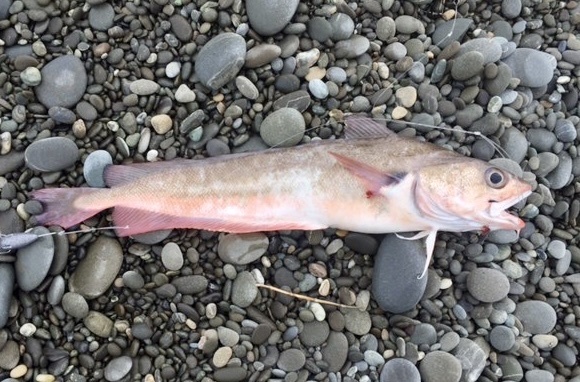
Red codling
Pseudophycis bachus · Moridae
Red codling is a slim, white-fleshed morid of the southwest Pacific, found around New Zealand and southern Australia from Sydney to Adelaide and around Tasmania. It works 26 to 700 m in subtropical water and feeds on crustaceans, fish and molluscs. Adults reach 90 cm TL. The season is short, July and August, which puts it in the southern winter.
- Family
- Moridae
- Max length
- 90 cm TL
- Depth
- 26–700 m
- IUCN
- NE
- Climate
- Subtropical
- Diet
- crustaceans, fishes, molluscs
Red codling (Pseudophycis bachus) is a fish of the family Moridae. FishBase gives its range as: Southwest Pacific: New Zealand and around Australia, at least from Sydney to Adelaide, and around Tasmania. Often confused with Pseudophycis barbata. It is recorded from 26 to 700 m, in subtropical water. The recorded maximum is 90 cm TL. Diet includes crustaceans, fishes and molluscs. IUCN status: Not Evaluated (NE). Chinese name: .
Seasonality
Other NZ-SE regulations
Same jurisdictionBefore you keep a fish
- Read the recorded value. It is copied from the notice; if the number and the notice disagree, the notice wins.
- Check the area. Federal, state and local waters can set different limits for the same fish.
- Check the date. Seasons, quotas and closures change; confirm the current notice before you go.
Common questions
- What is the minimum size for Red codling in New Zealand — South East?
- ≥25 cm
- Where does this regulation apply?
- New Zealand — South-East fishing area
- When was it checked?
- 2026-11-18, against MPI — South-East area fishing rules.