
European pilchard in Portugal: ≥11 cm — Portugal (mainland).
Sardinha (Sardina pilchardus) | 11 cm
Quoted from DGRM — Tabela de Tamanhos Mínimos de Captura
Regulation guide
Official sourcesA shared pelagic stock
European pilchard, or sardine (Sardina pilchardus), is a small pelagic fish. The fisheries for it are managed within the EU common fisheries policy, with annual fishing opportunities set on scientific advice.
The Iberian sardine is the clearest example of shared management. A Spanish fisheries resolution of 13 March 2026 records that the catch limit agreed between Spain and Portugal is divided 33.5 % to Spain and 66.5 % to Portugal, so that fishing possibilities are not exceeded under the precautionary exploitation rule.
For recreational anglers the species is usually a bait or food fish rather than a target, but the size rule is still enforceable and identical in all four countries covered here.
Source: European Commission: Fishing quotas (TACs and quotas) · BOE: Resolución de 13 de marzo de 2026, Secretaría General de Pesca (sardina ibérica) · European Commission: Technical measures
The EU minimum is 11 cm, with a 10 % tolerance for landings
Annex VI of Regulation (EU) 2019/1241 sets sardine at 11 cm for North Western Waters. The entry carries a footnote: by way of derogation from the landing obligation, the minimum conservation reference size for sardine, anchovy, herring, horse mackerel and mackerel does not apply up to a limit of 10 % by live weight of the total catches retained on board of each of those species.
The tolerance is a rule about unavoidable by-catch in commercial landings, calculated after sorting or at landing, and the 10 % limit may not be exceeded during transhipment, landing, transport, storage, display or sale. For an angler targeting sardine the working figure remains 11 cm.
The measurement is total length, from the tip of the snout to the end of the tail fin, under Annex IV of the same regulation.
Source: EUR-Lex: Regulation (EU) 2019/1241, Annex VI (minimum conservation reference sizes and footnotes) · EUR-Lex: Regulation (EU) 2019/1241, Annex IV (measurement) · European Commission: Technical measures
United Kingdom: 11 cm
The Marine Management Organisation's statutory guidance, updated on 3 February 2026, lists sardine (Sardina pilchardus) at 11 cm, applying in Region 2 as defined in Article 2(1)(b) of Council Regulation (EC) No 850/98.
Recreational fishing from shore without a vessel does not need a licence or permit from the MMO, and a private unlicensed vessel used for pleasure is recreational. Byelaws and protected-area rules still apply, and some districts require an Inshore Fisheries and Conservation Authority permit.
The catch must not be marketed or sold; selling it makes the trip commercial and brings vessel licensing and commercial conditions into play. The MMO table sets no recreational daily bag limit for sardine. In practice sardine is often taken for bait, and the same 11 cm rule applies whether the fish is eaten or used as bait.
Source: GOV.UK / MMO: Minimum Conservation Reference Sizes (MCRS) in UK waters · GOV.UK / MMO: Commercial and recreational fishing
France: 11 cm in both Atlantic and Mediterranean tables
The arrêté of 26 October 2012 lists sardine (Sardina pilchardus) at 11 cm in Annex I for the North Sea, Channel and Atlantic, and again at 11 cm in the Mediterranean table in the same annex. The annex in force was published in January 2026.
Article 3 refers measurement to the EU rules reproduced in Annex II, so the fish is measured to the end of the tail fin. The arrêté sets no daily bag limit for sardine.
Article R921-83 of the rural and maritime fishing code keeps maritime recreational fishing non-commercial: the catch is for the fisher and family and may not be hawked, exposed for sale, sold or knowingly bought. That matters for sardine, which is a common bait species and easy to move into trade.
Source: Légifrance: Arrêté du 26 octobre 2012 (tailles minimales de capture, pêche maritime de loisir) · Légifrance: Code rural et de la pêche maritime, articles R921-83 à R921-93
Spain: 11 cm on the Atlantic grounds and in the Mediterranean
Spain lists sardina at 11 cm in Annex I of Real Decreto 560/1995, covering the Cantabrian and Northwest grounds and the Gulf of Cadiz, and at the same 11 cm in Annex II for the Mediterranean grounds. The annexes were replaced by Real Decreto 936/2025, in force from 2 November 2025.
The 2026 sardine resolution sets the Iberian catch limit and the Spanish share of 33.5 %, and it is the instrument through which Spain orders the fishery for the year. That resolution is a commercial management measure; for a recreational angler the operative rule is the 11 cm minimum in the size decree.
Recreational fishing in external waters needs a licence from a coastal autonomous community or from Ceuta or Melilla under Real Decreto 347/2011, and Article 19 bars selling or commercially ceding the catch. No state daily bag limit for sardine is set; the autonomous community's licence terms apply.
Source: BOE: Real Decreto 560/1995 (tallas mínimas, consolidated text updated 1 November 2025) · BOE: Resolución de 13 de marzo de 2026 (sardina ibérica) · BOE: Real Decreto 347/2011 (pesca marítima de recreo)
Portugal: 11 cm, purse-seine closures and the 10 kg recreational cap
Portugal lists sardinha at 11 cm in the DGRM table dated 26 February 2026, which cites Portaria 255/2022, Regulation (EU) 2019/1241 and Regulation (EU) 2026/249 and reproduces the 10 % landing tolerance.
Portugal also runs a specific sardine management regime for the purse-seine fleet. DGRM explains that Portaria 251/2010, as amended, imposes a 48-hour weekly ban on sardine fishing with purse seine, with the hours set by port area, and that the 2026 season was reopened from 4 May by a ministerial order. These measures govern the commercial cerco fleet rather than shore anglers.
For recreational fishing, Portaria 14/2014 requires a licence, caps the daily catch at 10 kg per practitioner excluding the heaviest fish (15 kg underwater), and requires each retained fish to be marked with a cut in the caudal fin. Sardine is not on the list of species barred to recreational fishers.
Source: DGRM: Tabela de Tamanhos Mínimos de Captura (26 February 2026) · DGRM: Medidas de Gestão para a Sardinha · Diário da República: Portaria n.º 14/2014, de 23 de janeiro (pesca lúdica)
What to check before keeping a sardine
The size is the easy part: 11 cm is the figure in the EU annex and in the UK, French, Spanish and Portuguese national tables, so there is no discrepancy to resolve. Measure from snout tip to tail tip, and return anything shorter.
The national layers are where the differences lie. England requires no MMO licence for shore or private-vessel fishing but may require an IFCA permit; France requires no size declaration but bars sale; Spain requires an autonomous-community licence; Portugal requires a DGRM licence, a 10 kg daily cap and a fin cut on each retained fish.
No recreational daily bag limit for sardine appears in any of the four national instruments cited here. The binding limits are the 11 cm minimum, Portugal's overall weight ceiling, and the closed areas or byelaws that apply where the fish are taken.
Source: EUR-Lex: Regulation (EU) 2019/1241, Annex VI · GOV.UK / MMO: Minimum Conservation Reference Sizes (MCRS) in UK waters · DGRM: Espécies — proibições, tamanhos mínimos, marcação e limites diários
Official pages: GOV.UK / MMO: Minimum Conservation Reference Sizes in UK waters · European Commission: Technical measures · Légifrance: Arrêté du 26 octobre 2012 · BOE: Real Decreto 560/1995 · DGRM: Tamanhos mínimos de captura
European pilchard regulations at a glance
4 jurisdictions| Jurisdiction | Area | Size | Bag | Season / closure | Closed area | Other |
|---|---|---|---|---|---|---|
| France | France — North Sea, Channel, Atlantic and Mediterranean | ≥11 cm | — | — | — | — |
| Portugal | Portugal (mainland) | ≥11 cm | — | — | — | — |
| Spain | Spain — Cantabrian/Northwest, Gulf of Cadiz and Mediterranean | ≥11 cm | — | — | — | — |
| United Kingdom | UK waters (Region 2 as defined by Council Regulation (EC) No 850/98) | ≥11 cm | — | — | — | — |
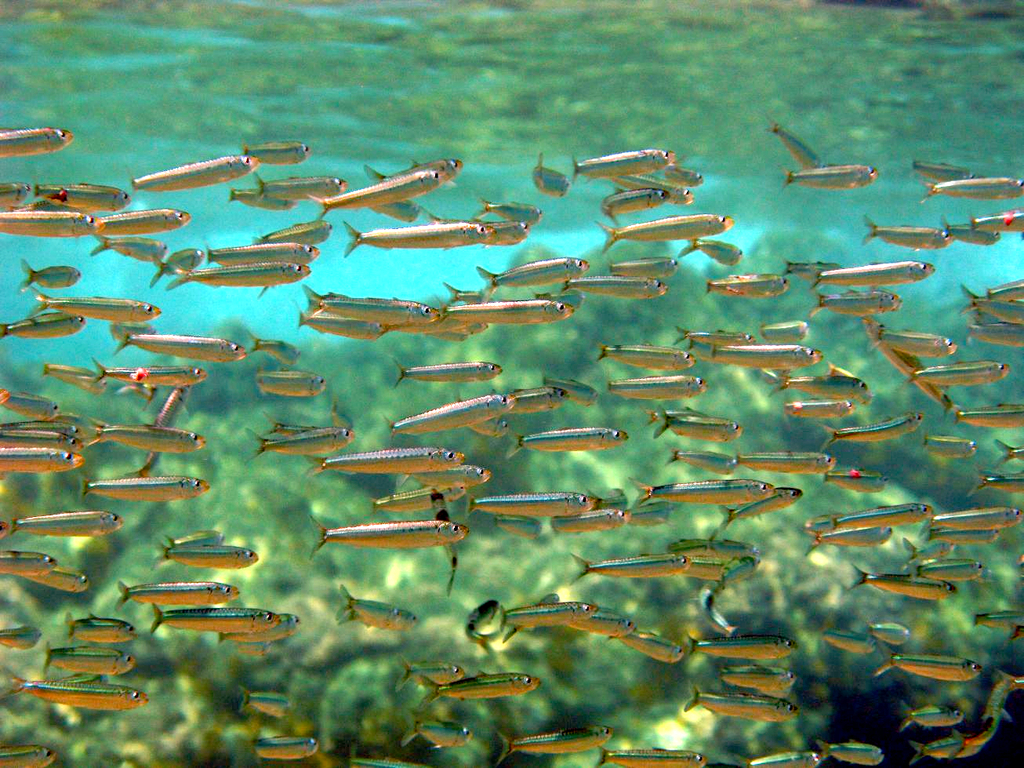
European pilchard
Sardina pilchardus · Alosidae
European pilchard is a small schooling clupeid of the northeast Atlantic and Mediterranean, from the North Sea and the British Isles south to Senegal, with Iceland at the rare edge of its range. It works the top 100 m, mostly below 10 m, and feeds on crustaceans and zooplankton. Adults reach 27.5 cm SL and can live 15 years. It is present year-round, and the market word sardine covers several species besides this one.
- Family
- Alosidae
- Max length
- 27.5 cm SL
- Max age
- 15 years
- Depth
- 10–100 m
- IUCN
- LC
- Climate
- Subtropical
- Diet
- crustaceans, zooplankton
European pilchard (Sardina pilchardus) is a fish of the family Alosidae. FishBase gives its range as: Northeast Atlantic: Iceland (rare) and North Sea, southward to Bay de Gorée, Senegal. Mediterranean (common in the western part and in Adriatic Sea, rare in the eastern part), Sea of Marmara and Black Sea. It is recorded from 10 to 100 m, in subtropical water. The recorded maxima are 27.5 cm SL, 15 years. Diet includes crustaceans and zooplankton. IUCN status: Least Concern (LC). Chinese name: .
Seasonality
Other PT regulations
Same jurisdictionBefore you keep a fish
- Read the recorded value. It is copied from the notice; if the number and the notice disagree, the notice wins.
- Check the area. Federal, state and local waters can set different limits for the same fish.
- Check the date. Seasons, quotas and closures change; confirm the current notice before you go.
Common questions
- What is the minimum size for European pilchard in Portugal?
- ≥11 cm
- Where does this regulation apply?
- Portugal (mainland)
- When was it checked?
- 2026-11-18, against DGRM — Tabela de Tamanhos Mínimos de Captura.
- Do other jurisdictions set different limits?
- Yes. This register lists 4 jurisdictions for European pilchard; compare them in the table above.