
Brill in United Kingdom: ≥30 cm (ICES divisions 7d and 7e only) — UK waters (Region 2 as defined by Council Regulation (EC) No 850/98).
| Brill | Scophthalmus rhombus | 30 cm (7d and 7e only) |
Quoted from Minimum Conservation Reference Sizes (MCRS) in UK waters
Regulation guide
Official sourcesHow brill is managed
Brill (Scophthalmus rhombus) is a flatfish caught in mixed demersal and flatfish fisheries in EU waters. Its conservation rules come from the EU technical measures framework and from the national law of the country whose waters are being fished; fishing opportunities for commercial stocks are set each year under the common fisheries policy.
Technical conservation rules for brill come from Regulation (EU) 2019/1241. The regulation fixes minimum conservation reference sizes, mesh sizes, closed areas and seasons for EU waters, and it allows countries with an interest in a sea basin to agree regional measures that are then adopted as EU secondary legislation.
Because the EU sets a floor rather than a complete rulebook, the size an angler must observe is the EU figure where one applies and the national figure where it does not. Licensing, bag limits and the right to keep a fish are decided nationally.
Source: European Commission: Technical measures · European Commission: Fishing quotas (TACs and quotas) · EUR-Lex: Regulation (EU) 2019/1241 on technical measures
The EU size is 30 cm, limited to ICES divisions 7d and 7e
In Annex VI of Regulation (EU) 2019/1241, the minimum conservation reference size table for North Western Waters, brill appears at 30 cm with the words "applicable in ICES divisions 7d and 7e only". The same restriction applies to turbot and lemon sole in that table, while plaice is set at 27 cm for the whole area.
The geographic limit is the part anglers most often miss. The EU imposes no brill size in the North Sea or in the southern Atlantic divisions, so a 30 cm rule in those waters rests on national law. In practice France, Spain and Portugal all apply 30 cm, which means the outcome is similar but the legal basis is not.
Source: EUR-Lex: Regulation (EU) 2019/1241, Annex VI (North Western Waters, minimum conservation reference sizes) · European Commission: Technical measures
United Kingdom
The Marine Management Organisation's statutory guidance on minimum conservation reference sizes, updated on 3 February 2026, lists brill at 30 cm with the note "7d and 7e only". The table is defined by reference to Region 2 under Article 2(1)(b) of Council Regulation (EC) No 850/98.
Recreational status is dealt with separately. The MMO's guidance on commercial and recreational fishing states that fishing from shore without a vessel does not require a licence or permit from the MMO, that a private unlicensed vessel used for pleasure is fishing recreationally, and that an Inshore Fisheries and Conservation Authority permit may be required in some districts.
Catches taken recreationally must not be marketed or sold. Selling any part of a trip's catch converts the whole trip into a commercial one, subject to vessel licensing and commercial conditions. The MMO size table carries no recreational bag limit for brill, and local byelaws or marine protected area rules may still restrict where and how the fish is taken.
Source: GOV.UK / MMO: Minimum Conservation Reference Sizes (MCRS) in UK waters · GOV.UK / MMO: Commercial and recreational fishing
France
The French size for brill is 30 cm. The arrêté of 26 October 2012, which sets minimum capture sizes for maritime recreational fishing, lists barbue (Scophthalmus rhombus) at 30 cm in Annex I, the table for the North Sea, Channel and Atlantic. The annex in force was published in January 2026.
Article 3 of the arrêté requires sizes to be measured according to the EU rules reproduced in Annex II, which means a total length from the tip of the snout to the end of the tail fin. The arrêté fixes no daily bag limit for brill.
The activity itself is regulated by the rural and maritime fishing code. Article R921-83 defines recreational sea fishing as non-commercial, with the catch reserved for the fisher and family and barred from being hawked, offered for sale, sold or knowingly bought.
Source: Légifrance: Arrêté du 26 octobre 2012 (tailles minimales de capture, pêche maritime de loisir) · Légifrance: Code rural et de la pêche maritime, articles R921-83 à R921-93
Spain
Spain lists brill as ramal in Annex I of Real Decreto 560/1995, the table for the Cantabrian and Northwest grounds and the Gulf of Cadiz, at 30 cm. Real Decreto 936/2025 replaced the annex with effect from 2 November 2025 and kept the 30 cm figure. Brill does not appear in the Mediterranean or Canary annexes.
Article 3 of the decree forbids keeping on board, transhipping, landing, transporting, storing, selling, displaying or marketing fish below the required size, which applies to a recreational catch as much as to a commercial one.
For the activity, Real Decreto 347/2011 requires a licence issued by a coastal autonomous community or by Ceuta or Melilla, allows shore, boat and breath-hold underwater fishing, and in Article 19 prohibits the sale or commercial cession of recreational catches. No state daily bag limit is set for brill; the autonomous community's licence terms and any marine reserve rules apply on top.
Source: BOE: Real Decreto 560/1995 (tallas mínimas, consolidated text updated 1 November 2025) · BOE: Real Decreto 347/2011 (pesca marítima de recreo en aguas exteriores) · MAPA: Pesca marítima de recreo, preguntas frecuentes
Portugal
Portugal's minimum-size table, published by DGRM and dated 26 February 2026, lists rodovalho (Scophthalmus rhombus) at 30 cm. The table cites Portaria 255/2022, Regulation (EU) 2019/1241 and Regulation (EU) 2026/249 as its legal basis.
Portaria 14/2014 governs recreational fishing. It requires a licence, caps the daily catch at 10 kg per practitioner excluding the heaviest fish (15 kg for underwater fishing), and requires every retained fish to be marked by a cut in the caudal fin before the angler leaves the spot or lands. Brill is not among the species Portugal bars recreational fishers from retaining.
The three requirements therefore stack: a 30 cm minimum, the overall 10 kg daily ceiling, and the marking duty. Licences are issued through the BMar portal under the same 2014 ordinance.
Source: DGRM: Tabela de Tamanhos Mínimos de Captura (26 February 2026) · DGRM: Espécies — proibições, tamanhos mínimos, marcação e limites diários · Diário da República: Portaria n.º 14/2014, de 23 de janeiro (pesca lúdica)
Measuring a brill and the checks that matter
Regulation (EU) 2019/1241 Annex IV measures a fish from the tip of the snout to the end of the tail fin. Brill has a rounded tail, so the difference between measuring to the fork and measuring to the tip is smaller than on a fork-tailed fish, but the rule is still the full length.
The practical checks are the same in each country: confirm the ICES division, because the EU and UK 30 cm rules apply only in 7d and 7e; confirm the national minimum, which is 30 cm in France, Spain and Portugal; confirm whether a licence or IFCA permit is needed; and remember that recreational catches cannot be sold anywhere in this group of countries. Undersized fish go back, and in Portugal they must be returned immediately and not kept on board.
Source: EUR-Lex: Regulation (EU) 2019/1241, Annex IV (measurement of the size of a marine organism) · GOV.UK / MMO: Minimum Conservation Reference Sizes (MCRS) in UK waters · DGRM: Tabela de Tamanhos Mínimos de Captura (26 February 2026)
Official pages: GOV.UK / MMO: Minimum Conservation Reference Sizes in UK waters · European Commission: Technical measures · Légifrance: Arrêté du 26 octobre 2012 (tailles minimales, pêche de loisir) · BOE: Real Decreto 560/1995 (tallas mínimas) · DGRM: Tamanhos mínimos de captura
Brill regulations at a glance
4 jurisdictions| Jurisdiction | Area | Size | Bag | Season / closure | Closed area | Other |
|---|---|---|---|---|---|---|
| France | France — North Sea, Channel and Atlantic | ≥30 cm | — | — | — | — |
| Portugal | Portugal (mainland) | ≥30 cm | — | — | — | — |
| Spain | Spain — Cantabrian/Northwest and Gulf of Cadiz | ≥30 cm | — | — | — | — |
| United Kingdom | UK waters (Region 2 as defined by Council Regulation (EC) No 850/98) | ≥30 cm (ICES divisions 7d and 7e only) | — | — | — | — |
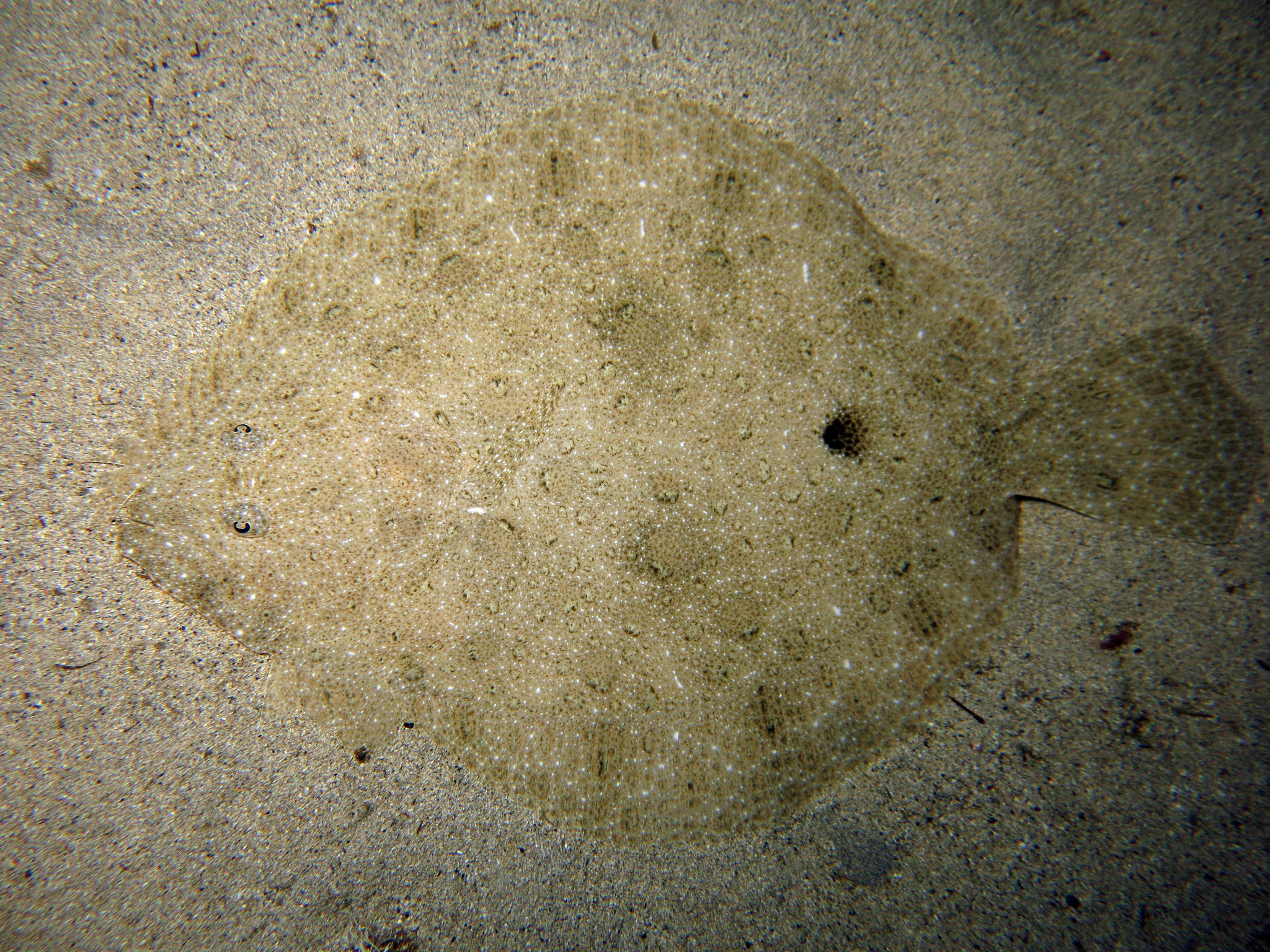
Brill
Scophthalmus rhombus · Scophthalmidae
A brill is not found by hunting deep water. It is found by locating the seam where sand gives way to mud, then putting the bait on the correct side of that seam. The fish is a bottom specialist before it is a depth statistic.
- Family
- Scophthalmidae
- Max length
- 75 cm TL
- Max weight
- 8 kg
- Max age
- 6 years
- Depth
- 5–50 m
- IUCN
- LC
- Climate
- Temperate
- Diet
- crustaceans, fishes
A brill is not found by hunting deep water. It is found by locating the seam where sand gives way to mud, then putting the bait on the correct side of that seam. The fish is a bottom specialist before it is a depth statistic.
Seasonality
Other UK regulations
Same jurisdictionBefore you keep a fish
- Read the recorded value. It is copied from the notice; if the number and the notice disagree, the notice wins.
- Check the area. Federal, state and local waters can set different limits for the same fish.
- Check the date. Seasons, quotas and closures change; confirm the current notice before you go.
Common questions
- What is the minimum size for Brill in United Kingdom?
- ≥30 cm (ICES divisions 7d and 7e only)
- Where does this regulation apply?
- UK waters (Region 2 as defined by Council Regulation (EC) No 850/98)
- When was it checked?
- 2026-11-18, against Minimum Conservation Reference Sizes (MCRS) in UK waters.
- Do other jurisdictions set different limits?
- Yes. This register lists 4 jurisdictions for Brill; compare them in the table above.