
Japanese amberjack in Japan — Mie: ≤15 cm total length may not be taken · year-round — Mie Prefecture sea waters.
Rule text: 第36条, which applies to any person; undersized catch may not be possessed or sold.
Regulation guide
Official sourcesWho sets the rules for Japanese amberjack
Japanese amberjack, buri, is a coastal fish, and the rules an angler meets are set mainly at prefecture level. The Fisheries Agency explains that catching aquatic animals in Japan is regulated by the Fishery Act, the Aquatic Resources Protection Act, prefectural fishing adjustment rules and instructions issued by sea-area fisheries adjustment committees. Those instruments set the species and sizes that may be taken, the gear and methods allowed, closed seasons and closed areas.
The agency adds that the rules bind recreational anglers as well as commercial fishers, and that breaches carry penalties. For buri, the practical question is therefore not only the size of the fish but the prefecture whose sea area it came from.
Source: 水産庁 遊漁・海面利用の基本的ルール · 水産庁 外国人による遊漁について
Five prefectures apply a 15 cm minimum
Five prefectures covered by this guide apply the same floor: Fukuoka, Shizuoka, Nagasaki, Mie and Tokyo all prohibit taking Japanese amberjack of 15 cm total length or less. Each writes the limit as 全長, total length, and each applies it to the general public rather than only to licensed fishers.
Fukuoka is the most specific. Article 38 of the Fukuoka Prefectural Fishing Adjustment Rules bans taking ぶり(もじゃこ), juvenile amberjack, of 15 cm total length or less, year-round, in sea waters.
Source: 福岡県漁業調整規則(令和2年福岡県規則第62号) · 静岡県 海面における遊漁のルールについて · 長崎県 漁業調整規則について · 三重県 漁業調整規則(体長制限等) · 東京都 海で楽しむ皆さんへ
Fukuoka and Shizuoka: how the limit is written
Fukuoka's Article 38 is a single table of species, prohibited periods and areas. The buri entry covers sea waters only and runs 周年, year-round; the parenthetical もじゃこ makes clear that the target is young fish.
Shizuoka reproduces the relevant parts of Articles 35, 36 and 39. Its size table gives ぶり as 全長15cm以下 and points to a measuring diagram, 図5, for total length. The same page lists closed periods for other species but not for buri.
The table format matters: size and period are read together, and Fukuoka's buri entry is one of the few that runs all year rather than for a season.
Source: 福岡県漁業調整規則(令和2年福岡県規則第62号) · 静岡県 海面における遊漁のルールについて
Nagasaki, Mie and Tokyo
Nagasaki sets the 15 cm floor under Articles 33 and 35 and warns that taking undersized fish can bring up to six months' imprisonment or a fine of up to ¥100,000. Its table covers fishers and the general public alike.
Mie's Article 36 prohibits taking buri of 15 cm total length or less and adds that undersized catch, or products made from it, may not be possessed or sold. Tokyo's Article 35 lists ぶり at 全長15cm以下 for Tokyo sea waters, including the Izu and Ogasawara islands.
Source: 長崎県 漁業調整規則について · 三重県 漁業調整規則(体長制限等) · 東京都 海で楽しむ皆さんへ
Gear rules where buri are caught
Gear rules differ, and they decide whether a buri can be taken legally even when it is large enough. Fukuoka allows rod-and-line, handline, hand nets and fork-hand nets without lighting, cast nets used without a boat, spear and hand tools, and hand gathering under Article 43; trolling is not open to recreational anglers.
Nagasaki's Article 45 allows hand gathering, rod, handline, hand net, cast net, trolling and spear or hand tools, but trolling needs approval from the Nagasaki United Sea Area Fisheries Adjustment Committee. Shizuoka's Article 43 allows a similar list, requires committee approval for trolling and for lights used with nets or spears, and bans scuba gear. Mie's Article 40 allows rod-and-line, hand nets, cast nets without a boat, spear without light and hand gathering. Tokyo's Article 40 allows rod-and-line without chumming, hand nets, cast nets without a boat, spear and hand tools, hand gathering, and trolling only under committee rules or approved tournaments; scuba, spearguns and fish-attracting lights are prohibited.
Source: 福岡県 ルールとマナーを守って楽しい遊漁 · 福岡県漁業調整規則(令和2年福岡県規則第62号) · 長崎県 漁業調整規則について · 静岡県 海面における遊漁のルールについて · 三重県 漁業調整規則(体長制限等) · 東京都 海で楽しむ皆さんへ
Fishing-right waters and no-take zones
Common fishing rights, 共同漁業権, close much of the coast to non-members. Fukuoka says almost its entire coast is covered and that a non-member who takes right-holding shellfish, seaweed or octopus can face a fine of up to ¥1 million; Nagasaki gives the same figure. Shizuoka's rights cover most of the coast except part of Enshu-nada, and Tokyo lists rights around the Izu and Ogasawara islands.
Whether buri itself is reserved depends on the species named in each right, so the local list has to be checked before fishing a bay or island shore.
Source: 福岡県 【海面編】遊漁に関するよくある問い合わせについて(Q&A) · 長崎県 漁業調整規則について · 静岡県 海面における遊漁のルールについて · 東京都 海で楽しむ皆さんへ
Before you keep a buri
Measure the fish as total length, from the tip of the snout to the tip of the tail, because all five prefectures use 全長. Treat small, slim fish as juveniles: Fukuoka's rule is aimed at もじゃこ, and the same 15 cm threshold applies elsewhere.
Check the prefecture, because the same figure is enforced through different articles and penalty clauses; check the sea-area committee instructions for closed areas and gear approvals; and check whether the ground lies inside a common fishing right. A fish that is close to the limit should be measured before it is kept.
Mie also bans possession and sale of undersized buri, so the limit follows the fish after landing as well as at the moment of capture.
Source: 福岡県漁業調整規則(令和2年福岡県規則第62号) · 静岡県 海面における遊漁のルールについて · 長崎県 漁業調整規則について · 三重県 漁業調整規則(体長制限等) · 東京都 海で楽しむ皆さんへ
Official pages: 水産庁 遊漁・海面利用の基本的ルール · 福岡県漁業調整規則(令和2年福岡県規則第62号) · 静岡県 海面における遊漁のルールについて · 長崎県 漁業調整規則について · 三重県 漁業調整規則(体長制限等) · 東京都 海で楽しむ皆さんへ
Japanese amberjack regulations at a glance
5 jurisdictions| Jurisdiction | Area | Size | Bag | Season / closure | Closed area | Other |
|---|---|---|---|---|---|---|
| Japan — Fukuoka | Total length ≤15 cm may not be taken · at the surface · year-round | — | — | — | — | |
| Japan — Mie | Mie Prefecture sea waters | ≤15 cm total length may not be taken · year-round | — | — | — | — |
| Japan — Nagasaki | Nagasaki Prefecture sea waters | ≤15 cm total length may not be taken · year-round | — | — | — | — |
| Japan — Shizuoka | Total length ≤15 cm may not be taken · year-round | — | — | — | — | |
| Japan — Tokyo | Tokyo sea waters (including the Izu and Ogasawara islands) | ≤15 cm total length may not be taken · year-round | — | — | — | — |
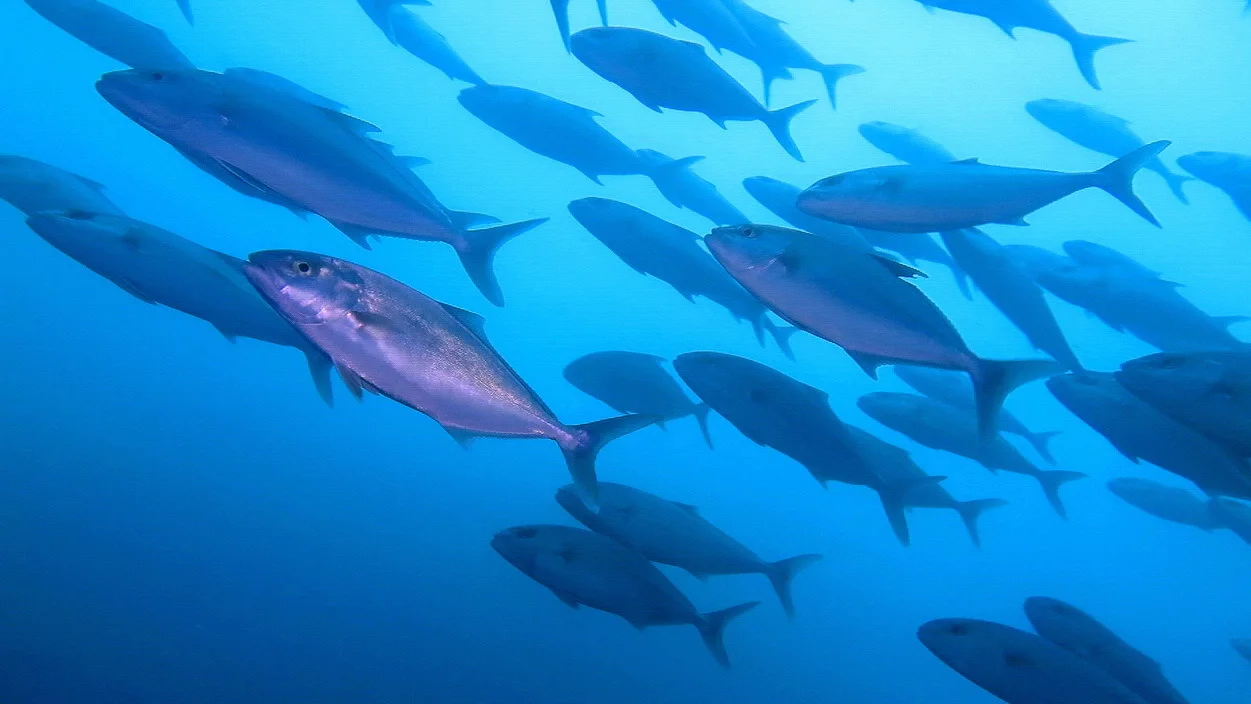
Japanese amberjack
Seriola quinqueradiata · Carangidae
Japanese amberjack is a member of the family Carangidae and ranges across the Northwest Pacific, from Japan and the eastern Korean Peninsula to the Hawaiian Islands. It lives shallower than 100 m in subtropical water. Fish reach 150 cm TL and 40 kg, feeding on zooplankton and algae. The usual approach is jigging, trolling or live bait.
- Family
- Carangidae
- Max length
- 150 cm TL
- Max weight
- 40 kg
- Depth
- ≤ 100 m
- IUCN
- LC
- Climate
- Subtropical
- Diet
- zooplankton, algae
Japanese amberjack (Seriola quinqueradiata) is a fish of the family Carangidae. FishBase gives its range as: Northwest Pacific: Japan and the eastern Korean Peninsula to the Hawaiian Islands. It is recorded shallower than 100 m, in subtropical water. The recorded maxima are 150 cm TL, 40 kg. Diet includes zooplankton and algae. IUCN status: Least Concern (LC). Chinese name: .
Techniques
- Jigging —
- Trolling —
- Live bait —
Seasonality
Other JP-24 regulations
Same jurisdictionBefore you keep a fish
- Read the recorded value. It is copied from the notice; if the number and the notice disagree, the notice wins.
- Check the area. Federal, state and local waters can set different limits for the same fish.
- Check the date. Seasons, quotas and closures change; confirm the current notice before you go.
Common questions
- What is the minimum size for Japanese amberjack in Japan — Mie?
- ≤15 cm total length may not be taken · year-round
- Where does this regulation apply?
- Mie Prefecture sea waters
- When was it checked?
- 2026-11-18, against www.pref.mie.lg.jp.
- Do other jurisdictions set different limits?
- Yes. This register lists 5 jurisdictions for Japanese amberjack; compare them in the table above.