
Common sole in Spain: ≥24 cm — Spain — Cantabrian/Northwest and Gulf of Cadiz grounds.
| Lenguado (Solea vulgaris) | 24 |
Quoted from BOE — Real Decreto 560/1995, anexo I
The annex lists the species as Solea vulgaris, a synonym of Solea solea. Mediterranean grounds are covered by a separate annex.
Regulation guide
Official sourcesHow common sole is managed
Common sole (Solea solea) is a flatfish of the northeast Atlantic and the Mediterranean, taken by trawls, nets and lines. It is also sold as Dover sole.
The European Commission's minimum conservation reference size database gives 24 cm total length for the North Sea, the Bay of Biscay, Portuguese waters, the Azores, the northern and Moroccan areas and ICES sub-areas V, VI and VII. It gives 20 cm for the Mediterranean.
Spain's two records in the current database mirror that split: 24 cm for the Cantabrian, Northwest and Gulf of Cadiz grounds and 20 cm for the Mediterranean. The two figures come from two different annexes of the same national decree.
Source: European Commission: Solea solea, minimum conservation reference size · EUR-Lex: Regulation (EU) 2019/1241 on technical measures
Spain's Atlantic figure is 24 cm
Real Decreto 560/1995, Annex I, is headed for the Cantabrian and Northwest grounds and the Gulf of Cadiz. It lists lenguado (Solea vulgaris) at 24 cm. The annex was replaced by Real Decreto 936/2025 with effect from 2 November 2025, and the consolidated text keeps the 24 cm entry.
The annex covers the Spanish Atlantic coast from the French border at the Bidasoa to the Portuguese border at the Miño, plus the Gulf of Cadiz between Tarifa and the Guadiana.
The decree's Article 3 makes retention, transhipment, landing, transport, storage, sale, display or marketing of an undersized fish unlawful. A sole taken on those grounds therefore has to clear 24 cm before it can be kept.
Source: BOE: Real Decreto 560/1995 (tallas mínimas, consolidated text updated 1 November 2025) · BOE: Real Decreto 347/2011, Article 2 (fishing zones)
Spain's Mediterranean figure is 20 cm
Annex II of the same decree is headed for the Mediterranean caladero. It lists lenguado (Solea vulgaris) at 20 cm. That is the figure recorded in the database as the second Spanish entry.
The 20 cm figure matches the EU Mediterranean minimum for the species. The Spanish annex is not creating a special Mediterranean allowance; it is reproducing the basin baseline that applies in those waters. The Commission database lists the 20 cm value only for the western, central and eastern Mediterranean areas.
The two Spanish records are therefore neither duplicates nor a mistake. They are the same species under two caladero annexes, each with the size that belongs to its basin.
Source: BOE: Real Decreto 560/1995 (tallas mínimas, consolidated text updated 1 November 2025) · European Commission: Solea solea, minimum conservation reference size
Why the two Spanish figures differ
Real Decreto 560/1995 is organised by caladero, not by species. Article 1 applies the annex for each distinct caladero that makes up the national fishing grounds, and each annex is a self-contained table for one ground, transposing the size that applies in that ground's waters.
The Atlantic annex's 24 cm matches the EU's 24 cm Atlantic minimum. The Mediterranean annex's 20 cm matches the EU's 20 cm Mediterranean minimum. The difference is a basin difference, not a disagreement between two Spanish authorities.
Real Decreto 347/2011, which governs recreational fishing in external waters, defines the same four zones in Article 2. The Mediterranean zone lies east of the meridian of Punta Marroquí at 5°35' W, including the Balearic Islands, Alborán, Ceuta and Melilla; the Gulf of Cadiz zone lies west of that meridian to the Guadiana.
That boundary is the practical answer to the two-record puzzle. A sole taken east of Punta Marroquí is measured against 20 cm; a sole taken on the Gulf of Cadiz grounds west of it is measured against 24 cm.
Source: BOE: Real Decreto 560/1995 · BOE: Real Decreto 347/2011 (pesca marítima de recreo en aguas exteriores) · European Commission: Solea solea
Spain's recreational rules
Recreational sea fishing in Spanish external waters is governed by Real Decreto 347/2011. Article 4 requires respect for the minimum sizes in Real Decreto 560/1995, which is how the annex figures reach a recreational sole.
The same decree makes the activity non-commercial and forbids selling or otherwise transacting the catch. The licence, issued by a coastal autonomous community or by Ceuta or Melilla, is required for shore, boat and underwater fishing under Articles 8, 9 and 13.
Neither national instrument sets a daily bag limit for sole. Any bag limit or closed season is a regional matter and has to be checked separately from the size.
Source: BOE: Real Decreto 347/2011 · BOE: Real Decreto 560/1995
Before you keep a sole
Identify the zone before measuring. The Atlantic grounds, including the Gulf of Cadiz west of Punta Marroquí, require 24 cm; the Mediterranean zone east of that meridian requires 20 cm.
Sole is a flatfish, so lay it flat and measure from the snout tip to the end of the tail fin. Return anything short; the Spanish decree prohibits retaining, landing or selling an undersized fish.
In Spain, remember the recreational licence and the ban on selling the catch. Check the autonomous community's bag and season rules as well, because the national instruments cited here set the size but not a daily bag.
Source: BOE: Real Decreto 560/1995 · BOE: Real Decreto 347/2011 · European Commission: Solea solea
Official pages: European Commission: Solea solea · BOE: Real Decreto 560/1995 · BOE: Real Decreto 347/2011 · EUR-Lex: Regulation (EU) 2019/1241
Common sole regulations at a glance
2 jurisdictions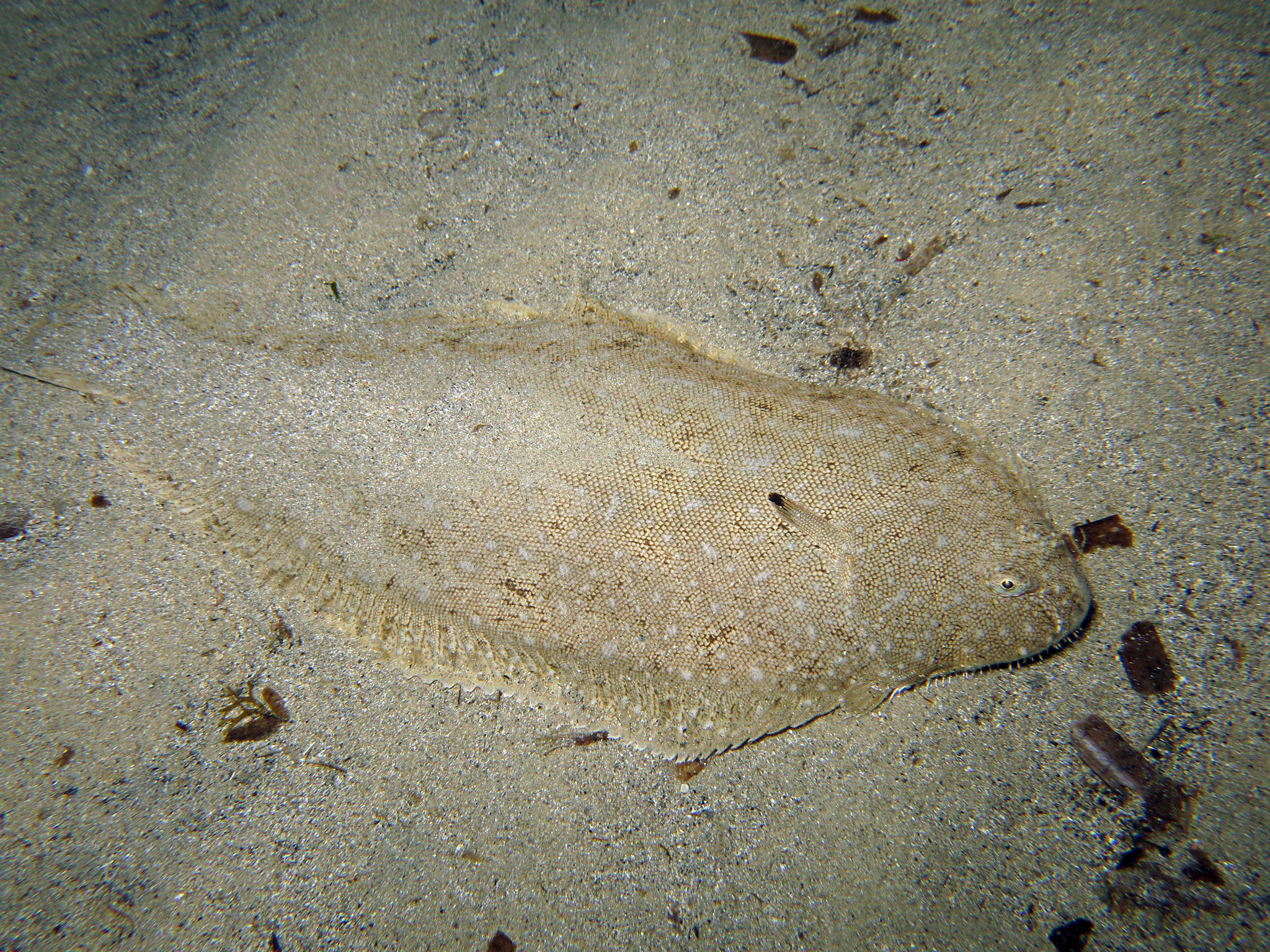
Common sole
Solea solea · Soleidae
Common sole is a flatfish of the northeast Atlantic and Mediterranean, from Trondheim Fjord and the North Sea through the western Baltic, Marmara, Bosporus and the Black Sea. It lives from the surface to 150 m in water of 8 to 24 °C, reaches 70 cm SL and 3 kg, can live 26 years, and feeds on crustaceans and worms. Boat bottom fishing is the usual approach, with the season running December to June.
- Family
- Soleidae
- Max length
- 70 cm SL
- Max weight
- 3 kg
- Max age
- 26 years
- Depth
- 0–150 m
- IUCN
- DD
- Climate
- Subtropical · 8–24 °C
- Diet
- crustaceans, worms
Common sole (Solea solea) is a fish of the family Soleidae. FishBase gives its range as: Eastern Atlantic: southward from Trondheim Fjord (including North Sea and western Baltic) and Mediterranean Sea (including Sea of Marmara, Bosporus and southwestern Black Sea). Elsewhere, southward to Senegal, including Cape Verde. It is recorded from 0 to 150 m, in subtropical water at 8–24 °C. The recorded maxima are 70 cm SL, 3 kg, 26 years. Diet includes crustaceans and worms. IUCN status: Data Deficient (DD). Chinese name: .
Techniques
- Boat bottom fishing —
Seasonality
Other ES regulations
Same jurisdictionBefore you keep a fish
- Read the recorded value. It is copied from the notice; if the number and the notice disagree, the notice wins.
- Check the area. Federal, state and local waters can set different limits for the same fish.
- Check the date. Seasons, quotas and closures change; confirm the current notice before you go.
Common questions
- What is the minimum size for Common sole in Spain?
- ≥24 cm
- Where does this regulation apply?
- Spain — Cantabrian/Northwest and Gulf of Cadiz grounds
- When was it checked?
- 2026-11-18, against BOE — Real Decreto 560/1995, anexo I.
- Do other jurisdictions set different limits?
- Yes. This register lists 2 jurisdictions for Common sole; compare them in the table above.