No recreational fishing allowed
United States — federal (Atlantic) · US-FED-ATL
Federal Atlantic rules close the recreational wolffish fishery.
Wolffish (Ocean Catfish) No recreational fishing allowed.

Three substrate words sit in the habitat row: rocky, sandy and muddy. The diet row contains fishes and echinoderms. Those two lines carry the page's entire case. A fish that crushes urchins and also takes fish, recorded over three bottoms, is not a mid-water hunter. The question is which edge of which bottom to fish, and at what depth.

Three substrate words sit in the habitat row: rocky, sandy and muddy. The diet row contains fishes and echinoderms. Those two lines carry the page's entire case. A fish that crushes urchins and also takes fish, recorded over three bottoms, is not a mid-water hunter. The question is which edge of which bottom to fish, and at what depth.
Rocky, sandy and muddy are not three ways of saying the same thing. They are three different jobs for a rig: snag risk, lead choice, and how long a bait stays fishable. The record lists all three without ranking them.
What it does not give is a percentage or a preferred substrate. So the page cannot say the fish is "mostly a rock fish" or "mostly a sand fish". It can say that all three appear in the habitat field, and that the mouth is built for hard prey.
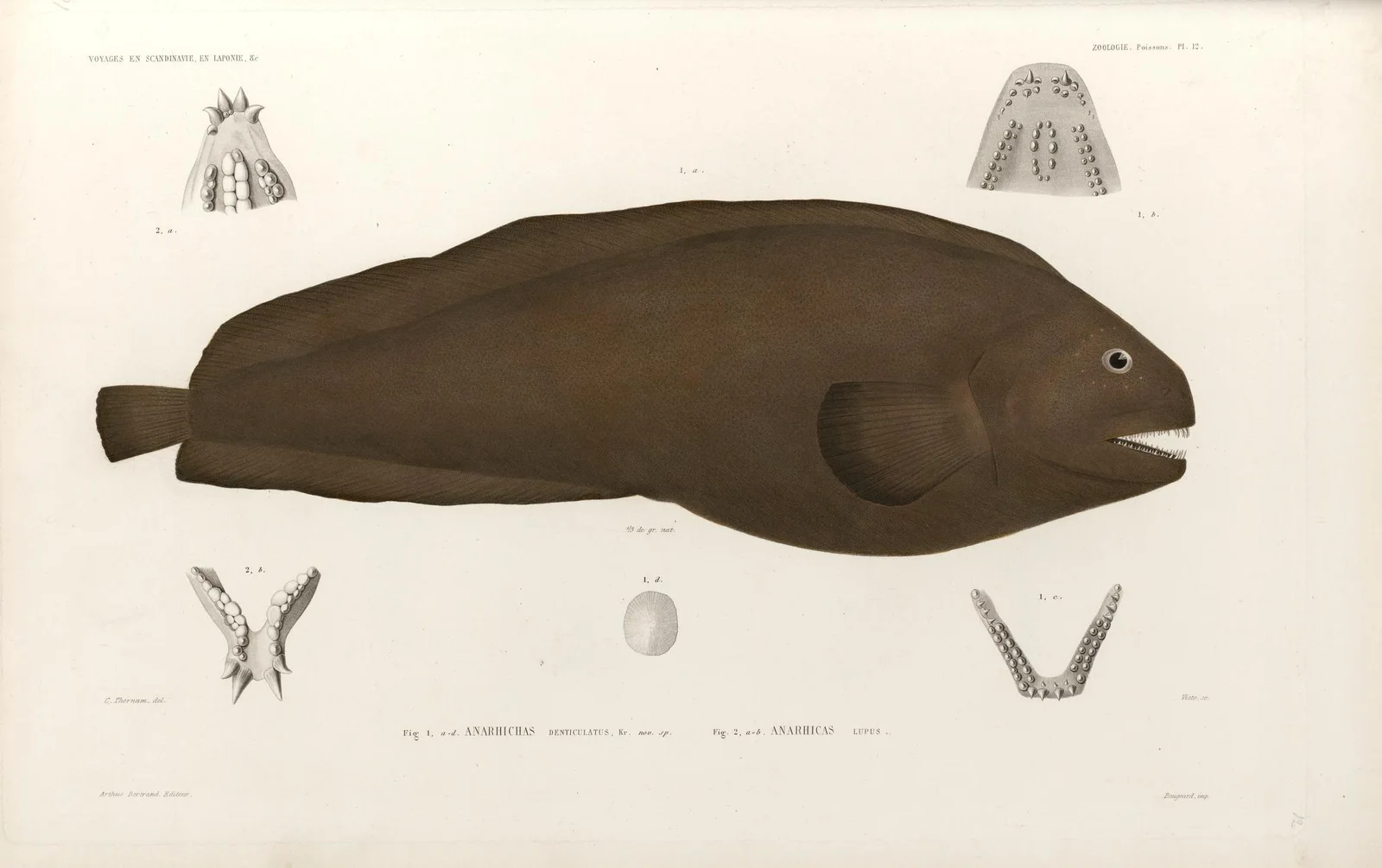
The diet includes fishes and echinoderms. Sea urchins are the echinoderm most anglers will recognise from this list, and they are not a swimming target. A wolffish that feeds on them is working the bottom, not chasing a bait through the water column.
Nothing in the source indicates what ground the urchins were taken from. Urchins can be found on rock and in sand or mud, so this does not settle the bottom question. It does settle the method: bait on the bottom, and a hook that can survive contact with hard structure.
The depth range is 1–600 m, usually 18–110 m. The working band is the useful part: 18 m is a short run, 110 m is a normal bottom drop, and the 600 m maximum is a tail that most trips will never test. The band itself is 92 m wide; the tail is more than five times the upper edge.
The 1 m figure is also in the row. The figure shows how shallow a northern cold-water fish may lie; it does not put a 150 cm specimen in the surf. The usual range is the planning number.
Spawning runs from October to January in the northeast Atlantic, with a Norwegian record that adds January and February. The entries overlap without matching exactly; no reconciliation is attempted.
The season is winter, when northern waters are at their least forgiving. That does not make the spawning months unfishable; it means the calendar and the weather are working against each other, and the record offers no alternative season.
The two entries together cover October, November, December, January and February — five months, not the four the northeast Atlantic line names. Maturity is 55 cm, range 50–60 cm, so the spawning stock sits in the lower half of a 150 cm range. The 23.6 kg maximum is published without a paired length.
Human use is stacked: commercial fishing, experimental farming, a gamefish tick and a public-aquarium entry. That is four different claims on one species, and they do not all point the same way.
For an angler, the gamefish tick is the relevant one. For the stock, the commercial label matters more. The record does not give landings or stock size, so the page cannot say how those pressures balance.
FishBase records the IUCN category as NE, meaning not evaluated. Wikipedia adds a national layer: in United States waters the species is described as depleted, probably through overfishing and bycatch, and it is listed as a NOAA Species of Concern.
Those two statements are not a contradiction. NE is a global Red List status; Species of Concern is a national management label. The page should carry both, and should not turn either into a claim about the whole Atlantic.
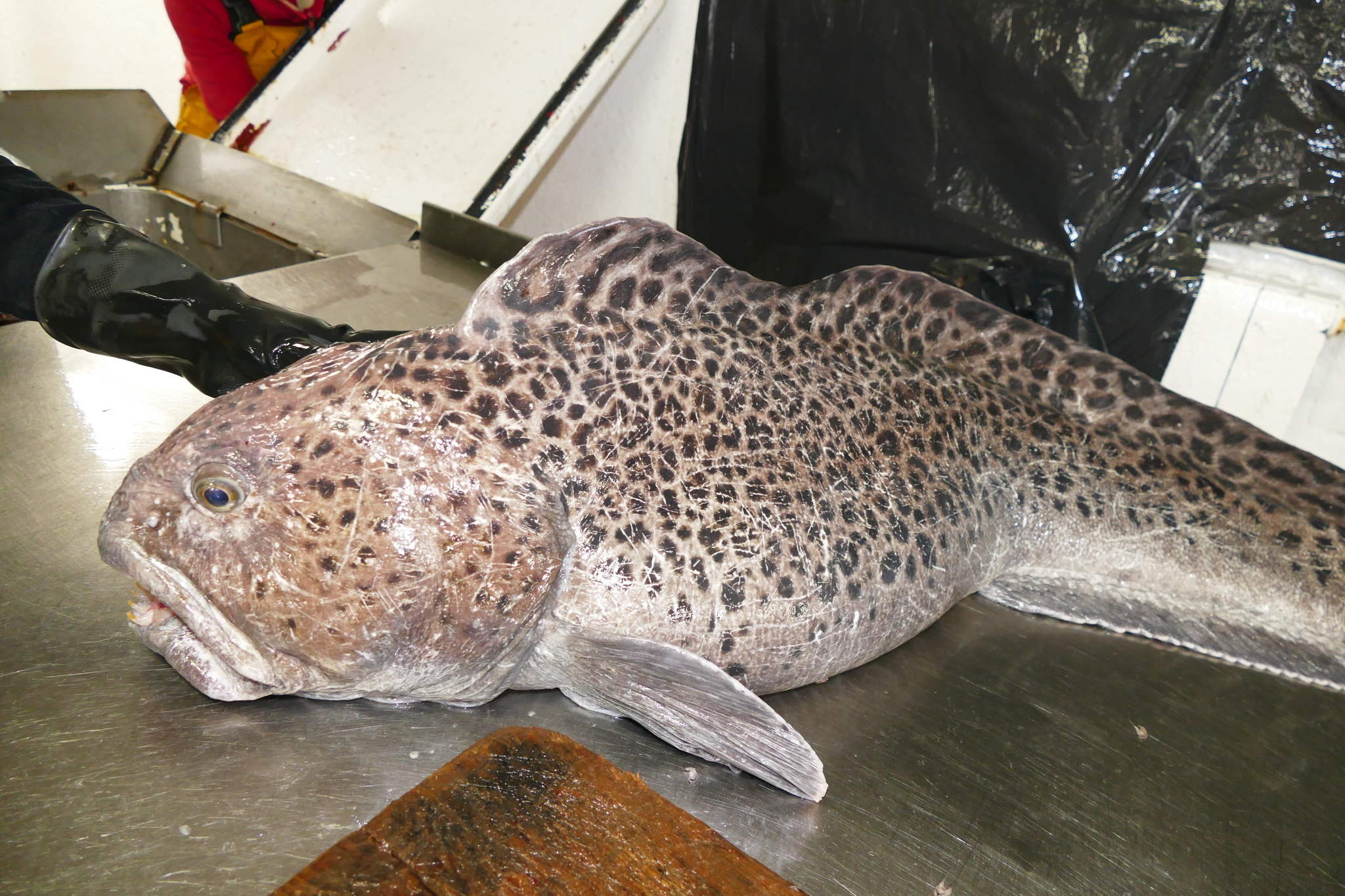
Wikipedia collects the names: seawolf, ocean catfish, devil fish and wolf eel. None of them is a taxonomic statement, and "wolf eel" is especially misleading, since the fish is not an eel.
FishBase gives , with as an alternative. iNaturalist carries 343 observations. English names describe the face, Chinese ones describe the family, and only the binomial crosses a language border intact.
Work the 18–110 m band first. Pick a mark where hard and soft ground meet, because that is the only place where all three habitat words can be true within a short drift. Use a leader that can take abrasion, and expect to lose gear on the rocky part.
GBIF's 24 distribution assertions straddle both coasts: Belgium (3), Denmark, France (2), Norway, Sweden (4), with sites running from Maine and the Saint Lawrence through Davis and Hudson straits to the Baltic. The Baltic entry is worth flagging, because FishBase marks the Baltic occurrence as questionable. The two sources disagree, and this page states both rather than choosing.
A wolffish bite is not a subtle take. The jaw that crushes urchins will crush a bait, and the hookset should be firm rather than early. The bottom tells you where to drop; the mouth tells you not to strike at the first tap.
These are the published regulations for this fish. Read the number first. The notice below it is the actual regulation.
Federal Atlantic rules close the recreational wolffish fishery.
Wolffish (Ocean Catfish) No recreational fishing allowed.
Massachusetts closes the recreational wolffish fishery.
Wolffish N/A Closed Prohibited
Maine prohibits anglers from possessing Atlantic wolffish.
ATLANTIC WOLFFISH (Anarhichas lupus) Anglers are prohibited from possessing Atlantic wolffish.
Rhode Island prohibits harvest, landing or possession of Atlantic wolffish.
3.32 Atlantic Wolffish A.The harvest, landing, or possession of atlantic wolffish in the marine waters of Rhode Island is prohibited.
Every record above names its source and the date it was retrieved. See the regulation register for the full list, or how to read these regulations.
Check these pages before you rely on a size, range or protection status.
These fish live in the same place.
Technique, gear and safety guides that fit Atlantic wolffish.