
Peruvian grunt
The Peruvian grunt is a 58 cm reef fish that normally sits in 3–12 m of water, and those two figures do more work than any other number on this page. The same record gives a maximum weight of 896 g, no common length, no maturity length and no age.
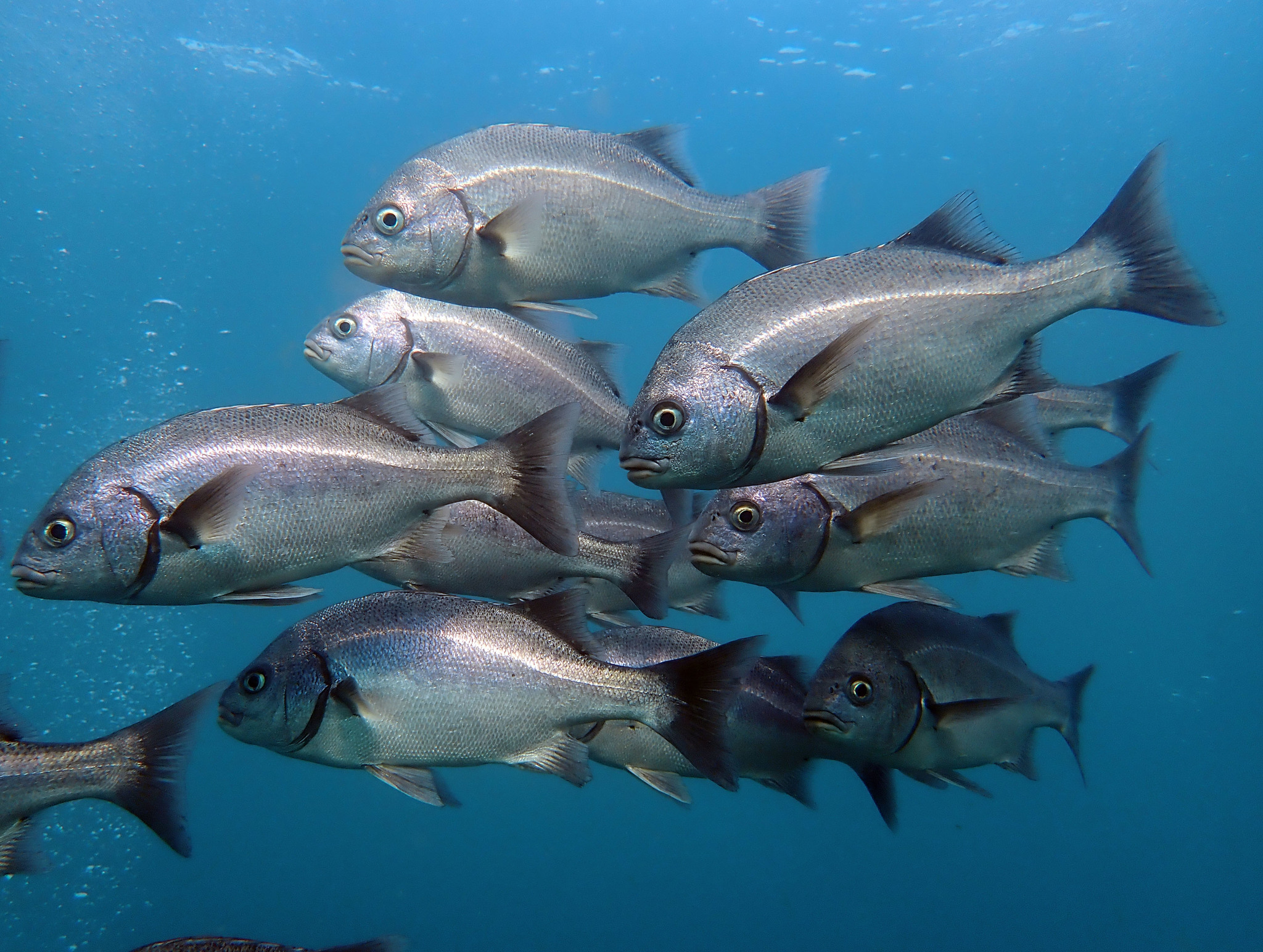
The Peruvian grunt is a 58 cm reef fish that normally sits in 3–12 m of water, and those two figures do more work than any other number on this page. The same record gives a maximum weight of 896 g, no common length, no maturity length and no age.
58 cm is the ceiling, and the page stops there
The maximum published length is 58.0 cm TL and the heaviest recorded specimen weighed 896.00 g. No common length is published, so there is no "usual" fish to design a trip around. No maturity length is published either, which means the page cannot supply a biological release line.
A 58 cm fish that weighs 896 g is light for its length. The weight belongs to the maximum, not to a typical capture, and it should be read as an upper anchor rather than an average. Because the record has no age field, there is also no growth story: the page cannot say how old a 58 cm fish is.
The usual band is 3 to 12 metres, not 30
The depth range is 3–30 m, with a usual band of 3–12 m. The full envelope is two and a half times deeper than the band the species normally occupies, and the band is what a shore or small-boat plan can reach.
The environment line calls the species reef-associated and places it in tropical water from 1°N to 24°S and 92°W to 70°W. That box runs from the Gulf of Guayaquil through Peru to northern Chile, which is the same coastline named in the distribution statement. No temperature figure is published.
Manta to Antofagasta, with Ecuador holding most records
FishBase gives the range as Manta, Ecuador south to Antofagasta, Chile, with Chile, Ecuador, the Galápagos Islands and Peru listed as native. GBIF holds 1,247 occurrence records: 689 from Ecuador, 432 from Chile, 107 from Peru, 2 from Costa Rica, and one each from Colombia, Mexico and an unassigned country.
Ecuador is the largest single block, which fits a range that begins at the equator. The Chilean count is not small, and it covers the southern end of the range. The single records from Colombia, Mexico and Costa Rica sit outside the stated range and should be treated as edge data, not as a second distribution.
iNaturalist carries 150 observations. That is a small set against a 1,247-record GBIF footprint, and it measures photographic attention rather than abundance.
Schools hang above the rock, not on it
The biology note is precise: the species forms schools in open water above rocky, boulder-strewn reefs and slopes, on hard substrate with good water movement. The habitat keywords are "rocky" and "open-water". The fish is therefore associated with reef, but it is not described as living inside the reef.
The diet is benthic invertebrates and floating organic matter, and the diet keyword is detritus. That is a fish feeding at the boundary between the bottom and the water above it. A bait held just off the structure sits inside the described feeding zone; a bait pinned into the bottom sits at its edge.
Two mainstream methods, and one secondary
Shore casting and boat bottom fishing are both listed as mainstream, with rock fishing as secondary. The terrain is rocky shore, sandy bottom and coastal. With a usual band of 3–12 m, a steep shoreline puts the described depth within casting range, which is why shore casting is not a fallback here.
The methods list does not assign either mainstream method to a country or a season. The choice between shore and boat is therefore about access, not about a documented difference in the fish's behaviour.
There is no spawning table to plan around
The page publishes no spawning months and no temperature preference for this species. A seasonal plan therefore has to come from local water conditions and from the depth band, not from a spawning calendar.
The conservation entry is Least Concern, assessed on 25 May 2007. Neither CITES nor CMS has evaluated the species, and it is listed as harmless to humans.
896 grams is the whole handling problem
The human-uses line records no commercial fishery, no aquaculture and no gamefish status; it carries only generic publication and FishSource links. That is an absence of a recorded use, not evidence that anglers release the fish.
At a maximum of 896 g, the species does not require heavy tackle or a long release procedure. A wet hand, a short fight and a quick return are enough for a released fish; ice and a cool box are enough for a kept one.
Two agencies, two sets of rules
In Chile, SUBPESCA writes the recreational fishing rules and SERNAPESCA enforces them; a recreational licence is required, and daily limits, minimum sizes and closed seasons apply. Marine protected areas include the AMCP-MU sites and the Parque and Reserva Marina designations, such as Juan Fernández and Nazca-Desventuradas, where the rules differ from the open coast.
In Peru, PRODUCE writes the fisheries rules and IMARPE supplies the scientific assessment; management relies on minimum sizes, closed seasons and area measures, and artisanal fishing pressure is heavy. SERNANP manages reserves such as the Reserva Nacional de Paracas and the Reserva Nacional San Fernando, where recreational fishing is not allowed.
No bag number, size limit or closed-season date is repeated here, because those values change. Check the current SUBPESCA or PRODUCE rule before the trip, and check the specific protected area as well as the national rule.
Where these facts come from
Check these pages before you rely on a size, range or protection status.
- FishBase — Anisotremus scapularis — FishBase · T2
- GBIF — Anisotremus scapularis occurrence records — GBIF · T2
- IUCN Red List — Anisotremus scapularis — IUCN · T1
- Photo record — iNaturalist — iNaturalist · T3
Fish in the same water
These fish live in the same place.
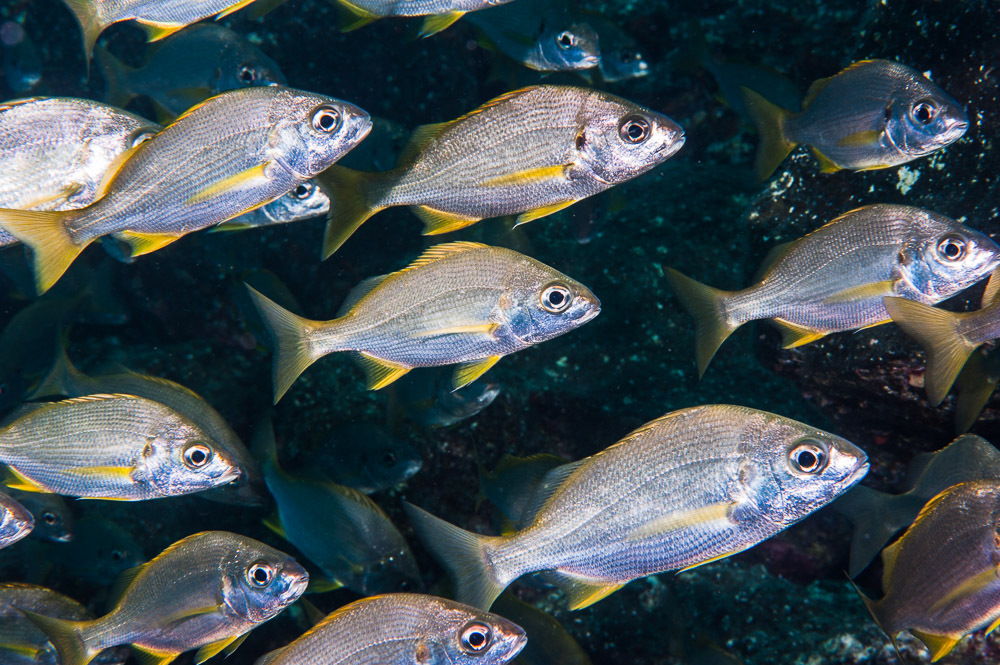
Bastard grunt
- Family
- Haemulidae
- Depth
- 10–100 m
- Season
- Jun, Jul, Aug
Cabinza grunt
- Family
- Haemulidae
- Depth
- 0–50 m
- Season
- Jan, Oct, Nov, Dec
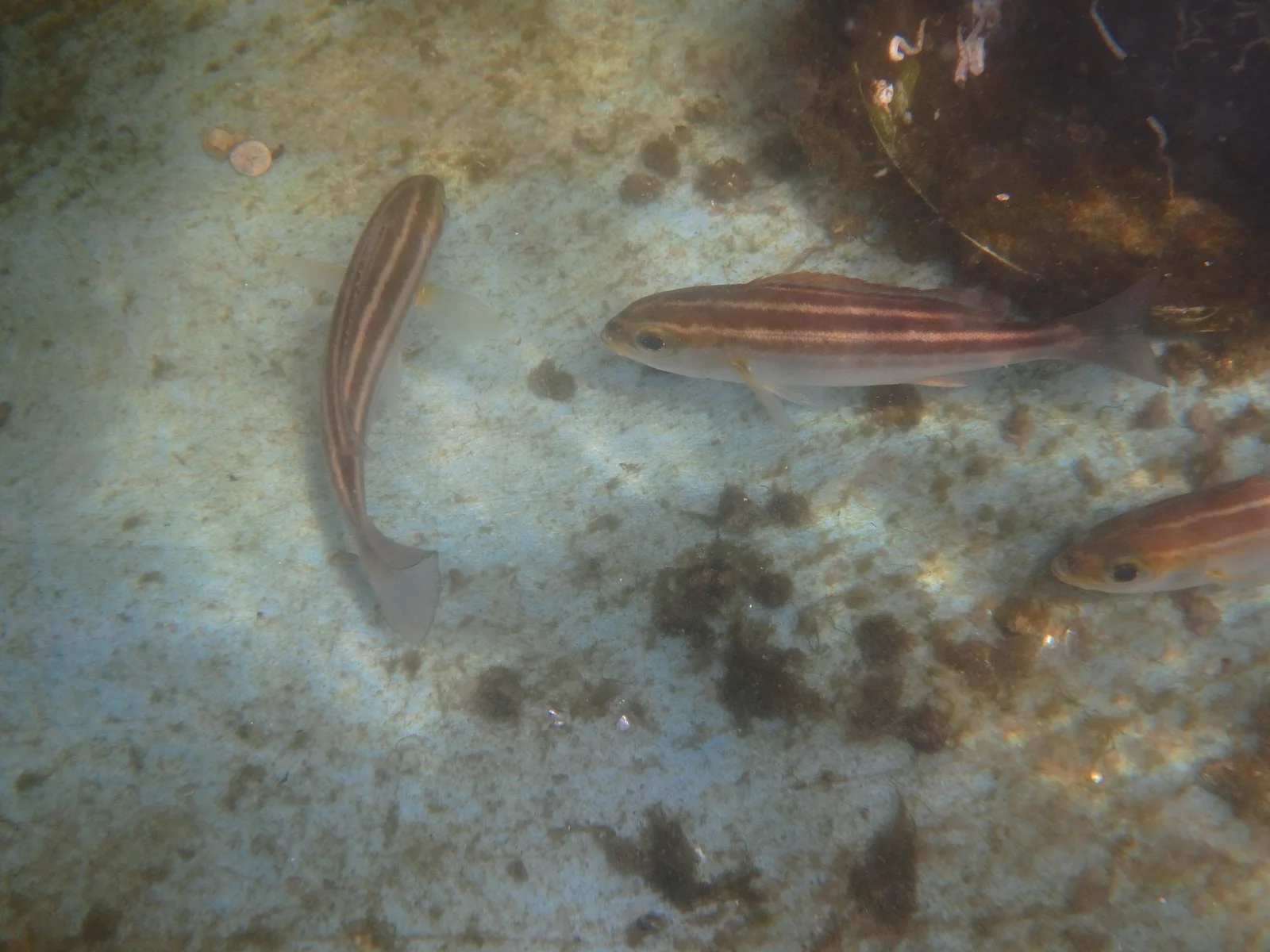
Chicken grunt
- Family
- Haemulidae
- Season
- Jun, Jul, Aug
Guides for this water
Technique, gear and safety guides that fit Peruvian grunt.