
Cabinza grunt
The cabinza grunt is a 60 cm fish that lives from the surface down to 50 m, is the only known member of its genus, and carries a published weight that does not survive a sanity check. Those three facts set the shape of this page.
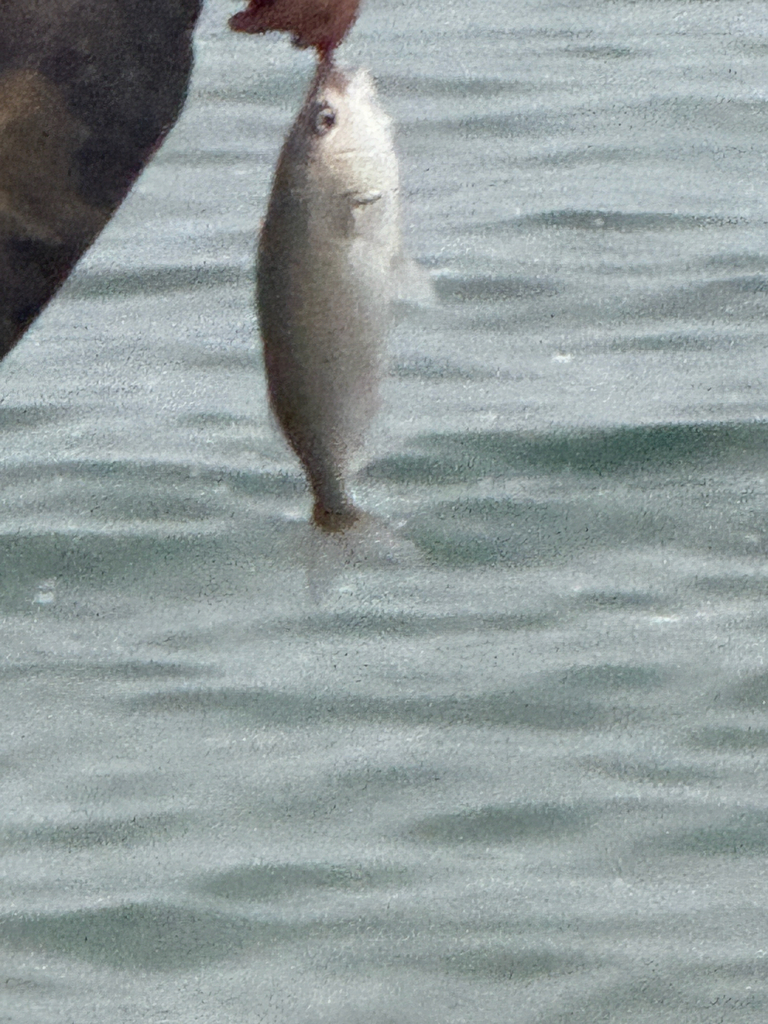
The cabinza grunt is a 60 cm fish that lives from the surface down to 50 m, is the only known member of its genus, and carries a published weight that does not survive a sanity check. Those three facts set the shape of this page.
60 cm, mature from 17 cm, and a weight that does not fit
The maximum published length is 60.0 cm TL. The maturity field reads "17 – ? cm", so the lower bound is 17 cm and the upper bound is not published. That 17 cm is the only maturity number on the page, and it cannot serve as an upper release line.
The page also carries a published weight of 183 g against a 60 cm maximum length, while Wikipedia gives 1.83 kg for the same species. The two figures differ by a factor of ten, and 183 g is not credible for a 60 cm grunt. The weight has been left out of the size field pending source review, and this account quotes neither figure as a usable maximum.
From the surface to 50 metres
The depth range is 0–50 m, and the species is described as benthopelagic. A zero-metre lower bound means the fish can be at the surface; 50 m is the deepest record. Wikipedia gives the same 0–50 m range over rocky or sandy substrate.
The climate is subtropical, with coordinates from 5°S to 55°S and 81°W to 70°W. That is a long latitudinal run, from Peru past Chile to the southern tip. No temperature figure is published.
Chile holds 4,599 of 4,690 records
FishBase gives the range as Peru to Chile, with an additional record from Nicaragua. The native list includes Chile, the Juan Fernández Islands, Nicaragua and Peru. GBIF holds 4,690 records: 4,599 from Chile, 72 from Peru and 9 from Ecuador. iNaturalist carries 55 observations.
The Chilean share is 4,599 of the 4,690 records, yet this page's editorial region is Peru. That is not a contradiction: the region field marks the page's scope, while the distribution text marks the fish's range.
Rock and sand, with a diet of small crustaceans
The biology note places the species over rocky and sandy bottoms. It feeds on small crustaceans such as isopods and amphipods, and also on polychaetes and algae. The page adds that the maximum size is assumed to be the same as for the family, which means the 60 cm figure is an assumption as well as a record.
That last sentence is worth keeping visible. The diet is specific enough to guide bait size: small crustaceans and worms point to small presentations, not to large fish baits.
Two mainstream methods, no boat-only rule
Shore casting and boat bottom fishing are both listed as mainstream. The terrain is rocky shore, sandy bottom and coastal. With a 0 m lower depth bound, a shore angler can reach the top of the range without a boat.
The methods list gives no region split, so the choice between shore and boat is a matter of access. The 0–50 m span is wide enough that both methods can be fishing the same species at very different depths. A zero-metre lower bound also means the fish can be intercepted at the surface, though the page describes no surface fishery.
October to January in Peru
The spawning table marks January, October, November and December, all from Peru, at Chao and Samanco near Chimbote. That is the only spawning record on the page; there is no Chilean row. The four months span the southern spring and early summer.
No temperature preference is published, so the spawning months are the only seasonal signal available. The conservation entry is Least Concern, assessed on 4 February 2009, with no CITES or CMS evaluation and no threat to humans.
Least Concern, and the only species in its genus
Wikipedia states that Isacia conceptionis is the only valid member of its genus and that it is important to local commercial fisheries. FishBase records a commercial fishery. No aquaculture, gamefish or aquarium use is listed.
Least Concern is a broad assessment rather than a local stock statement. The page publishes no local biomass or landings series, so the rating cannot be converted into a bag expectation. The 55 iNaturalist observations are far fewer than the 4,690 GBIF records, which is normal for a commercial fish that is rarely photographed.
One set of rules on the page, another across the border
This page's region is Peru. In Peru, PRODUCE writes the fisheries rules and IMARPE provides the scientific assessment; management relies on minimum sizes, closed seasons (veda) and area measures, and artisanal pressure is heavy. SERNANP manages the Reserva Nacional de Paracas and the Reserva Nacional San Fernando, where recreational fishing is not allowed.
FishBase also places the species in Chile, but this page's source list contains no Chilean agency entry, so Chilean rules are not restated here. An angler fishing the Chilean part of the range should check SUBPESCA for the current recreational licence, bag and size rules, and SERNAPESCA for enforcement.
No bag number, size limit or closed-season date is given here. Check the current rule before the trip, and check the protected-area map as well.
Where these facts come from
Check these pages before you rely on a size, range or protection status.
- FishBase — Isacia conceptionis — FishBase · T2
- GBIF — Isacia conceptionis occurrence records — GBIF · T2
- IUCN Red List — Isacia conceptionis — IUCN · T1
- Photo record — iNaturalist — iNaturalist · T3
Fish in the same water
These fish live in the same place.
Guides for this water
Technique, gear and safety guides that fit Cabinza grunt.