
Bastard grunt
Bastard grunt is a haemulid of the eastern Atlantic and Mediterranean, ranging from Angola up to Spain. It is a shallow subtropical fish, caught between 10 and 100 m. Adults reach 53.5 cm TL and live about seven years. The season is short, June to August, so the fish is a summer target rather than a year-round one.
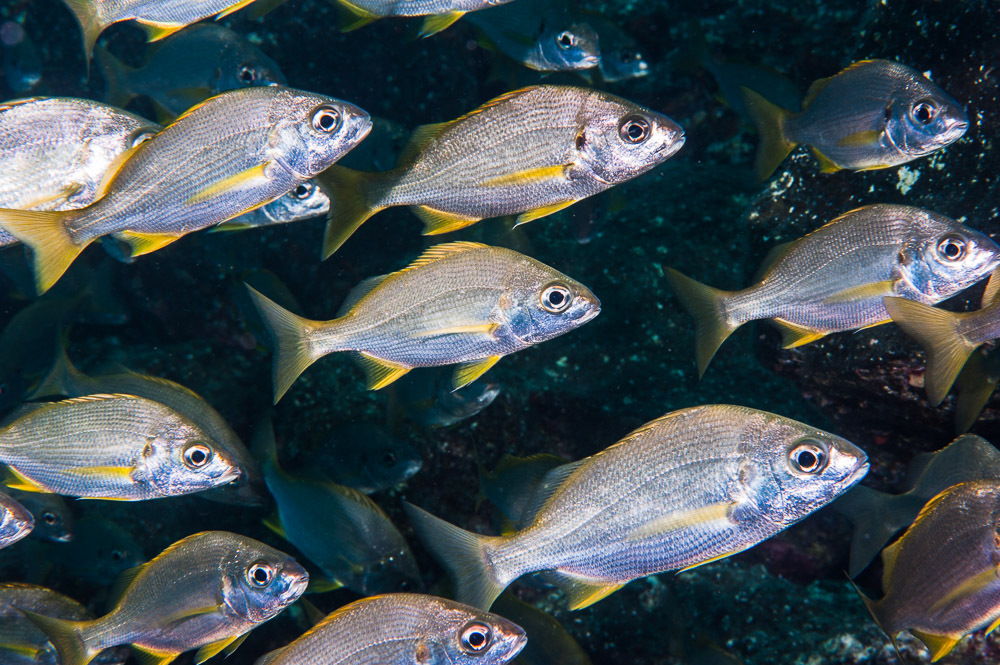
Bastard grunt (Pomadasys incisus) is a fish of the family Haemulidae. FishBase gives its range as: Eastern Atlantic: Angola to Spain ; in the Mediterranean. FishBase gives an oblong, compressed body with 15–16 dorsal soft rays, III + 11–13 anal rays and 27 vertebrae. It is recorded from 10 to 100 m, in subtropical water. The recorded maxima are 53.5 cm TL, 7 years. IUCN status: Least Concern (LC). Chinese name: .
Identification
FishBase gives an oblong, compressed body with 15–16 dorsal soft rays, III + 11–13 anal rays and 27 vertebrae. The colour description is a dark brown back, silvery-white belly, sometimes large dark spots on the back and flanks but never small spots or bands, and a black spot at the upper angle of the opercle. A 2020 Biodiversity Data Journal paper adds the identification detail that matters at the water's edge: greyish dorsum, silvery-white sides and belly, dark spot on the upper operculum, and orange or yellow fins. It separates the species from Pomadasys stridens, which has three yellowish or light-brown longitudinal bars, and from P. auritus, which has an elongated operculum reaching past the pectoral-fin base and small spots that P. incisus lacks. The record gives a 53.5 cm TL maximum, a 25 cm TL common length and a maximum age of seven years. iNaturalist holds 511 observations under taxon 110029.
Habitat and distribution
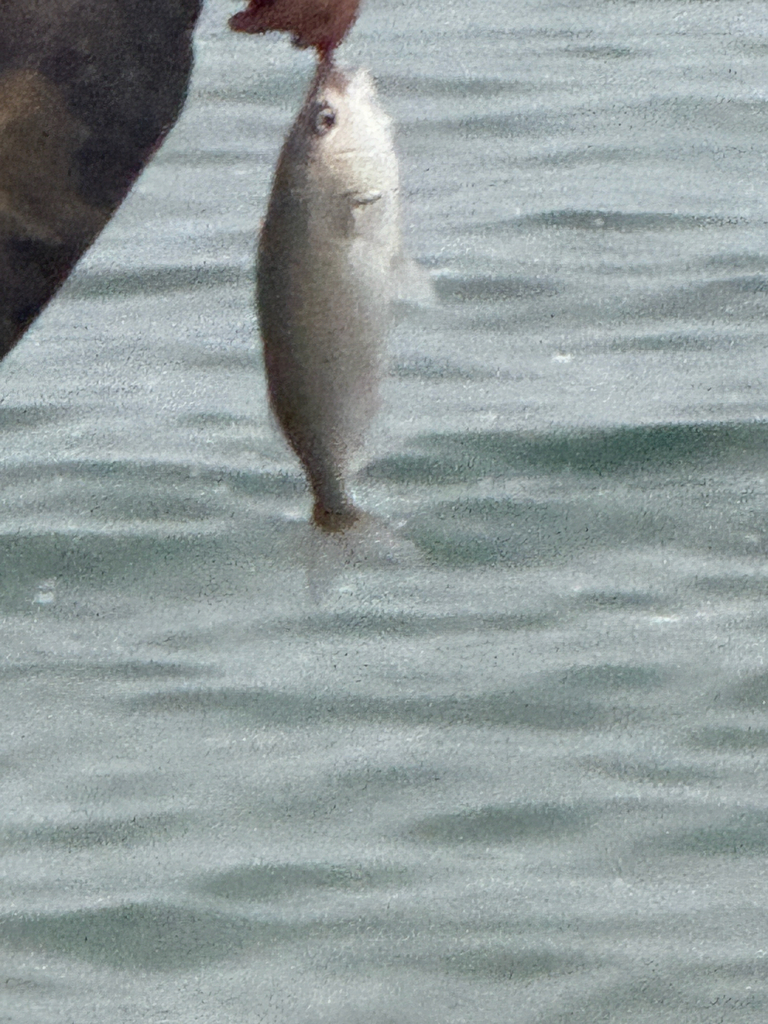
The distribution is itself a source disagreement. FishBase says Eastern Atlantic from Angola to Spain, plus the Mediterranean. The 2020 paper says the species is widely distributed in the Eastern Atlantic from Galicia to South Africa and has been recorded in the Mediterranean since 1840. Both can be true at different scales, but the southern limit differs and neither source reconciles it. The FishBase environment fields read marine and brackish, demersal, 10–100 m; the habitat keywords are sand and estuary. The paper describes hard and sandy bottoms, seagrass meadows, estuaries and lagoons, and records two Cyprus fish at 2 m over sand, caught at night from shore on rag worms. That 2 m capture is the shallow end of a gradient that the database summarizes as 10–100 m.
Season and fishing approach
The only spawning record is June–August in the eastern Atlantic; the paper does not add a Mediterranean spawning season. The useful question is not "the estuary" as a fixed place but which part of the salinity gradient the fish is using. At the shallow end, the paper's night shore captures at 2 m over sand show that fish can be reached from land without a boat. At the deeper end, FishBase's 10–100 m band describes the shelf population. A bottom bait on a running sinker, cast into the sandy edge at night, is the closest match to the recorded capture; if no fish appear, move along the shore rather than immediately offshore. The paper's diet note — a wide range of invertebrates — supports worm and crustacean baits. No source gives tide or current preferences, so those remain local observations.
Edibility and regulations
Only minor commercial landings are listed; aquaculture and aquarium uses are absent. The two Cyprus specimens were eaten by the fishermen who caught them, which is direct evidence of edibility but not a market grade. The IUCN Red List category, from a 4 February 2009 assessment, is Least Concern; the record's international fields name no CITES or CMS listing. The country table has 19 entries, and the Mediterranean records in the paper fall outside it, so neither the Atlantic states nor the Mediterranean countries can be covered by one quoted minimum size, take limit or closure.
Where these facts come from
Check these pages before you rely on a size, range or protection status.
- FishBase — Pomadasys incisus — FishBase · T2
- GBIF — Pomadasys incisus occurrence records — GBIF · T2
- IUCN Red List — Pomadasys incisus — IUCN · T1
- Photo record — iNaturalist — iNaturalist · T3
Fish in the same water
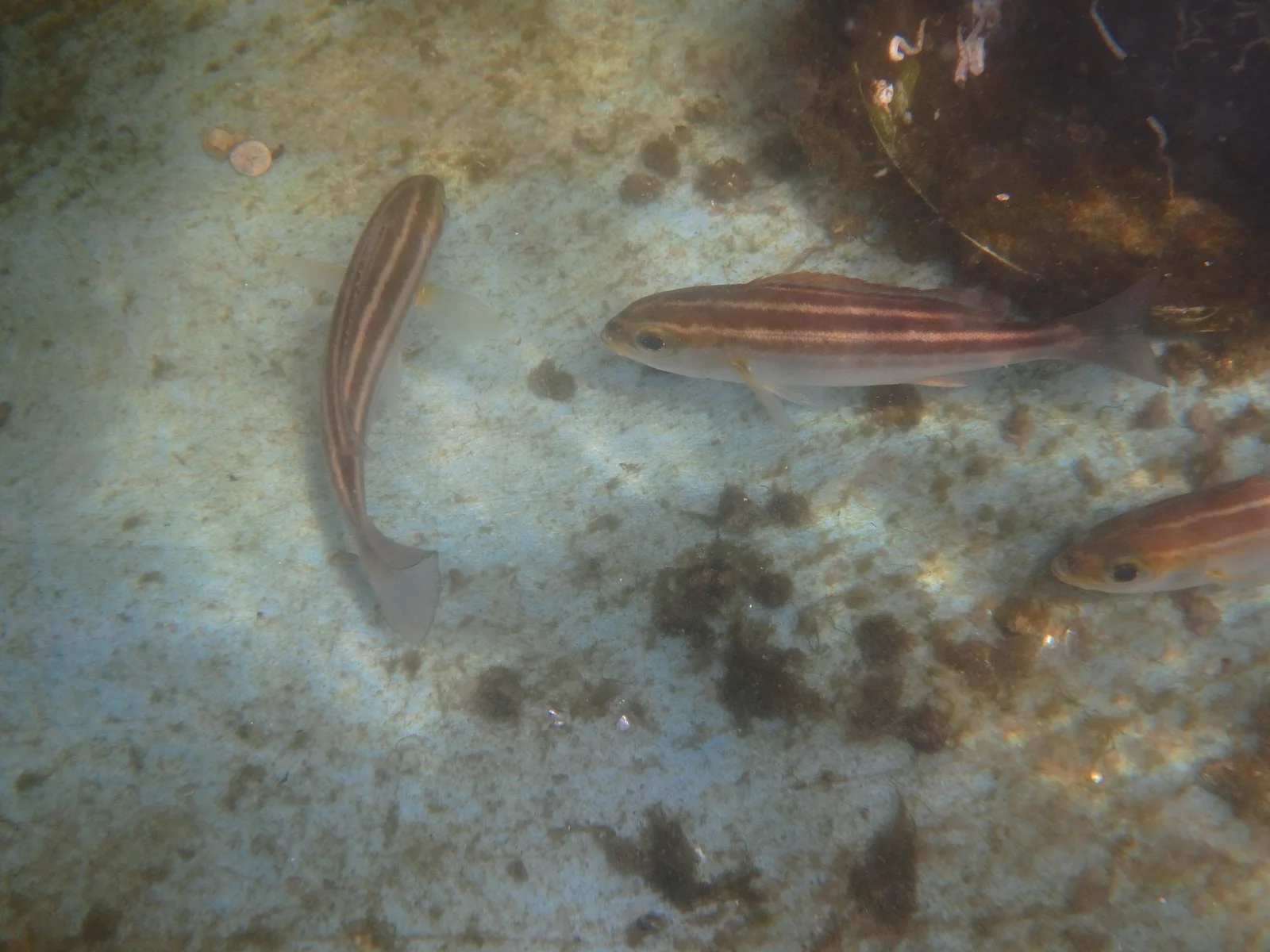
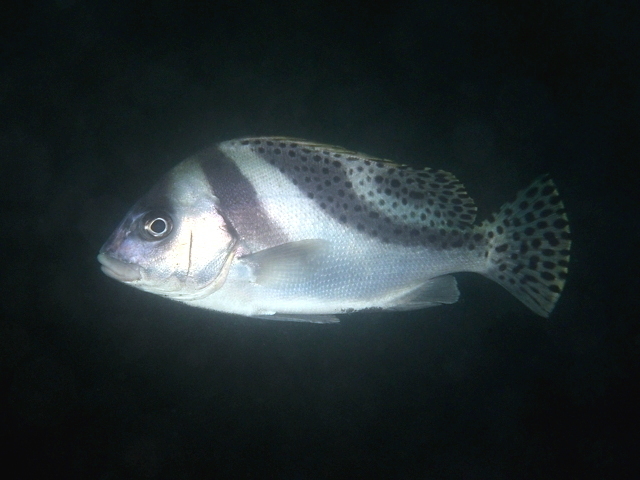
These fish live in the same place.
Guides for this water
Technique, gear and safety guides that fit Bastard grunt.