
Black scabbardfish
Black scabbardfish is a long, eel-like deep-water species of the North Atlantic, recorded on both sides and at underwater rises from the Denmark Strait to Cape Verde. It lives between 200 and 2,300 m, reaches 151 cm, and feeds on crustaceans, fish and molluscs. Its season runs throughout the year.

Black scabbardfish (Aphanopus carbo) is a fish of the family Trichiuridae. FishBase gives its range as: North Atlantic: on both sides and at underwater rises from Denmark Strait to Cape Verde. It is recorded from 200 to 2300 m, in deep water. The recorded maximum is 151 cm TL. Diet includes crustaceans, fishes and molluscs. IUCN status: Least Concern (LC). Chinese name: .
Two rulers in one size block
The size block prints a common length of 70.0 cm SL and a maximum of 151 cm TL. Standard length and total length are not the same tape: SL stops at the end of the caudal peduncle, TL runs to the tip of the caudal fin. A page that puts the two figures in one block invites a comparison that cannot be made without the caudal fin length, and the record does not give it. The two numbers also come from different papers — the 151 cm figure carries reference 108708, the 70 cm figure carries reference 3698. Read as a pair, 70.0 and 151.0 describe two measurements, not a small fish and a large one.
The weight field that prints zero
The maximum published weight is printed as 0.00 g, and the missing-field list contains size.max_weight_kg. Both statements say the same thing: no weight was captured, and the table left a zero in the cell. A reader who takes the zero as data would conclude that a 151 cm fish weighs nothing, which is the opposite of what the record means. Everything in this section has to be built from length, because the weight column carries no information at all.
Maturity at 111.6 against a 117.5 ceiling
Maturity is 111.6 cm with a range of "? - 117.5 cm". The lower bound is missing and the upper bound is 117.5, which is 5.9 cm above the mean figure. Set against the 151 cm maximum, the maturity length sits 39.4 cm below the top of the record. No maximum age is published. Without an age, the 111.6 cm figure cannot be converted into years, and the 15-year lifespan that exists for other cutlassfishes cannot be borrowed for this one.
Seven hundred to thirteen hundred metres
The depth range is 200 to 2300 m, with a usual band of 700 to 1300 m, which is 600 m tall inside a 2,100 m range. The species is bathypelagic and oceanodromous, and the habitat keywords are deep and open-water. The diet keywords are crustaceans, fishes and molluscs, given without proportion or prey size. The climate class is Deep-water; the box is 71°N to 23°S and 82°W to 17°E. No part of that band is reachable from a beach; this is a boat fishery with a deep drop. Neither the record nor any of the six sources attaches an FAO statistical area to the species, so a landing cannot be matched to a reporting zone from this page.
Landings counted in Ireland
GBIF counts 3,328 occurrences: Ireland 2,395, Great Britain 437, Spain 163, Portugal 74, Canada 27 and the United States 26. The facet carries six rows, so the tail of the list is hidden, and the pattern tracks recorder coverage around the north-east Atlantic rather than abundance. The distribution endpoint returns 18 declarations: two ITIS ocean rows for the eastern and western Atlantic; the IUCN line is a global PRESENT; eleven WoRMS rows covering the Gulf of Maine, the Azores EEZ twice, the North Pacific, the North East Pacific, the Pacific Northeast, the coastal waters of south-east Alaska and British Columbia, British Columbia, the Canadian Pacific EEZ, European Marine Waters and the North West Atlantic; a Chilean NATIVE entry; a Mexican NATIVE entry; a Norwegian row with no source; and a NATIVE row covers the Azores Archipelago.
Ten spawning months and a two-month gap
The spawning table returns ten months: January to April and July to December. Three records build that union — Madeira (January, February, September to December), the Canary Islands (July to December) and the west of the British Isles (January to April, November and December). May and June are the months no record fills. The union is a ten-month envelope across three separated areas, not a single season, and the two-month gap only exists because no one sampled there.
An eel-shaped fish with 97 to 100 vertebrae
Morphology gives 34 to 41 dorsal spines, 52 to 56 dorsal soft rays, 2 anal spines, 43 to 48 anal soft rays and 97 to 100 vertebrae, with an eel-like, compressed body. The fisheries entry is highly commercial, and the record has no gamefish or aquarium flag. A body that long changes the landing plan more than the weight does: a 151 cm fish has to be lifted horizontally, and the trace has to survive a set of teeth the page never describes. The 97 to 100 vertebrae are a third ruler alongside the two lengths, and they measure the same animal.
What the file contradicts
The Red List files it as Least Concern, with an assessment date of 12 October 2018; neither CITES nor CMS has assessed it. The territory table holds 17 entries, all in the Atlantic and its adjacent seas. Against that, the GBIF declarations put the species in the North Pacific, off British Columbia, off Chile and off Mexico, and FishBase's own range sentence stops at the North Atlantic, from the Denmark Strait to Cape Verde. The two maps cannot both be right, and this page reports both rather than choosing. WoRMS carries one accepted record, AphiaID 127085 (Lowe, 1839), marine only; iNaturalist holds 46 observations under the preferred name Black Scabbardfish.
Where these facts come from
Check these pages before you rely on a size, range or protection status.
- FishBase — Aphanopus carbo — FishBase · T2
- GBIF — Aphanopus carbo occurrence records — GBIF · T2
- IUCN Red List — Aphanopus carbo — IUCN · T1
- Photo record — iNaturalist — iNaturalist · T3
Fish in the same water
These fish live in the same place.
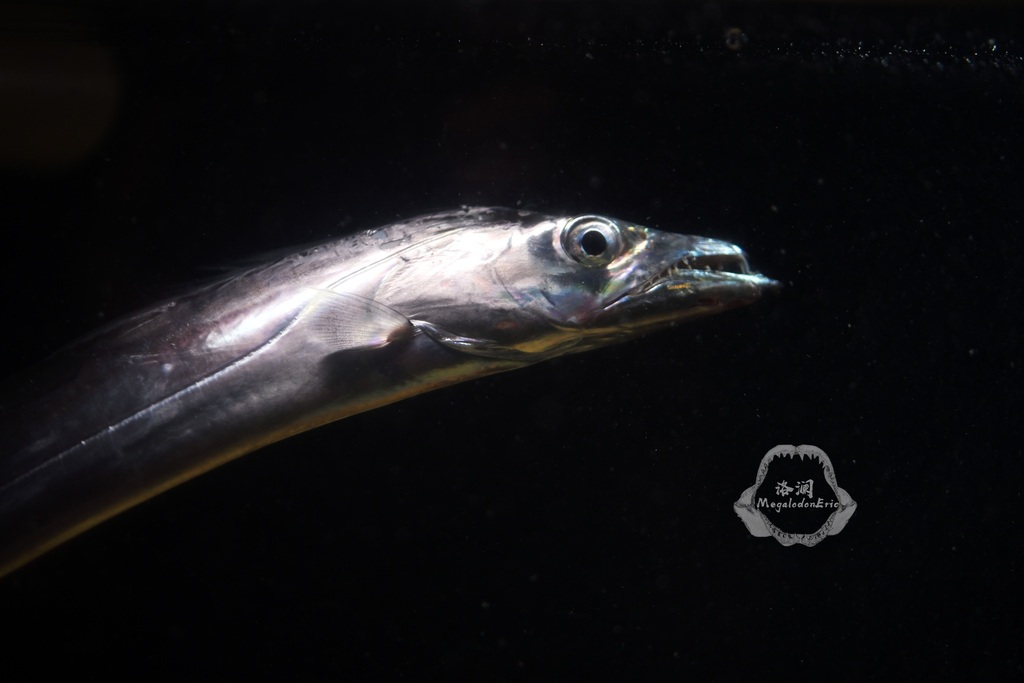
Japanese cutlassfish
- Family
- Trichiuridae
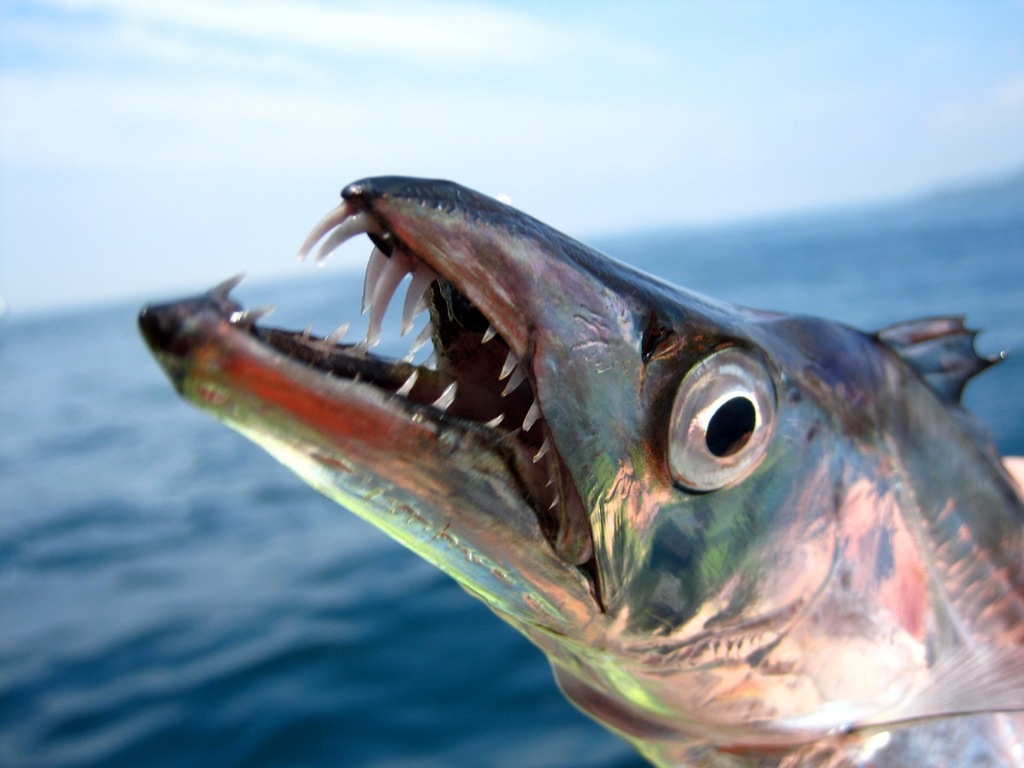
Largehead hairtail
- Family
- Trichiuridae
- Depth
- 0–589 m
- Season
- Jan, Feb, Mar, Apr, May, Jun, Jul, Aug, Sep, Oct, Nov, Dec

Acoupa weakfish
- Family
- Sciaenidae
- Depth
- 1–20 m
- Season
- Jan, Feb, Mar, Apr, May, Jun, Jul, Aug, Sep, Oct, Nov, Dec
Guides for this water
Technique, gear and safety guides that fit Black scabbardfish.