
Japanese cutlassfish
Japanese cutlassfish is the northwest Pacific member of the cutlassfish genus, recorded from Japan, China and Taiwan, which is the whole of its range. It lives in subtropical water and reaches 213 cm TL, and fish are recorded to 15 years old. IUCN lists it as Not Evaluated, and no depth band is recorded for it.
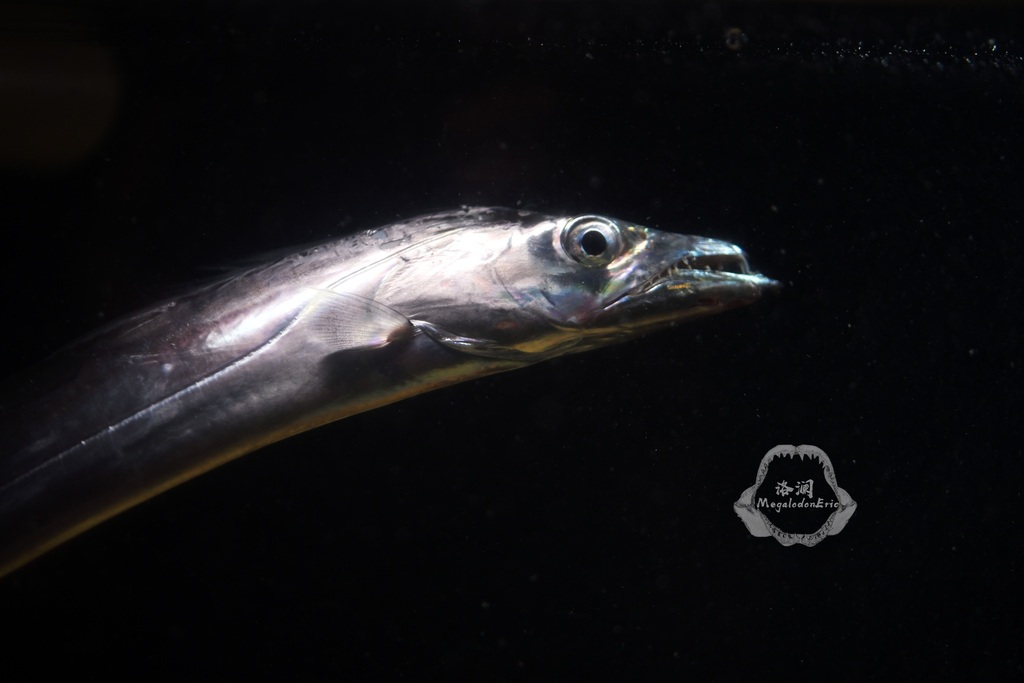
Japanese cutlassfish (Trichiurus japonicus) is a fish of the family Trichiuridae. FishBase gives its range as: Northwestern Pacific: Japan, China and Taiwan. It is recorded in subtropical water. The recorded maxima are 213 cm TL, 15 years. IUCN status: Not Evaluated (NE). Chinese name: .
Three territories, one cosmopolitan accepted name
FishBase draws the range as the Northwestern Pacific and lists three territories: China, Japan and Taiwan region. That is the complete territory list; the page adds no other country, no EEZ and no sea area. GBIF's backbone, however, does not accept the name at all: it files Trichiurus japonicus under Trichiurus lepturus, key 2389407, and the distribution file for that accepted name returns 196 rows covering 137 countries and territories. Those rows are not a northwest Pacific range map. They are the range of a fish GBIF treats as cosmopolitan, and the two ranges answer different questions. Korea and Papua New Guinea do not appear in FishBase's territory table, but under the accepted name they are two of the 137 countries and territories in the file.
Marine on one page, brackish in another
FishBase labels the species Marine and benthopelagic, with no brackish and no freshwater flag. In WoRMS the name is accepted as AphiaID 305414 (Temminck and Schlegel, 1844), with marine and brackish both recorded. There is no estuary in the three-territory range, and none of the 196 distribution rows names a river mouth, so the brackish flag arrives without a place attached to it. A reader who needs to know whether this fish enters river mouths gets two answers, and neither answer comes with coordinates that would settle the question.
The backbone files the name as a synonym
The key cached for the Japanese name, 2389414, is flagged SYNONYM in the backbone, and 2389407 is the accepted key for Trichiurus lepturus. The distribution file belongs to the accepted key: it holds 196 rows, all returned in one response. The synonym key is not an alternative route to the same file. A reader who cites it is citing a synonym record, while the accepted file is the one with content. What moves when the key changes is the label and the range, not the fish in the Japanese catch.
A page with nine empty fields
The missing-field list names nine entries: depth, maximum weight, common length, the Chinese name, the Japanese name, habitat keywords, spawning months, the gamefish flag and morphology. The record also carries no fisheries or aquarium use and no IUCN assessment date. What survives is a maximum length, a maximum age and a habitat class. Every field an angler uses to choose a hook, a depth, a bait or a season is absent, and the six documents cited in this article leave each of those fields blank. The human-uses block is not empty, though: it carries an FAO publication link and a FishSource link, but no fisheries category, no gamefish flag and no aquarium flag. A link to a publication is not a landing statistic.
213 centimetres and fifteen years
Maximum length is 213 cm TL, recorded for males and unsexed specimens, and the oldest fish on the page is 15 years. There is no common length, no weight and no maturity figure. A 213 cm ribbon of a fish with 15 years behind it is the entire biological outline the page provides; the record does not say what it weighs at that length, at what length it first spawns, or how the two sexes differ. Both surviving values are single points, so the length cannot be checked against the age and the age cannot be checked against the length. Fifteen years is the maximum reported age, not an average, and the record gives no growth curve that would place the two values on one line.
196 rows, thirty-one places
The accepted file's 196 rows do not all say the same thing. Thirty-eight carry a status of PRESENT; the other 158 carry no status at all. One hundred and fifty rows come from the Catálogo Taxonômico da Fauna do Brasil and are country and territory records from a Brazilian checklist; 32 come from WoRMS and name places such as the Gulf of Mexico, the Red Sea, the Somali EEZ and European marine waters; seven are freshwater-realm rows from the Freshwater Animal Diversity Assessment; four are ITIS realm statements; one is the IUCN Global entry. One hundred and thirty-seven countries appear in the file, and 151 rows are marked NATIVE. Only 44 rows carry a locality at all; the rest stop at country or realm. A map drawn from this file is a map of a cosmopolitan accepted species, not of the northwest Pacific population, and the density in Japan and Taiwan region that a reader might expect is not in it.
Reading a benthopelagic fish with no depth
Benthopelagic means the fish lives just above the bottom, and the record gives no depth range at all, so the habitat class is the only vertical information available. Subtropical is the only climate entry. Without depth, substrate keywords or prey, a fishing plan starts from the body: a long, compressed fish taken near the bottom in subtropical water. Everything after that — lead weight, trace length, hook size — is unconstrained by the sources, and the page should say so rather than invent a default.
Not Evaluated, and no landing figure
No Red List category has been assigned, and the appendix lists have no entry for it either. The danger column reads Harmless, the only human-use field that carries an entry. The territory table has three entries, the GBIF distribution file holds 196 rows under the accepted name, WoRMS gives one accepted record and iNaturalist holds 18 observations with no preferred common name. The only English name on the FishBase page is Japanese cutlassfish, and the Chinese name field is empty. The page therefore has no vernacular label to search by in either language, which is why this article opens with the scientific name and stays with it.
Where these facts come from
Check these pages before you rely on a size, range or protection status.
- FishBase — Trichiurus japonicus — FishBase · T2
- GBIF — Trichiurus japonicus occurrence records — GBIF · T2
- IUCN Red List — Trichiurus japonicus — IUCN · T1
- Photo record — iNaturalist — iNaturalist · T3
Fish in the same water
These fish live in the same place.

Black scabbardfish
- Family
- Trichiuridae
- Depth
- 200–2300 m
- Season
- Jan, Feb, Mar, Apr, Jul, Aug, Sep, Oct, Nov, Dec
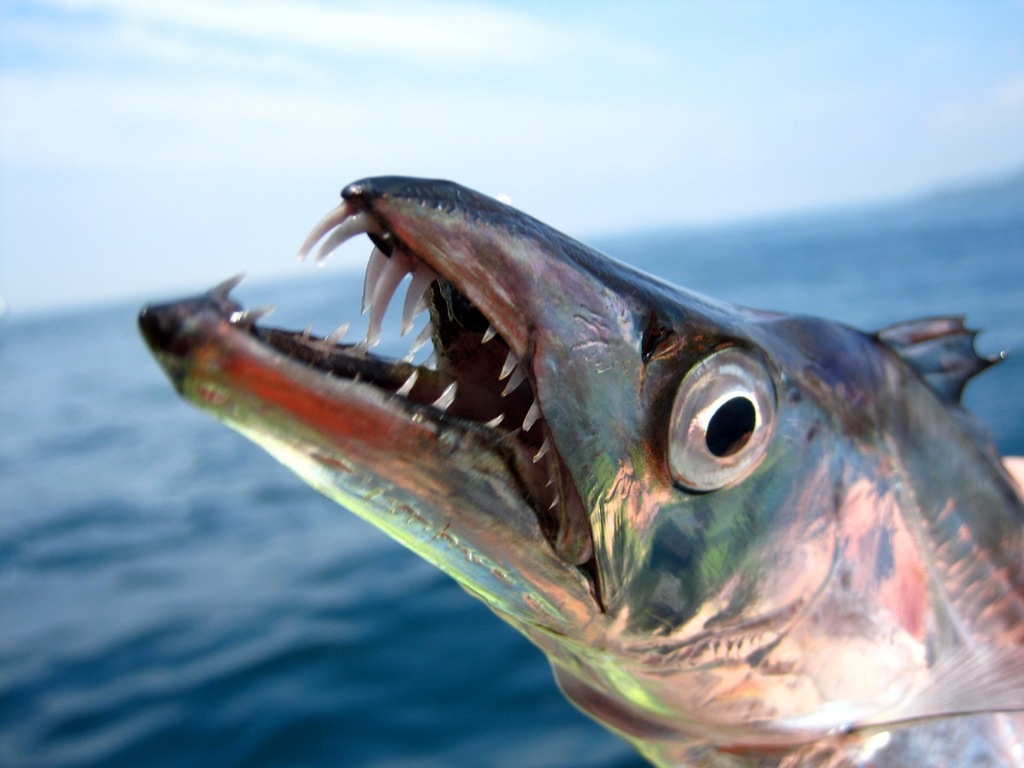
Largehead hairtail
- Family
- Trichiuridae
- Depth
- 0–589 m
- Season
- Jan, Feb, Mar, Apr, May, Jun, Jul, Aug, Sep, Oct, Nov, Dec
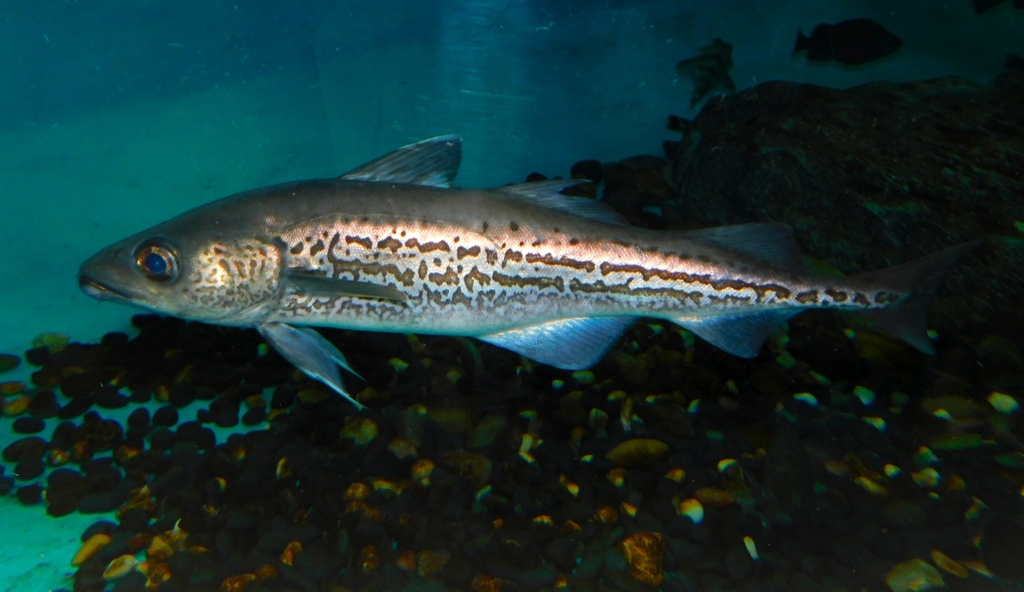
Alaska pollock
- Family
- Gadidae
- Depth
- 0–1280 m
- Season
- Jan, Feb, Mar, Apr, May, Jun, Jul, Aug
Guides for this water
Technique, gear and safety guides that fit Japanese cutlassfish.