
Bullet tuna
Two statements about the bullet tuna sit a few lines apart in the record and describe different animals. The fisheries line says "highly commercial"; the angling line says "gamefish: yes". Both are true, and neither cancels the other, but the fish in a landing table and the fish at the end of a line are not the same object even when they are the same species.
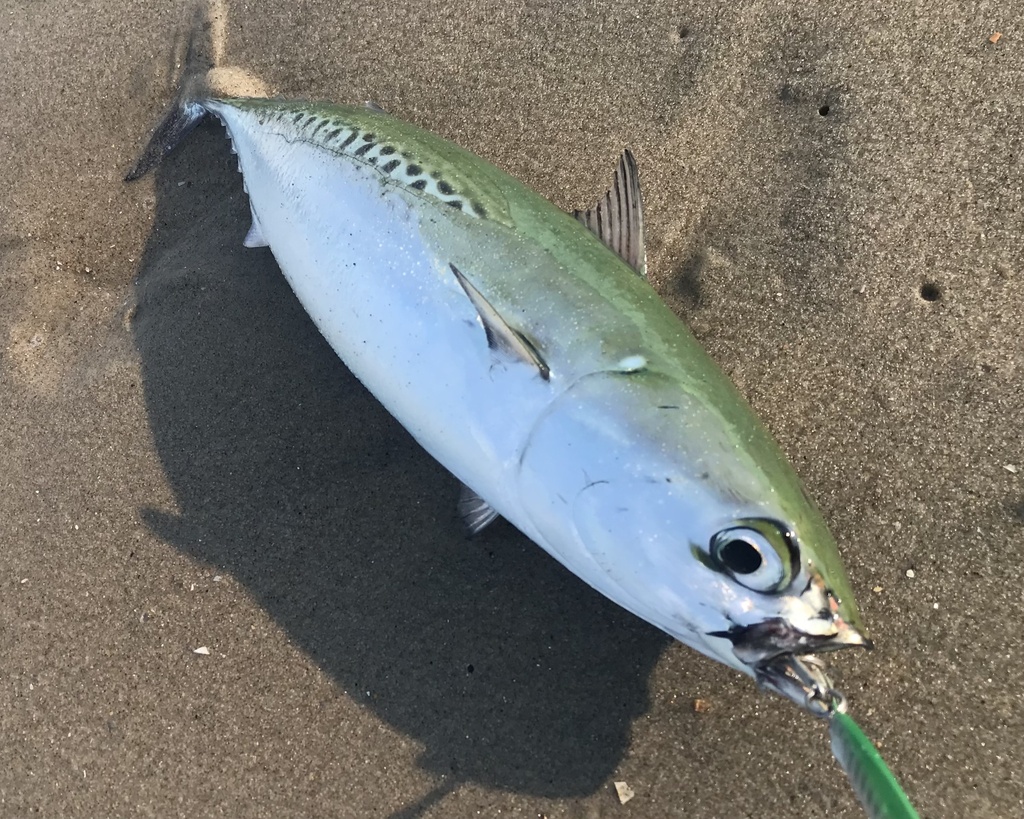
Two statements about the bullet tuna sit a few lines apart in the record and describe different animals. The fisheries line says "highly commercial"; the angling line says "gamefish: yes". Both are true, and neither cancels the other, but the fish in a landing table and the fish at the end of a line are not the same object even when they are the same species. This entry is about that split.
The fish in the landing tables
The bullet tuna is recorded from the Atlantic, the Indian Ocean and the western and central Pacific, including the Mediterranean, and the entry calls it a highly migratory species. Its country list runs to 145 entries, from Albania and Algeria to Venezuela and Yemen. The fisheries label is "highly commercial", the strongest category in the record's human-use line.
That label describes an industry, not an individual fish. It says the species enters markets and processing at scale. It does not say which sizes are landed, which gears take them, or what price they carry. No landing figures and no market data appear in the record, and this entry will not invent either.
The fish at the end of a line
The same line also says "gamefish: yes". That is an angling category, and it sits beside the commercial one without conflict because it answers a different question. The record does not rank the two uses, and it does not say whether the same fish serve both.
The bullet tuna's maximum is 50 cm fork length, with the common length and the weight both blank. That is a small tuna by the standards of the group, and it explains why the two pictures diverge: a fish that is a commercial commodity in bulk is also a light-tackle target, and the tackle does not treat it as a commodity.
Two labels, no contradiction
"Highly commercial" and "gamefish: yes" are often read as a contradiction by anglers who assume a commercial species cannot also be a sport fish. The record does not present them as alternatives. It presents them as two uses of one species, and the rest of the entry has to be read with both in view.
IUCN lists the species as Least Concern, dated 1 March 2022. That category covers the whole range and says nothing about the condition of a single stock or market. It does not resolve the tension between the two uses; it only says the species is not currently assessed as threatened.
50 cm fork length and a 35 cm maturity
The maximum is 50 cm fork length. Maturity is given as a range starting at 35 cm, with no upper bound. Neither the common length nor the maximum weight is recorded.
A 35 cm start means some fish mature well below the 50 cm maximum, and the open upper bound means the record does not say when maturity ends. The missing common length removes the middle figure that would normally separate a typical fish from a maximum. What remains is a small upper limit and a maturity threshold close enough to it that the two should not be treated as far apart.
Five years
Maximum reported age is 5 years. That is the shortest lifespan in this batch, and it changes the reading of the commercial label. A species that turns over in five years can support a high-volume fishery in a way that a 34-year reef fish cannot, but the record supplies no stock assessment and this entry draws no conclusion about sustainability from the age alone.
The absence of a weight figure is also worth noting. A 50 cm fork-length tuna has a weight, but the entry does not give it, and a number taken from a sister species would be a number for that species.
Ten metres to an open end
FishBase gives a minimum depth of 10 m and no maximum. Wikipedia describes the species as living in open surface waters to depths of 50 m. The two statements are not the same shape: one has a floor and no ceiling, the other has a ceiling and calls the water surface its upper zone.
Neither line is a full depth range, so the entry keeps them apart. The FishBase line also gives a temperature ceiling of 28 °C with no lower bound, and a latitude span from 61°N to 51°S. Those describe an envelope, not a fishing depth.
145 countries in FishBase, 133 in GBIF
The country and territory lists disagree by a dozen entries. FishBase names 145 countries and territories; GBIF's distributions layer names 133 countries and territories across 167 records. The difference is a difference in how each database resolves territories, not a difference in where the fish lives.
GBIF also places the species in the Mediterranean and the Black Sea, matching the FishBase distribution line. iNaturalist carries 80 observations, a thin count. For anyone planning a trip, the overlap is the useful part: both records agree that the bullet tuna is a warm-water species with a very wide coastal and oceanic range, and neither narrows it to a single sea.
What to plan for
Plan for a small, fast-turnover tuna that is both a commercial species and a gamefish. Use the 50 cm fork-length maximum as the outer size and the 35 cm maturity start as the lower landmark; do not fill in a common length or a weight that the record does not carry. Use the surface layer as the starting point, consistent with the Wikipedia description and the FishBase minimum depth, and treat the open-ended maximum as an open question rather than a licence to fish deep. The taxonomy note matters too: the eastern Pacific population is recognised as A. rochei eudorax, and some authorities treat it as a separate species, so records from that region may not describe the same fish as records from the Atlantic.
Where these facts come from
Check these pages before you rely on a size, range or protection status.
- FishBase — Auxis rochei — FishBase · T2
- GBIF — Auxis rochei occurrence records — GBIF · T2
- IUCN Red List — Auxis rochei — IUCN · T1
- Photo record — iNaturalist — iNaturalist · T3
Fish in the same water
These fish live in the same place.

Albacore
- Family
- Scombridae
- Depth
- 0–600 m
- Season
- Jan, Feb, Mar, Apr, May, Jun, Jul, Aug, Oct, Nov, Dec
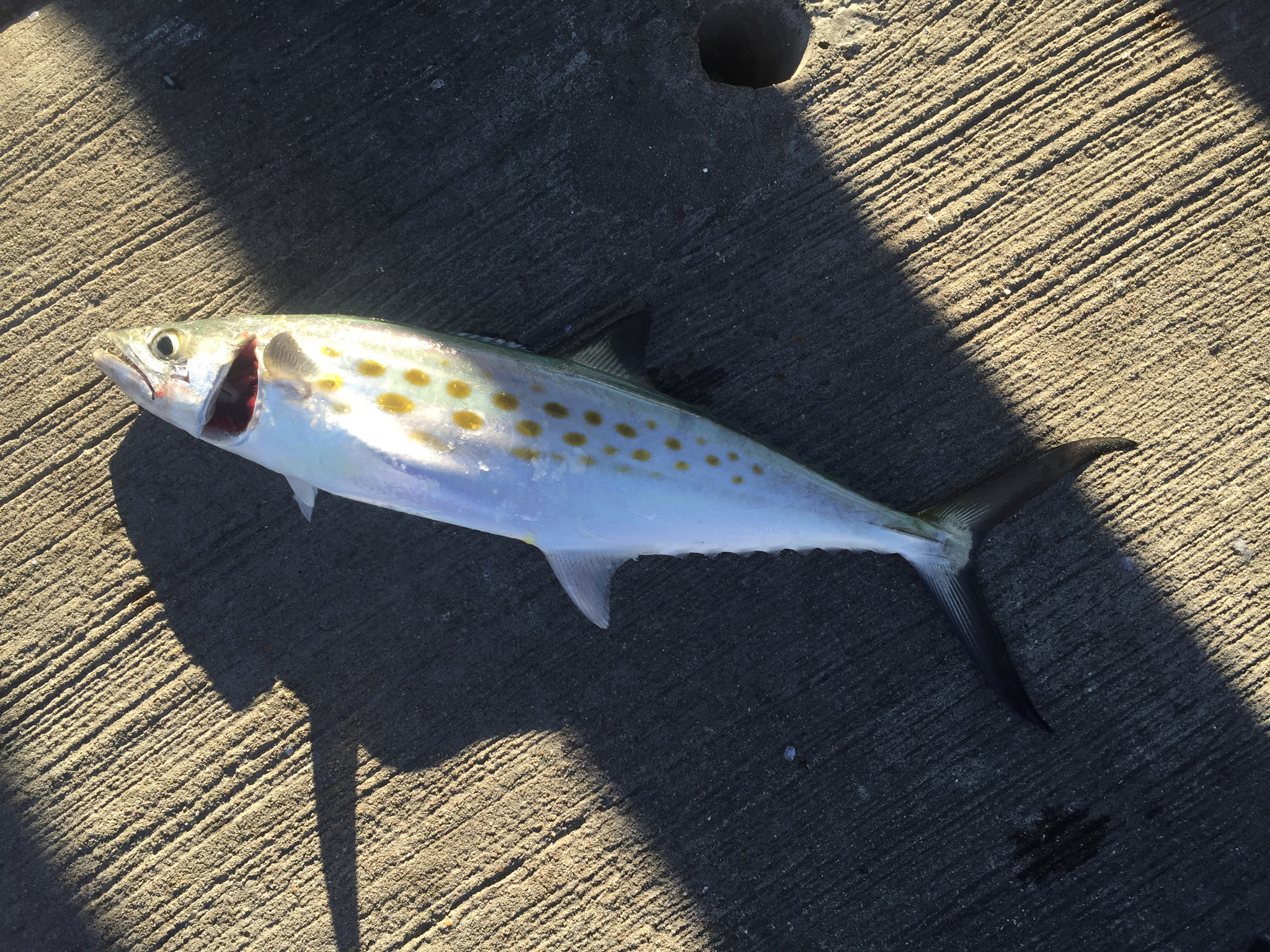
Atlantic Spanish mackerel
- Family
- Scombridae
- Depth
- 10–35 m
- Season
- Jan, Feb, Mar, Apr, May, Jun, Jul, Aug, Sep, Oct, Nov, Dec
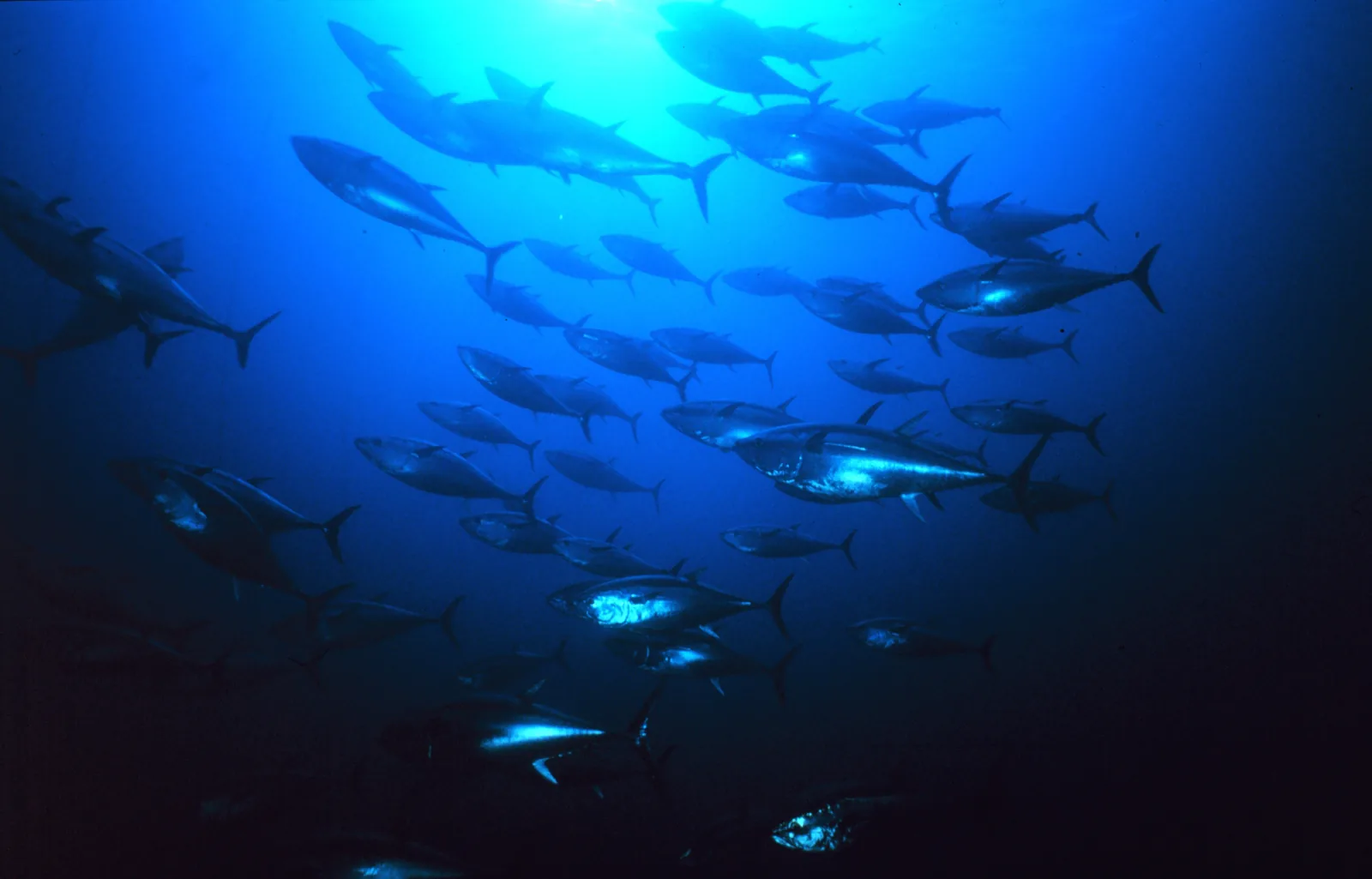
Atlantic bluefin tuna
- Family
- Scombridae
- Depth
- 0–985 m
- Season
- Jun
Guides for this water
Technique, gear and safety guides that fit Bullet tuna.