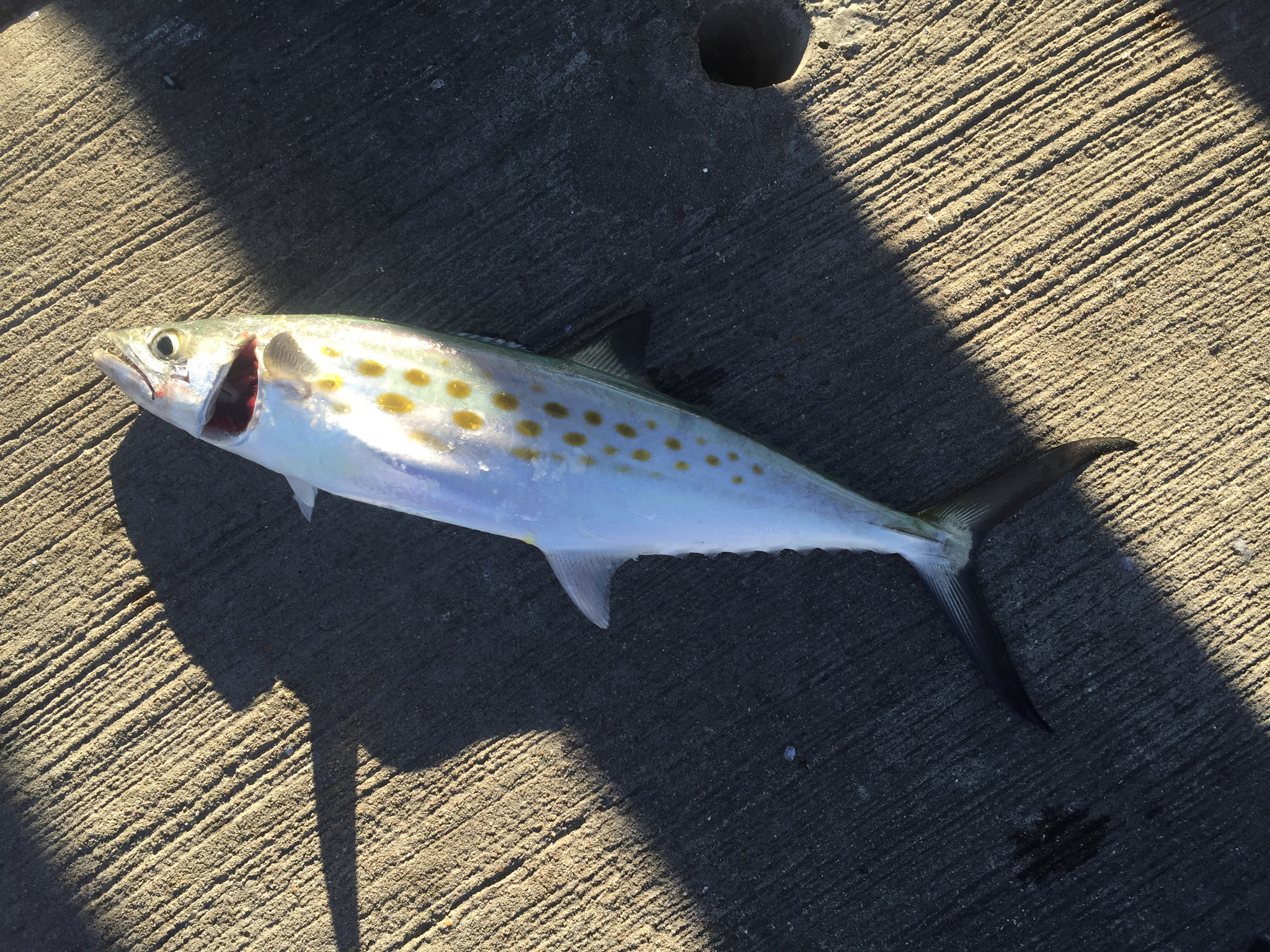
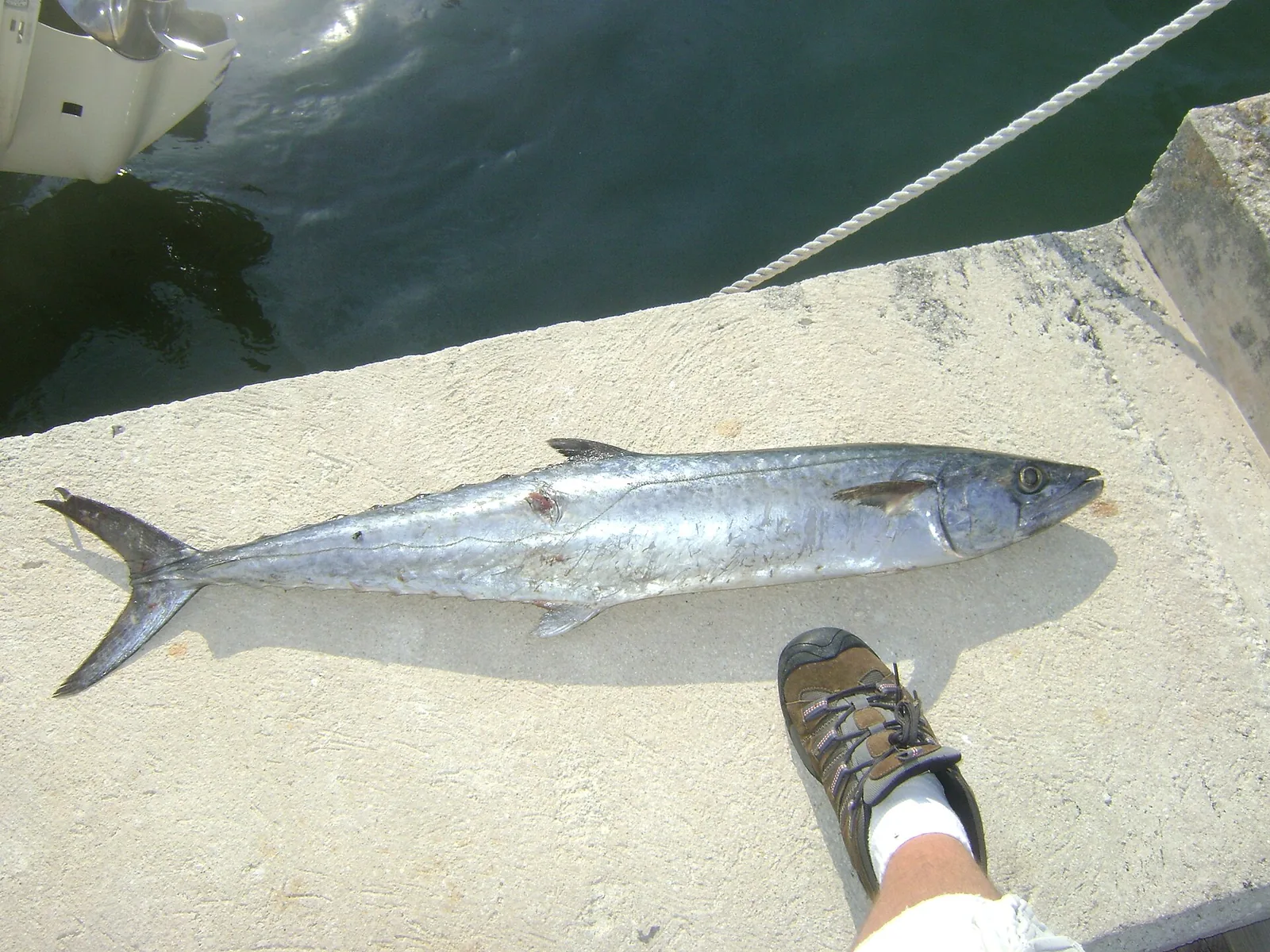
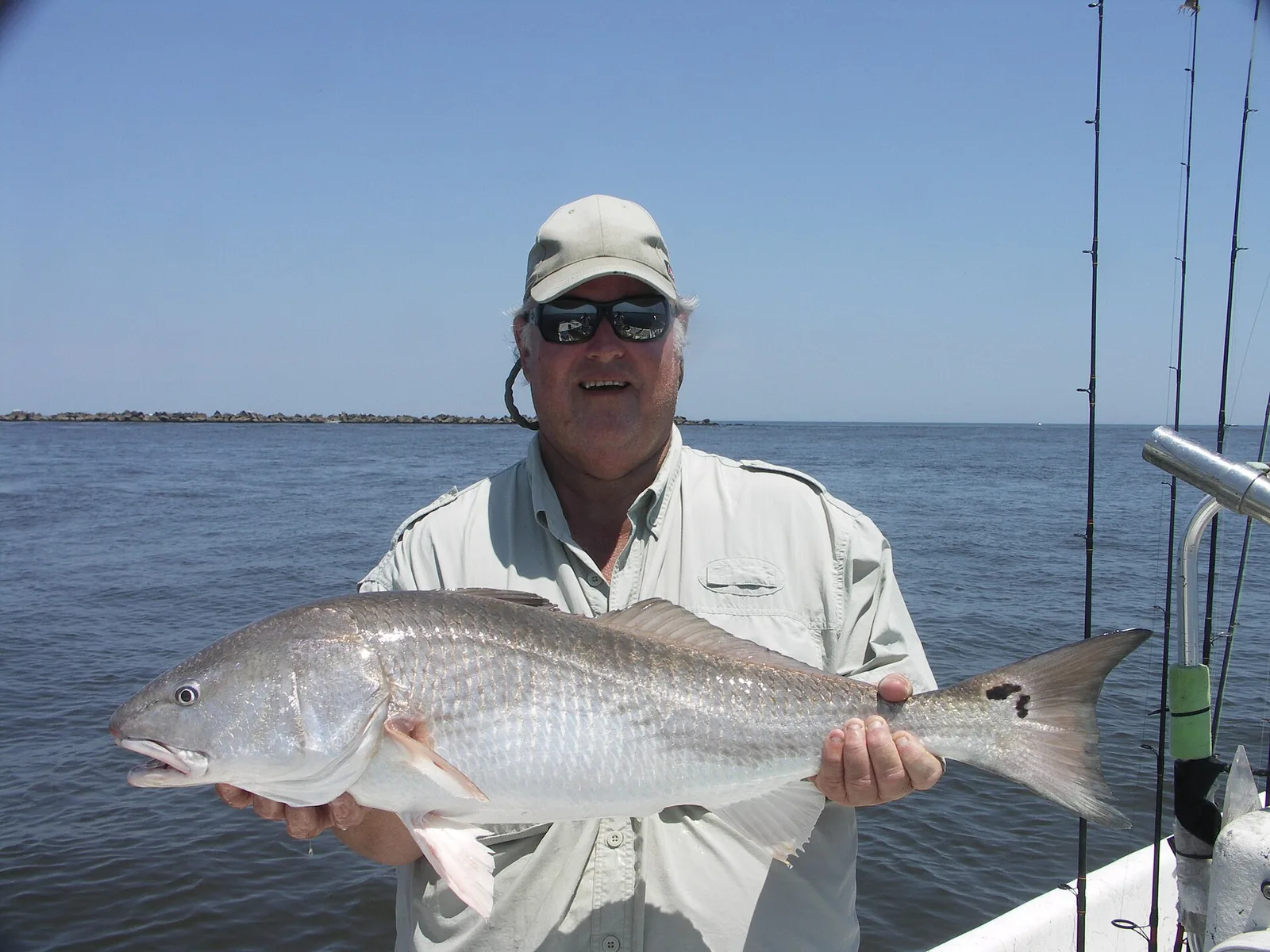
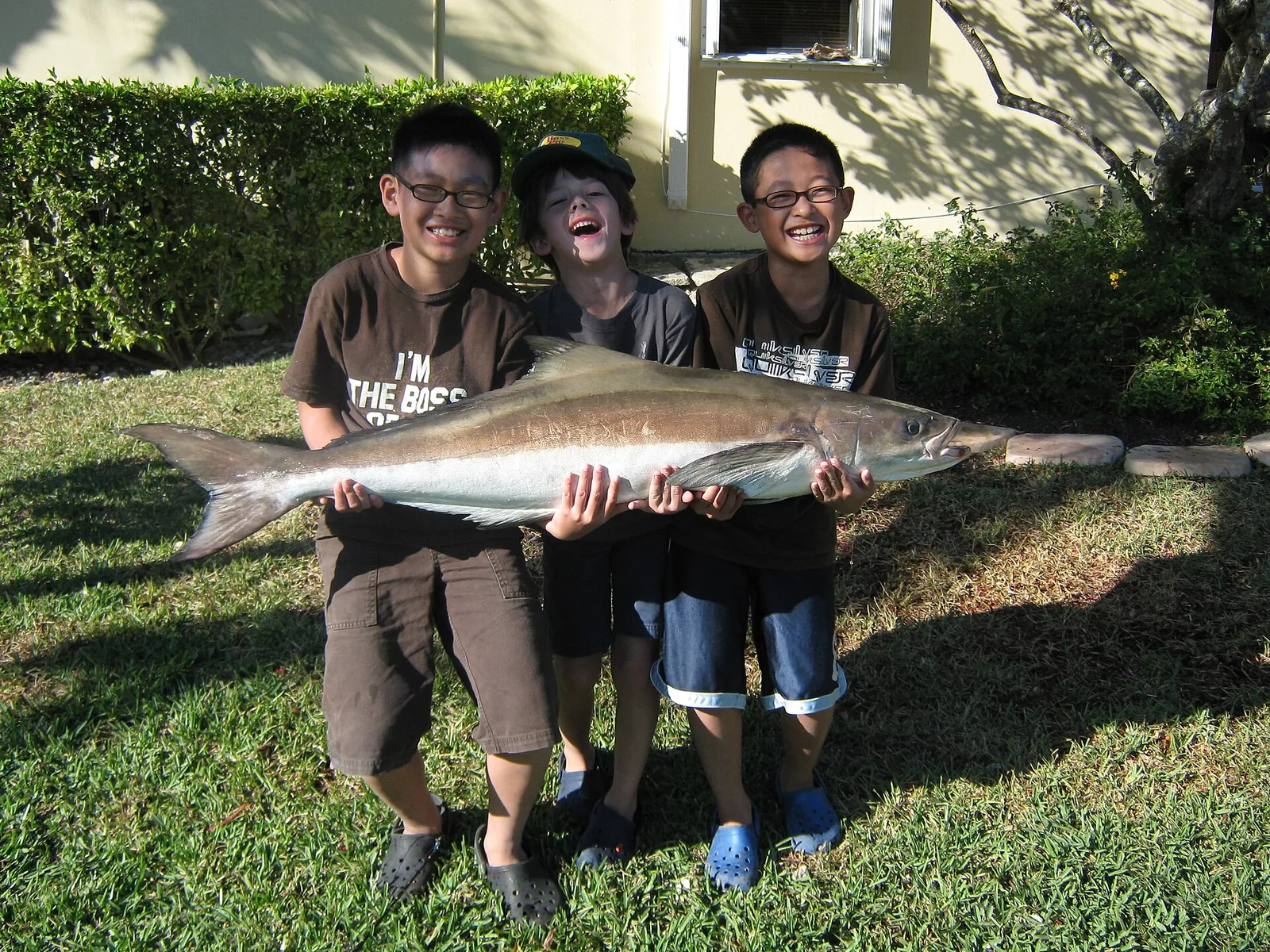
"Spanish mackerel" is a name that means a different fish in three different oceans, and that is the first thing to settle before discussing tackle. In the western Atlantic the approved species is *Scomberomorus maculatus*: 91 cm fork length, 5.9 kg, a five-year lifespan, a maturity length of 40.5 cm, and a recorded depth range of 10–35 m in water of 20–30 °C. In the eastern Atlantic the same common name is applied to *Scomberomorus tritor*; in the eastern Pacific it is *Scomberomorus sierra*; in the Caribbean and Brazil it is *Scomberomorus brasiliensis*. Four species, one market name, four sets of rules.
A name that means three different fish
FishBase's distribution note for this species lists the other three explicitly, which is unusual and useful: the catalogue is telling you that the name travels. A charter booking made over the internet for "Spanish mackerel" in Florida, in Senegal and in Ecuador refers to three different animals with different sizes, different limits and different seasons.
For a reader in the western Atlantic the practical rule is to check the scientific name on any trip operator's page, and to check it on any regulation. A bag limit written for S. maculatus does not apply to S. brasiliensis, which has its own assessment and its own national rules in Brazil.
Spots, and how to count them
The species is named for its spots, and the spots are real but not diagnostic on their own. Atlantic Spanish mackerel carry a row of round, brassy spots along the flank, often with a few scattered below the lateral line; the lateral line drops sharply behind the second dorsal fin, which is a better character than the spots.
The other western Atlantic species overlap. King mackerel has a straight lateral line and lacks the spot row on the flank; S. brasiliensis has spots as well and is separated by range and by the number of dorsal-fin rays rather than by pattern. The record's fin counts for this species are 17–19 dorsal spines, 17–20 dorsal soft rays, 17–20 anal soft rays and 51–53 vertebrae. Those counts are what a fisheries biologist uses; an angler uses the lateral line drop and the dark leading edge of the first dorsal fin.
91 cm and 5.9 kg, five-year lifespan
The maximum is 91 cm fork length and 5.9 kg, with a maximum age of five years. That is a small, fast-growing mackerel: it matures at 40.5 cm, with a reported range of 25–51.2 cm, which means a two-year-old fish is already a spawner.
The five-year ceiling changes how the fishery behaves. There is no large, old, resident population; almost every fish in the water is young, the stock turns over quickly, and recruitment is tied closely to the success of each year class. It also means the biggest fish in a school are not much older than the smallest, and a "trophy" is a matter of centimetres.
The 10–35 m band and the 20–30 °C window
The recorded depth range is narrow — 10 to 35 m — and the temperature window is 20–30 °C. Read together, those two numbers describe a fish of the warm surface layer over the inner shelf, not a fish of the deep or the open ocean.
That narrowness is the basis of the fishing method. Spanish mackerel are caught by trolling small baits and lures fast, by casting to fish that are busting bait at the surface, and by drifting live bait on a float. All three methods keep the offering in the top part of that band. A bait fished at 40 m is below the fish, however good the mark looks.
The warm-water requirement also explains the seasonal map. The stock moves north along the US coast as the shelf warms in spring and retreats south in autumn, and the timing of that movement shifts by a few weeks each year.
A migration, not a season
The spawning table for the species contains every month, but the entries are not one population spawning all year. Cape Cod in Massachusetts contributes August and September; Ceará in Brazil contributes November and December, plus January to April and October to December across two long series.
The pattern is a latitudinal spread: northern fish spawn at the end of summer, equatorial fish spawn across most of the year. What a US angler experiences is not a spawning season but a migration, with fish arriving from the south in spring and leaving in autumn. The relevant signal is water temperature, not a calendar date.
Light tackle and short wire
Spanish mackerel have small teeth and a soft mouth, and they are usually caught on light gear. A 2.1 m spinning rod rated 5–20 g with 0.10–0.13 mm braid and a 20–30 lb fluorocarbon leader is enough for a 2 kg fish and pleasant for a 1 kg one.
A short wire trace of 15–20 cm is the standard compromise: enough to stop a bite-off, short enough that it does not kill the action of a small lure. Trolling a 7–10 cm spoon or a small minnow at 5–7 knots along a colour change is the classic search method. Casting a small metal lure into a surface feed is faster and more fun, and often catches the larger fish in the school.
LC 2022 and the bag-limit arithmetic
The catalogue records Least Concern, assessed 10 November 2022, and classifies the species as highly commercial and a gamefish. In US waters the recreational fishery is managed with a bag limit and, in some states, a minimum size; the commercial fishery has a separate quota.
The arithmetic that matters to a recreational angler is small: a bag limit of a few fish per person, a short season in some states, and a stock that turns over in five years. Taking a full limit every trip from a school that is passing through is not the same pressure as taking the same number from a resident population. That is a conservation argument, not a rule.
2,938 records and a Brazilian gap
The GBIF index holds 2,938 records for the matched taxon: the United States at 2,209, an unassigned category at 287, Mexico at 67, Brazil at 38 and Colombia at 15. For a fish that is abundant from Massachusetts to Yucatan, that is a thin set, and the thinness is concentrated exactly where the species is least studied.
iNaturalist's 988 observations are more evenly spread and include a good number of Brazilian records, which partly fills the gap. Neither dataset locates a school. What they show is a western Atlantic shelf fish with a warm-water core, and a northern edge that reaches Cape Cod in a good year.
Where and when it feeds
Tide. Fish the moving tide around a pass or inlet. A ripping current concentrates bait.
Weather. Warm, clear water and light wind. Rough, dirty water pushes them offshore.
How to catch it
Trolling
Trolled from a moving boat; suits roaming or pelagic species.
Shore casting
Cast from shore or a breakwater, within reach of the recorded inshore range.
Bait and lures
Metal spoonLive shrimpSmall live baitfishGotcha plug
Regulations before you keep it
These are the published regulations for this fish. Read the number first. The notice below it is the actual regulation.
Bag limit4
12 in fork length · 15 fish per person per day
United States — North Carolina · US-NC
North Carolina requires Spanish mackerel to be 12 inches fork length with a 15-fish daily bag.
Spanish Mackerel
(H)
12" FL
15/Day
14 in · 15 fish per person per day · all year
United States — New York · US-NY
New York allows 15 Spanish mackerel per person per day at a 14-inch minimum.
Spanish mackerel 14" 15 All year
14 in · 15 fish per person per day · year round
United States — Rhode Island · US-RI
Rhode Island allows 15 Spanish mackerel per person per day at a 14-inch minimum.
3.35.1 Recreational
A.Minimum size: Fourteen inches (14”); must be landed with head and fins intact.
B.Season: January 1 through December 31.
C.Possession limit: Fifteen (15) fish per person per day.
14 in · 15 fish per person per day
United States — Virginia · US-VA
Virginia allows 15 Spanish mackerel per person per day at a 14-inch minimum.
SPANISH MACKEREL
Minimum Size Limit: 14 IN.
Possession Limit: 15 per person
Every record above names its source and the date it was retrieved. See the regulation register for the full list, or how to read these regulations.
Where these facts come from
Check these pages before you rely on a size, range or protection status.
-
FishBase — Scomberomorus maculatus
— FishBase · T2
-
GBIF — Scomberomorus maculatus occurrence records
— GBIF · T2
-
IUCN Red List — Scomberomorus maculatus
— IUCN · T1
-
Photo record — iNaturalist
— iNaturalist · T3