
Bull shark
Bull shark is a large requiem shark that moves between reef, coast, estuary, brackish water and fresh water. It is recorded from 1 to 164 m, reaches 360 cm and 316.5 kg, and can live 32 years. It is recorded in January, February, June, July and December.
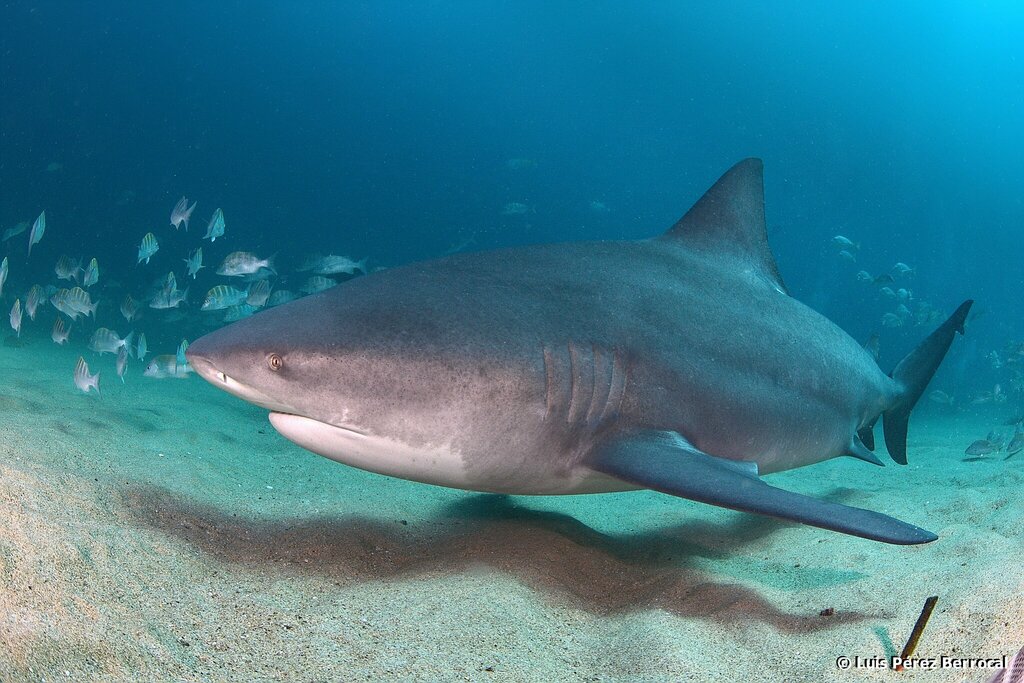
Four habitat words sit on one line: estuary, coastal, brackish, freshwater. The same environment line also prints reef-associated. Reef is a marine structure; freshwater is the opposite of the sea; brackish is the space between them. The page keeps all five without ranking them. This article takes the conflict apart: which of the five is supported twice, which is supported once, and which is contradicted by a number in the same row.
Five words, one of them load-bearing
Estuary and coastal describe places where salt water meets land. Brackish describes a salinity. Freshwater describes a salinity too, and it is the source of the dispute.
Reef-associated is a single milieu word, and it sits with the other four without qualification. A shark recorded on reefs is a marine animal; a shark recorded in freshwater is not. The environment line also carries "amphidromous" with reference 51243, which is a word about movement between fresh and marine water rather than about residence in either. That word is the hinge: the record is not saying the fish lives in both systems permanently, it is saying the fish moves between them.
The names say river
Common names are habitat statements in miniature. FishBase lists Estuary shark, Estuary whaler shark, Freshwater whaler, River whaler, River whaler shark, Zambezi shark and Swan River whaler. Seven of the fifteen English aliases point at a river, an estuary or fresh water, and only one names a coast (Hervey Bay).
The Wikipedia entry repeats the pattern and adds a locality: the bull shark is known as the Zambezi shark in Africa and the Lake Nicaragua shark in Nicaragua, and its presence is mainly in warm, shallow brackish and freshwater systems including estuaries and, in the article's own wording, usually the lower reaches of rivers. Names are not data, but seven of them agreeing on a river is a reason to look for a second witness rather than to dismiss the tag.
Freshwater needs a witness outside FishBase
The strongest independent witness is a landlocked country. GBIF's 134 distribution assertions carry 85 country codes, and one of them is Zimbabwe, marked NATIVE. Zimbabwe has no coastline. A native national record there cannot describe a marine occurrence, so whatever the Zimbabwe record is, it is inland water.
The FishBase country table reaches the same place by a different route: it lists Malawi, also landlocked, against reference 39192, and Zimbabwe against reference 13337. A country table is not a habitat survey, and neither entry says which river or lake it came from. But the arithmetic is narrow: a shark in Zimbabwe or Malawi is a shark in fresh water.
Wikipedia supplies the upstream limit that the tags do not: the presence in rivers is qualified as usually the lower reaches, and the Lake Nicaragua name supplies one standing lake exception. That is the difference this page will keep. Entering an estuary is a tide-driven fact; ascending a river to its lower reach is a different fact; and living in a lake is a third. The record supports all three, and it does not support the idea that the fish moves through a whole river system.
One to a hundred and sixty-four
The depth row gives 1 to 164 m, citing reference 106604, and then gives 1 to 30 m as the usual range, citing reference 55183. Both minima are the same number; the ceilings differ by 134 m, and the two figures come from two different references.
This page states the disagreement and does not settle it. A 164 m record is a single deep capture or a gear range; a 1–30 m usual band is a statement about where the ordinary fish is. Both can be true at once, and neither sentence in the row tells us which is.
Fresh water has no depth in the row at all. The 1–164 m figures are marine figures, and applying them to a river is a category error that the record does not invite.
Two hundred and one
Length at first maturity is 201 cm, with a range of 180–230 cm. Common length is 260 cm TL. Maximum length is 360 cm TL for males and fish of unknown sex, and 400 cm TL for females.
The arithmetic is uncomfortable: the maturity point sits at 77 per cent of the common length, so the ordinary adult is only 59 cm past the size at which it starts to reproduce. A 260 cm shark is barely a mature one. The 400 cm female maximum is 40 cm beyond the male maximum, and the record prints that as a separate line rather than folding the two into one figure.
No maturity figure is given for either sex separately. The 201 cm entry is the only number in the row, and it is not qualified by sex.
Five months, two hemispheres
Four spawning rows produce five months. South African coastal waters give January, February and December; South Africa off Natal gives the same three; the Gulf of Mexico gives June and July; and a fourth row labelled Western Atlantic, with no country, gives June and July again.
So the table holds two windows on opposite sides of the equator: a southern summer window in December–February and a northern summer window in June–July. The two South African rows are duplicates of one window, and the two northern rows are duplicates of another. Five months is the union, not five separate findings.
None of the four rows carries a depth, a salinity or a river locality. The spawning record is coastal, which is exactly the part of the life cycle where the freshwater tag does not apply.
Three hundred and sixteen kilos, thirty-two years
Maximum published weight is 316.5 kg, cited to reference 40637, with no paired length in the row. Maximum reported age is 32 years, cited to reference 42004. The two maxima describe different specimens and cannot be combined.
Human use is double: commercial fisheries and a gamefish tick. The IUCN category is Vulnerable, assessed on 24 November 2020. CITES lists the species on Appendix II. CMS is marked Not Evaluated. The threat-to-humans field reads Traumatogenic, which is a record of injuries rather than a behavioural claim.
Fishing a fish that crosses the line
The practical split follows the label conflict. In an estuary, the fish is inside both the brackish and the coastal words, and ordinary coastal shark gear applies. Upstream of the salt wedge, the same fish is in fresh water, where the rig has to survive current, snags and a bottom that changes with every flood.
Rig for 260 cm, not for 400. That is the common length, and it is the figure the record describes as the ordinary fish. A 201 cm maturity point means a released fish near that size is close to its first breeding year, which changes the value of a release.
The record prints no size limit and no bag limit. Both must come from the jurisdiction holding the water, and the jurisdiction changes at the salt wedge. A shark that is legal in the estuary may be illegal a few kilometres upstream, and the sources here cannot tell you where that line falls.
iNaturalist holds 2,113 observations. That is public documentation, not abundance. GBIF's 134 assertions spread across 85 country codes, but almost all are national checklists with establishment means NATIVE rather than point records; the Kenyan, Mozambican, Tanzanian and Mauritian assertions name exclusive economic zones, and the Azores entry is marked IRREGULAR. No depth field appears in that file, so the 1–164 m row stands as printed.
Where these facts come from
Check these pages before you rely on a size, range or protection status.
- FishBase — Carcharhinus leucas — FishBase · T2
- GBIF — Carcharhinus leucas occurrence records — GBIF · T2
- IUCN Red List — Carcharhinus leucas — IUCN · T1
- Photo record — iNaturalist — iNaturalist · T3
Fish in the same water
These fish live in the same place.
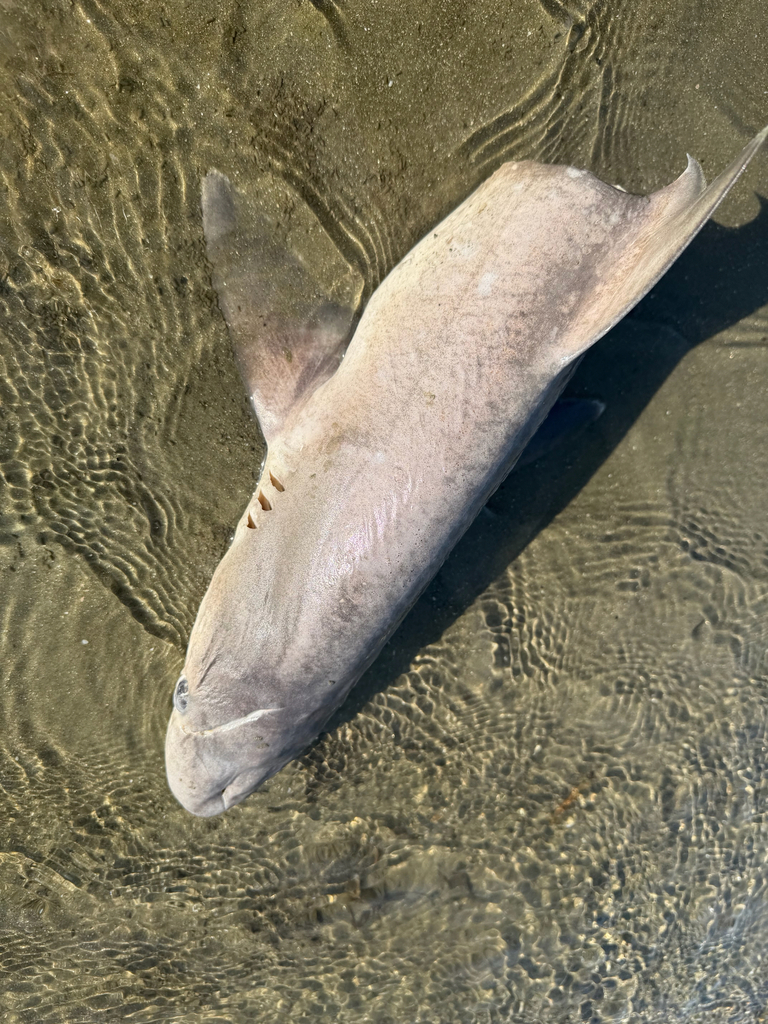
Atlantic sharpnose shark
- Family
- Carcharhinidae
- Depth
- 0–280 m
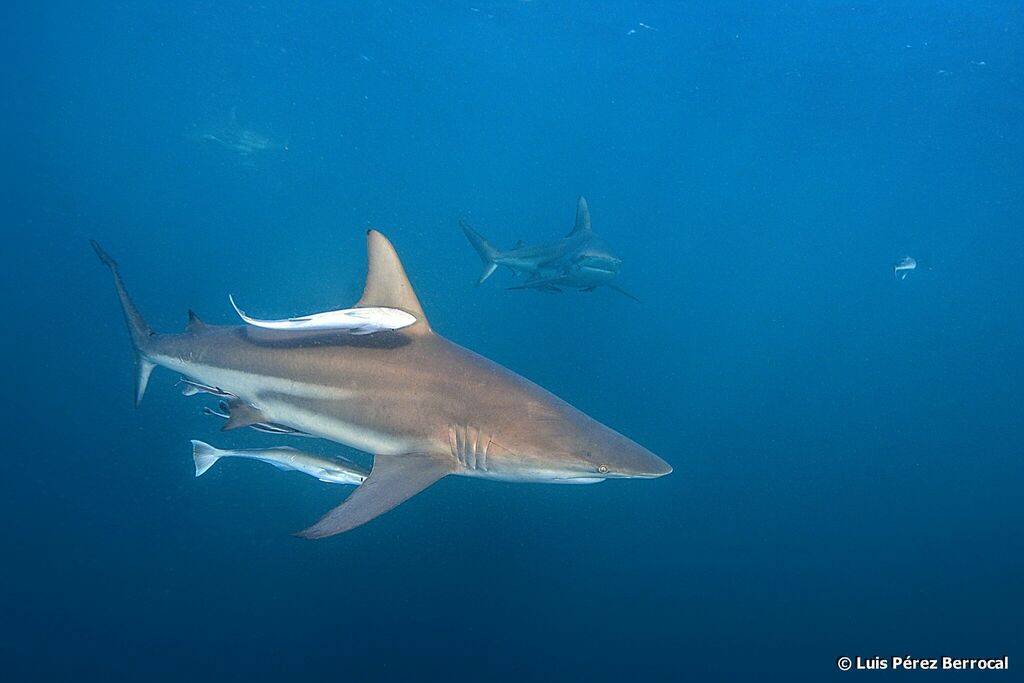
Blacktip shark
- Family
- Carcharhinidae
- Depth
- 0–140 m
- Season
- Apr, May, Jun, Sep, Oct, Nov, Dec
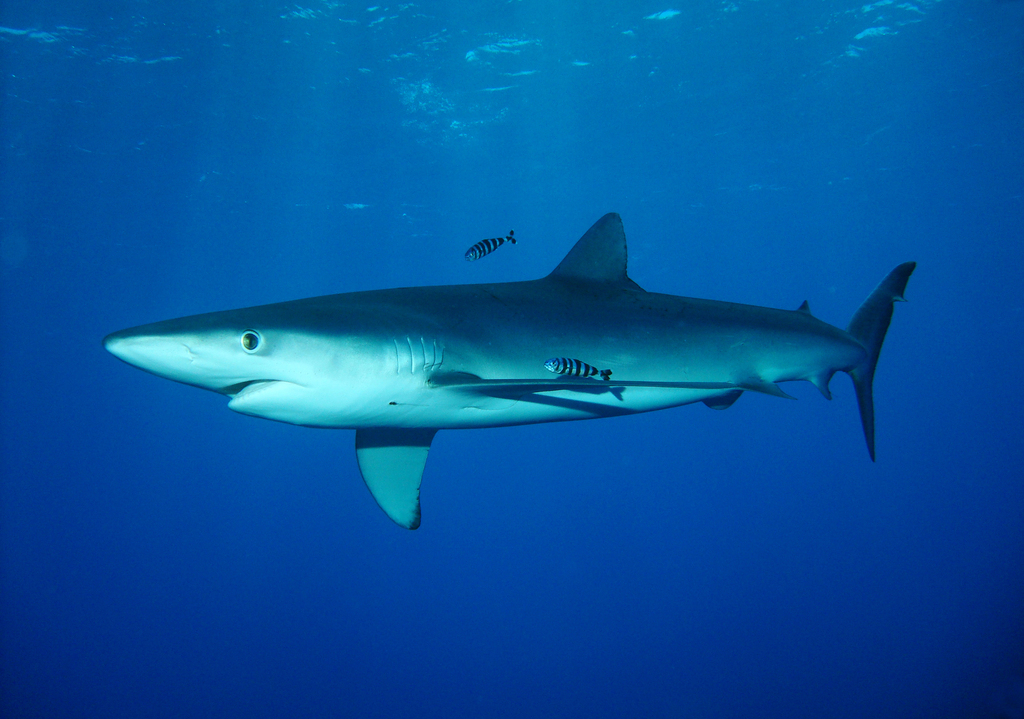
Blue shark
- Family
- Carcharhinidae
- Depth
- 0–1082 m
- Season
- Mar, Apr, May, Jun
Guides for this water
Technique, gear and safety guides that fit Bull shark.