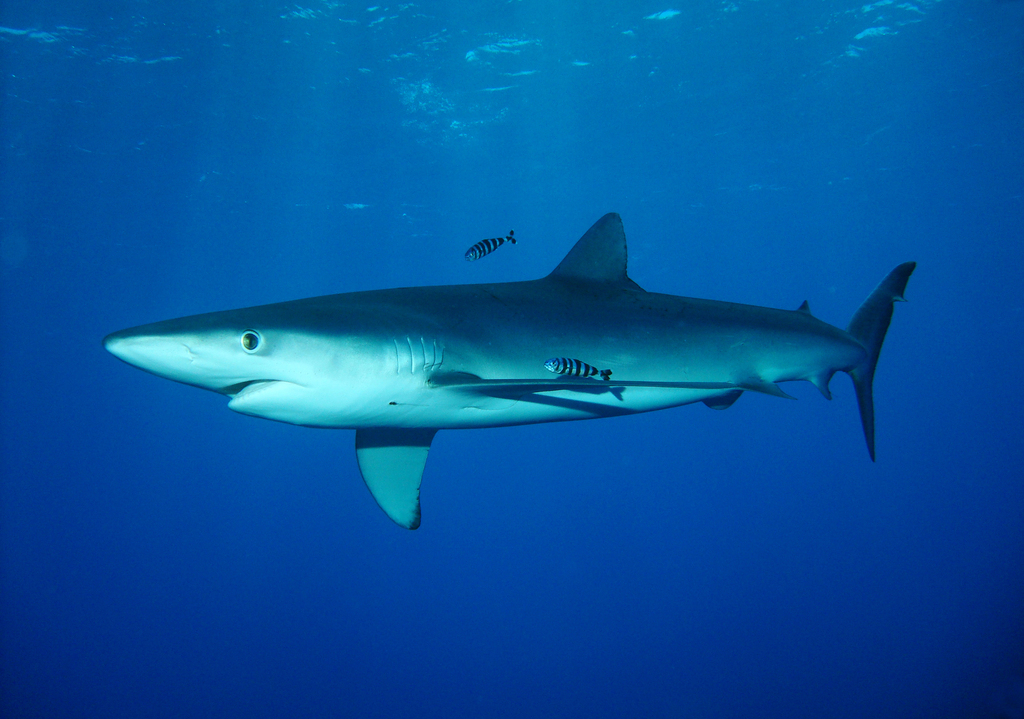
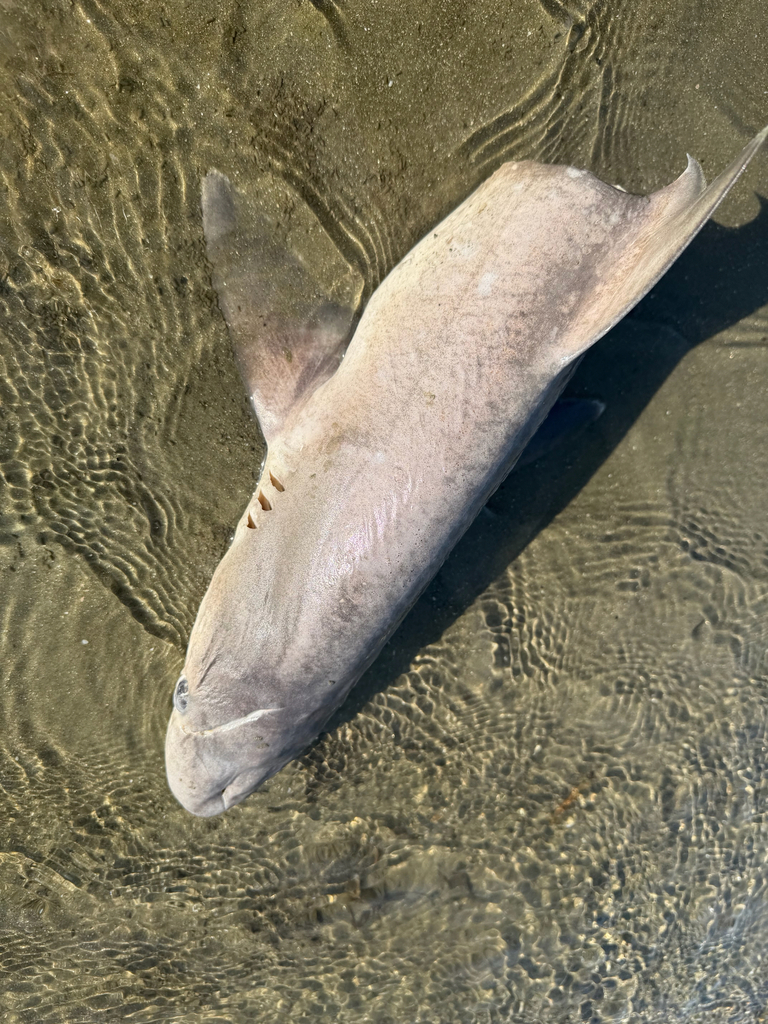
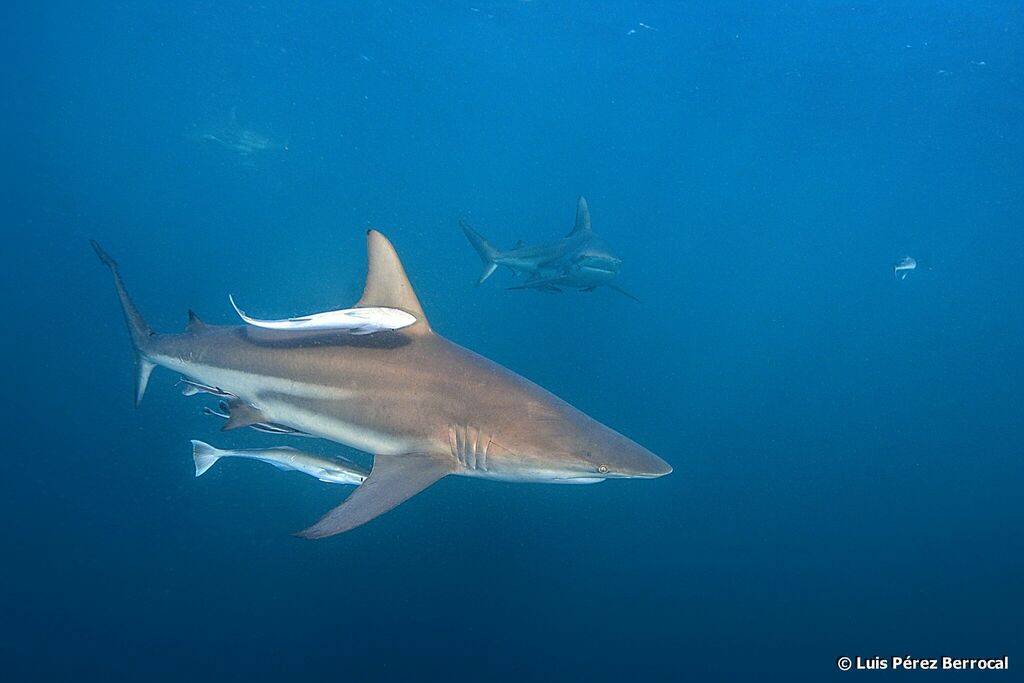
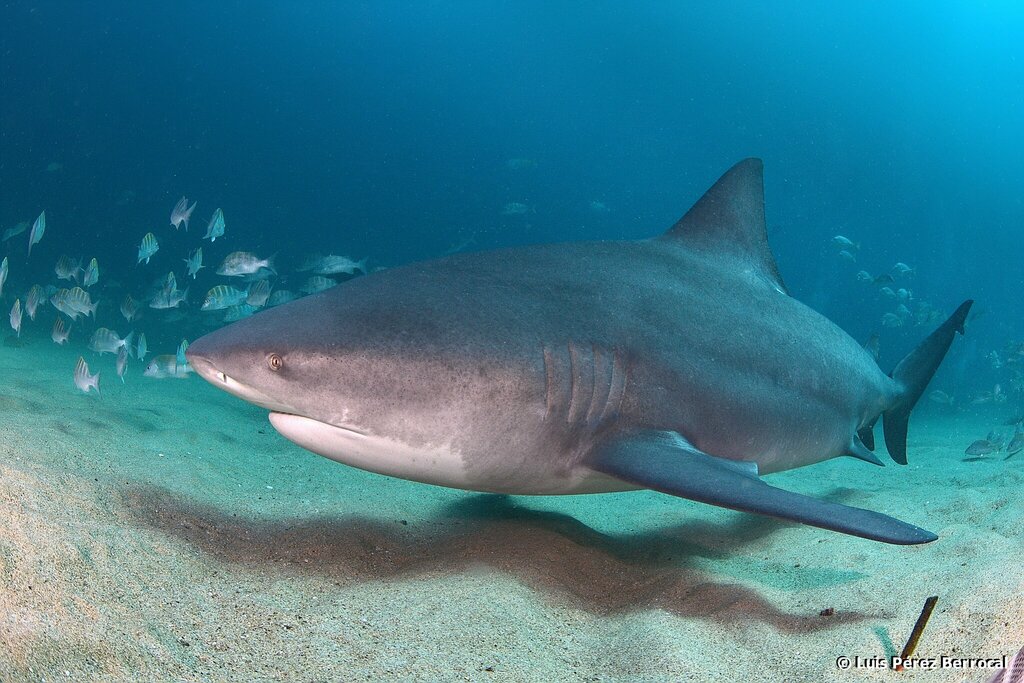
Five numbers describe the species on one page, and four of them are not lengths: 205.9 kg, 199.1 cm, 20 years, a common length of 335 cm, and a maximum of 400 cm. Read together they suggest a giant. Read separately they describe a fish whose ordinary size, first breeding size and heaviest published weight are three different pieces of evidence that the record never joins. This page keeps them apart, because a reader who merges them will rig for the wrong animal.
Two hundred and five point nine kilos is a record, not a norm
FishBase prints 205.9 kg as "max. published weight", cited to reference 40637. Reference 40637 is IGFA's Database of IGFA angling records until 2001: its own citation names the International Game Fish Association in Fort Lauderdale, and describes the contents as all records recorded by IGFA until August 2001.
So the figure is a certified angling weight, not a sample from a population study. The certifying body is IGFA, and the cut-off is August 2001. The database entry, as FishBase carries it, does not print the angler's name, the year of capture, the line class, or the tackle. Those four blanks are stated here rather than filled, because an invented name and date would be read as fact by the next person who quotes this page.
The weight has no partner
No length is attached to 205.9 kg in the row. That matters more than the weight itself. With a paired length, the figure would be a body-condition fact and could be compared with the 335 cm common fish. Without one, it is a ceiling with no shape: a very heavy shark of unknown length, certified under unknown tackle.
The row does not say the record fish was 335 cm, and it does not say it was 400 cm. A sentence that puts the weight beside either length and calls the result typical or exceptional would be adding a pairing the record does not contain.
One hundred and ninety-nine point one, and no unit tag
Length at first maturity is printed as "L m 199.1", with a range of 170–221 cm. The row does not tag the figure as total length or fork length. The maximum and common lengths on the same page are both tagged TL; the maturity figure is not. This page keeps the record's own convention and does not assign a unit the record does not print.
Even without the tag, the position is clear. A 199.1 cm maturity point sits at 59 per cent of the 335 cm common length, so the ordinary fish is 136 cm past its first breeding size. That is a wide margin for a shark, and it means a released fish in the low 200s is already an adult, not a juvenile.
Three hundred and thirty-five against four hundred
Common length is 335 cm TL, from reference 5217. Maximum length is 400 cm TL for males and unsexed fish, from reference 35388. The two figures are 65 cm apart, and the maximum is 1.19 times the common length.
That ratio is worth printing plainly because it is small. A fifth again is the spread a slow-growing, long-lived shark shows between an ordinary adult and an exceptional one. It is not a gap between size classes, and no gear decision should be built on treating a 400 cm fish as a different animal from a 335 cm one.
The maximum and the common length come from different references, which is normal on a page assembled from many sources, and neither reference is dated in the row.
Twenty years, and a four-month window
Maximum reported age is 20 years, cited to reference 27347. No growth curve accompanies it, so the row cannot say what age a 335 cm fish is. Twenty years is a ceiling for the species, not an expected lifespan and not an age-at-size table.
Spawning is a single record covering March, April, May and June, with the locality written as "Indian Ocean, North Atlantic". Two oceans, four months, one row. The entry does not separate the two oceans, so it cannot be used to date a spawning run in either one. What it does establish is that the window is a northern-spring window in at least part of the range.
A pelagic shark inside a shelf row
The milieu word is pelagic-oceanic, and the environment line adds oceanodromous. The habitat keywords are estuary, coastal, open-water and continental-shelf. A purely oceanic shark would not carry estuary; a shelf shark would not carry pelagic-oceanic. The page holds both, and it does not rank them.
Depth runs 0 to 1082 m, with a usual band of 1 to 220 m. The two figures cite different references, 89422 and 55193, and the minimum is written as 0 in one field and 1 in the other. Temperature is given as 7–21 °C, cited to reference 244.
For a boat, the usual band is the working figure: 1–220 m is where the fish is expected, while 1082 m is an outlier depth with no percentage attached. The estuary keyword is one word in a row dominated by open water, and it is not a licence to fish a river.
Minor commercial, major gamefish
Human uses are "minor commercial" and "gamefish: yes". The two labels describe different fleets: a by-catch line in commercial landings and a target species for sport boats. The English aliases include blue whaler and great blue whaler. Whaler is a name from the game fishery, not from a market.
IUCN lists the species as Near Threatened, assessed on 6 November 2018. CITES lists it on Appendix II, and CMS also lists it on Appendix II. The threat-to-humans field reads Traumatogenic.
Wikipedia describes the species as averaging around 3.1 m, preferring cooler waters, and migrating long distances, such as from New England to South America. The 3.1 m average and the 335 cm common length are 25 cm apart, which works as a consistency check rather than as a new fact.
Rigging for the common fish
Rig for 335 cm. That is the common length, the figure the record calls the ordinary fish, and the maximum is 1.19 times it rather than a different class of animal. A 199.1 cm maturity point means a fish at the low end of the common range is already mature, so release decisions should not rest on size alone.
The species is a gamefish that is also taken as minor commercial catch, so a release is a choice rather than a rule. No size limit or bag limit appears in the record; both must come from whichever authority manages the water. The depth plan is the usual band, 1–220 m, and the 7–21 °C line is the only environmental number that can be checked before a trip.
iNaturalist holds 1,191 observations. That is documentation, not abundance. GBIF's 274 distribution assertions span 182 country codes, but only 65 carry PRESENT; 206 carry no status, 2 are DOUBTFUL and 1 is IRREGULAR; Brazil alone holds 18. The file has no depth field, so it cannot test the 1–220 m band.
Regulations before you keep it
These are the published regulations for this fish. Read the number first. The notice below it is the actual regulation.
Bag limit1
1 fish per fisher per day
New Zealand — South East · NZ-SE
New Zealand allows 1 blue shark per fisher per day.
No minimum length. Blue shark counts inside the 30-finfish combined bag and must be landed with fins naturally or artificially attached.
Blue shark | 1 | — | 100
Every record above names its source and the date it was retrieved. See the regulation register for the full list, or how to read these regulations.
Where these facts come from
Check these pages before you rely on a size, range or protection status.
-
FishBase — Prionace glauca
— FishBase · T2
-
GBIF — Prionace glauca occurrence records
— GBIF · T2
-
IUCN Red List — Prionace glauca
— IUCN · T1
-
Photo record — iNaturalist
— iNaturalist · T3