
Brownbarred rockcod
Brownbarred rockcod is a small grouper of the Indo-West Pacific, from Kenya and southern Mozambique east into the western Pacific, though it is absent from the Red Sea and Persian Gulf. It lives on shallow reef at 1 to 64 m, usually 4 to 30, and matures at just 12.2 cm. Adults reach 30 cm TL and live up to 11 years. Bottom fishing and lures are the methods listed.
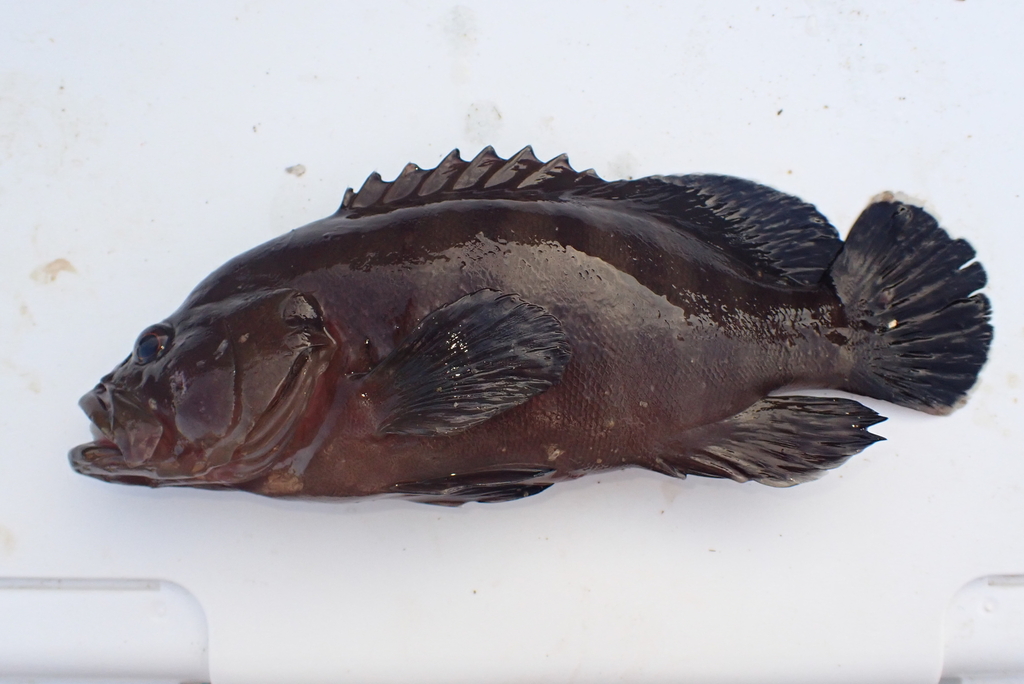
The brownbarred rockcod is a small grouper, with a FishBase maximum of only 30 cm total length, a maturity length of 12.2 cm and a maximum reported age of 11 years. It ranges from Kenya and southern Mozambique east into the western Pacific, is absent from the Red Sea and Persian Gulf, and is unknown from Micronesia except Palau. It lives at 1–64 m, usually 4–30 m, so it is a fish of shallow reef water. IUCN lists it as Least Concern, assessed on 16 November 2016.
Nine spines and dusky bars
The dorsal fin has 9 spines and 15–17 soft rays; the anal fin has 3 spines and 8 soft rays. The body is brownish to greenish grey with dusky vertical bands; the median fins carry white margins and black sub-margins, and those edges are more conspicuous than the bands themselves. The preopercle is rounded and very finely serrate, with no enlarged spines at the angle and a fleshy lower edge; body scales are ctenoid, including on the abdomen; body depth is 2.6–3.1 times in standard length; the caudal fin is rounded; the pelvic fins usually do not reach the anus and are 1.6–2.1 times in head length. Against the longfin grouper, the pattern differs: this species has bars plus black-and-white fin edges, while the longfin grouper is covered in large hexagonal to roundish dark spots. Both have rounded tails, so tail shape alone will not separate them.
Silty dead reef in sheltered water
The range starts in Kenya and southern Mozambique and runs east into the western Pacific; the Red Sea and Persian Gulf are excluded; in the Indian Ocean islands it is recorded only from Aldabra, the Comoros, Madagascar, the Andaman and Lakshadweep islands; in Micronesia it is unknown except Palau. The country table includes the Andaman and Nicobar Islands, Australia, Cambodia, China, the Comoros, Hong Kong SAR, India, Indonesia, Japan, Kenya, Madagascar, Malaysia, the Maldives, Mayotte, Micronesia, Mozambique, New Caledonia, Palau, Papua New Guinea, the Philippines, Réunion, the Ryukyu Islands, Seychelles, Singapore, the Solomon Islands, Sri Lanka, Taiwan region, Tanzania, Thailand, Vietnam and Wallis and Futuna. It is mainly a coastal species, favouring silty dead reefs in protected waters and also occurring on live coral; it is secretive and feeds mainly on fish and crustaceans. GBIF's 4,022 records are led by Australia (1,505), the Philippines (412), Singapore (278), Indonesia (238), Thailand (195), Japan (187), Taiwan region (180), New Caledonia (134), Hong Kong SAR (122) and Malaysia (115).
April to October in Hong Kong
FishBase's spawning record comes from the eastern waters of Hong Kong, with months from April to October. That is the only citable spawning window here: it shows a late-spring-to-autumn spawning period in the Hong Kong and southern-China area, and Taiwan region and Southeast Asia cannot simply copy it without local temperature data. No water temperature is recorded, only the tropical label and the 32°N–32°S range. It is common at 4–30 m and is reachable from shore and boat; dusk, night and the change of tide are better than midday.
Small hooks, short leaders, tight to the reef
The mouth is small and the fish swallows deeply, so hooks should be small and leaders not too heavy; a large bait mostly produces missed bites. Use prawn, crab flesh, sandworm and small fish chunks, placed at dead-coral crevices, reef bases and the hard edge of silt. Lures are small soft plastics, micro-minnows and jigheads crawled slowly along the bottom, with small movements rather than sharp rips. It is secretive and often gives one chance; after the hookset it heads for the crevice, so lift quickly but do not lock the drag or the line will cut at the hole. If a spot is dead, move to the next patch of dead reef instead of waiting.
Light tackle is the right tackle
With a 30 cm ceiling and smaller everyday fish, a light rock rod or a 7-foot lure rod, a 2000–3000 reel and an 8–12 lb fluorocarbon leader are enough. It lives against reef, so the leader must resist abrasion, but the main line does not need to be heavier; thin, tough hooks are needed to match small baits. Maturity is 12.2 cm, and fish below that have not spawned and should go back. It can live 11 years, so small does not mean young; keep fish only under the local minimum-size rule.
Eating, ciguatera and the rules
Recorded uses are subsistence fisheries and the commercial aquarium trade. The flesh is fine-textured and suits steaming, braising and soup; bleed, gut and ice promptly. The threat field says harmless and there is no ciguatera report, but large reef groupers should still follow local advice. Rules are regional: in Taiwan region the Fisheries Agency and local governments manage closed areas, closed seasons, gear restrictions and minimum sizes; Hong Kong SAR's Fisheries Protection Ordinance regulates methods, marine parks and reserves prohibit angling and collecting, and the live-fish trade is separately regulated; mainland China has a summer closed season and minimum catch sizes; Southeast Asian states differ widely on grouper sizes and closed seasons, with Malaysia, Indonesia, the Philippines and Thailand each setting rules and core protected-area zones usually no-take. Check the current local notice.
What the record leaves open
The page uses FishBase taxonomy, morphology, distribution, environment, biology, reproduction, use, IUCN and threat entries, with the country table for range and GBIF/iNaturalist for occurrence. The spawning months are one Hong Kong record and are flagged as regional, not extrapolated. No water temperature is recorded and no estimate is added. is the master-plan approved name; and are FishBase Chinese variants kept as aliases; , and are generic labels, not formal names.
How to catch it
Bottom fishing
Fished with the listed approach, matched to the recorded depth and size.
Lure fishing
Fished with the listed approach, matched to the recorded depth and size.
Where these facts come from
Check these pages before you rely on a size, range or protection status.
- FishBase — Cephalopholis boenak — FishBase · T2
- GBIF — Cephalopholis boenak occurrence records — GBIF · T2
- IUCN Red List — Cephalopholis boenak — IUCN · T1
- Photo record — iNaturalist — iNaturalist · T3
Fish in the same water
These fish live in the same place.
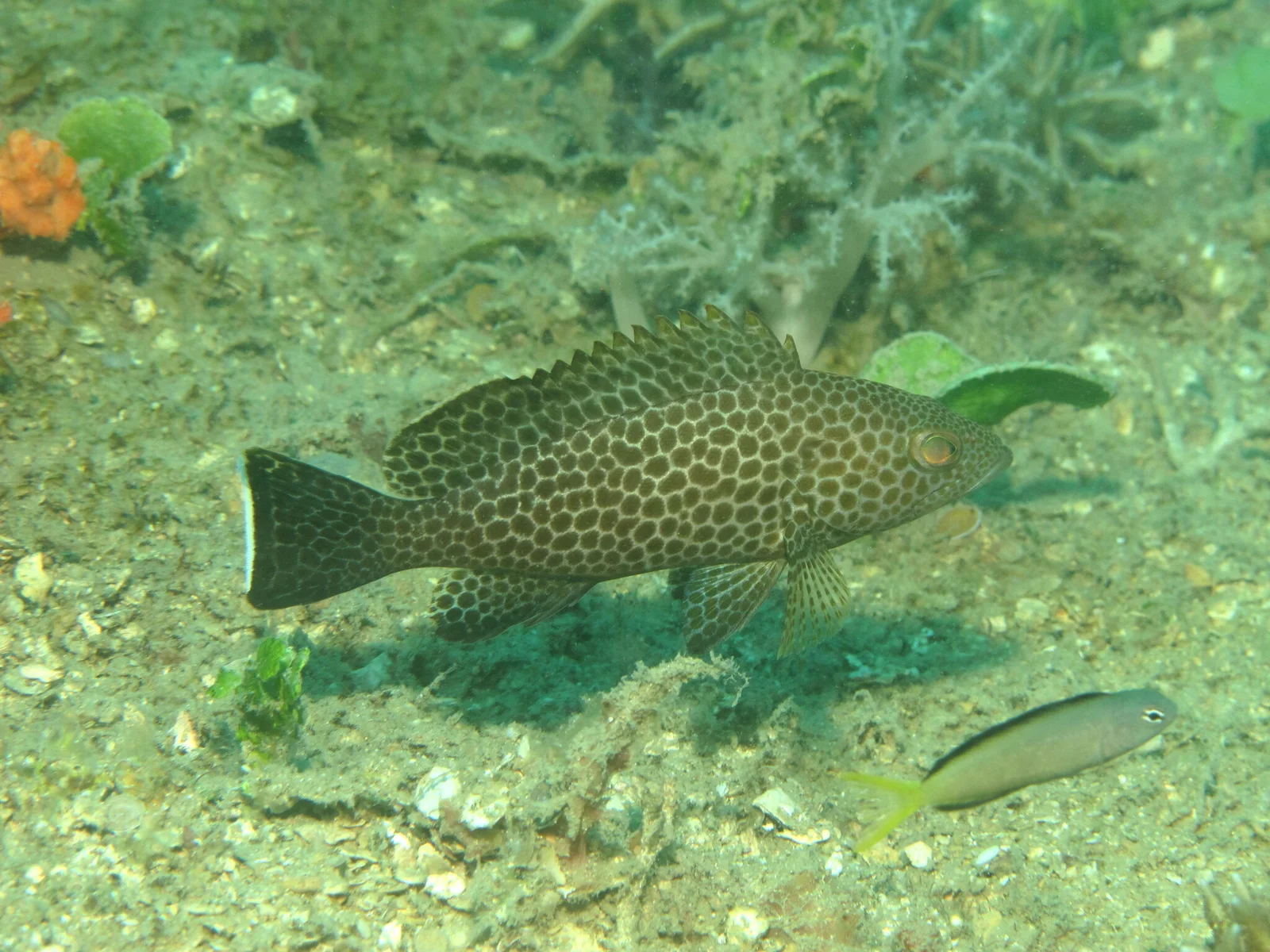
Areolate grouper
- Family
- Epinephelidae
- Depth
- 6–200 m
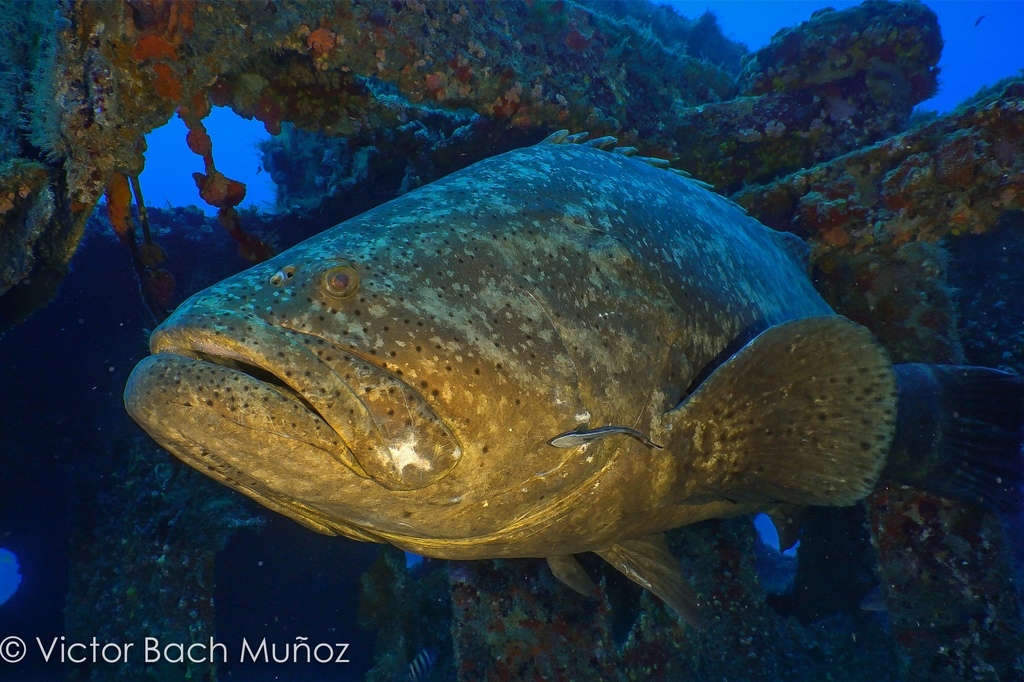
Atlantic goliath grouper
- Family
- Epinephelidae
- Depth
- 0–100 m
- Season
- Jan, Feb, Jun, Jul, Aug, Sep

Black grouper
- Family
- Epinephelidae
- Depth
- 60–250 m
- Season
- Jan, Feb, Mar, Apr, May, Jun, Jul, Aug, Sep, Oct, Nov, Dec
Guides for this water
Technique, gear and safety guides that fit Brownbarred rockcod.