
Yellowfin hind
Yellowfin hind is a small serranid known only from the northern Red Sea through the Persian Gulf to the coast of Pakistan. It works 4 to 55 m of reef, reaches 35 cm TL with a common length of 23 cm, and can live 26 years. Boat bottom fishing, jigging and sight fishing are the methods listed for it.
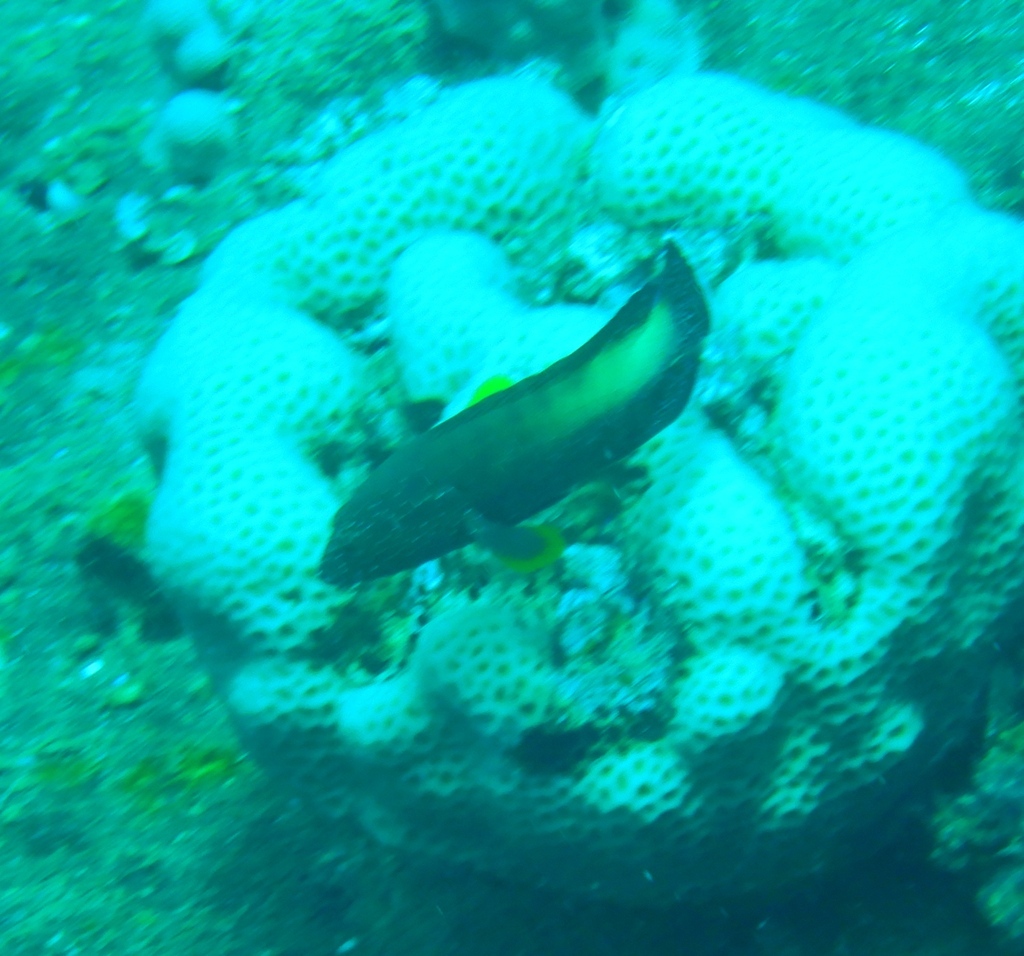
Cephalopholis hemistiktos is a small serranid recorded only from the northern Red Sea through the Persian Gulf to the coast of Pakistan. FishBase gives a maximum of 35 cm total length, a common length of 23 cm, a depth range of 4 to 55 m and a maximum age of 26 years. It is an obligate monogamist: pairs hold a joint territory of up to 62 square metres, and the diet is about 64 per cent fish, mostly damselfish, and 36 per cent crustaceans. It is listed as Least Concern.
Identification
A small grouper with nine dorsal spines and 8 to 10 soft rays, and three anal spines with 8 to 10 soft rays. Body depth is 2.7 to 3.0 times in standard length and head length 2.4 to 2.6 times, with a flat interorbital area.
The preopercle is rounded and finely serrate, the upper opercular edge is distinctly convex, and the maxilla is scaly.
The ground colour is reddish brown with lighter mottling and a scattering of pale spots on the head; the rear dorsal and anal fins are darker. It reaches 35 cm total length, with 23 cm a common size and 26 years the maximum recorded age.
Distribution and Habitat
Western Indian Ocean, but only from the northern end of the Red Sea through the Persian Gulf to the coast of Pakistan. FishBase notes that records from elsewhere appear to be misidentifications.
It is reef-associated and non-migratory, found from 4 to 55 m, usually at 15 to 20 m. In the Red Sea it favours patchy, open reef rather than dense coral cover.
That makes it a shore and small-boat target; below about 30 m other species dominate.
Habits and Diet
FishBase records a diurnal diet of about 64 per cent fish, mostly damselfish, and 36 per cent crustaceans. It is an ambush predator that works the reef edge rather than roaming open sand.
It is an obligate monogamist: a pair jointly defends up to 62 square metres, so removing one fish breaks a pair.
FishBase lists overfishing, lack of management and habitat loss as threats; the fish is small and site-attached, so local depletion is slow to reverse.
Fishing Methods and Gear
Light bottom fishing with shrimp or a strip of fish, a small hook and just enough lead to hold on the reef edge. Fish the sand channels between coral heads rather than dropping into the coral itself.
Small 60 to 80 g jigs worked slowly just off the bottom also take fish, as do soft plastics dropped vertically.
A 7 ft rod, 3000 reel, 20 lb braid and 25 to 30 lb leader suffice, but turn the fish away from coral quickly.
Seasonal Window
FishBase does not give monthly spawning data for this species. It is present year-round; warm months fish best.
The best window within a day is moving water, from mid-flood to high tide. On slack water the fish sit tight to structure and are hard to tempt.
Early morning and late afternoon are the most comfortable times on the flat. Night fishing produces groupers, but no species-specific night record exists.
Edibility and Handling
A good food fish, marketed fresh, with white flesh that suits frying, steaming or soup. A 23 cm fish yields a modest fillet.
Bleed and ice promptly. Reef groupers carry a general ciguatera risk that size does not predict, so treat any reef fish with caution.
Being monogamous and site-attached, releasing small fish matters more than the bag limit suggests. Handle with wet hands and return promptly.
Regulations and Conservation
United Arab Emirates: groupers are managed collectively as hammour, and Ministerial Decree No. 580 of 2015 sets a 45 cm minimum total length for hammour. The decree uses the collective name, so whether it applies species by species to a fish that reaches only 35 cm is a matter for the authority; if applied literally, no individual could be retained. A recreational licence is required, and Abu Dhabi charges AED 120 per year or AED 30 per week.
The Abu Dhabi prohibited list's yellow grouper is Epinephelus flavocaeruleus, not this species.
Saudi Arabia: recreational fishing requires ministerial licensing, but no species-specific size or bag limit for this fish was found; treat as unverified. IUCN: Least Concern, assessed 21 November 2016.
How to catch it
Boat bottom fishing
Jigging
60–80
Sight fishing
Where these facts come from
Check these pages before you rely on a size, range or protection status.
- GBIF — Cephalopholis hemistiktos occurrence records — GBIF · T2
- IUCN Red List — Cephalopholis hemistiktos — IUCN · T1
- Photo record — iNaturalist — iNaturalist · T3
Fish in the same water
These fish live in the same place.

Guides for this water
Technique, gear and safety guides that fit Yellowfin hind.