
Thicklip grey mullet
WoRMS keeps three water boxes for this fish and ticks all of them: Chelon labrosus is marine, brackish and freshwater at once. That is not a licence to fish anywhere the water is wet. It means the species name sits on three separate checklists, and an angler has to decide which salinity band the fish is using before picking a mark.
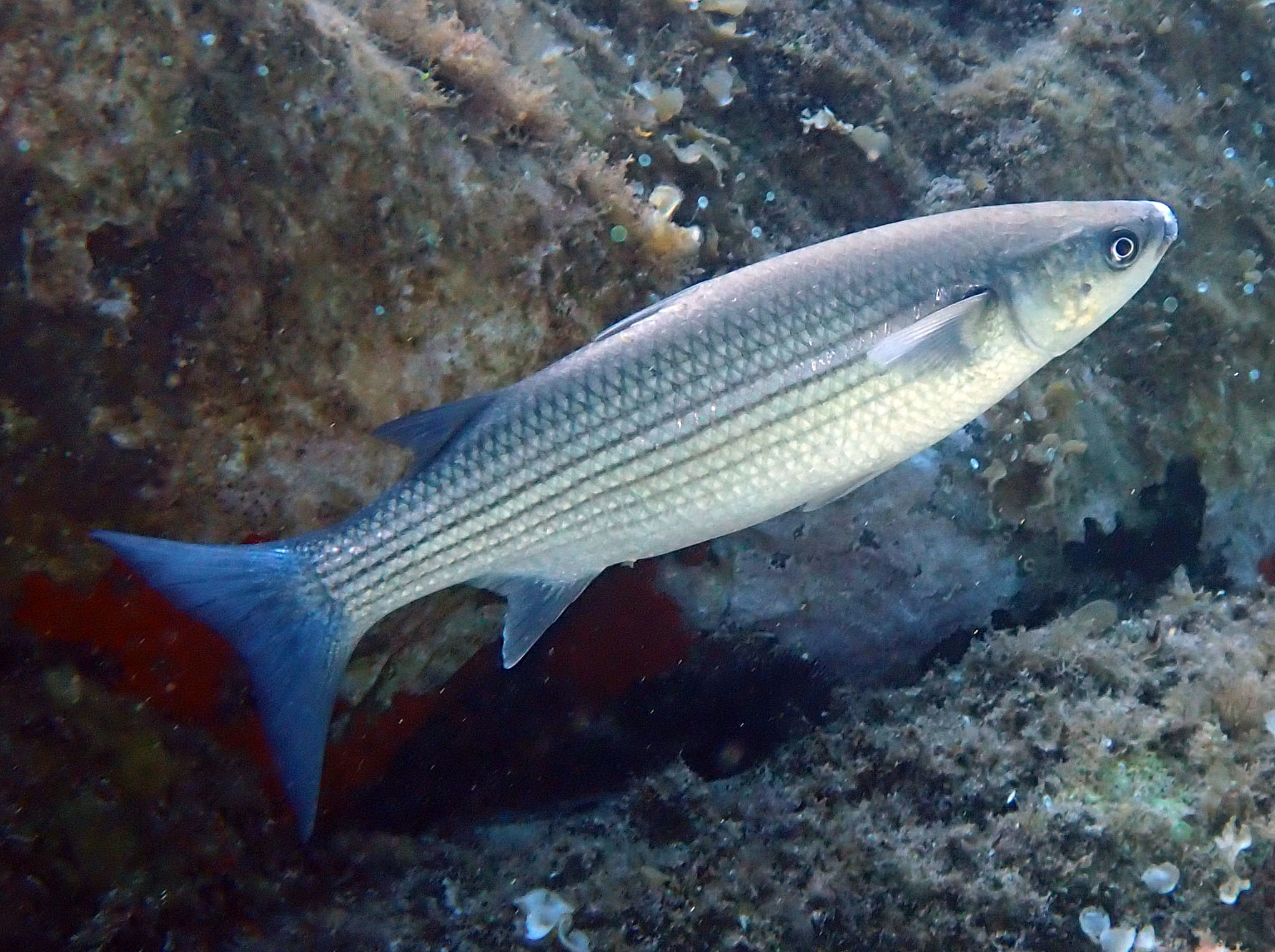
WoRMS keeps three water boxes for this fish and ticks all of them: Chelon labrosus is marine, brackish and freshwater at once. That is not a licence to fish anywhere the water is wet. It means the species name sits on three separate checklists, and an angler has to decide which salinity band the fish is using before picking a mark.
The estuary is a band, not a place
The WoRMS record for AphiaID 126977 is accepted as Chelon labrosus (Risso, 1827), with isMarine, isBrackish and isFreshwater all true and isTerrestrial false. FishBase prints the same set in its environment line and adds demersal and catadromous. Read as a distribution claim, "freshwater" is misleading: the recorded biology puts adults inshore in schools that frequently enter brackish lagoons and freshwater, not resident far upstream. The synonym list matters, because freshwater literature predates the current combination: Mugil labrosus Risso, 1827 is the basionym, and Mugil chelo, Mugil curtus and Mugil septentrionalis are among the unaccepted names. FishBase's territory table also flags salinity per territory, from marine-only entries such as the Faroe Islands and Isle of Man to three-water entries such as Spain and the Netherlands.
Where the gradient is cut
FishBase gives a depth range of 2–15 m and calls the species catadromous. Those two lines set the seaward end of the gradient; the landward end is the freshwater list. Between them sit the brackish lagoons adults enter and the estuaries juveniles use: fish of about 2.0 cm SL move into coastal lagoons and estuaries in April–June and return to the sea in summer. A workable cut runs by band rather than by place: the freshwater reach, the brackish lagoon, the estuary mouth, and the coastal belt from 2 m down to 15 m. The last band is narrow, so "estuary" is not a point on the map. The species is demersal, so each band is fished near the bottom, not through the water column.
Which checklists the distribution list is built from
GBIF's rows for the mullet come mostly from checklists rather than surveys: the Global Dataset of Freshwater Invasive and Alien Species contributes 29 rows, WoRMS 20, DAISIE three, and the rest come from ITIS, FADA and national lists. Establishment means split as 31 introduced, 29 blank and 6 native; presence status as 35 blank, 28 present, 2 doubtful and 1 rare. Both doubtful rows are the same Wimereux record from WoRMS, so the list contains a duplicate. iNaturalist adds 2,927 observations, photographs rather than distribution statements. A freshwater alien checklist can list a coastal mullet without saying it breeds there, so read dataset names before the map.
The lip is the identification key
FishBase's short description separates this mullet by fin counts rather than colour: five dorsal spines, 7–9 dorsal soft rays, three anal spines and 8–9 anal soft rays, on an elongated body. The common name comes from the thick upper lip, and the Wikipedia summary attributes both the name and the silvery-grey look to it. Colour is a weak field mark in turbid estuaries. The English alias list is weaker still: one variant misspells the common name as "Thichlip mullet", the AFS spelling used in the United States, and "lesser grey mullet" comes from Britain. A fish logged under a misspelled alias is a fish a later search can miss, which is why a catch record should carry the binomial rather than the stall name.
A 32-centimetre fish with a 75-centimetre ceiling
All three size figures are standard length, not total length: maturity at 29.5 cm, a common length of 32.0 cm, and a maximum of 75.0 cm, with a published maximum weight of 4.5 kg and a reported age of 25 years. The common fish is therefore only 2.5 cm past first maturity, while the ceiling is more than twice the routine length. FishBase also states that females grow larger than males. For a lagoon of mostly juveniles, the relevant number is the 2.0 cm entry size, not the 75 cm record. In the coastal band, 32 cm is the fish to build a rod around; 75 cm is an old female, not a grade to plan for. Keep 29.5 cm in sight on deck: under it the fish goes back.
Spawning: which sea, which months
FishBase is definite about the medium and vague about the map: reproduction occurs in the sea during winter, with pelagic eggs and larvae. The spawning table is more specific: the Channel and Irish waters in July–August, the Marmara Sea in August–September, Mediterranean coasts in February–April, France unspecified in February–June, and Tunis Lake in December–April. The first entries are summer records at high latitude; the Mediterranean rows are winter-to-spring. Tunis Lake is the odd one, because a lake is not the sea the biology sentence names. Treat the rows as place-month records, not proof of marine spawning. Latitude, not the word "winter", is the useful part of the calendar.
How the wet and dry seasons move the line
The record gives season rather than rainfall, so the movement has to be read from dated statements. Adults tend to move northward in summer as temperatures rise, and juveniles leave the lagoons for the sea in summer after entering them in April–June. That supports one direction: in the warm half of the year the brackish and lagoon segment is occupied and the coastal segment is pushed north. In the cool half, the same statements reverse the traffic, while Mediterranean spawning is recorded from December to April. A wet season adds freshwater at the landward end and lengthens the brackish band; a dry season shortens it toward the mouth. A salinity number here would have to be measured on the day, so locate the band by the fish and the bottom rather than by a guessed isohaline.
Bank and boat belong to different segments
Bank work belongs to the landward half: brackish lagoon and lower estuary, where adults enter and 2.0 cm juveniles arrive in April–June. The water is shallow and the fish demersal, so the bait must reach the bottom. Boat work belongs to the seaward band, 2–15 m, where adults are inshore in schools. The 15 m ceiling limits the boat plan; a deeper fallback would be outside the record. Winter spawning in the sea puts the boat near the mouth in the cool months, while summer movement spreads the band along the coast. The stock is listed Near Threatened (A2cd+4cd), assessed 7 June 2022; with maturity at 29.5 cm and a 25-year maximum age, a 75 cm fish is old and worth putting back.
Where these facts come from
Check these pages before you rely on a size, range or protection status.
- FishBase — Chelon labrosus — FishBase · T2
- GBIF — Chelon labrosus occurrence records — GBIF · T2
- IUCN Red List — Chelon labrosus — IUCN · T1
- Photo record — iNaturalist — iNaturalist · T3
Fish in the same water
These fish live in the same place.
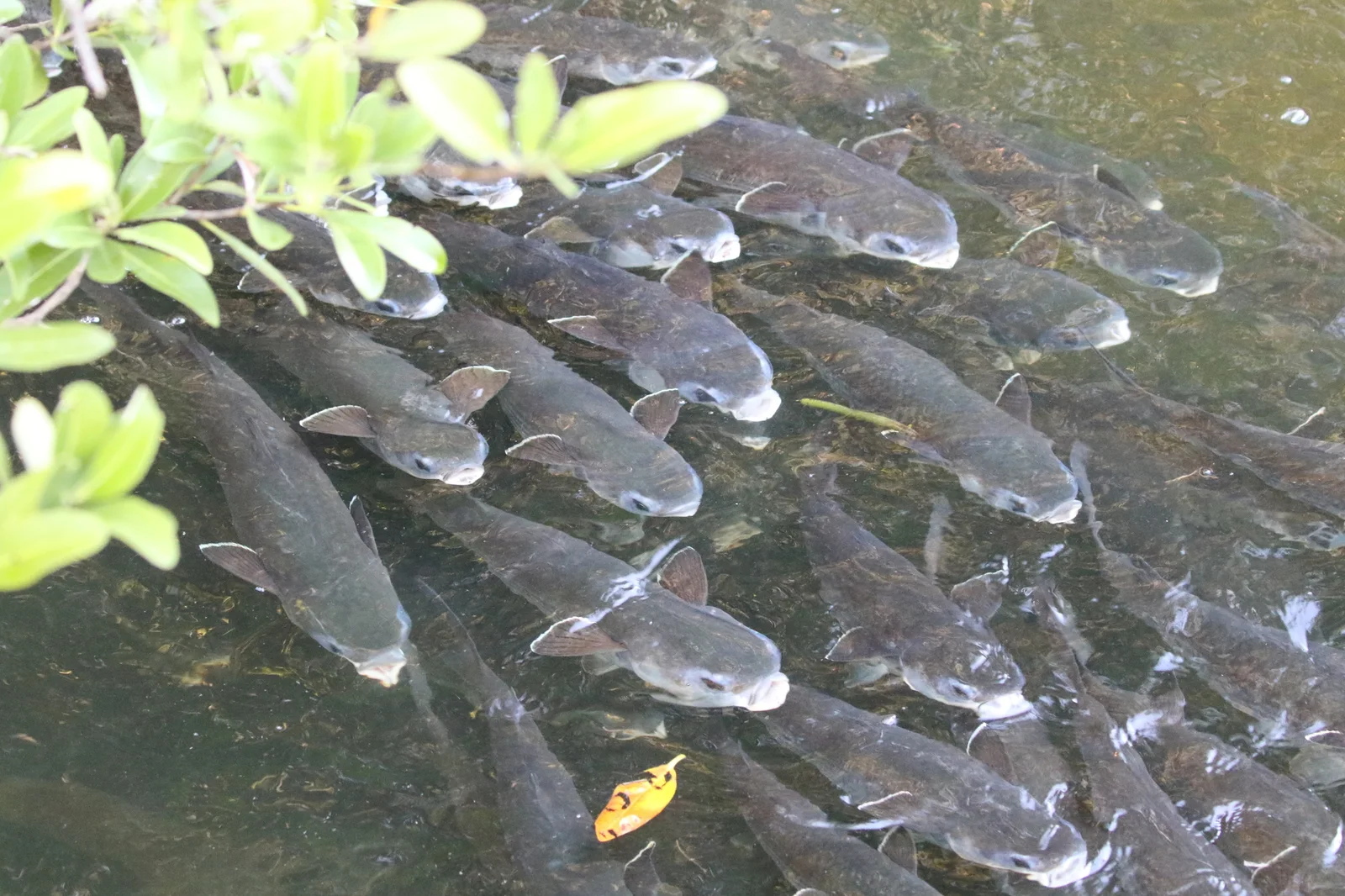
Flathead mullet
- Family
- Mugilidae
- Depth
- 0–120 m
- Season
- Jan, Feb, Mar, Apr, May, Jun, Jul, Aug, Sep, Oct, Nov, Dec
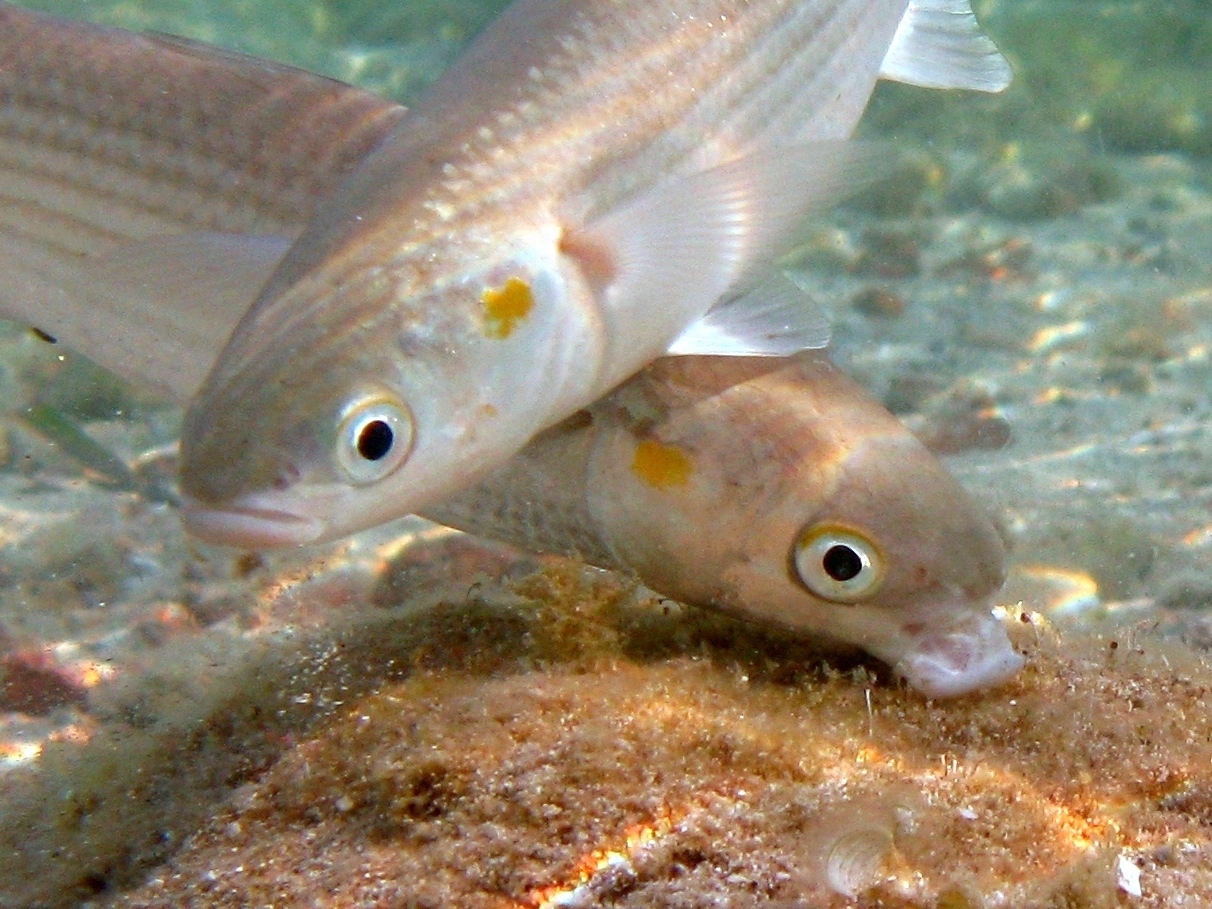
Golden grey mullet
- Family
- Mugilidae
- Depth
- 10–20 m
- Season
- Jan, Feb, Apr, May, Jun, Jul, Aug, Sep, Oct, Nov, Dec
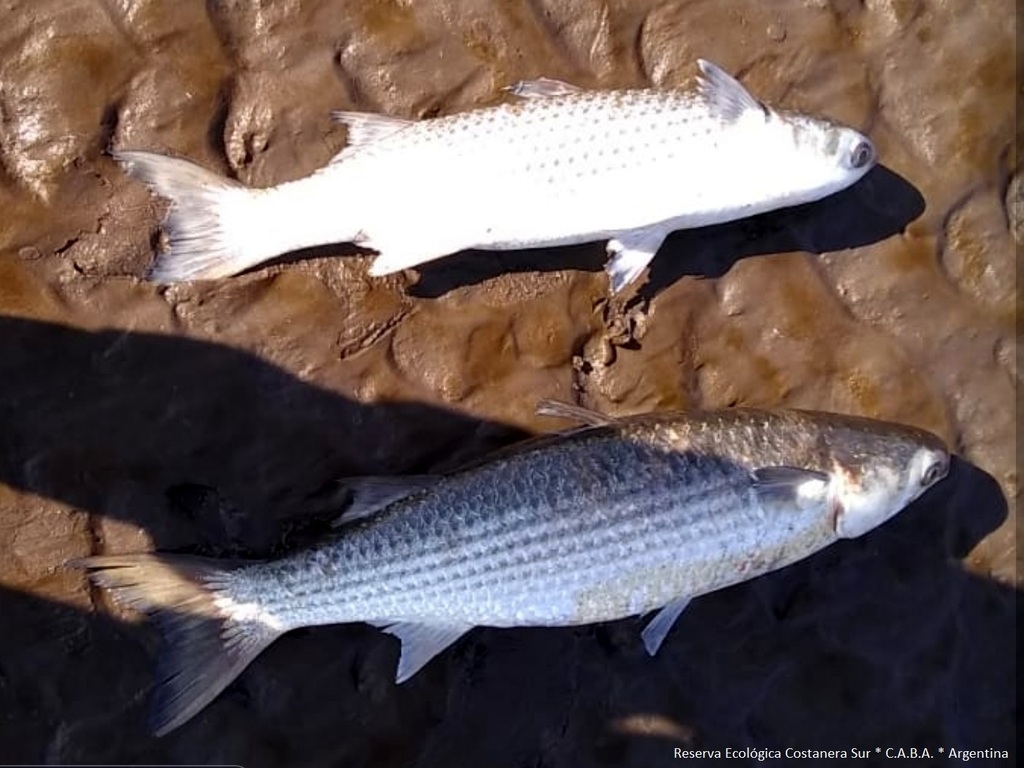
Lebranche mullet
- Family
- Mugilidae
- Depth
- ≥ 10 m
- Season
- Feb, Mar, May, Jun, Jul, Aug, Sep, Oct, Nov, Dec
Guides for this water
Technique, gear and safety guides that fit Thicklip grey mullet.