
Thinlip grey mullet
Thinlip grey mullet is a mugilid of the eastern Atlantic, from southern Norway to Cape Verde, including the Mediterranean and Black Sea. It lives from 10 to 20 m in temperate water, reaches 70 cm TL and 2.9 kg, can live 10 years, and feeds on zooplankton, algae and detritus. Its season covers January to December except March.
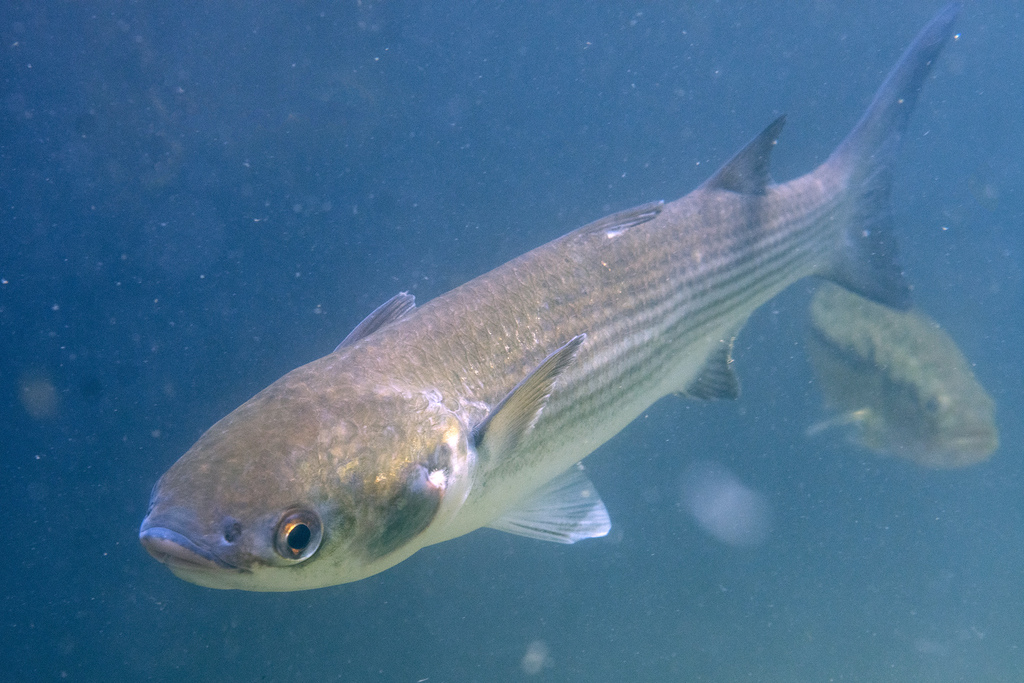
Thinlip grey mullet (Chelon ramada) is a fish of the family Mugilidae. FishBase gives its range as: Eastern Atlantic: from the coasts of southern Norway to Cape Verde, including the Mediterranean and the Black Sea (). Records of its in tropical waters are based on misidentifications. The dorsal fin carries four or five spines and seven to ten soft rays; the anal fin has three spines and eight or nine soft rays. It is recorded from 10 to 20 m, in temperate water. The recorded maxima are 70 cm TL, 2.9 kg, 10 years. Diet includes zooplankton, algae and detritus. IUCN status: Near Threatened (NT). Chinese name: .
Identification
Chelon ramada reaches 70 cm total length and 2.9 kg, with a common length of 35 cm and a maximum recorded age of 10 years. First maturity is given as 25.9 cm inside a 25 to 32 cm range, so the entry is a point value with a spread around it. The common length being half the maximum is the useful proportion here: most fish landed will be around 35 cm, and a 70 cm specimen is uncommon.
The dorsal fin carries four or five spines and seven to ten soft rays; the anal fin has three spines and eight or nine soft rays. That meristic combination is a stronger identification tool than the English names, which include grey mullet, thin-lipped grey mullet, thinlip grey mullet, thinlip mullet, haarder and mowel. The iNaturalist taxon has 399 observations.
Habitat and distribution
The range follows the eastern Atlantic from southern Norway to Cape Verde, taking in the Mediterranean and the Black Sea. Records from tropical water are attributed to misidentifications on the same page, which narrows the southern claim. Thirty-five jurisdictions are listed. The species is catadromous and moves through fresh, brackish and marine water, at a recorded depth of 10 to 20 m. For an angler, the estuary label is the operative one: the fish is recorded in brackish water at river mouths as well as in the open-water column.
GBIF's distribution file holds four records and ends at that count. One is the IUCN global assessment; two are national checklists, Denmark and Sweden, with the Swedish Dyntaxa entry carrying an irregular status while still marked native; the fourth is the 2025 checklist for the Doñana Biosphere Reserve in Spain, marked native. None of the four adds a country beyond the FishBase list, but they record the species in three different national inventories.
Season and fishing approach
Spawning months entered are January, February, June, July, August, September, October, November and December, leaving March to May blank. The records behind those months are regional: Turkish lagoons in 1992 to 1994, British waters in summer, French and Greek lakes, and a Tunisian lake in 1972 and 1973. A nine-month table with a three-month gap is more useful than a year-round claim, because it points to a spring pause rather than a closed season.
Catadromy and the 10 to 20 m band put the fish in reach of shore and small-boat anglers working an estuary. The diet is zooplankton, algae and detritus, so fine particle baits and bread-based groundbait match the feeding mode better than fish or crab. Fish the salinity gradient on a moving tide, present the bait shallow, and use light tackle: 2.9 kg is the ceiling.
Edibility and regulations
CITES carries no listing and CMS carries none, so on the page two fields are empty rather than settled. The one conservation statement left is a Near Threatened Red List assessment whose date is 7 June 2022.
Uses recorded are commercial fishing, commercial aquaculture and gamefishing. The country list spans 35 jurisdictions, so the rule that matters is national or local. The page prints no size threshold, no daily cap and no closed dates; those are three instruments, not one.
Where these facts come from
Check these pages before you rely on a size, range or protection status.
- FishBase — Chelon ramada — FishBase · T2
- GBIF — Chelon ramada occurrence records — GBIF · T2
- IUCN Red List — Chelon ramada — IUCN · T1
- Photo record — iNaturalist — iNaturalist · T3
Fish in the same water
These fish live in the same place.
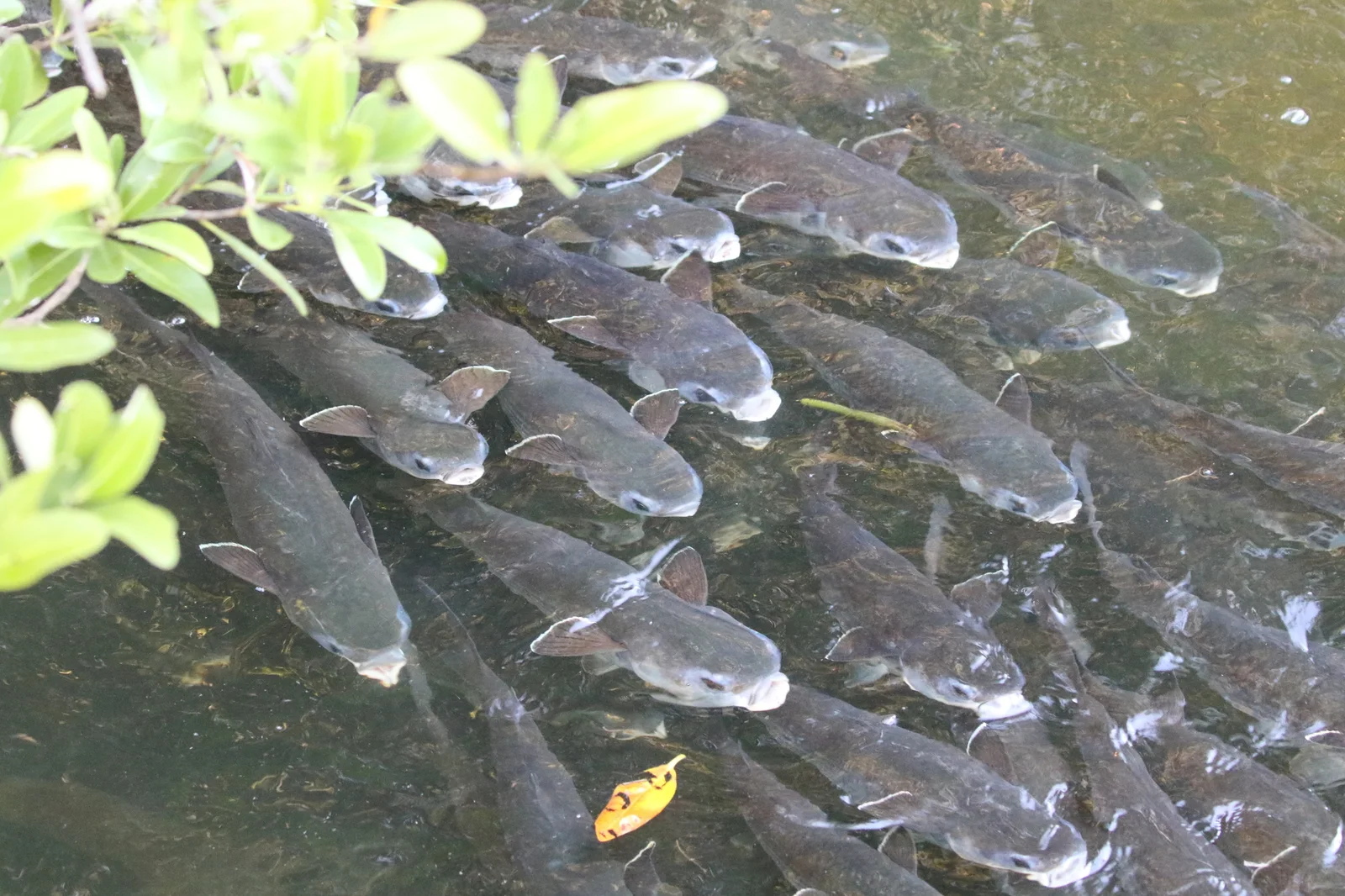
Flathead mullet
- Family
- Mugilidae
- Depth
- 0–120 m
- Season
- Jan, Feb, Mar, Apr, May, Jun, Jul, Aug, Sep, Oct, Nov, Dec
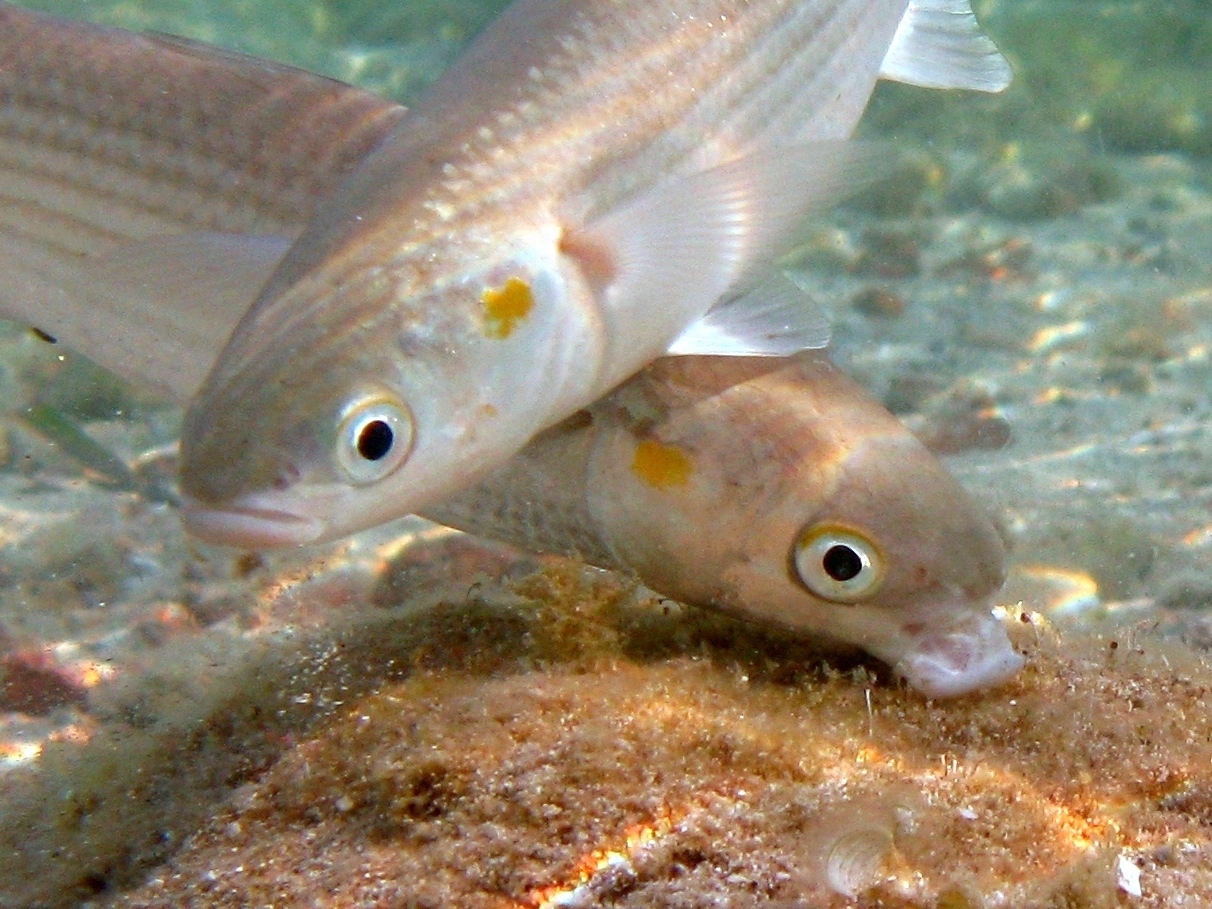
Golden grey mullet
- Family
- Mugilidae
- Depth
- 10–20 m
- Season
- Jan, Feb, Apr, May, Jun, Jul, Aug, Sep, Oct, Nov, Dec
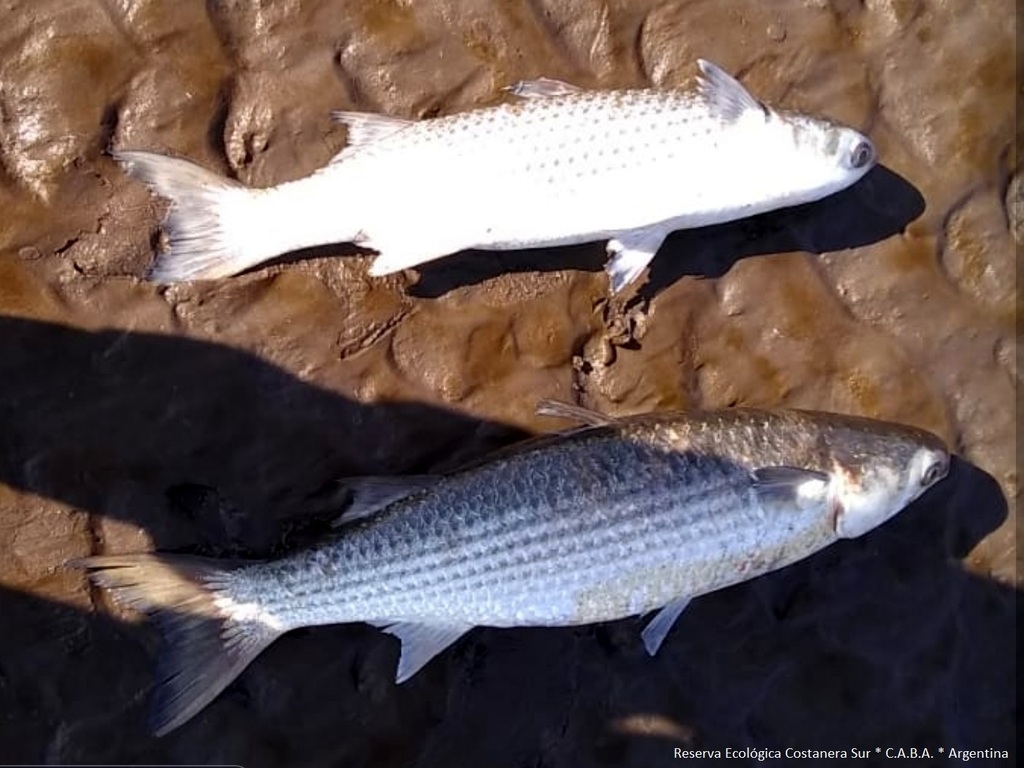
Lebranche mullet
- Family
- Mugilidae
- Depth
- ≥ 10 m
- Season
- Feb, Mar, May, Jun, Jul, Aug, Sep, Oct, Nov, Dec
Guides for this water
Technique, gear and safety guides that fit Thinlip grey mullet.