
Lumpfish
The lumpfish is a stout, knobbly cyclopterid of the North Atlantic, found on both sides — from Hudson Bay and Labrador down to New Jersey in the west, and from the Barents Sea and Greenland to Spain in the east. It is a cold-water fish, recorded at 3–11 °C and usually between 50 and 150 metres, though the full range runs from the surface to 868 m.
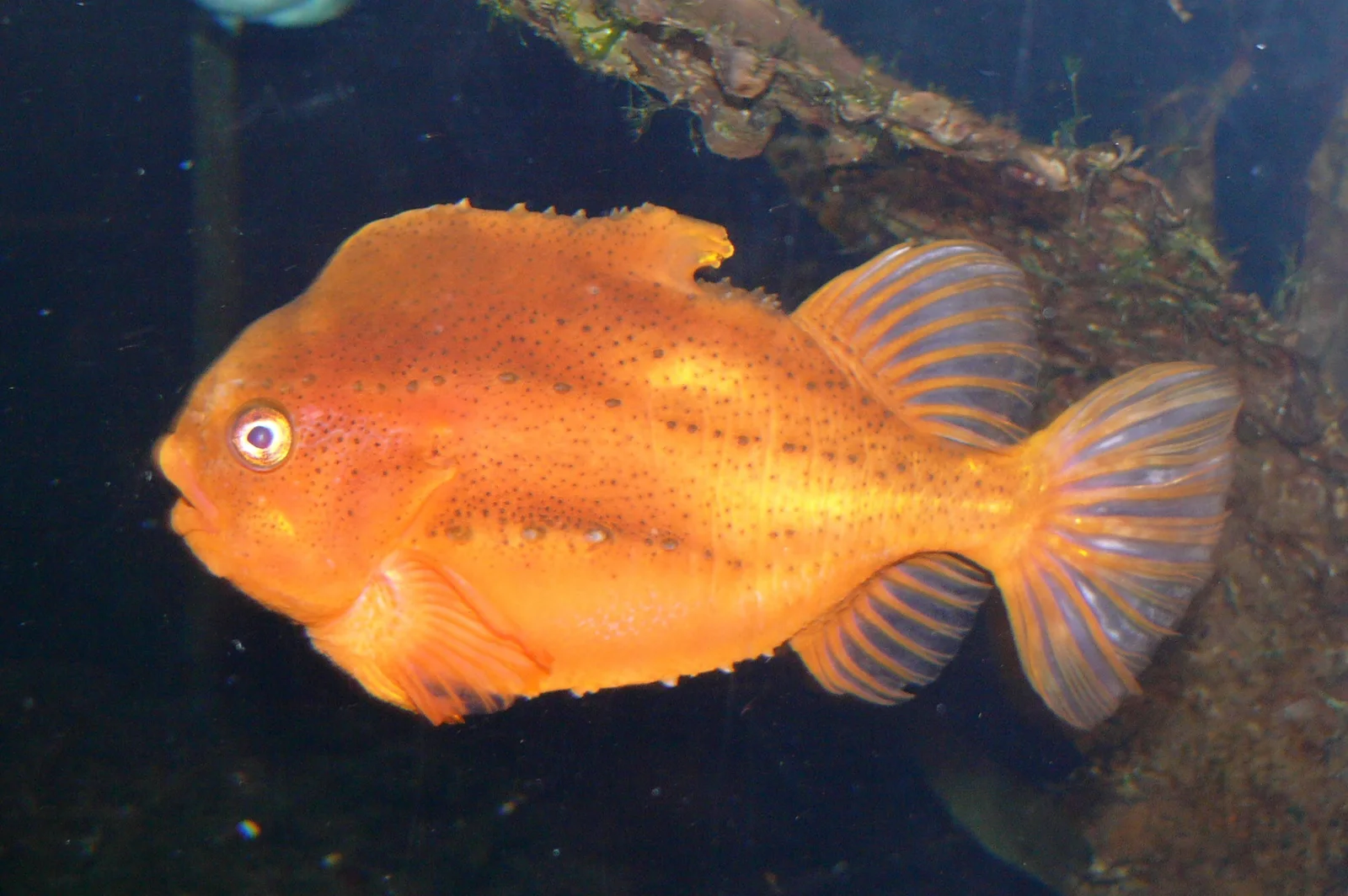
The lumpfish is a stout, knobbly cyclopterid of the North Atlantic, found on both sides — from Hudson Bay and Labrador down to New Jersey in the west, and from the Barents Sea and Greenland to Spain in the east. It is a cold-water fish, recorded at 3–11 °C and usually between 50 and 150 metres, though the full range runs from the surface to 868 m. It can reach 61 cm and 9.5 kg. FishBase marks it highly commercial and notes bait use, with no gamefish entry, so it is a fishery species rather than an angling target.
Identification
FishBase's human-uses line carries two entries here — highly commercial, and bait — and no gamefish entry. That line is the spine of this page: a fish with a price at the quay, a place in someone else's bait bucket, and no recorded role in rod-and-line fishing.
The size block explains why the two ends of that life sit so far apart. Maximum is 61 cm TL for a male or unsexed fish, with 42.9 cm SL recorded for a female; the heaviest published weight is 9.5 kg and the oldest reported age 13 years. Maturity is unrecorded — the page reads "L m ?" with no range — so a tape tells you sex and age class, not spawning condition. The counts that separate it from anything else on the same rock are 5–9 dorsal spines, 9–11 dorsal soft rays, no anal spine, 9–10 anal soft rays and 28–29 vertebrae, on a short, deep, angular body.
Vernacular names run from Hen-fish through Lump and Lumpsucker to Lumpfish. FishBase's principal English name picked Hen-fish, while its FAO and AFS entries both say Lumpfish; that is a naming wrinkle inside one species, not a taxonomic split.
Habitat and distribution
Environment: marine, benthopelagic, oceanodromous, 0–868 m with a usual band of 50–150 m, polar, 3–11 °C. The 0 m at the shallow end is one extreme; the 50–150 m band is where the record expects the animal, and a plan built at the surface has to explain the 50 m gap.
Distribution spans Nunavut, Hudson Bay and Labrador south to New Jersey, rarely Chesapeake Bay and Bermuda; in the east the Barents Sea, Iceland and Greenland to Spain. The country table holds 24 entries, among them Estonia, Finland, Latvia, Lithuania and Poland — the eastern Baltic is inside the range, which matters below.
The Wikipedia entry cited here is the genus page Cyclopterus — a monotypic genus whose only species is C. lumpus — and it records two dated Mediterranean reports, off Croatia in 2004 and Cyprus in 2017. GBIF's 56 distribution rows include six for Cyprus and three for Croatia, with 23 rows carrying no country; iNaturalist holds 806 observations. Those dated sightings plus the nine checklist rows support "occasional" and nothing stronger.
Season and fishing approach
Spawning arrives as three rows with both months and places: Baltic Sea February–May, North Atlantic June–August, and the west coast of Greenland May–June. The outer bounds are February and August. What is not settled is the hand-off: the Greenland window opens in May while the Baltic window is still running, and the North Atlantic window does not start until June.
Read south to north and that looks like a lag; read it as three separate surveys and it is three samples. The record supports the second. Either way the Baltic row is why the Estonian, Finnish, Latvian, Lithuanian and Polish entries in the country table sit inside a 3–11 °C envelope.
Because the species is oceanodromous, the 50–150 m band can empty locally. Which side of the migration a mark sits on is not on the page. The one hard check is a sounding above 11 °C: you are outside the usual envelope.
Edibility and regulations
Not Evaluated, no assessment date. NE is the absence of an assessment: not a finding of abundance, and not a permission. Beside it sit highly commercial and bait, usually. Heavy use and no assessment are compatible facts about the same fish.
No bag limit is quoted here, and none follows from a category. The one datum a recreational reader can use is the missing gamefish entry: where a rule exists for this species, it is a bycatch rule rather than a target rule.
Where these facts come from
Check these pages before you rely on a size, range or protection status.
- FishBase — Cyclopterus lumpus — FishBase · T2
- GBIF — Cyclopterus lumpus occurrence records — GBIF · T2
- IUCN Red List — Cyclopterus lumpus — IUCN · T1
- Photo record — iNaturalist — iNaturalist · T3
Fish in the same water
These fish live in the same place.
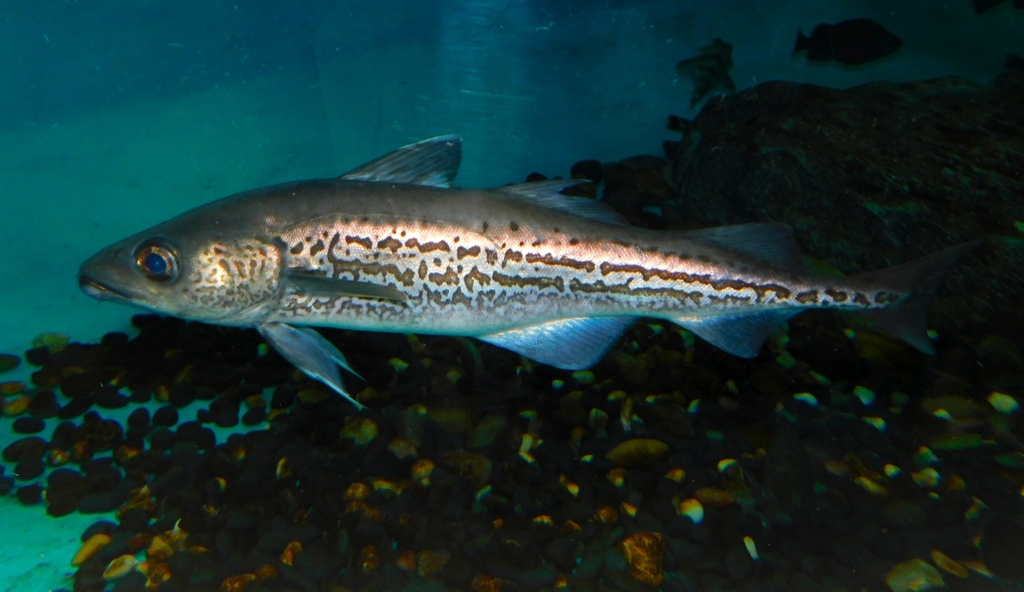
Alaska pollock
- Family
- Gadidae
- Depth
- 0–1280 m
- Season
- Jan, Feb, Mar, Apr, May, Jun, Jul, Aug

Albacore
- Family
- Scombridae
- Depth
- 0–600 m
- Season
- Jan, Feb, Mar, Apr, May, Jun, Jul, Aug, Oct, Nov, Dec
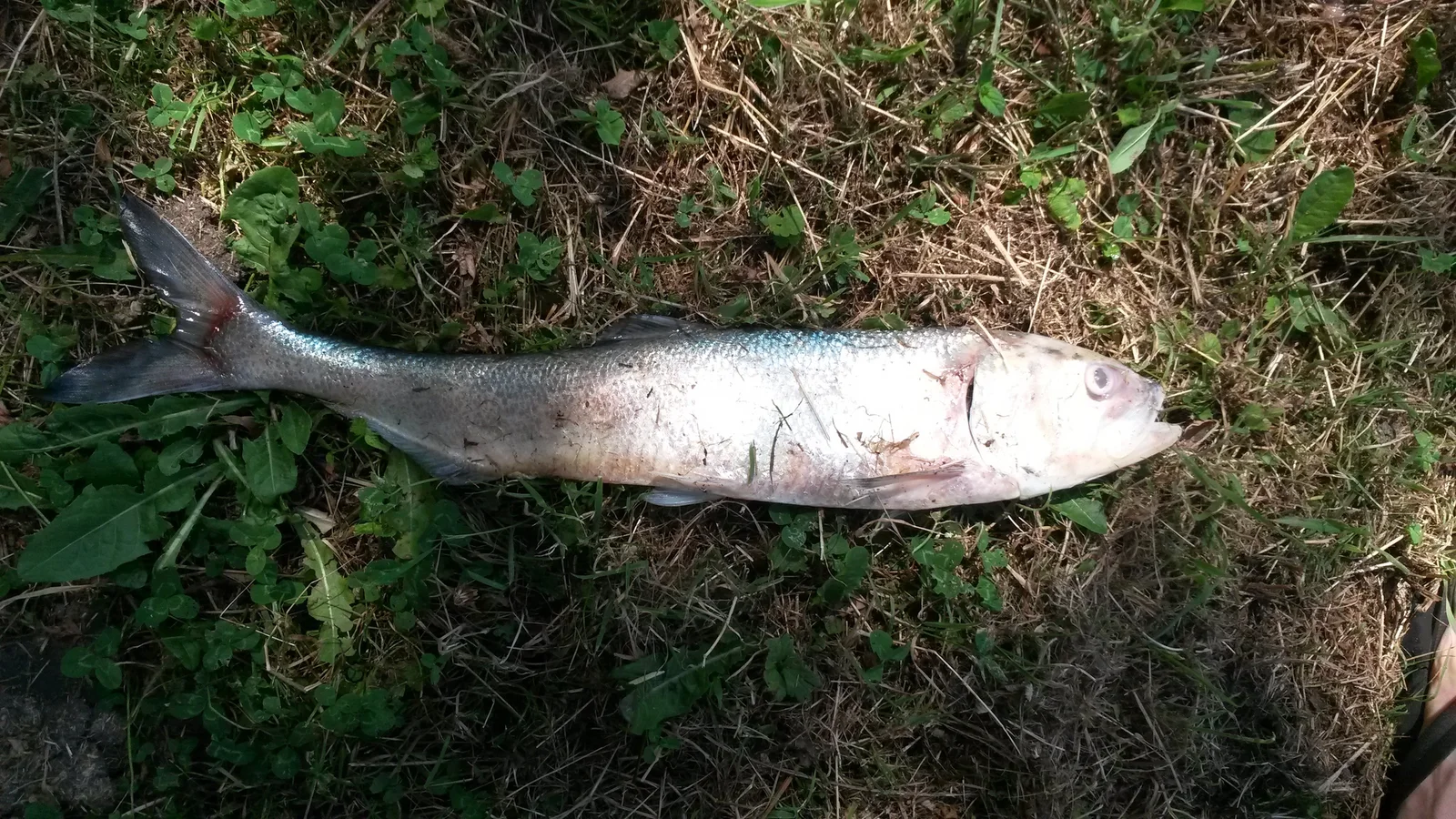
Allis shad
- Family
- Alosidae
- Depth
- 10–400 m
- Season
- Apr, May, Jun, Jul
Guides for this water
Technique, gear and safety guides that fit Lumpfish.