
Painted sweetlips / Slatey sweetlips
Painted sweetlips is an Indo-West Pacific haemulid, from the Red Sea, Arabian Sea and Mozambique Channel east to Palau, north to Japan and south to New Caledonia. It lives on reefs, in bays and estuaries at 1–170 m, usually 1–50 m, with juveniles in weedy areas.
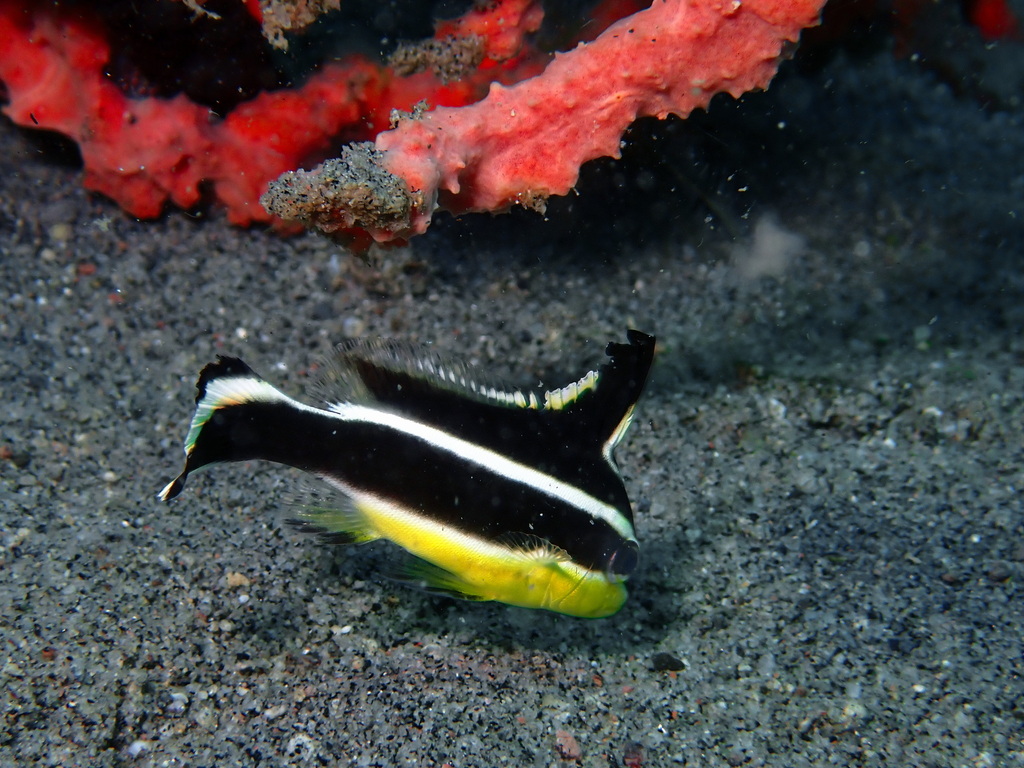
Painted sweetlips is an Indo-West Pacific haemulid, from the Red Sea, Arabian Sea and Mozambique Channel east to Palau, north to Japan and south to New Caledonia. It lives on reefs, in bays and estuaries at 1–170 m, usually 1–50 m, with juveniles in weedy areas. FishBase gives a maximum of 100 cm fork length and 6.3 kg, a common length of 55 cm, maturity at about 31.8 cm and a maximum reported age of 13 years. IUCN has not evaluated it (NE). The Chinese name follows FishBase's Chinese table, which gives , with as an alias.
Reading the spines
The dorsal fin has 9–10 spines and 21–25 soft rays; the anal fin has 3 spines and 7 soft rays. The body is fusiform and compressed. Adults are silver-grey to grey-brown with dense small dark spots on the body and fins; juveniles are paler with several dark longitudinal bands. The thick lips and the chin knob are typical of sweetlips, but the dense small spots, carried onto the fins, plus the 21–25 dorsal soft rays separate this species from the striped and spotted congeners. Colour deepens and fades with bottom and mood, so count fin rays and check spot density rather than relying on the name.
A fish of turbid bays and wrecks
FishBase's range is the Indo-West Pacific: the Arabian Sea and Mozambique Channel east to Palau, north to Japan and south to New Caledonia. The country table includes Australia, Bahrain, Bangladesh, Brunei, Cambodia, China, the Comoros, Djibouti, Hong Kong SAR, India, Indonesia, Iran, Iraq, Japan, Kenya, Kuwait, Macao, Madagascar, Malaysia, the Maldives, Mauritius, Mayotte, Mozambique, Myanmar, New Caledonia, Oman, Pakistan, Palau, Papua New Guinea, the Philippines, Qatar, Réunion, Saudi Arabia, Seychelles, Singapore, Somalia, South Africa, Taiwan region, Thailand and Vietnam. GBIF's 11,106 records are led by Australia (8,173), Mozambique (715), Japan (582), New Caledonia (335), Indonesia (245), the Philippines (201), Hong Kong SAR (158), Taiwan region (95) and Thailand (57). It is usually solitary or in small groups, often in turbid water over open muddy, sandy or silty ground in protected bays or estuaries, around rock outcrops, wreckage and debris, and also on shallow coast and coral reefs; juveniles use weedy areas.
The diet is explicit: benthic invertebrates and fishes, which puts crab meat, prawn, fish chunks and worms squarely on the bait list.
The blanks are information
FishBase gives two spawning windows: April–May off Abu Dhabi and August–October off East Africa. The two are far apart in the calendar, which points to local triggers rather than one season for the species; it is tropical and catchable all year, and in Taiwan region, Hong Kong SAR and southern China late spring to autumn is the main window, with winter fish deeper or on lee shores. No temperature number is published, so follow local bay and reef temperature. Tide and slack water concentrate food along turbid edges and river-mouth outsides; dawn, dusk and night are good because the fish is benthic and partly nocturnal. It often lives where visibility is poor, so do not ignore dirty water.
Where to start looking
The GBIF pattern is strongly Australian, with Mozambique, Japan, New Caledonia and Southeast Asia secondary. Fish the wreck, the rock outcrop and the sand-to-mud edge in sheltered water, not the clean coral head. The source gives no coordinates; local knowledge of snags and channel edges is the real map.
Tackle and baits
Bottom fishing is the standard: a medium-heavy rock or boat rod, a single hook or a short dropper rig, and prawn, crab meat, fish chunk or sandworm. The thick mouth takes bait firmly, so a sharp, wide-gap hook helps; after the hookset the fish dives for crevices or wreckage, so an abrasion-resistant leader and a fast lift matter. Soft plastics, jigheads and slow-pitch jigs dragged near the bottom work around wrecks and rock. In turbid water, scent and sound beat flash. Night fishing is productive because the fish moves inshore.
Eating, handling and the rules
The species supports commercial fisheries, game fishing and the aquarium trade; the flesh is fine, good steamed, braised or in soup. Bleed, gut and ice it promptly. FishBase explicitly reports ciguatera poisoning in some areas, so large adults, heads and organs deserve caution. Rules vary: Taiwan region manages inshore fishing and reef species through closed areas, seasons and protected zones, and recreational fishing must follow Fisheries Agency and local government notices; Hong Kong SAR's Fisheries Protection Ordinance regulates methods, with no angling or collecting in marine parks and reserves; Southeast Asian states differ widely, with Malaysia, Indonesia, the Philippines and Thailand issuing size and closed-season rules and usually prohibiting take in marine protected areas. Check the current local notice.
What the record leaves open
The page is built from FishBase taxonomy, morphology, distribution, environment, biology, reproduction, use, IUCN and ciguatera entries, with the country table for range and GBIF/iNaturalist for occurrence. The Chinese name follows FishBase's Chinese table , with kept as an alias. Water temperature, local size limits and ciguatera monitoring are not standardised, so the text stays conservative.
How to catch it
Bottom fishing
Fished with the listed approach, matched to the recorded depth and size.
Lure fishing
Fished with the listed approach, matched to the recorded depth and size.
Where these facts come from
Check these pages before you rely on a size, range or protection status.
- FishBase — Diagramma pictum — FishBase · T2
- GBIF — Diagramma pictum occurrence records — GBIF · T2
- IUCN Red List — Diagramma pictum — IUCN · T1
- Photo record — iNaturalist — iNaturalist · T3
Fish in the same water
These fish live in the same place.
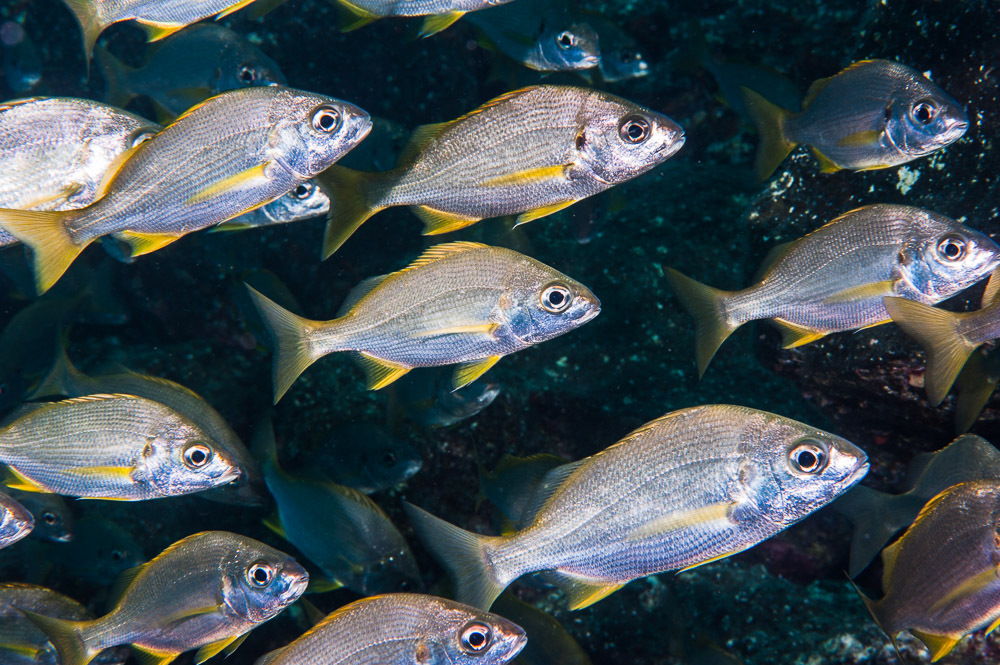
Bastard grunt
- Family
- Haemulidae
- Depth
- 10–100 m
- Season
- Jun, Jul, Aug
Cabinza grunt
- Family
- Haemulidae
- Depth
- 0–50 m
- Season
- Jan, Oct, Nov, Dec
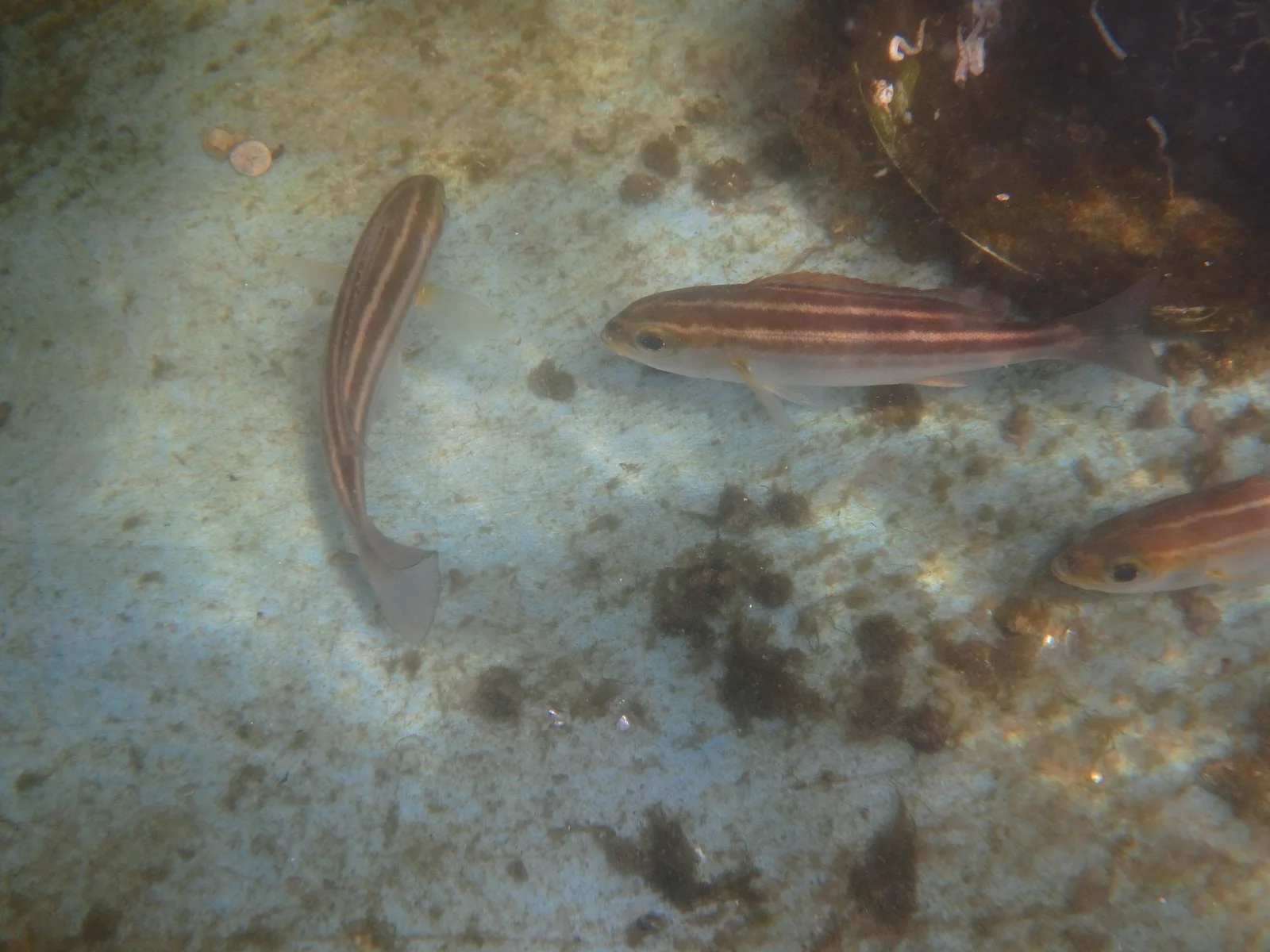
Chicken grunt
- Family
- Haemulidae
- Season
- Jun, Jul, Aug
Guides for this water
Technique, gear and safety guides that fit Painted sweetlips / Slatey sweetlips.