
Sand perch
Sand perch is a small Serranidae bass of bays, coastal grass and shallow banks in the United States, found from 1 to 80 m. It is solitary, feeds on small fish and is a synchronous hermaphrodite. It reaches 30 cm with a common length near 16 cm, and it is taken on small hooks with shrimp or squid near cover. Boat bottom fishing, jigging and drifting are the methods listed.

Sand perch is a Serranidae bass of bays, coastal grass and shallow banks from 1 to 80 m, with a maximum of 30 cm and a common length near 16 cm. It is solitary, feeds on small fish, is a synchronous hermaphrodite, and is taken on small hooks with shrimp or squid near cover.
Identification
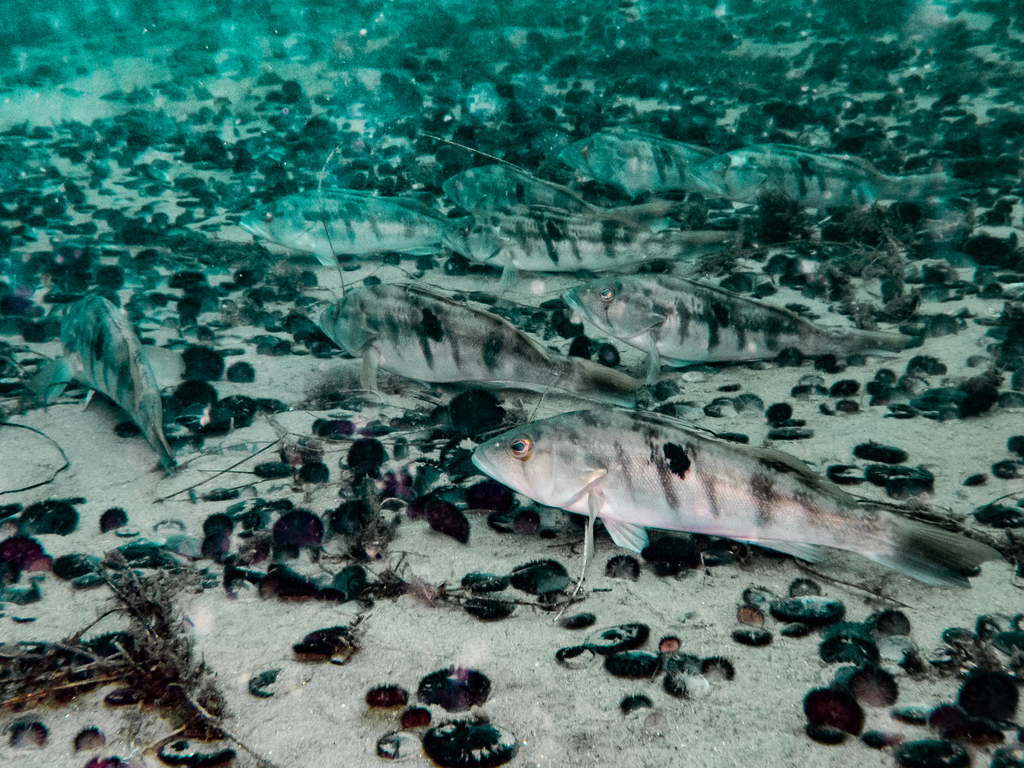
Sand perch is a small, fairly elongate serranid with a sandy brown to olive back and a paler belly. The colour shifts with bottom and light, so the shape and fin count are more useful than any single shade.
The anal fin carries three spines and 7 to 8 soft rays, and the species lacks both an opercular spine and the venom gland that many small groupers have. That combination helps separate it from juvenile groupers and from other small bass on the same grass edge.
FishBase gives 30 cm total length, a common length of 16 cm and maturity at about 13 cm. It is a synchronous hermaphrodite, meaning each adult carries both male and female tissue at the same time rather than changing sex at a set size.
Distribution and Habitat
The species is recorded from North Carolina and the northern Gulf of Mexico through the Bahamas and south to Uruguay. FishBase flags western Caribbean records as doubtful, so the Caribbean picture is less certain than the Gulf one.
Depth is 1 to 80 m. It lives in bays, over coastal grassy areas and on shallow banks, and it is reef-associated without being tied to high coral relief. Grass edges, patchy hard bottom and low rock are the usual marks.
Habits and Diet
Sand perch are solitary and ambush small fish around cover. They retreat into shelter when frightened, which is why a bait presented a little away from the grass edge often beats one dropped into the middle of it.
The species is a synchronous hermaphrodite, a reproductive strategy that lets paired fish exchange roles. Spawning records from US coasts fall in January and from March through December, so the window is broad rather than sharply seasonal.
Despite a 30 cm maximum, it is a popular pan fish. Most kept fish are close to the 16 cm common length, and the 13 cm maturity point means a modest size is already an adult.
Fishing Methods
A small two-hook bottom rig with shrimp pieces or squid strips is the standard approach. Fish it along the grass-to-sand edge, over patch reef or beside a dock piling, and let the bait sit still between small lifts.
Micro jigs of 10 to 20 g work on shallow banks when the fish are aggressive, and a slow lift-and-drop just off the bottom is enough. Drifting across grass beds covers water and picks up sand perch as a bycatch while you look for larger fish.
Gear and Approach
Use 10 to 15 lb braid, a 20 lb leader, size 1 to 2 hooks and 1 to 3 oz of lead depending on current. A light 6 to 7 ft rod makes small baits easier to feel and keeps the fight interesting.
The bite is a series of taps rather than a run. Set on the first steady weight, because the small mouth does not hold a bait long. Keep the rod tip low and lift the fish clear of grass before it buries into cover.
Seasonal Window
Warm months are the most consistent, and the near year-round spawning record means fish are present rather than absent for most of the year. Winter fish move off the shallow flats into deeper bay water and bite less often.
Clear, calm water is the practical trigger. A muddy tide shuts down the shallow bite, while a settled spell with light current brings fish back onto the grass edges and makes small baits visible again.
Edibility and Handling
The flesh is white, sweet and flaky, and the fish is a classic Gulf pan fish. Whole fried or pan-fried is the usual treatment; at 16 cm there is little point in filleting, and the frame gives good stock.
Chill immediately in an ice slurry and clean the same day. A small fish warms quickly on deck, and the thin flesh turns soft if it sits in a bucket.
There are no reported ciguatera concerns and FishBase lists the species as harmless to humans, which is one reason it is kept so casually.
Regulations and Conservation
Federal waters set no bag or size limit for sand perch, and there is no federal seasonal closure. The species is not on the federal reef fish table.
Florida treats it as an unlisted species, so the default rule applies: 100 lb or 2 fish per person per day, whichever is greater. Louisiana does not list it. Mississippi does not list it. Alabama sets no species limit, and Texas does not list it either.
The IUCN Red List lists sand perch as Least Concern, assessed 21 August 2012. Because it is a synchronous hermaphrodite, a size limit would not protect one sex alone, but no such limit currently applies. Rules change yearly, so confirm the current state notice.
How to catch it
Boat bottom fishing
Jigging
10 20
Drift fishing
Where these facts come from
Check these pages before you rely on a size, range or protection status.
- FishBase — Diplectrum formosum — FishBase · T2
- GBIF — Diplectrum formosum occurrence records — GBIF · T2
- IUCN Red List — Diplectrum formosum — IUCN · T1
- Photo record — iNaturalist — iNaturalist · T3
Fish in the same water
These fish live in the same place.

Guides for this water
Technique, gear and safety guides that fit Sand perch.