
Rock hind
Rock hind is a small western Atlantic grouper from Massachusetts and Bermuda through the Gulf of Mexico and the Caribbean to southern Brazil. It lives on rocky reefs from 1 to 120 m, usually shallower than 15 m, reaches 65 cm and 4.5 kg, and is a wary, solitary fish taken on small bottom baits.
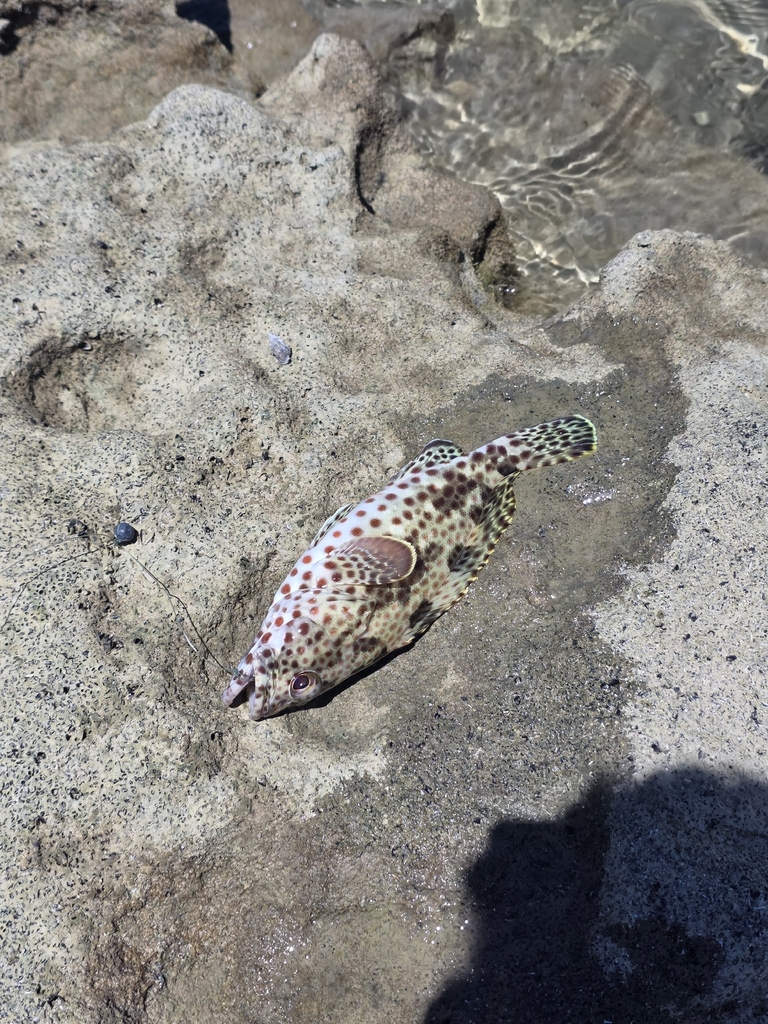
Rock hind is a small western Atlantic grouper from Massachusetts and Bermuda through the Gulf of Mexico and the Caribbean to southern Brazil. It lives on rocky reefs from 1 to 120 m, usually shallower than 15 m, reaches 65 cm and 4.5 kg, and is a wary, solitary fish taken on small bottom baits.
Identification
Rock hind is a small, stocky grouper, mottled olive-brown to red-brown with darker reddish spots over the body and fins. The pattern is blotchier than the fine speckling of a red hind. FishBase gives 65 cm, 4.5 kg and 25 years, with a 35 cm common length and maturity at 30.4 cm. The dorsal fin has 16 to 17 soft rays and the anal fin three spines and eight soft rays.
Distribution and Habitat
The range runs from Massachusetts and Bermuda through the Gulf of Mexico and the Caribbean to southern Brazil. It lives on rocky reefs from 1 to 120 m but usually shallower than 15 m. That shallow habit is why it is a shore fish.
Habits and Diet
Adults are solitary and wary, and they use cover well; a fish that sees the boat often refuses the bait. Cast, wait, and keep the presentation small. The diet runs to crabs and fishes, with other bottom animals taken as available. A live shrimp or a small crab bait matches that better than a large cut bait.
Fishing Methods and Gear
Fish the edges: jetty rocks, patch reef, ledges and channel sides. A 20 to 30 lb braid, a 30 lb leader, a 2/0 to 4/0 circle hook and a small sinker are enough. Cast past the rock and work the bait back to the edge. Expect a sharp tap and a short run; strike with a lift rather than a swing. Add just enough lead to hold.
Seasonal Window
FishBase records spawning off Cuba in January to March and at Ascension from July to November. Gulf timing is not documented, so no Gulf month range is claimed. Warm months fish best from shore, and low-light hours beat midday. A falling tide that drains the shallow rock is often the most productive window.
Edibility and Handling
Rock hind is good eating, with white flesh and a small frame that suits pan frying or soup. Ciguatera has been reported for this species, so large individuals from reef areas carry a risk. Keep the smaller fish.
Regulations and Conservation
Federal Gulf EEZ: grouper fall under a 4 fish aggregate per person per day, and warsaw are 1 per boat per day. Rock hind have no federal minimum size and no dedicated closure, and they count inside the aggregate. Federal documents have used Gulf of America since 2025. Florida sets no separate minimum and counts rock hind in the 4 fish aggregate, with warsaw at 1 per person and 1 per boat per day on the Atlantic side. Louisiana and Mississippi use a 4 fish aggregate with no rock hind minimum. Alabama uses a 4 fish aggregate and a 20 fish reef-fish aggregate where no other bag applies. Texas lists no rock hind in state water; beyond 9 nautical miles federal rules apply. IUCN lists rock hind as Least Concern, assessed 12 May 2017, with no species-specific closure in the Gulf.
How to catch it
Boat bottom fishing
Drift fishing
Lure fishing
20 30
Where these facts come from
Check these pages before you rely on a size, range or protection status.
- FishBase — Epinephelus adscensionis — FishBase · T2
- GBIF — Epinephelus adscensionis occurrence records — GBIF · T2
- IUCN Red List — Epinephelus adscensionis — IUCN · T1
- Photo record — iNaturalist — iNaturalist · T3
Fish in the same water
These fish live in the same place.
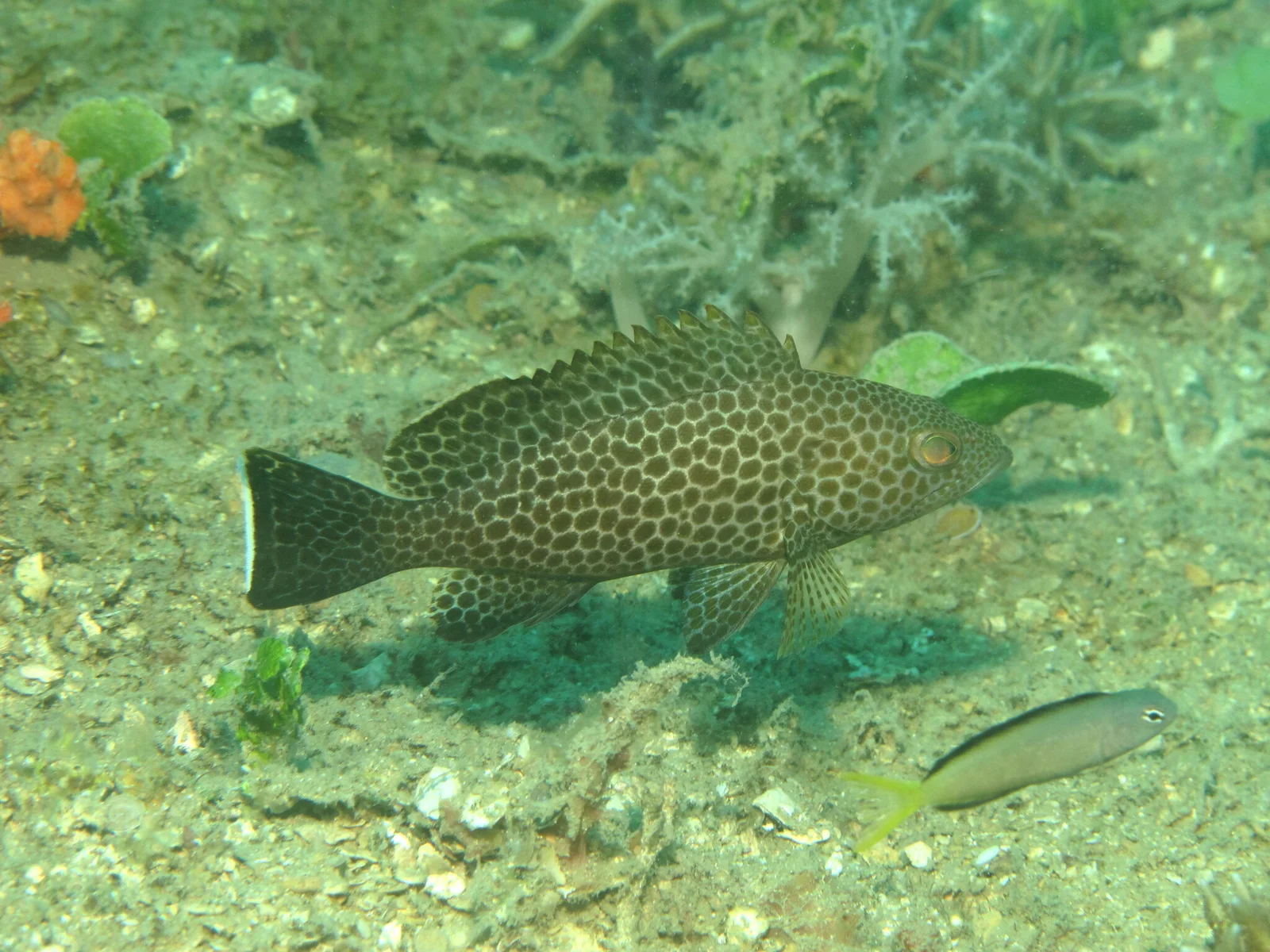
Areolate grouper
- Family
- Epinephelidae
- Depth
- 6–200 m
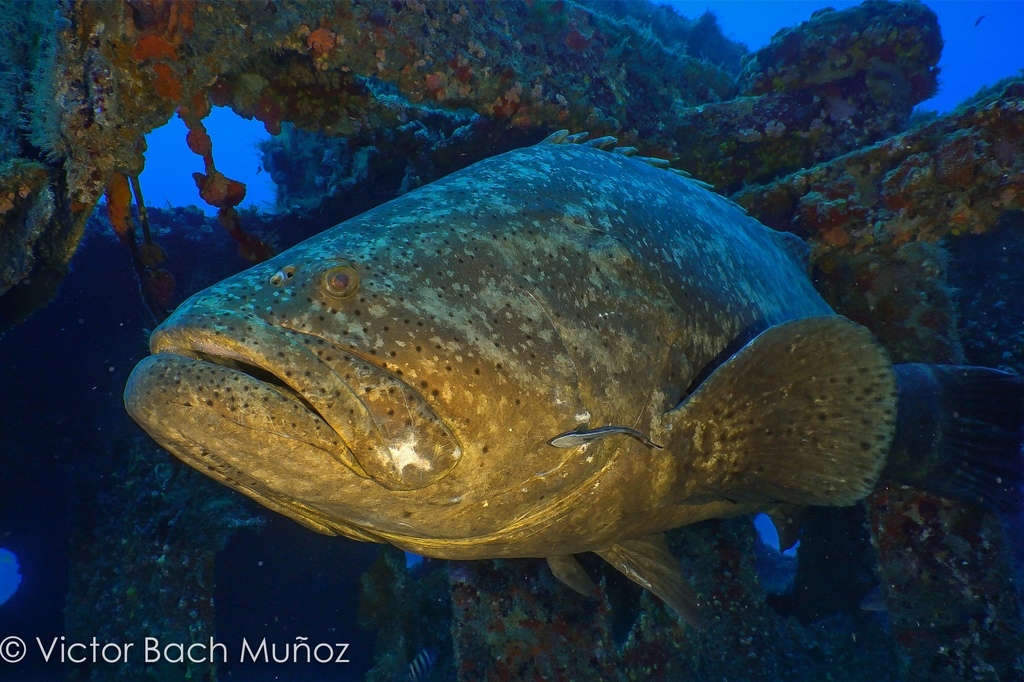
Atlantic goliath grouper
- Family
- Epinephelidae
- Depth
- 0–100 m
- Season
- Jan, Feb, Jun, Jul, Aug, Sep

Black grouper
- Family
- Epinephelidae
- Depth
- 60–250 m
- Season
- Jan, Feb, Mar, Apr, May, Jun, Jul, Aug, Sep, Oct, Nov, Dec
Guides for this water
Technique, gear and safety guides that fit Rock hind.