
Dogtooth grouper
Dogtooth grouper is a large epinephelid of the eastern Atlantic and Mediterranean, from Portugal to Angola. It is a deep-water grouper, living from 30 to 400 m in subtropical water, and reaches 164 cm TL and 35 kg. It feeds on fish.
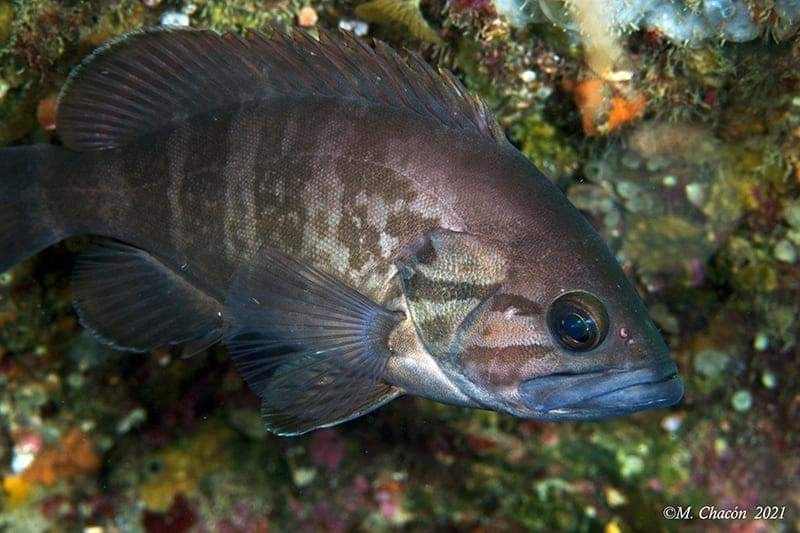
Dogtooth grouper (Epinephelus caninus) is a fish of the family Epinephelidae. FishBase gives its range as: Eastern Atlantic: Portugal to Angola, including the Mediterranean. The body itself is fusiform and laterally compressed. It is recorded from 30 to 400 m, in subtropical water. The recorded maxima are 164 cm TL, 35 kg. Diet includes fishes. IUCN status: Data Deficient (DD). Chinese name: .
Identification
The FAO English name is "Dogtooth grouper", the UK vernacular on the same table is "Toothed grouper", and the Chinese entries give both and . The body itself is fusiform and laterally compressed. Spination separates the fin patterns: three anal spines with eight rays, and 13–14 soft rays in the dorsal fin. For size the record offers only a ceiling — 164 cm TL and 35 kg — while common length, maturity length and maximum age are all left blank; those two figures describe the top of the species, not the fish usually landed.
iNaturalist's preferred name is "Dogtooth Grouper"; taxon 100083 holds 39 observations. WoRMS keeps the accepted name Epinephelus caninus at AphiaID 127033 and restates the 164 cm body size as an attribute. That repetition is worth noticing: the same ceiling appears in two databases because both trace it back to the same taxonomic literature, not because two independent measurements agree.
Habitat and distribution
The written range is the eastern Atlantic from Portugal to Angola, including the Mediterranean. The country table carries 45 territories, from Albania, Algeria and Angola through Portugal, Spain and Türkiye to Ukraine and Western Sahara. The environment fields read marine, demersal, subtropical, 46°N to 18°S and 19°W to 41°E, at 30–400 m. Two substrate keywords are recorded — "sandy" and "muddy" — and the only prey word is "fishes". No spawning month appears anywhere on the record.
OBIS returns 737 records in 16 datasets dated 1933 to 2026. No country field comes back with the query, so the total confirms sampling of the depth band without locating it along the 46°N–18°S range.
Season and fishing approach
With no spawning month and a single prey word, the season cannot be read off a calendar and the bait cannot be read off a list. What the record does say is where the fish sits: 30–400 m over sand and mud. A grouper that reaches 164 cm and eats fishes on soft ground is an ambush predator, and the ambush site is the bottom rather than the reef.
That changes the rig. A reef outfit casts at structure; this fish needs a bait on or near soft bottom, and the 30 m shallow edge is already boat water; at 400 m a small open boat is out of its depth, so the practical zone is the shallower end, where a sounder can mark sand or mud and a weighted bait can still find bottom. The record gives no current, tide or temperature note, so those stay field observations.
Edibility and regulations
Commercial fisheries is the only use listed; gamefish, aquaculture and the aquarium trade are all absent. IUCN assessed it on 17 November 2016 and returned Data Deficient. For a fish that reaches 164 cm and 35 kg that is a gap in knowledge, not a verdict on the stock.
The country table carries 45 territories, from Portugal and Spain through the Mediterranean to Angola. Each entry is a presence record: no minimum length, no bag limit and no closed season attaches to any of them, and no fisheries authority is named. A recreational take would depend on a national text the database does not carry, and a 45-row presence table is the wrong place to look for it.
Where these facts come from
Check these pages before you rely on a size, range or protection status.
- FishBase — Epinephelus caninus — FishBase · T2
- GBIF — Epinephelus caninus occurrence records — GBIF · T2
- IUCN Red List — Epinephelus caninus — IUCN · T1
- Photo record — iNaturalist — iNaturalist · T3
Fish in the same water
These fish live in the same place.
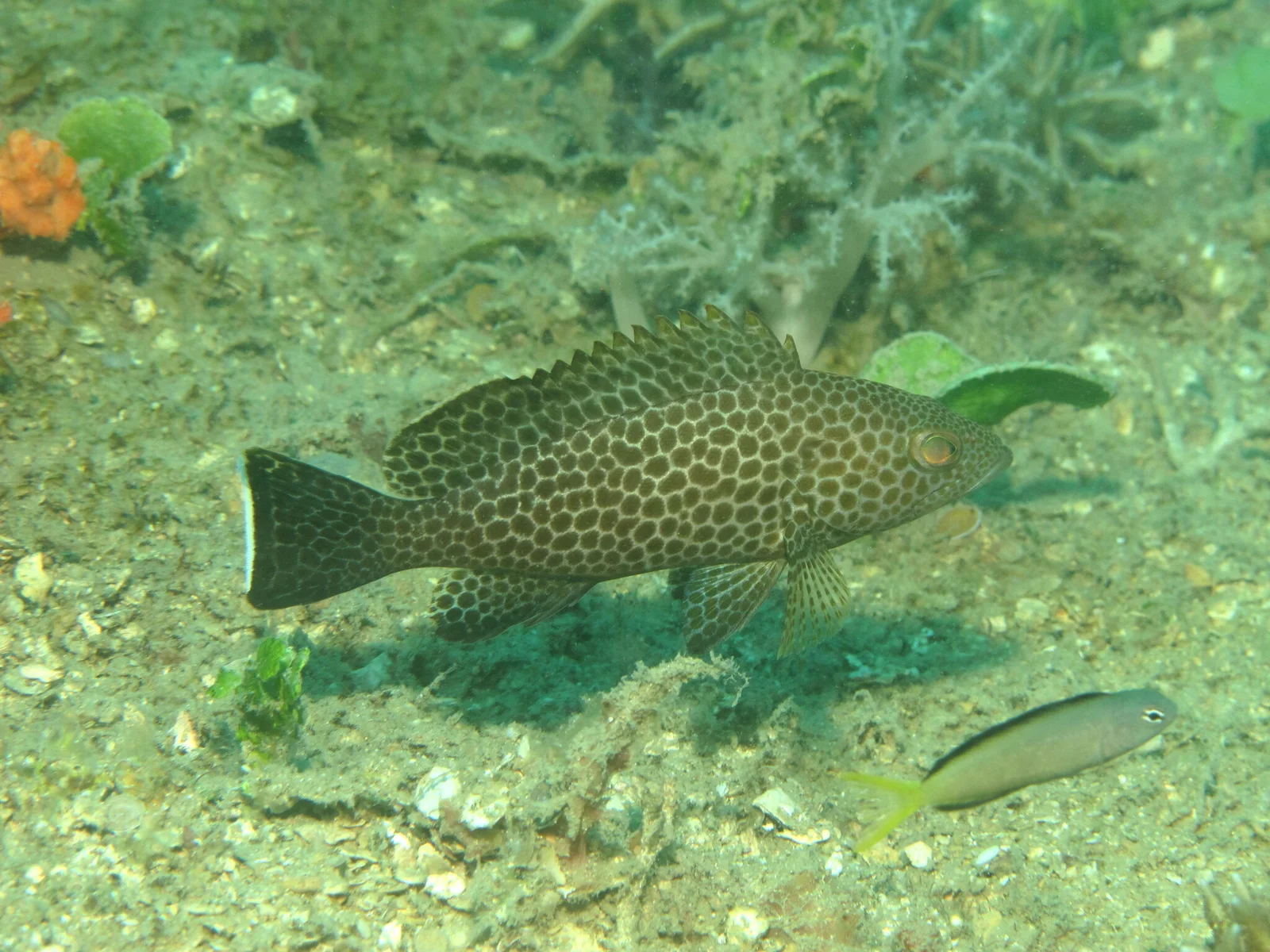
Areolate grouper
- Family
- Epinephelidae
- Depth
- 6–200 m
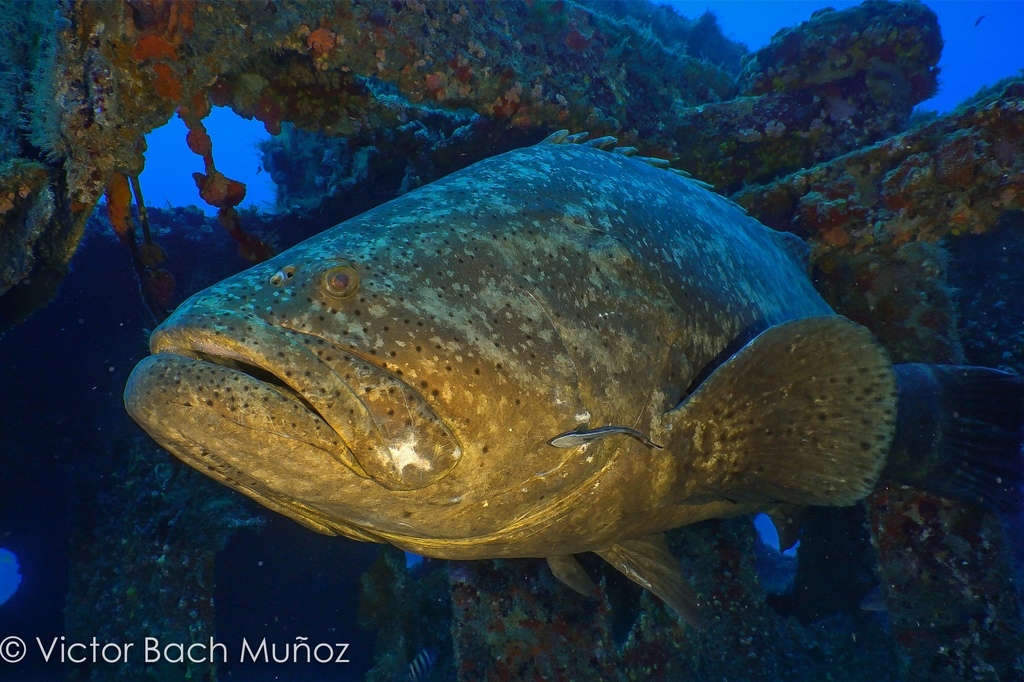
Atlantic goliath grouper
- Family
- Epinephelidae
- Depth
- 0–100 m
- Season
- Jan, Feb, Jun, Jul, Aug, Sep

Black grouper
- Family
- Epinephelidae
- Depth
- 60–250 m
- Season
- Jan, Feb, Mar, Apr, May, Jun, Jul, Aug, Sep, Oct, Nov, Dec
Guides for this water
Technique, gear and safety guides that fit Dogtooth grouper.