
Sixbar grouper
Sixbar grouper is a small grouper of the western-central Pacific, from Thailand and the Philippines to northern Australia. It lives from 10 to 80 m in tropical water, reaches 40 cm, and feeds on crustaceans and fish. Boat bottom fishing is the usual approach.
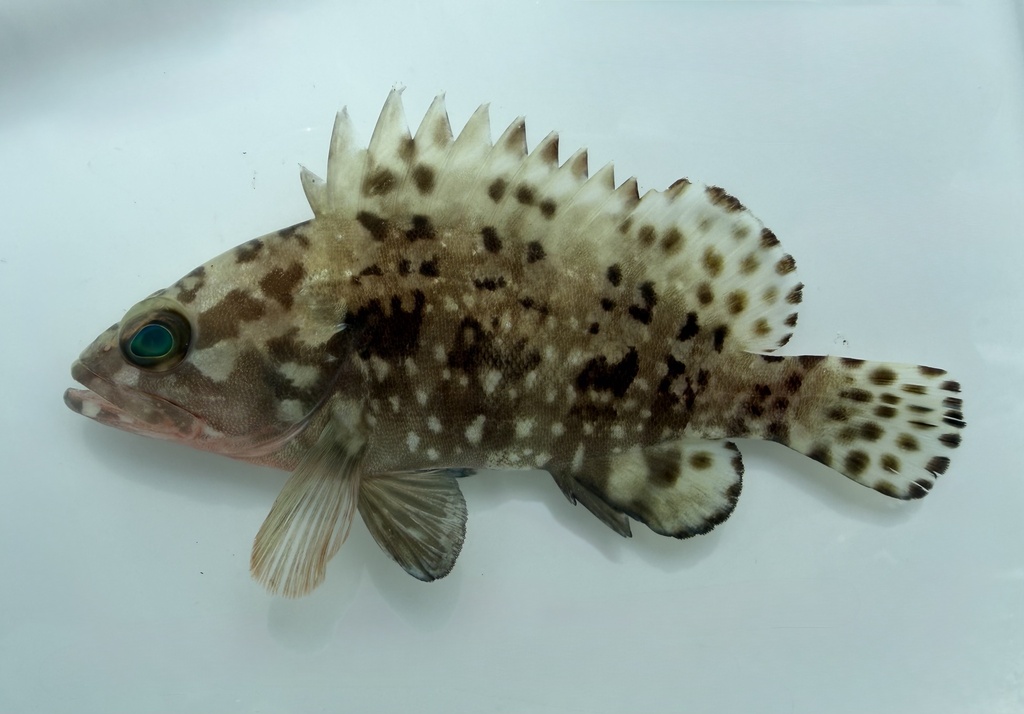
Sixbar grouper (Epinephelus sexfasciatus) is a fish of the family Epinephelidae. FishBase gives its range as: Western Central Pacific: known only from tropical waters, from Thailand and the Philippines to northern Australia. It is recorded from 10 to 80 m, in tropical water. The recorded maximum is 40 cm TL. Diet includes crustaceans and fishes. IUCN status: Least Concern (LC). Chinese name: .
Two labels, one species
The environment line reads "Marine; reef-associated; depth range 10 - 80 m" and adds a tropical range of 21°N to 21°S, 94°E to 143°E. The biology keywords read "sandy, muddy, soft-bottom". The page's terrain list follows the keywords rather than the environment line. So the disagreement is not between this page and FishBase; it is inside the source itself. A reader who picks whichever label suits the paragraph will produce a confident page that the next reader cannot reproduce.
Which label carries more weight
The depth range is the hardest number in the record because it is a measured field rather than a descriptor: 10–80 m. The reef-associated tag is a milieu category, and FishBase applies it broadly to species that associate with reef structure without requiring the fish to sit on coral. The substrate keywords are biology-section terms, which describe what the animal is recorded over. Read that way, the two labels are not alternatives: a grouper can be associated with reef structure while feeding over the sand and mud around it. The error is to treat either label as a map.
Where the range text and the records diverge
The distribution text is narrow: "Western Central Pacific: known only from tropical waters, from Thailand and the Philippines to northern Australia." The country list is wider, adding Indonesia, Malaysia, Papua New Guinea, Singapore and Viet Nam. GBIF's 1,929 preserved occurrences sharpen the same tension: Australia supplies 1,406 of them, the Philippines 126, Indonesia 78, Thailand 75 and Malaysia 64. The text describes a tropical corridor; the specimens sit heavily in one corner of it. For a trip plan, that means the published range is broader than the museum weight, and the Australian concentration is a record artefact as much as a biological signal.
A working hypothesis that does not pick a winner
Take both labels as true at different scales, then look for the seam. A reef-associated fish recorded over sand and mud is most plausibly using isolated hard structure that rises from soft ground: a rock patch, a rubble pile, a ledge, a wreck, the edge of a channel. That hypothesis uses the depth range, the substrate keywords and the reef tag without discarding any of them. It also fails honestly: if the ground is flat sand for a kilometre in every direction, the hypothesis predicts nothing there, and the page should not pretend otherwise.
How to test it on the water
A sounder is the test instrument. Look for a hard return surrounded by a soft one, then note the depth at the transition. The recorded range starts at 10 m, so the first stage of the search sits inside recreational depth almost everywhere; the 80 m ceiling matters only if you have the boat and line for it. Drift over the transition rather than anchoring on the mark, because the point is the edge, not the centre. If two drifts produce nothing, move to another piece of hard ground instead of fishing longer over the same sand.
The fish you will meet
The only length figure is a maximum of 40 cm (TL); there is no common length and no weight. The maturity field is partial: "Lm ?, range 13 - ? cm", which gives a lower bound but no estimate. Identification therefore rests on counts and pattern rather than on a size expectation: 14–16 soft dorsal rays, 3 anal spines and 8 soft anal rays, on a compressed body. The name is also unstable. FishBase's English list runs from sixbar grouper through six-banded rock cod to coral cod and red-banded grouper. iNaturalist's linked summary for the same taxon calls it "Spotted coralgrouper", a name that belongs properly to a different grouper genus. A photo labelled with the wrong common name can push a catch into the wrong record; the fin counts are the stable part.
The missing spawning table
No spawning window is recorded for this species, and the page leaves the season field empty rather than estimating one. That absence has a cost: the month cannot be used as a filter, and any "peak season" claim for this grouper would be unsupported. What remains usable is the depth band and the tropical range. Plan around water temperature and current rather than a calendar, and treat local advice about a run as local information rather than as a property of the species.
Gear on soft ground near hard structure
Boat bottom fishing is the recorded approach, with bait or lure worked near the bottom. The substrate conflict changes the terminal rig: over sand and mud a plain bottom rig sits cleanly, while at the seam the same rig abrades against rock. A short, heavier leader section above the hook costs little and survives the edge. The 40 cm ceiling suggests moderate tackle rather than heavy gear; the depth range, not the size, decides lead weight. Hook the bait so it can be lifted off the bottom without dragging the lead into the structure.
How to catch it
Boat bottom fishing
Anchored or drifting boat, bait or lure worked near the recorded bottom.
Where these facts come from
Check these pages before you rely on a size, range or protection status.
- FishBase — Epinephelus sexfasciatus — FishBase · T2
- GBIF — Epinephelus sexfasciatus occurrence records — GBIF · T2
- IUCN Red List — Epinephelus sexfasciatus — IUCN · T1
- Photo record — iNaturalist — iNaturalist · T3
Fish in the same water
These fish live in the same place.
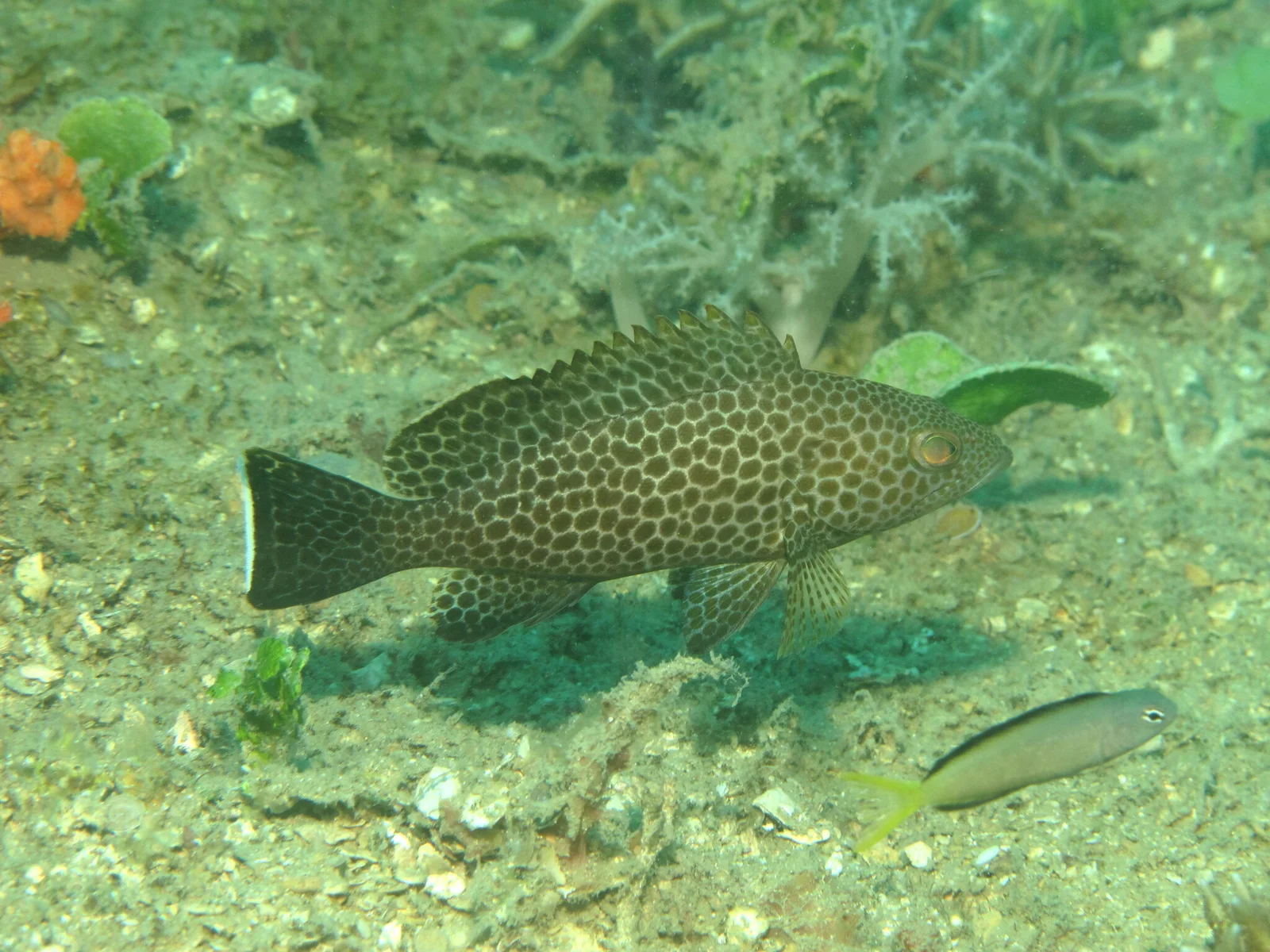
Areolate grouper
- Family
- Epinephelidae
- Depth
- 6–200 m
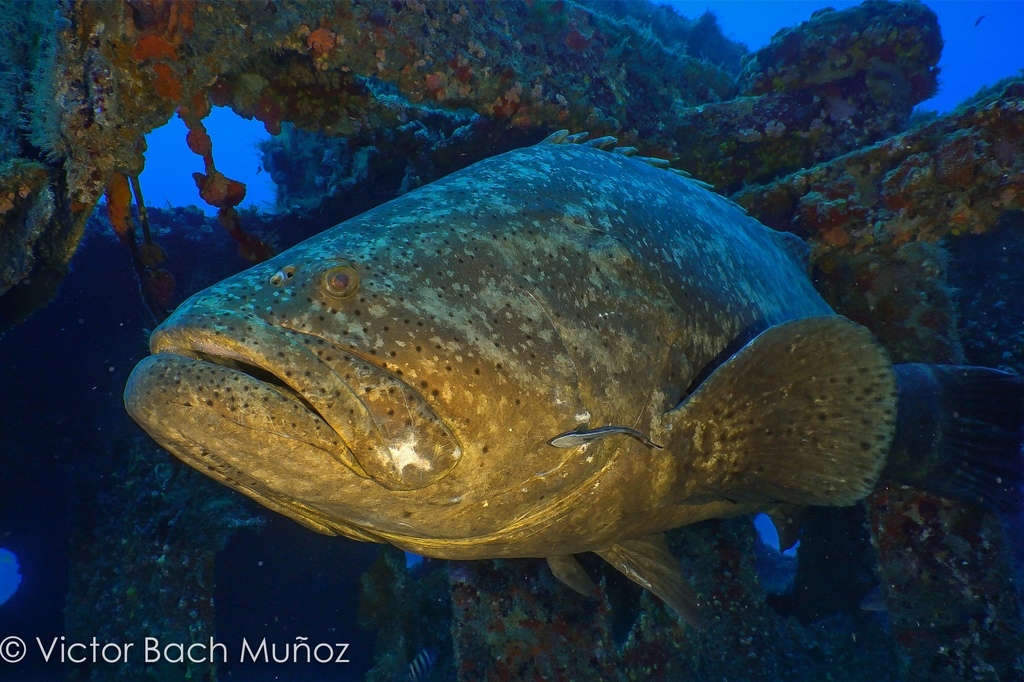
Atlantic goliath grouper
- Family
- Epinephelidae
- Depth
- 0–100 m
- Season
- Jan, Feb, Jun, Jul, Aug, Sep

Black grouper
- Family
- Epinephelidae
- Depth
- 60–250 m
- Season
- Jan, Feb, Mar, Apr, May, Jun, Jul, Aug, Sep, Oct, Nov, Dec
Guides for this water
Technique, gear and safety guides that fit Sixbar grouper.