
Wavy-lined grouper
Most grouper pages start with a reef. Epinephelus undulosus lives on muddy open substrate and uses holes in the mud, solid structures, shipwrecks and debris as cover. It is described as flighty, and as solitary. That single sentence changes the whole approach: the fish is not waiting on a coral head for a bait to drift past.
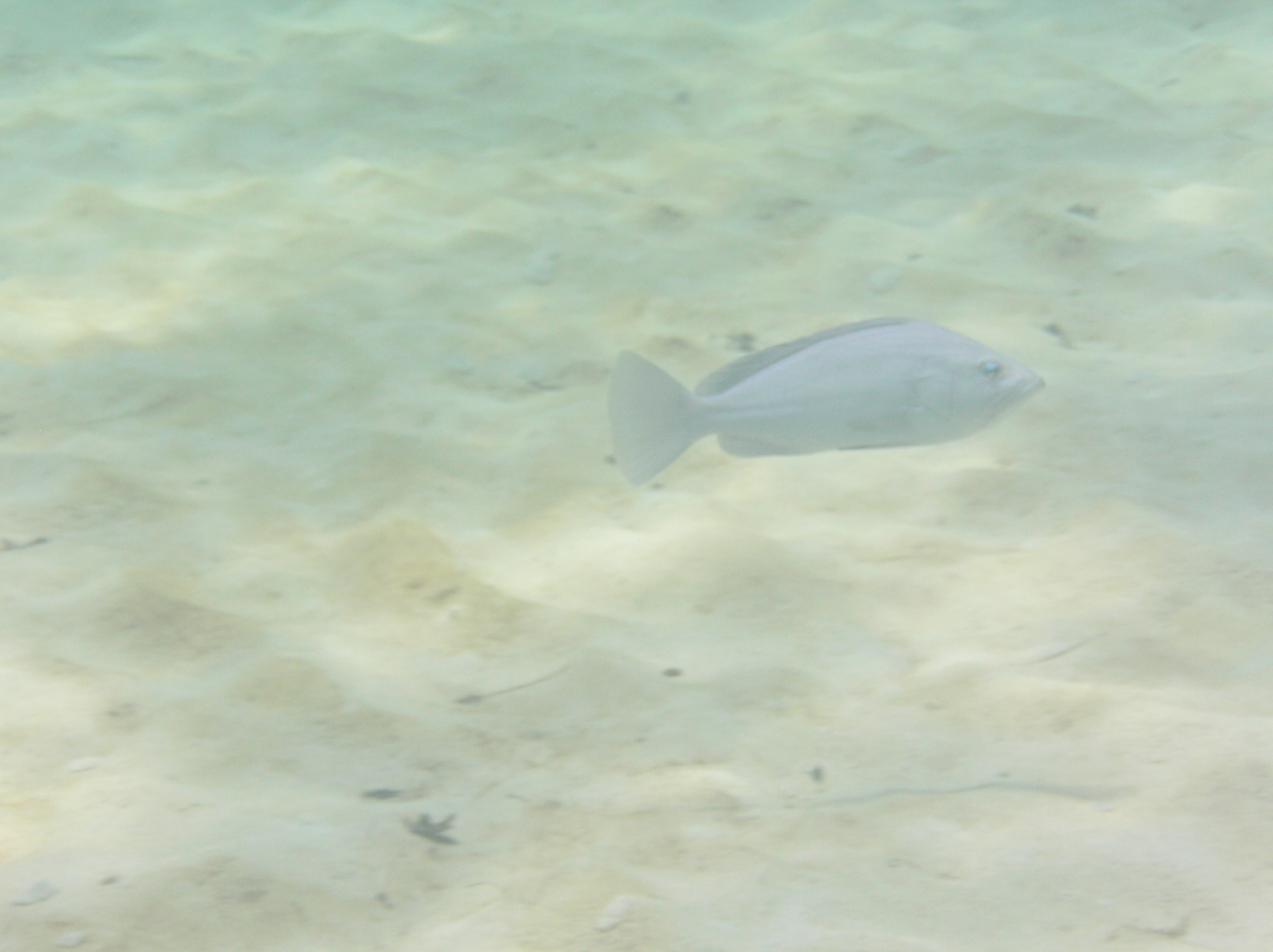
Most grouper pages start with a reef. This one starts with mud. Epinephelus undulosus lives on muddy open substrate and uses holes in the mud, solid structures, shipwrecks and debris as cover. It is described as flighty, and as solitary. That single sentence changes the whole approach: the fish is not waiting on a coral head for a bait to drift past. It is sitting beside a piece of hard structure on a soft bottom, and it will move away if the boat arrives too close. Find the structure first; the fish is a second question.
What the file leaves blank, and why that helps
The depth is 24–90 m. There is no spawning month, no age, and no more than a starting figure for maturity at 41 cm. The maximum length is 120 cm total length, the common length 45 cm, and the maximum published weight 6.4 kg. Those blanks are the article's method. A fish that is never recorded spawning, is rarely photographed (19 observations on iNaturalist) and is taken only as minor commercial catch is not a fish you plan around a season. You plan around depth and structure, because those are the two columns that are filled in.
Reading a mud bottom
A flat mud plain looks featureless on a sounder, and that is the point: the fish needs something solid to sit beside. A wreck, a debris field, a rock outcrop, a bank that rises from the mud — those are the marks. The 24 m lower limit puts the shallow end within reach of a small boat; the 90 m upper limit puts the deep end beyond a casual drop. Between them, the productive zone is the edge of the structure, not its centre. A bait dropped into the wreck is a donation. A bait dropped on the mud ten metres up-current of the wreck is a presentation.
Bait that arrives quietly
The diet is small fishes, stomatopods, shrimps and pelagic tunicates. That last item is unusual and worth noticing: this grouper feeds on Thalia and Pyrosoma, which drift in the water column, so it is not a pure bottom ambusher. A bait that sits dead on the mud may be less convincing than one that lifts and settles. Whole small fish and shrimp are the practical choices. Because the fish is flighty, the lead should be light enough to land without a crash, and the boat should be positioned up-current so the scent and the bait arrive together. Strike on the first real weight, not on the taps.
Gear for a 45 cm fish with a 120 cm record
The everyday fish is 45 cm; the record is 120 cm and 6.4 kg. Rig for the 45 cm fish with PE 2–3 and a 40–50 lb leader, and accept that a 120 cm fish will test the outfit. Hooks in the 5/0–6/0 range, sharp rather than heavy. In 24–90 m the lead has to reach the bottom quickly or the bait never gets to the structure; a slow fall in current is the most common failure. The drag can start around 70 per cent of the line rating because there is no reef to cut you off, but the fish's weight on a vertical line is the real load.
Minor catch, old fish, three sets of rules
The uses field says minor commercial only; there is no gamefish entry and no ciguatera report. Red List status is Least Concern, assessed 21 November 2016. The resilience field is very low, with a minimum population doubling time over 14 years, and the fishing vulnerability score is high to very high. A minor commercial fish with very low resilience is a quiet conservation problem: nobody is targeting it, and it still cannot absorb much removal. India has no single national minimum size; Kerala, Tamil Nadu and other states issue their own minimum catch sizes on CMFRI advice, and the Andaman and Nicobar Islands have separate tribal-area and protected-area restrictions. Sri Lanka protects the core zones of Bar Reef, Hikkaduwa and Pigeon Island, with no single national minimum size. The Maldives bans reef shark fishing, closes reef-fish spawning sites seasonally, requires export permits and bars sale of tourist catches. Check the state or national notice before keeping one.
Names, lines and the small sample
The head and body are purplish grey to brownish grey, with golden-brown dots and wavy longitudinal lines on the dorsal part; large specimens lose the lines, and the spinous dorsal fin has a narrow blackish margin. The body is 2.7–3.1 times into standard length, and adults have a prominent knob or hook-like process on the lower edge of the maxilla. The Sri Lankan name Lawaya comes from a local rock-fish list. iNaturalist holds only 19 observations. A small sample is a reason to describe the fish carefully, not a reason to call it rare: it lives in muddy water at 24–90 m, where few divers and fewer photographers go.
How to catch it
Boat bottom fishing
Fished with the listed approach, matched to the recorded depth and size.
Handline
Fished with the listed approach, matched to the recorded depth and size.
Where these facts come from
Check these pages before you rely on a size, range or protection status.
- FishBase — Epinephelus undulosus — FishBase · T2
- GBIF — Epinephelus undulosus occurrence records — GBIF · T2
- IUCN Red List — Epinephelus undulosus — IUCN · T1
- Photo record — iNaturalist — iNaturalist · T3
Fish in the same water
These fish live in the same place.

Guides for this water
Technique, gear and safety guides that fit Wavy-lined grouper.