
Three-spined stickleback
Three-spined stickleback is a small gasterosteid of circumarctic and temperate waters, from the Black Sea, southern Italy, the Iberian Peninsula and North Africa northward. It lives from the surface to 100 m, reaches 11 cm TL with a common length near 5 cm, can live eight years, and feeds on crustaceans, fish, algae and worms. Its season runs March to September, in water of 4 to 20 °C.
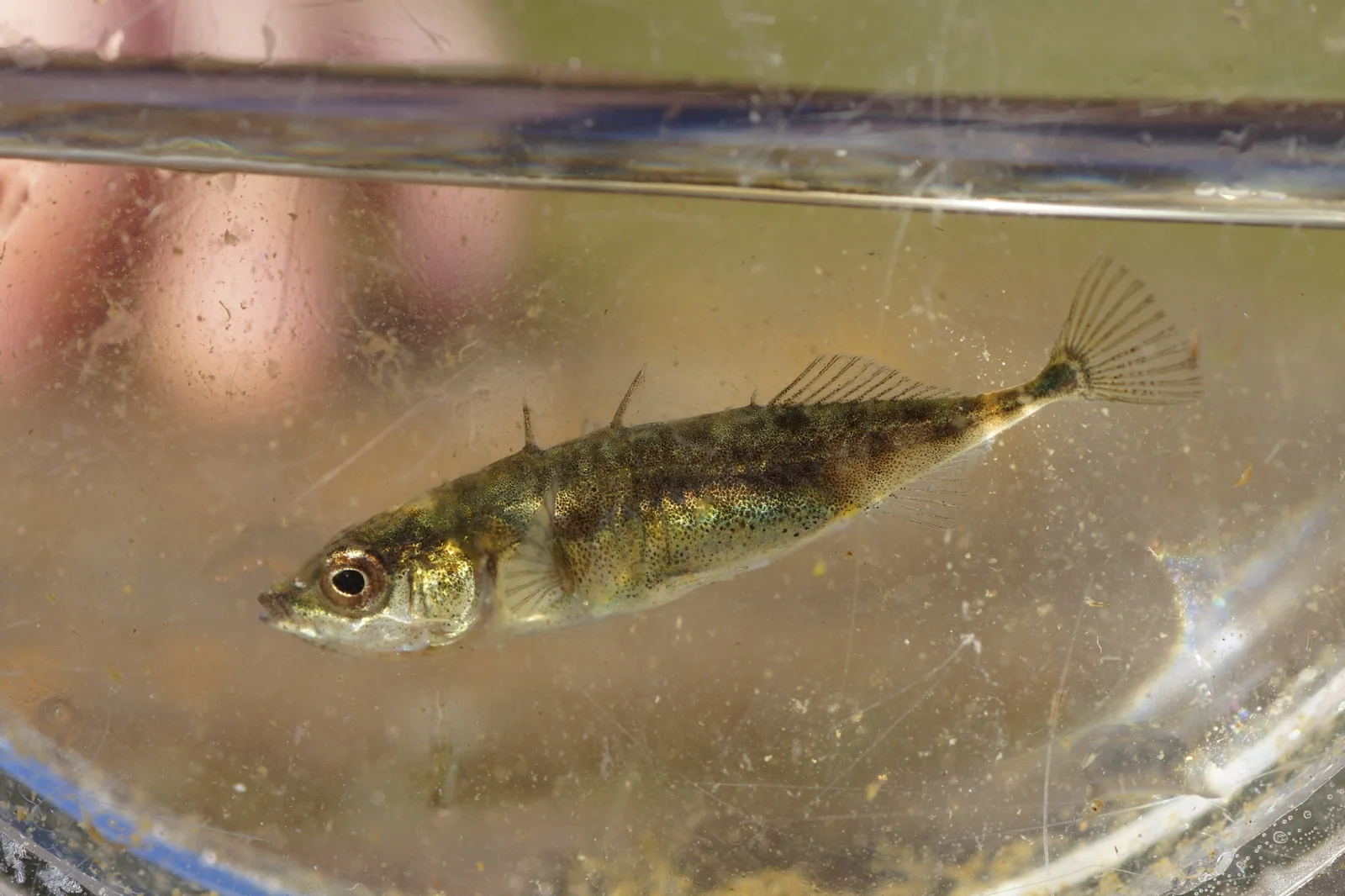
Three-spined stickleback (Gasterosteus aculeatus) is a fish of the family Gasterosteidae. FishBase gives its range as: Circumarctic and temperate regions: Extending south to the Black Sea, southern Italy, Iberian Peninsula, North Africa; in Eastern Asia north of Japan (35°N), in North America north of 30-32°N; Greenland. It is recorded from 0 to 100 m, in subtropical water at 4–20 °C. The recorded maxima are 11 cm TL, 8 years. Diet includes crustaceans, fishes, algae and worms. IUCN status: Least Concern (LC). Chinese name: .
Identification
The three-spined stickleback is small even for its family: 11.0 cm total length maximum, 5.1 cm common length, first maturity 5.5 cm. Eight years is the maximum reported age, long for a fish this size. No maximum weight was captured, so length and age cannot be tied to mass.
Fin counts are 2–4 dorsal spines, 10–14 dorsal soft rays, one anal spine, 7–11 anal soft rays and 29–34 vertebrae. The name promises three, and three is usual, but the recorded span runs from two to four. Canadian names include Twospine stickleback beside Threespine, so the two-spine form has its own label. Identification rests on the combination — small size, separated dorsal spines, a single anal spine — not on the count alone.
The species is the type of Gasterosteus and Gasterosteidae. English names are numerous: the Canadian list holds more than thirty variants, among them Banstickle and Tiddler, while Japanese gives Itoyo. Chinese entries are and ; iNaturalist prefers Threespine Stickleback.
Habitat and distribution
The range is circumarctic and temperate: south to the Black Sea, southern Italy, Iberia and North Africa, east in Asia to 35°N off Japan, north in North America above 30–32°N, plus Greenland. The country table carries 50 entries, 45 native and five introduced — Austria, Czechia, Hungary, Iran and Slovakia. All five introductions are inland European states.
Water is marine, freshwater and brackish; the fish is benthopelagic and anadromous, recorded from 0 to 100 m at 4–20 °C. One field contradicts the rest: the climate line says Subtropical while the range reaches the Arctic and the temperature ceiling is 20 °C. Read it as machine noise.
GBIF holds 116 distribution rows, thirty-five without a country code; Belgium 11, Canada 7 and the Netherlands 6 lead the identified entries. iNaturalist carries 10,785 observations, a gap that reflects recorder density in north-west Europe rather than abundance.
Season and fishing approach
Eleven spawning rows span March to September: Alaska June–August, with a second row March–August; Cowichan River April–September; Italy May–July; North Atlantic and Mediterranean April–June; northern France April–June; Primorye April–August; Schleswig-Holstein March–July; Spain April–May; the UK March–June; a generic Europe row March–April. The pattern is window length rather than one month: northern and southern entries both stretch to four or six months, and the Arctic rows start latest.
No angling method is recorded. Minor commercial is the only fisheries tick, public aquariums the other use, and gamefish is blank and listed among the missing values. In this capture it is not a target; the angler meets it at the shallow margin. Depth begins at 0 m; habitat keywords are sandy, muddy, estuary, coastal, brackish and freshwater; the diet is crustaceans, fishes, algae and worms.
Edibility and regulations
With no weight and no gamefish tick, edibility rests on the minor-commercial entry alone; public aquariums are the second use. Its IUCN category is Least Concern, last assessed 30 May 2022. CITES and CMS have not been evaluated, and the fish is Harmless to humans. Neither size limit nor closed season nor bag rule appears in the capture. A Least Concern listing is a conservation judgment, not a right to land fish; local rules govern.
Wikipedia notes long use in evolution, population genetics, behaviour and osmoregulation, which is why its literature is laboratory work rather than culinary.
Where these facts come from
Check these pages before you rely on a size, range or protection status.
- FishBase — Gasterosteus aculeatus — FishBase · T2
- GBIF — Gasterosteus aculeatus occurrence records — GBIF · T2
- IUCN Red List — Gasterosteus aculeatus — IUCN · T1
- Photo record — iNaturalist — iNaturalist · T3
Fish in the same water
These fish live in the same place.
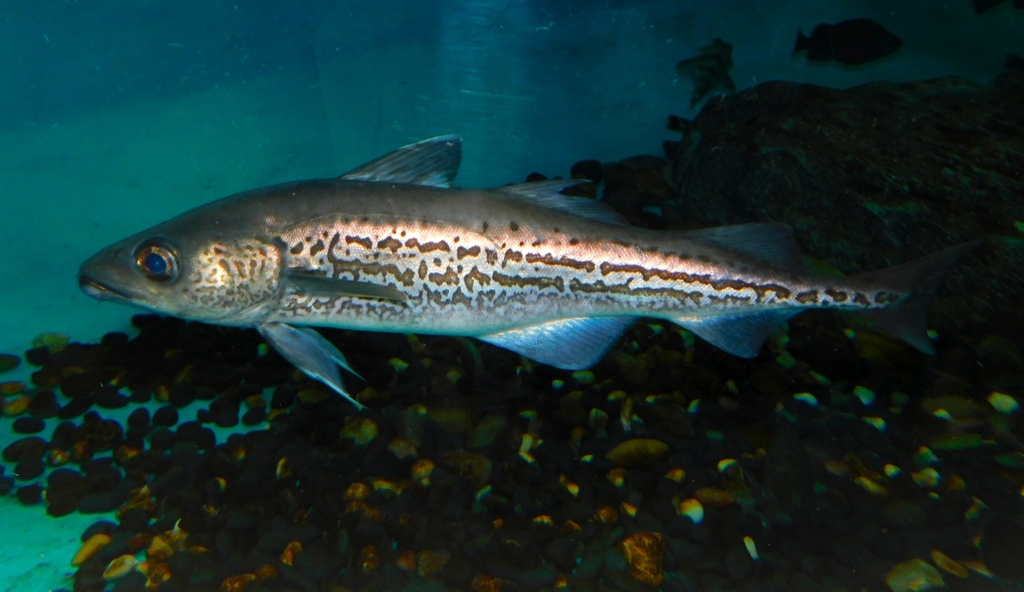
Alaska pollock
- Family
- Gadidae
- Depth
- 0–1280 m
- Season
- Jan, Feb, Mar, Apr, May, Jun, Jul, Aug

Albacore
- Family
- Scombridae
- Depth
- 0–600 m
- Season
- Jan, Feb, Mar, Apr, May, Jun, Jul, Aug, Oct, Nov, Dec
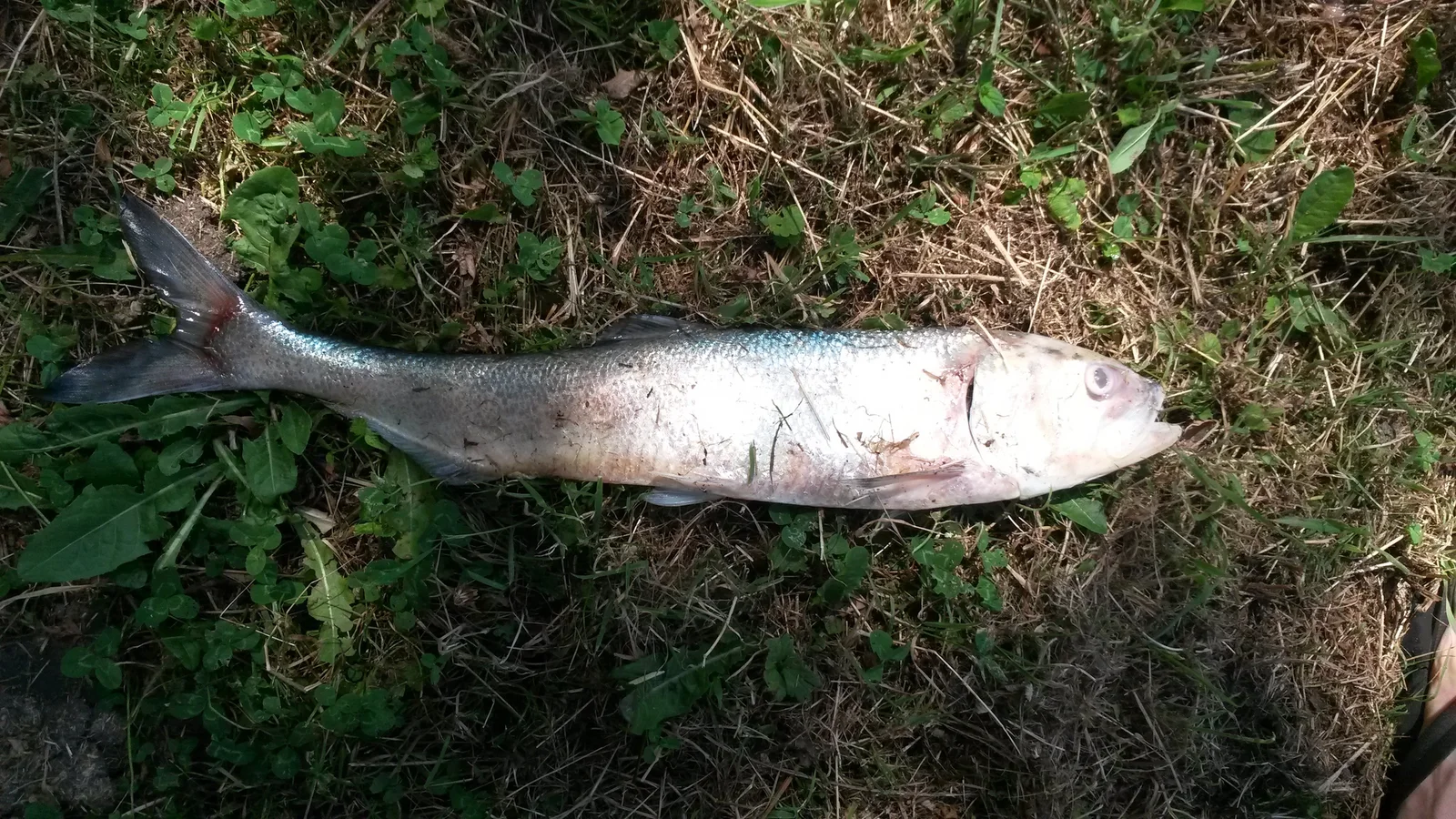
Allis shad
- Family
- Alosidae
- Depth
- 10–400 m
- Season
- Apr, May, Jun, Jul
Guides for this water
Technique, gear and safety guides that fit Three-spined stickleback.