
Girella leonina
Girella leonina is a small, laterally compressed sea chub of shallow rocky ground in Japan and Korea, an adult fish of just 1 to 15 m in subtropical water. It reaches a maximum of 46 cm SL, with no weight, age or prey recorded for it. Its season here is brief, covering November and December.
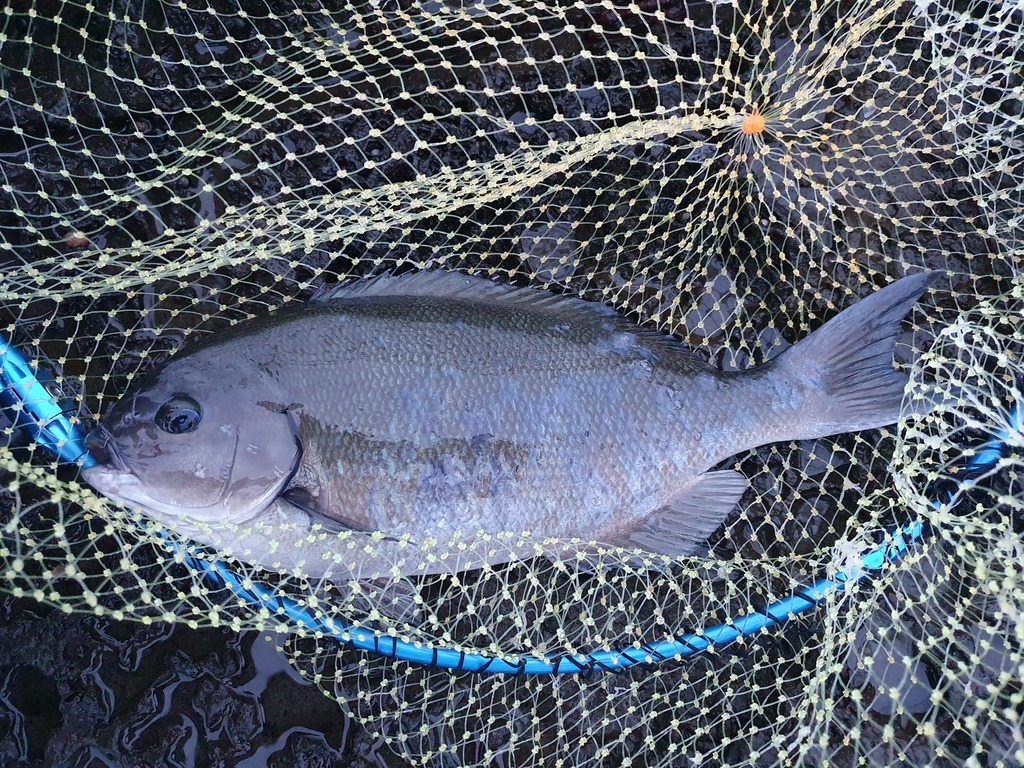
The record gives one size number: a maximum of 46 cm SL. It gives no common length, no weight, no maximum age, no maturity length, no prey names and no human-use entry. Six blanks on a page that normally carries eight fields. This article is built around the blanks: each one is named, kept empty, and kept away from the congener that does have data.
One number, and it is standard length
The only size figure is 46 cm SL, cited to reference 36349. SL is standard length, measured to the end of the vertebral column and excluding the tail. TL runs to the caudal-fin tip and is therefore the longer measurement for the same fish. The record gives no TL figure and no conversion, so a reader who needs TL cannot get it from this page.
The distinction is real at this size. A 46 cm SL girellid with a forked tail is not a 46 cm TL fish, and this page will not call it one. The maximum is the only anchor the record provides, and a maximum is the rare end of a distribution rather than its middle.
Common length
The common-length field is empty. There is no "usually" size, no typical weight class, and no second figure beside the maximum. A release plan built on the maximum would be a plan built on the exception.
Without a common length there is no working size on board, only an upper bound. The one number a deck can use is 46 cm SL, and it is there to set the net width and the release mat, not to describe the ordinary fish.
Weight and age
No maximum weight and no maximum age are printed. There is no length-weight table either, so the 46 cm figure cannot be turned into a weight by arithmetic on this page.
The absence has two consequences. A fish cannot be described by weight, and a growth curve cannot be drawn. A 46 cm SL specimen might be young or old; the record does not say which, and it does not supply the references that would.
Maturity
The maturity field reads "L m ? range ? - ? cm". That is the record's own way of printing an unknown value: not zero, not an unmeasured implication, just a question mark in each slot.
Without a maturity length there is no release size. The blank cannot be filled from Girella tricuspidata, whose page carries a 29.5 cm maturity figure with no unit; copying it would import another species' life history into this article.
Diet
The diet keyword list is empty. No prey group is named — not fishes, not algae, not crustaceans. The habitat row names rocky and open-water substrates, and nothing connects either substrate to a food item.
This is the blank that changes bait choice most. With no prey name, the honest statement is that the record does not specify one; bait chosen for the congener is a guess wearing a citation.
Uses
The human-use row carries no entry: no fisheries line, no gamefish tick, no aquarium line. The common-name table has no English alias record either.
So the record does not say whether this fish is landed, targeted or kept. A page about fishing a species with no recorded fishery has to be a page about what is unknown, not a page about what is assumed.
What the record does say
Depth is 1–15 m, cited to reference 58302, with no usual band. Fourteen metres separate the two ends: the upper end is wading depth on a rocky shore, and the lower end needs a boat. No usual band is printed, so the row does not say which part of those 14 m holds the ordinary fish. The habitat keywords are rocky and open-water, and the milieu word is reef-associated. The fish is therefore placed in shallow rocky water with an open-water keyword beside it, and the two keywords are not ranked.
Spawning is one entry: Japan, November and December, locality "Not stated". One country, two months, no site. The distribution text runs from Hong Kong SAR, China to Japan, citing reference 36349, and adds a range extension to Midway Atoll and Hawaii, citing reference 48237. The IUCN category is Not Evaluated.
Wikipedia's extract repeats three of those items — family Girellidae, Hong Kong SAR to Japan, 1–15 m — and adds shallow rocky reefs. Its wording and the iNaturalist summary are the same sentence, so the two are one witness rather than two.
Where to look, and what to log
GBIF has no distributions file for this taxon. The only GBIF figure available is an occurrence-country aggregation: 580 records with a country facet, of which Japan holds 511, South Korea 56, Taiwan region 3, Hong Kong SAR 2 and China 1, leaving 7 without a country. That is an aggregation of occurrence records, not a distribution assertion, and the response reports endOfRecords false, so it is not a complete count of the taxon's records. Japan alone accounts for 88 per cent of the 580. It describes where records have been uploaded, which is not where the fish lives.
iNaturalist holds 34 observations. Thirty-four is a documentation count, not abundance, and it is small enough that the species is rarely photographed relative to how often it is seen.
The working method follows from the blanks: fish the rocky shallow band from 1 to 15 m, log size, depth and month for every fish, and treat each entry as filling a blank the record left open. With no common length, no weight and no maturity point, that log is the only local data this species will have.
Where these facts come from
Check these pages before you rely on a size, range or protection status.
- FishBase — Girella leonina — FishBase · T2
- GBIF — Girella leonina occurrence records — GBIF · T2
- IUCN Red List — Girella leonina — IUCN · T1
- Photo record — iNaturalist — iNaturalist · T3
Fish in the same water
These fish live in the same place.
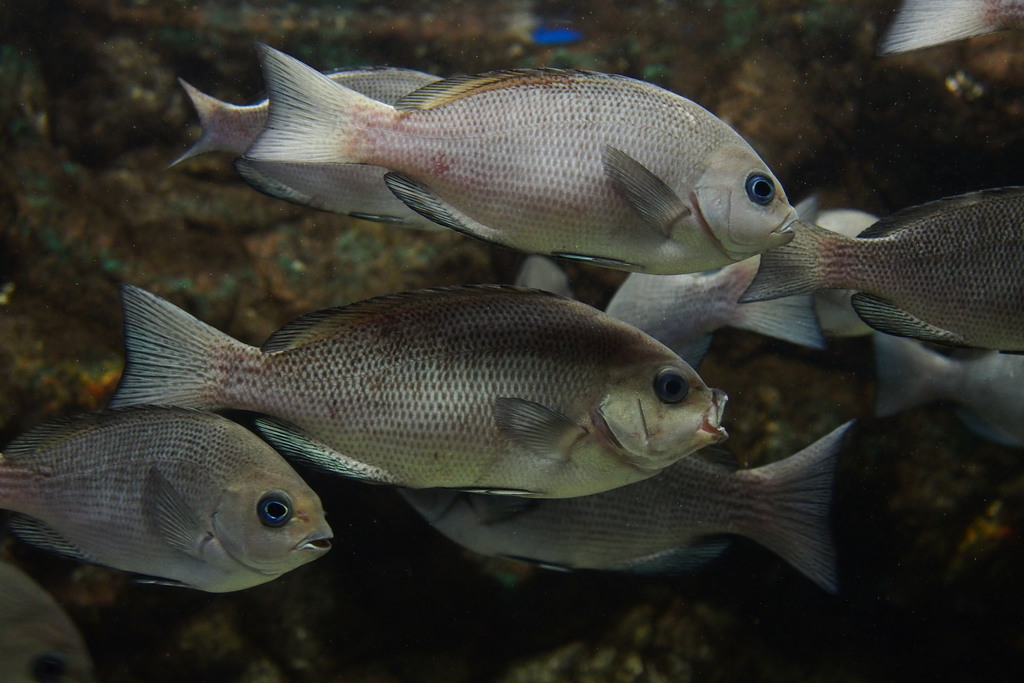
Largescale blackfish
- Family
- Girellidae
- Season
- Feb, Mar, Apr, May, Jun
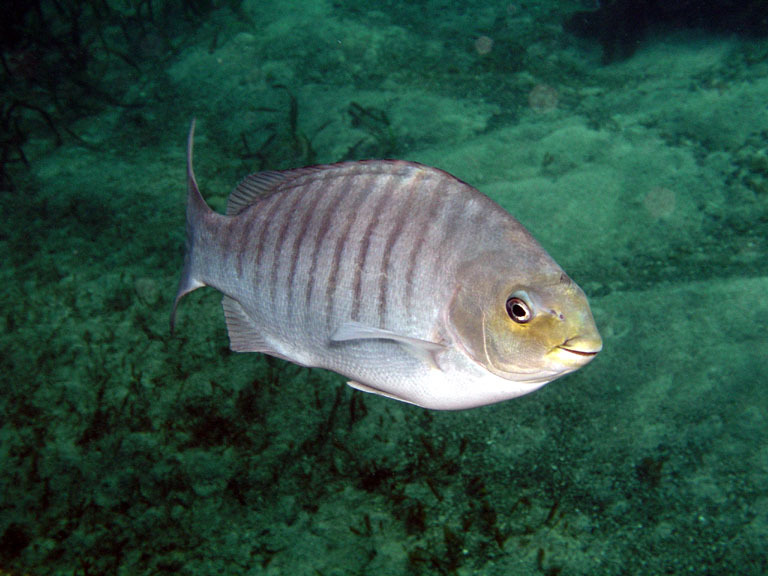
Parore
- Family
- Girellidae
- Depth
- 0–20 m
- Season
- Jan, Feb, Mar, Jun, Jul, Aug, Sep, Oct, Nov, Dec
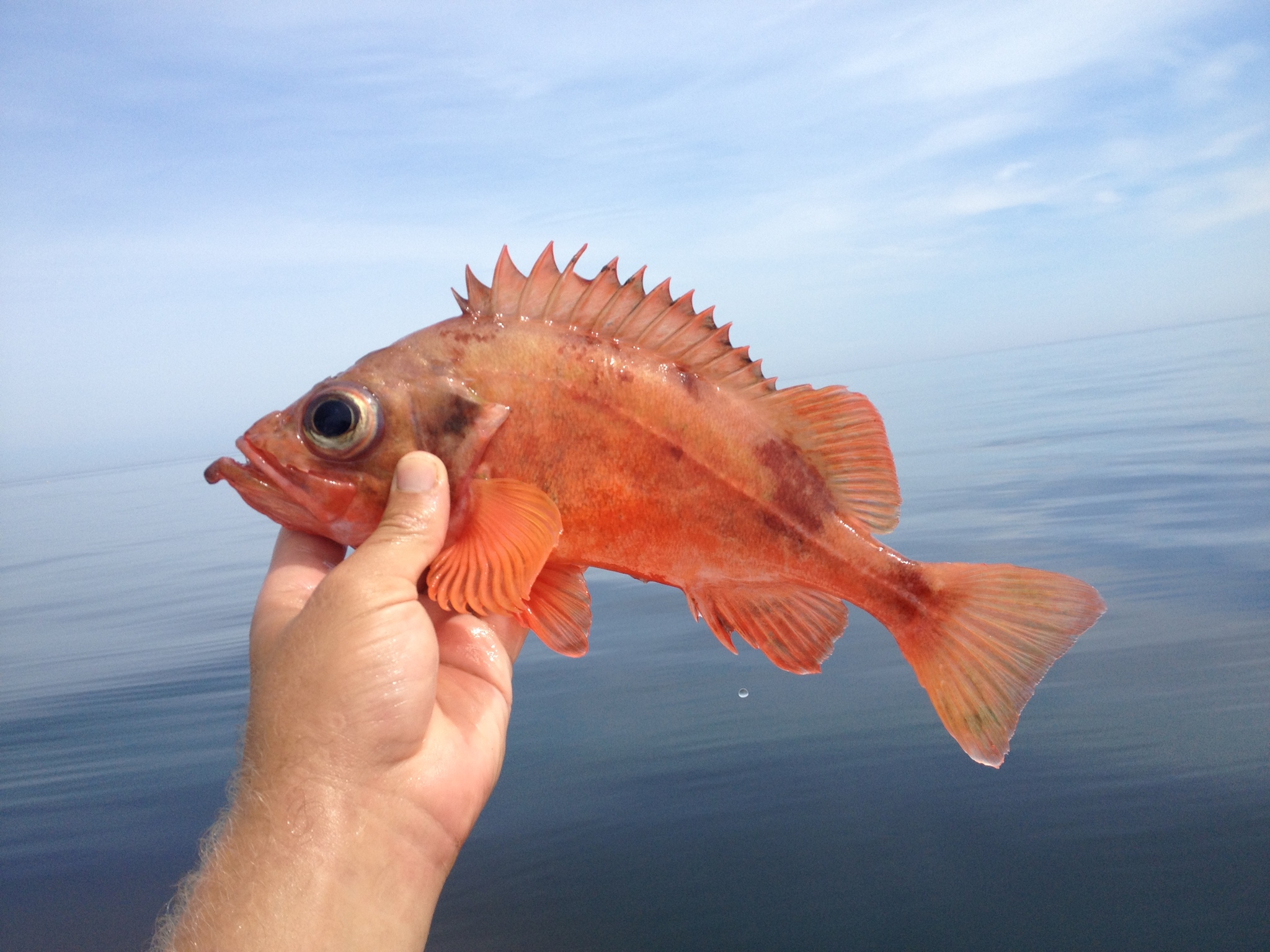
Acadian redfish
- Family
- Sebastidae
- Depth
- 70–592 m
Guides for this water
Technique, gear and safety guides that fit Girella leonina.