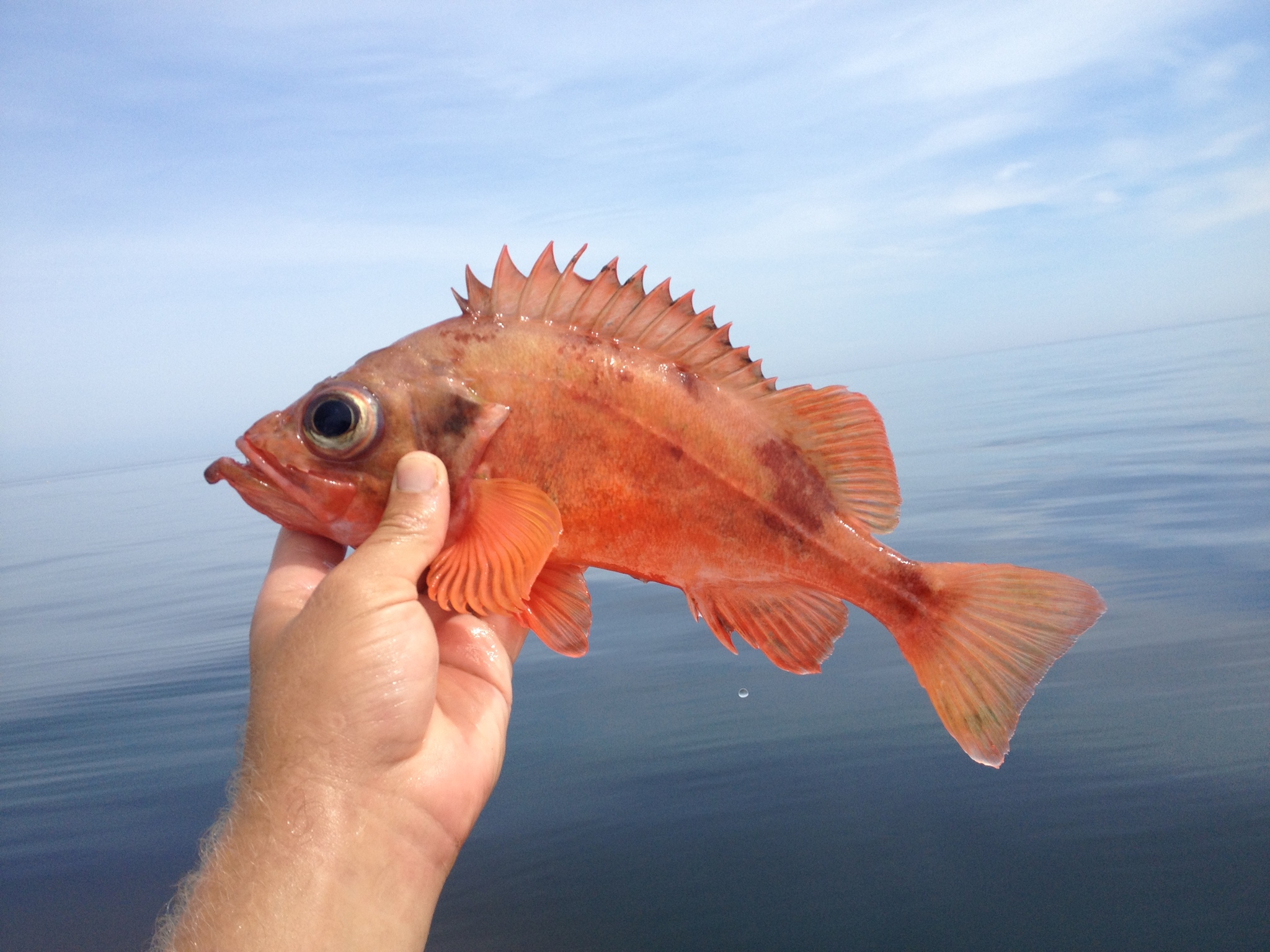
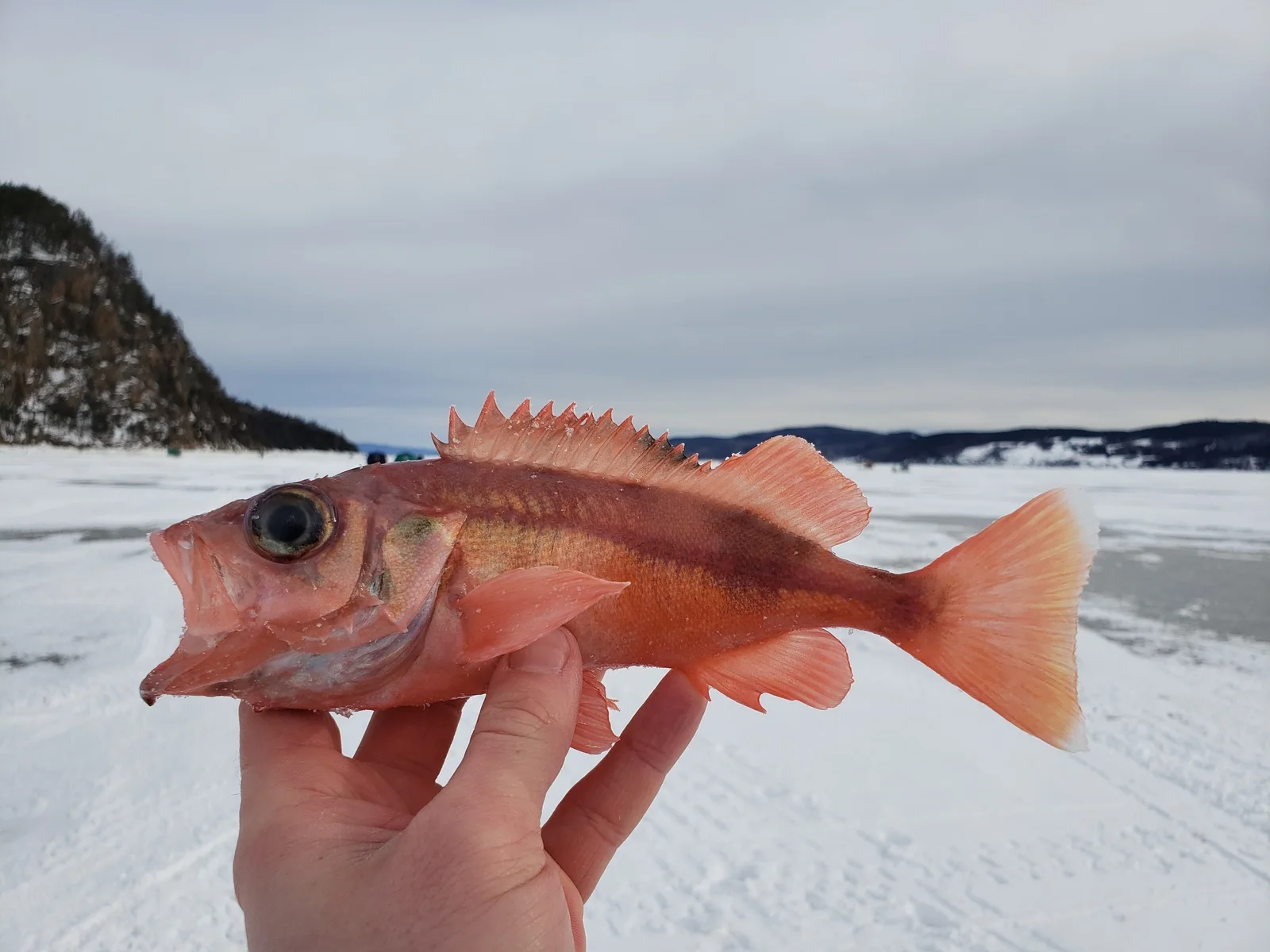
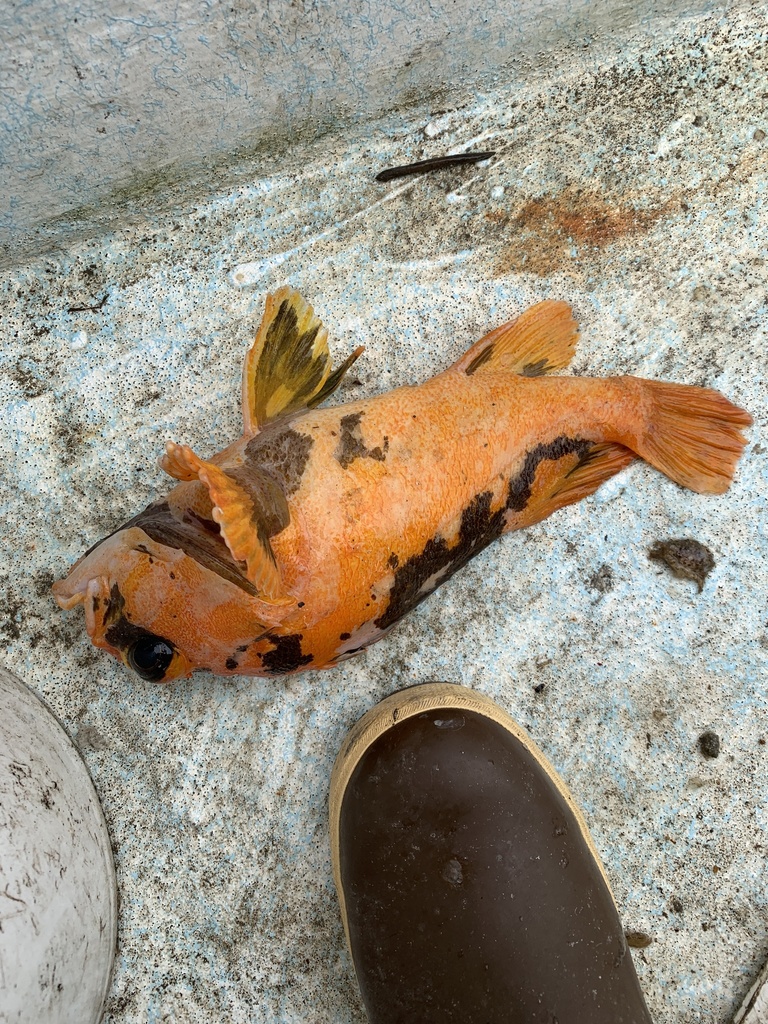
Acadian redfish (Sebastes fasciatus) is a fish of the family Sebastidae. FishBase gives its range as: Northwest Atlantic: Gulf of St. Lawrence to shelf waters of Nova Scotia in Canada. Northeast Atlantic: off Iceland and western Greenland. It is recorded from 70 to 592 m, in temperate water. The recorded maximum is 47 cm TL. Diet includes fishes. IUCN status: Endangered (EN). Chinese name: .
The row stops at length
A compiled species row is a partial document, and the useful skill is reading where it stops. For this fish FishBase carries a maximum of 47 cm TL, first maturity at 22.3 cm, a depth range, five countries and an IUCN category. Common length, weight, maximum age and spawning months are not filled in on that page.
None of those blanks means the fish is small, short-lived or spawns nowhere. It means the compiler had not put those numbers into that row, and the next document to open is the fisheries agency. NOAA gives 18 to 20 inches, a lifespan of 50 years or more, maturity at 5 to 6 years, and a full reproductive calendar. Read the two pages together and the animal is complete; read only the first and you would underestimate it on every axis except length.
Seventy metres down to five hundred and ninety-two
FishBase puts the species between 70 and 592 m and calls 128–366 m the usual range. NOAA says it is most common in the deep Gulf of Maine, down to 975 feet, which converts to about 297 m and sits inside the FishBase band. The agreement is worth noting: two documents built from different data land on the same slope.
The bottom matters more than the number. NOAA describes rocky, mud and clay ocean floors. Mud and clay alone would be flat ground; the combination means broken bottom where a fish can hold above the seabed and still be close to it. A trawl towed across a mud basin can miss a mark that sits fifty metres away against rock.
NOAA adds two movements that change how a mark fishes. Redfish rise off the bottom at night to feed and move closer to shore in winter. A deep mark that is dead at noon can produce at dusk, and a winter trip should start shallower than a summer one.
Five to six years is the real clock
FishBase gives first maturity as 22.3 cm. NOAA gives the same event as an age: 5 to 6 years, with low reproductive rates and a lifespan of 50 years or more. Both describe one fish, and they are useful for different decisions.
The length is what a hand can measure. If the fish in your hand is under 22 cm, it has not spawned, and the argument for releasing it does not depend on the law. The age is what explains the fragility. A species that takes half a decade to breed and can live five decades cannot replace a removed adult quickly, so a bag of small fish is not a light harvest. The two numbers together are the reason this fish is managed with minimum sizes rather than bag limits alone.
Mating in late autumn, release in summer
The FishBase spawning row is empty for this species; NOAA supplies the sequence. Mating happens in late autumn and early winter. Eggs are not fertilised until spring, incubate for 45 to 60 days inside the female, and the hatched larvae are released from late spring through July and August, 15,000 to 20,000 per cycle.
That calendar changes what a summer catch means. A female taken in July is carrying near-term larvae, and one taken in November has already mated. The young stay in the upper water column until they are about two inches long, then settle to the bottom in autumn. A school of small fish seen at the surface in spring is therefore not a school of adults that has risen; it is the next year class before settlement.
Two family names, one borrowed common name
FishBase places the species in Sebastidae, while NOAA's classification table puts it in Scorpaenidae. The fish does not change; the catalogue entry does. A survey, a closure or a quota written under one family name can be invisible to a search run under the other, and both families contain other redfish.
The common name is a second trap. NOAA notes that the fish is called redfish in New England and Canada, and warns that it is not the redfish of the Gulf, which is a drum. FishBase's English list offers Acadian redfish and Redfish. For any rulebook, the two-word scientific name returns a single animal.
What the seven rows actually say
The GBIF distributions endpoint returns seven rows for this species, and not one of them carries a country code. They name water bodies: the Western Atlantic Ocean, the North West Atlantic, European Marine Waters, the Gulf of Saint Lawrence, the Gulf of Maine twice, and one global row. That is a set of presence statements about places, not a list of seven range states, and it should never be counted as one.
FishBase's country table is the one that gives jurisdictions: Canada, Greenland, Iceland, Saint Pierre and Miquelon and the United States. iNaturalist holds 271 observations. A photographic count and a list of gulfs describe where people looked and what a database was told; neither says how many fish are on a bank.
Trawl first, rod and reel last
NOAA lists trawl as the usual gear, with gillnet, bottom longline and rod and reel behind it. The recreational fishery is small: redfish are not a common target, they turn up while anglers fish for cod and haddock, and the only federal recreational rule is a minimum size.
That is a useful asymmetry. Almost every fish an angler meets will be a bycatch on someone else's trip, so the handling practised on a cod line is the handling this species gets. NOAA manages one stock in United States waters under the Northeast Multispecies plan, with time and area closures to protect spawning fish and habitat, minimum sizes, and annual catch limits. For a rod-and-reel angler the enforceable number is the minimum size; the closures are aimed at trawls and at spawning aggregations.
Endangered in 1996, not overfished in 2025
FishBase carries an IUCN category of Endangered, assessed on 1 August 1996. NOAA's 2025 stock assessment finds the species not overfished and not subject to overfishing, and reports 2024 commercial landings of 13 million pounds worth $8 million.
These are not two answers to one question. One is a global red-list category written in 1996 and not revised on the page; the other is a stock status for United States waters in 2025. The thirty-year gap is the story: a label can sit unchanged while the fishery underneath it is rebuilt and re-measured. It also has a boundary. NOAA assesses a single stock in United States waters, so the Canadian part of the range is outside that finding, and the 1996 category remains the only global statement on the page.
Read together, the two labels say the same practical thing: the species is not a fish to keep because a category looks reassuring, and not a fish to release because a category looks alarming. The minimum size is the rule in front of you.
Regulations before you keep it
These are the published regulations for this fish. Read the number first. The notice below it is the actual regulation.
Minimum size2
≥9 in · unlimited possession · all year
United States — federal (Atlantic) · US-FED-ATL
Federal Atlantic rules set a 9-inch redfish minimum with unlimited possession.
Redfish (Ocean Perch)
Open season: All year
Minimum size: 9 inches
Possession limit: Unlimited
≥9 in · no bag limit
United States — Maine · US-ME
Maine sets a 9-inch Acadian redfish minimum with no bag limit.
ACADIAN REDFISH (Sebastes fasciatus)
Size: Minimum size 9 inches.
No bag limit.
Every record above names its source and the date it was retrieved. See the regulation register for the full list, or how to read these regulations.
Where these facts come from
Check these pages before you rely on a size, range or protection status.
-
FishBase — Sebastes fasciatus
— FishBase · T2
-
GBIF — Sebastes fasciatus occurrence records
— GBIF · T2
-
IUCN Red List — Sebastes fasciatus
— IUCN · T1
-
Photo record — iNaturalist
— iNaturalist · T3