
Dogtooth tuna
Dogtooth tuna is a large Indo-Pacific scombrid of coral-reef water, from the Red Sea and East Africa to French Polynesia, north to Japan and south to Australia. It lives from the surface to 250 m in 20 to 28 degrees C, usually alone or in schools of six or fewer, and feeds on small schooling fish and squid. It reaches 248 cm FL and 131 kg, and trolling, jigging and lures are the methods listed.
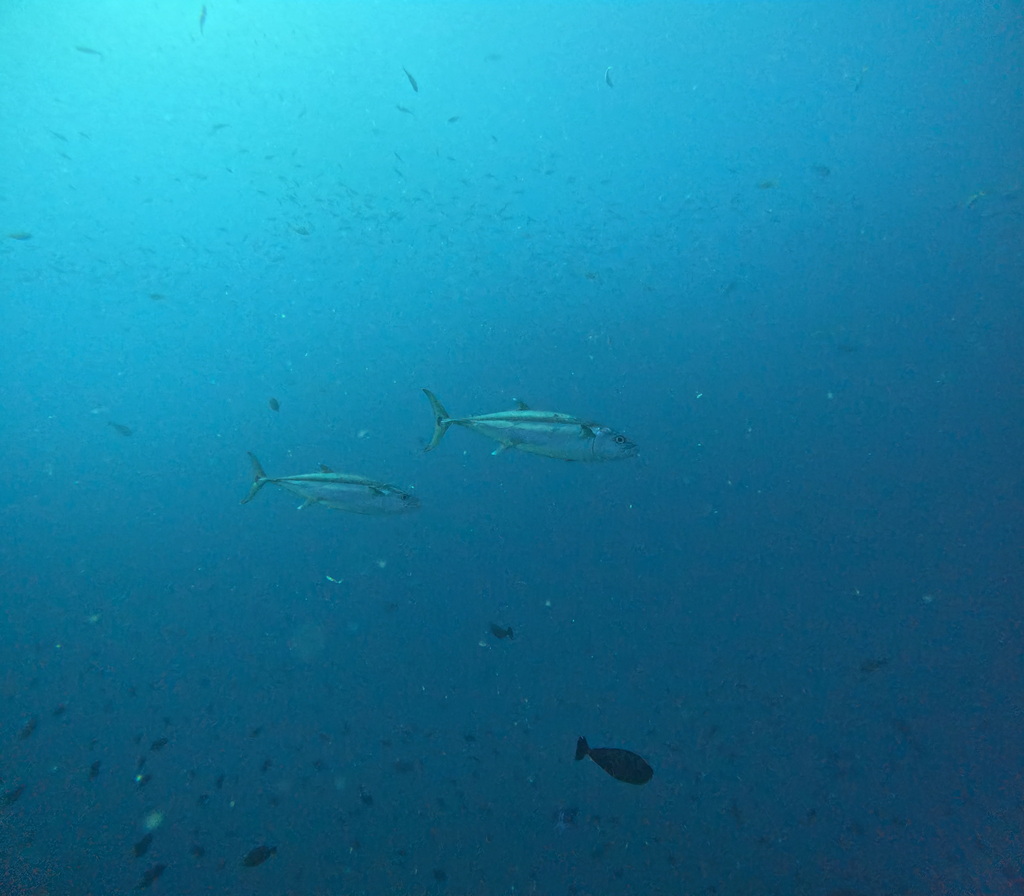
Dogtooth tuna is a large Indo-Pacific scombrid of coral-reef waters, from the Red Sea and East Africa to French Polynesia, north to Japan and south to Australia. It lives at 0–250 m in 20–28°C tropical offshore reefs, usually solitary or in schools of six or fewer, feeding on small schooling fishes such as Decapterus, Caesio, Pterocaesio, juvenile parrotfishes and squid. FishBase gives a maximum of 248 cm fork length and 131 kg, with a common length of 190 cm. IUCN lists it as Least Concern, assessed in 2022. It is not a true tuna but a bonito, though its speed and power invite tuna comparisons.
Reading the spines
The dorsal fin has 13–15 spines and 12–14 soft rays; the anal fin has no spines and 12–13 soft rays; there are 38 vertebrae. The body is elongate and moderately compressed. The mouth is fairly large, the upper jaw reaching the middle of the eye. There are 14–31 large conical teeth on the upper jaw and 10–24 on the lower jaw, plus two patches of villiform teeth on the upper surface of the tongue. Total gill rakers on the first arch are 11–14. The first dorsal fin is XIII–XV with an almost straight border, followed by 6–7 finlets, and the two dorsal fins are close together. The anal fin is followed by 6 finlets. The pectoral fin has 25–28 rays. The interpelvic process is large and single. The lateral line is strongly undulating. The body is naked posterior to the corselet except for the lateral line, dorsal-fin base and caudal keel. The caudal peduncle is slender with a well-developed keel. “Dogtooth” and “naked” are the field marks: large conical teeth and a largely naked rear body.
A reef-edge tuna
FishBase's range is the Indo-Pacific: the Red Sea and East Africa to French Polynesia, north to Japan and south to Australia. The country table includes the Andaman and Nicobar Islands, Australia, China, Hong Kong SAR, India, Indonesia, Japan, Korea, the Maldives, Mauritius, Micronesia, Myanmar, New Caledonia, Oman, Palau, Papua New Guinea, the Philippines, Seychelles, Singapore, the Solomon Islands, Taiwan region, Thailand, Tonga and Vietnam. GBIF's 1,306 records are led by the Maldives (114), Egypt (111), Japan (107), Indonesia (104), Australia (100), French Polynesia (100), American Samoa (79) and the Philippines (58). It is mainly a coral-reef edge and slope fish, also offshore; adults may be ciguatoxic.
The blanks are information
FishBase gives a Fiji spawning record from December to February. That brackets the warm season in Fiji, which is the southern hemisphere, so the months mark local conditions rather than a fixed calendar for the species; it lives at 20–28°C and is catchable all year, and in Taiwan region, Hong Kong SAR and Southeast Asia late spring to autumn is the main window while monsoon winters reduce offshore trips. No finer local season table is published, so follow local temperature and sea state. It is an offshore wanderer, so tide matters less than current breaks, reef slopes and upwelling; dawn and dusk are good. Large fish are often solitary, while small groups work the upper water.
Where to start looking
The GBIF pattern is Maldives, Egypt, Japan, Indonesia, Australia and French Polynesia first. Fish the outer reef slope, the current-swept point and the drop-off, not the lagoon. The source gives no coordinates beyond reef association; local boat knowledge of pinnacles and current lines is the real map.
Tackle and baits
Heavy lure and troll fishing are the standards: big poppers, pencils, heavy jigs, deep jigs and large live baits. Live baits such as scad, fusilier or small squid are slow-trolled along the reef edge; jigs must sink fast to 50–150 m and be retrieved quickly. The fish sprints and fights hard, so the drag must be smooth and the rod able to absorb sudden lateral runs. Use bite protection: 60–100 lb fluorocarbon or wire leader, large single hooks or heavy trebles. Do not challenge large fish on light tackle in reef country.
Eating, handling and the rules
Dogtooth tuna is a minor commercial and game fish, with pale flesh used canned, frozen and cooked; large adults may be ciguatoxic, and FishBase warns of this. Bleed, gut and ice promptly; heads and organs should not be eaten in quantity. Rules vary: Taiwan region manages inshore fishing through closed areas, seasons and gear restrictions, and offshore boat fishing must follow Fisheries Agency and local notices; Hong Kong SAR's Fisheries Protection Ordinance regulates methods, with no angling or collecting in marine parks and reserves; Japan, Korea and Southeast Asian states manage scombrids separately, and some areas post ciguatera warnings for large predators. Check the current local notice.
What the record leaves open
The page is built from FishBase taxonomy, morphology, distribution, environment, biology, reproduction, use, IUCN and ciguatera entries, with the country table for range and GBIF/iNaturalist for occurrence. Local seasons, size limits and ciguatera monitoring are not standardised, so the text stays conservative. and are local aliases; the formal name remains .
How to catch it
Trolling
Fished with the listed approach, matched to the recorded depth and size.
Jigging
Fished with the listed approach, matched to the recorded depth and size.
Lure fishing
Fished with the listed approach, matched to the recorded depth and size.
Where these facts come from
Check these pages before you rely on a size, range or protection status.
- FishBase — Gymnosarda unicolor — FishBase · T2
- GBIF — Gymnosarda unicolor occurrence records — GBIF · T2
- IUCN Red List — Gymnosarda unicolor — IUCN · T1
- Photo record — iNaturalist — iNaturalist · T3
Fish in the same water
These fish live in the same place.

Albacore
- Family
- Scombridae
- Depth
- 0–600 m
- Season
- Jan, Feb, Mar, Apr, May, Jun, Jul, Aug, Oct, Nov, Dec
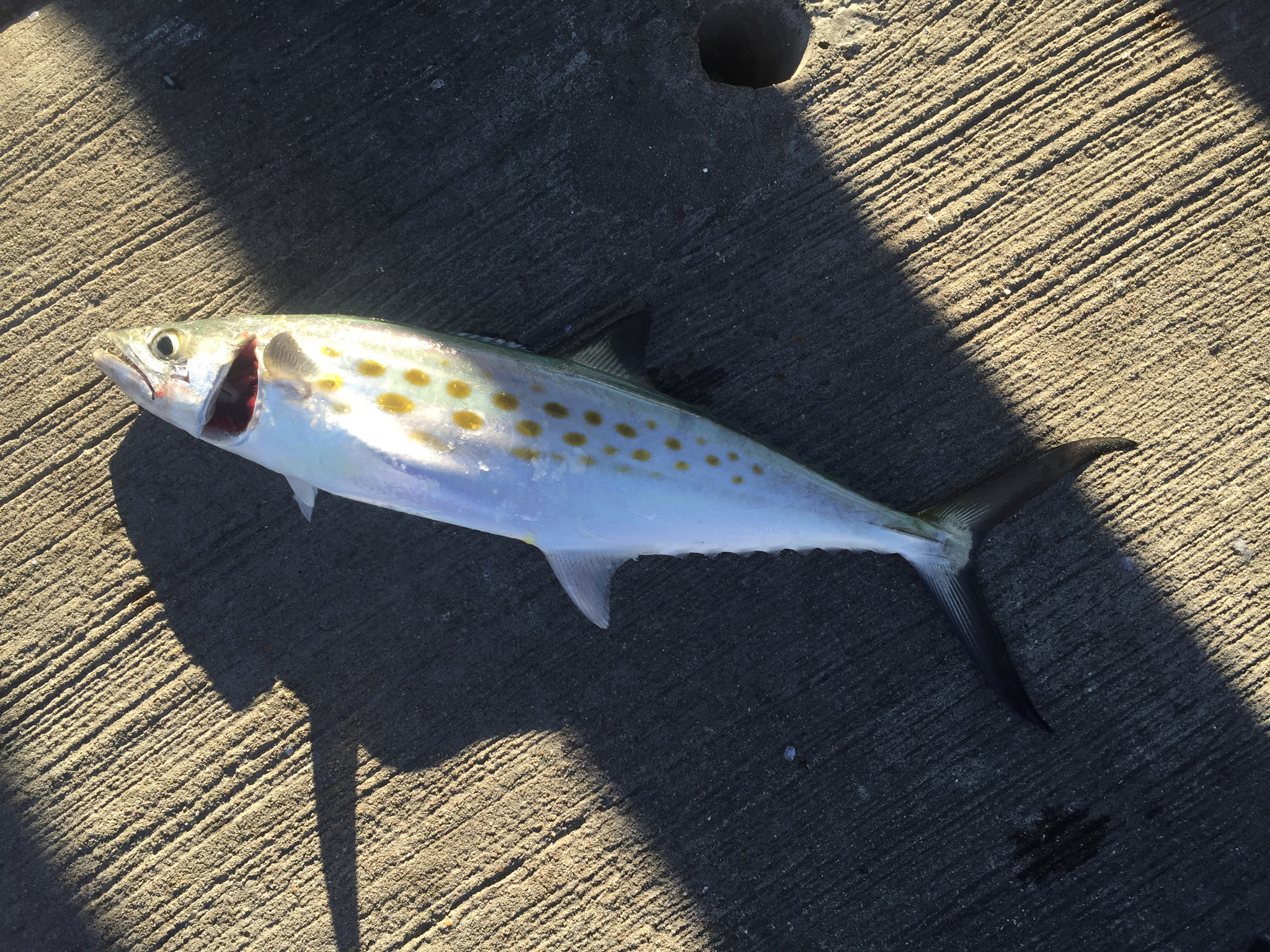
Atlantic Spanish mackerel
- Family
- Scombridae
- Depth
- 10–35 m
- Season
- Jan, Feb, Mar, Apr, May, Jun, Jul, Aug, Sep, Oct, Nov, Dec
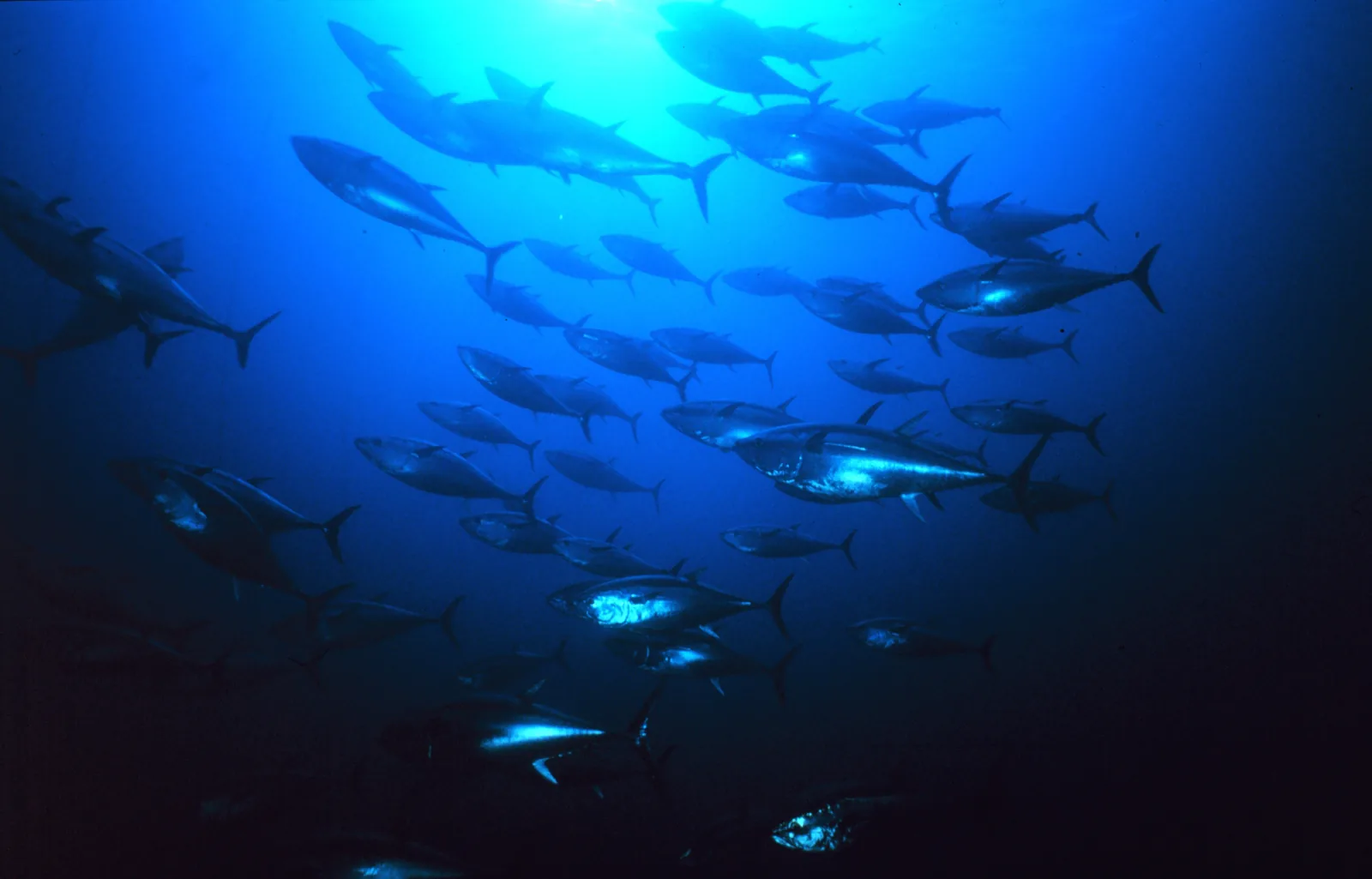
Atlantic bluefin tuna
- Family
- Scombridae
- Depth
- 0–985 m
- Season
- Jun
Guides for this water
Technique, gear and safety guides that fit Dogtooth tuna.