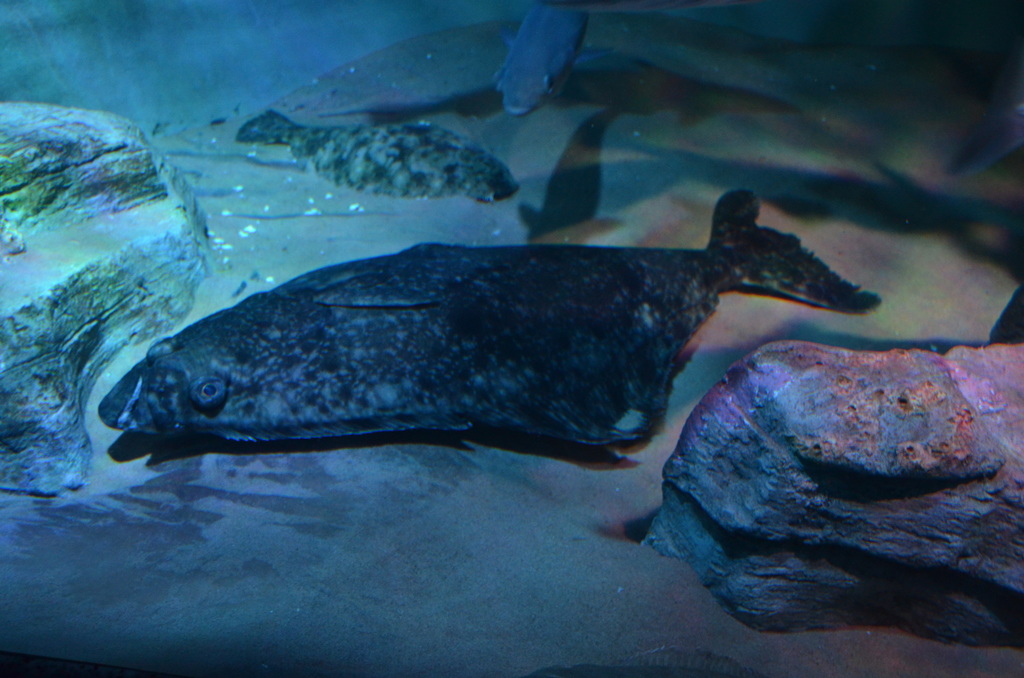
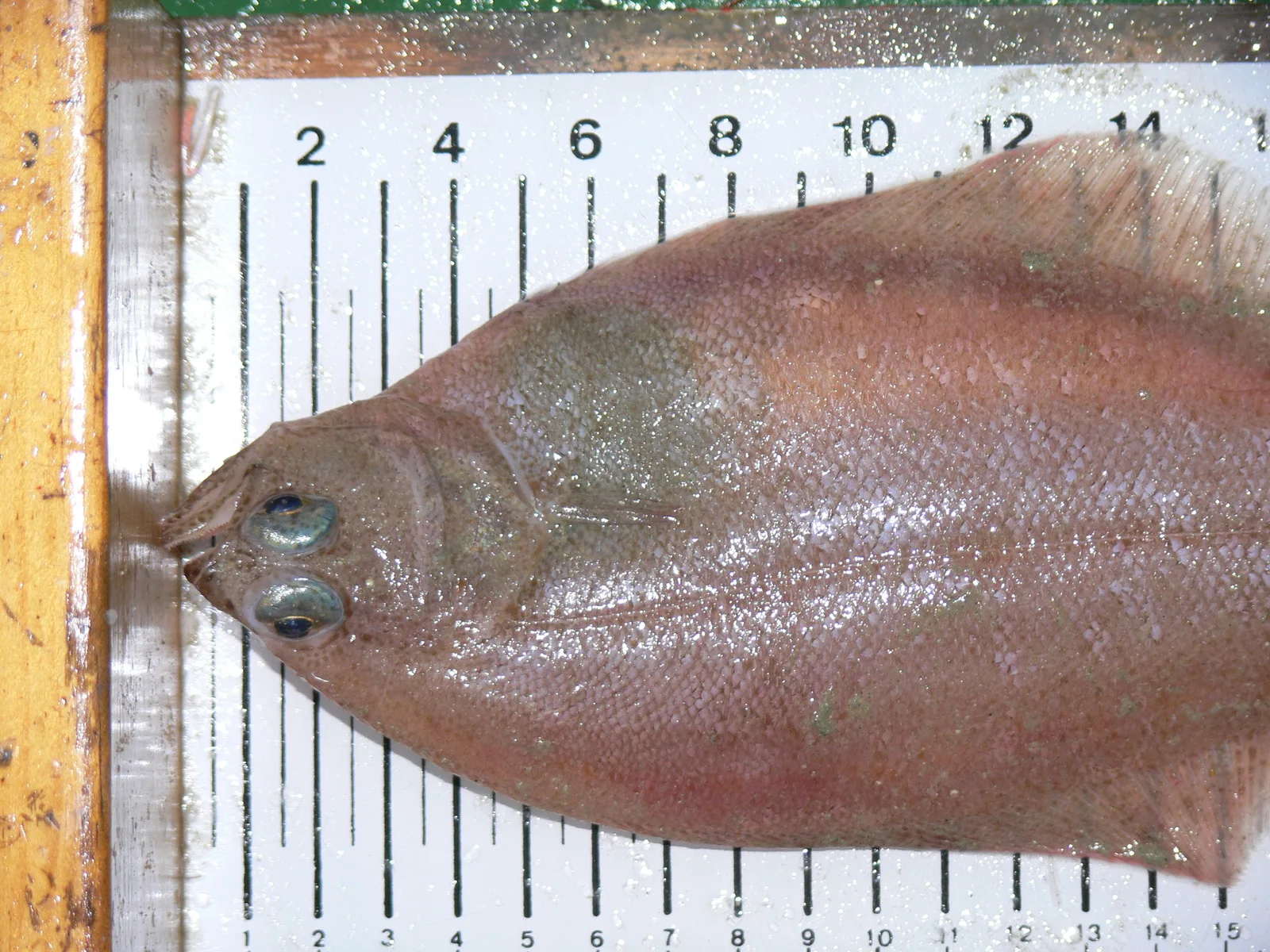
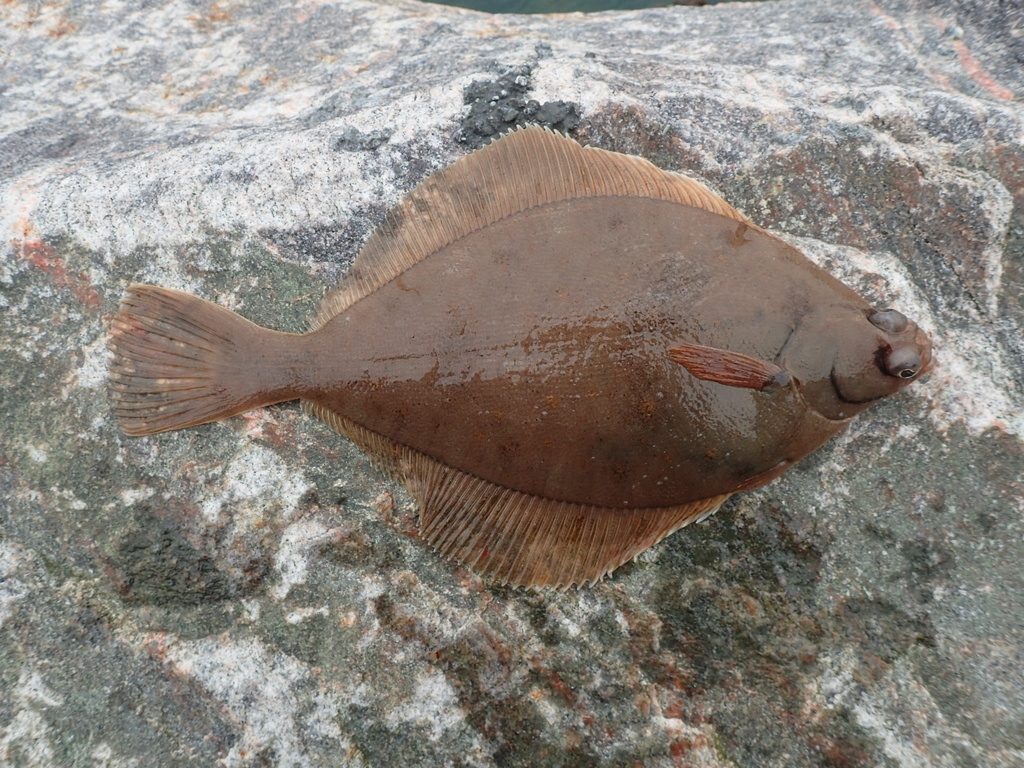
Atlantic halibut (Hippoglossus hippoglossus) is a fish of the family Pleuronectidae. FishBase gives its range as: Atlantic Ocean and adjacent Arctic. It is recorded from 50 to 2000 m, in temperate water. The recorded maxima are 470 cm TL, 320 kg, 50 years. Diet includes crustaceans, fishes and molluscs. IUCN status: Near Threatened (NT). Chinese name: .
Four empty boxes
The size section gives a maximum but no common length. The depth section gives 50–2,000 m but no usual band. The environment line gives no temperature at all. The maturity line gives 122 cm and a range of 135–? cm, which cannot both describe the same threshold. Four blanks, each in a different part of the page.
What the blanks are not
A 50–2,000 m depth range is a tolerance, not a habitat. It says the species has been recorded across that span, not that a fish will be at any particular depth on a given day. The missing usual band is the more important absence: without it, the record cannot tell you where the fish concentrates. Filling that gap with a plausible number would turn a blank into false precision.
The missing common length works the same way. Without it, there is no "average fish" to plan tackle around, only a maximum and two sex-specific figures. A 320 kg maximum is a record, not a target, and the page gives no middle rung between that and nothing.
The maturity entry contradicts itself
Maturity is written as 122 cm, yet the range printed with it opens at 135 cm, so the single figure falls under that opening. The two entries come from different references and are left unbridged. The conservative reading takes 135 cm as the cautious release line, because it is the higher threshold; the literal reading takes 122 cm. This article does not average them, and it does not pretend the discrepancy is a rounding error.
Where the spawning table points
Five records, months January to April and December. Lofoten, March and April. Møre, March and April. Vesterålen, March and April. Off the Norwegian coast, January to April and December. One entry is marked "Not specified". Four of the five are Norwegian, and all of them sit in the same corner of the Atlantic.
That is a sampling pattern, not a range-wide season. The distribution text says the Atlantic and adjacent Arctic; the spawning table says Norway. A reader in Canada or Greenland should not import the Norwegian months as a local calendar.
The record's geography is Canadian
GBIF holds 41,865 preserved records. Canada contributes 36,459, the United States 2,083, Norway 2,079, Great Britain 288, Sweden 119. FishBase lists sixteen territories across the North Atlantic and Arctic; iNaturalist holds 129 observations.
Two maps again, and this time they disagree in a useful way. The spawning table is Norwegian; the specimen index is Canadian. Neither is the species. One is where someone watched spawning, the other is where someone preserved bodies. Between them sits the actual fish, which the page never places on a single chart.
Turning the blank into a search plan
What the page does give is habitat keywords sandy and open-water, a demersal milieu, and a 50–2,000 m envelope. Together they suggest a slope transect: find where sand meets deeper water, work down the slope, and let the sounder and the chart choose the contour. Boat angling is the only method the list gives, and the slope transect is that approach applied to a page with no usual band.
Because there is no usual band, there is no target depth to quote. The honest instruction is to fish the change in bottom, not a number. That is what the blank is good for: it forces the plan back onto structure that can be seen.
The size gap
Maximum length is 470 cm for males and 300 cm for females; the heaviest published weight is 320 kg, and the oldest aged specimen reached 50 years. The male maximum exceeding the female maximum is unusual, and the page states both without comment.
A 50-year life and a 470 cm ceiling describe an animal that grows slowly and lives long. That makes the missing common length more serious, not less: with a long-lived fish, the size structure of the population matters, and the page gives no central value to compare against.
Wikipedia supplies one reason this gap may never close. Halibut size is not age-specific; it follows a cycle tied to abundance, so a length cannot be converted into an age even in principle. The same entry also records strong swimming and long migrations, which is how a slow-growing fish still moves between the grounds the page lists.
What to do with an unfillable page
IUCN lists Near Threatened, assessed 12 February 2021. The human uses are commercial fishing, experimental aquaculture, gamefish and public aquaria. None of that fills the four blanks.
Use the page for what it has: a northern distribution, a sandy-slope habitat, a Norwegian spawning record, a very large maximum. Then take the missing common length, usual depth and temperature as three questions to ask locally. A labelled blank guides better than an invented number.
How to catch it
Boat bottom fishing
Anchored or drifting boat, bait or lure worked near the recorded bottom.
Trolling
Trolled from a moving boat; suits roaming or pelagic species.
Regulations before you keep it
These are the published regulations for this fish. Read the number first. The notice below it is the actual regulation.
Bag limit3
41 in · 1 fish per vessel per trip · all year
United States — federal (Atlantic) · US-FED-ATL
Federal Atlantic rules allow one Atlantic halibut per vessel per trip at 41 inches.
Halibut
Open season: All year
Minimum size: 41 inches
Possession limit: 1 fish per vessel per trip
41 in · 1 fish per person per day · year round
United States — Massachusetts · US-MA
Massachusetts allows one Atlantic halibut per person per day at a 41-inch minimum.
Halibut (4, 5) Min: 41" Year Round 1 fish
41 in · 5 fish per vessel per year (25 charter) · May 18 – Jun 13, no fishing Wednesdays and Thursdays
United States — Maine · US-ME
Maine allows a 41-inch Atlantic halibut with a 5-fish vessel annual limit in a May 18 – Jun 13 season.
ATLANTIC HALIBUT (Hippoglossus hippoglossus)
Size: Minimum size 41 inches.
Bag limit: Vessels may land no more than 5 fish (recreational) / 25 fish (charter) per year. All retained fish shall immediately be tagged with an approved landings tag.
Maine territorial waters; Season: Halibut can be retained from sunrise on May 18 through sunset on June 13th. No fishing on Wednesdays and Thursdays
Every record above names its source and the date it was retrieved. See the regulation register for the full list, or how to read these regulations.
Where these facts come from
Check these pages before you rely on a size, range or protection status.
-
FishBase — Hippoglossus hippoglossus
— FishBase · T2
-
GBIF — Hippoglossus hippoglossus occurrence records
— GBIF · T2
-
IUCN Red List — Hippoglossus hippoglossus
— IUCN · T1
-
Photo record — iNaturalist
— iNaturalist · T3