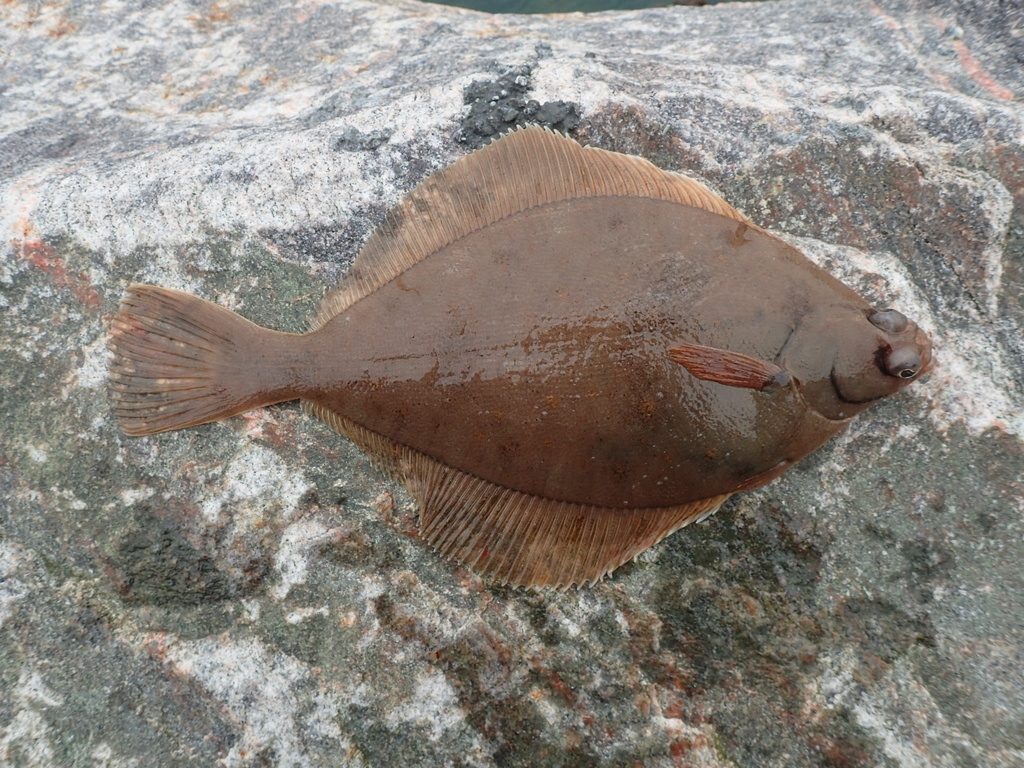
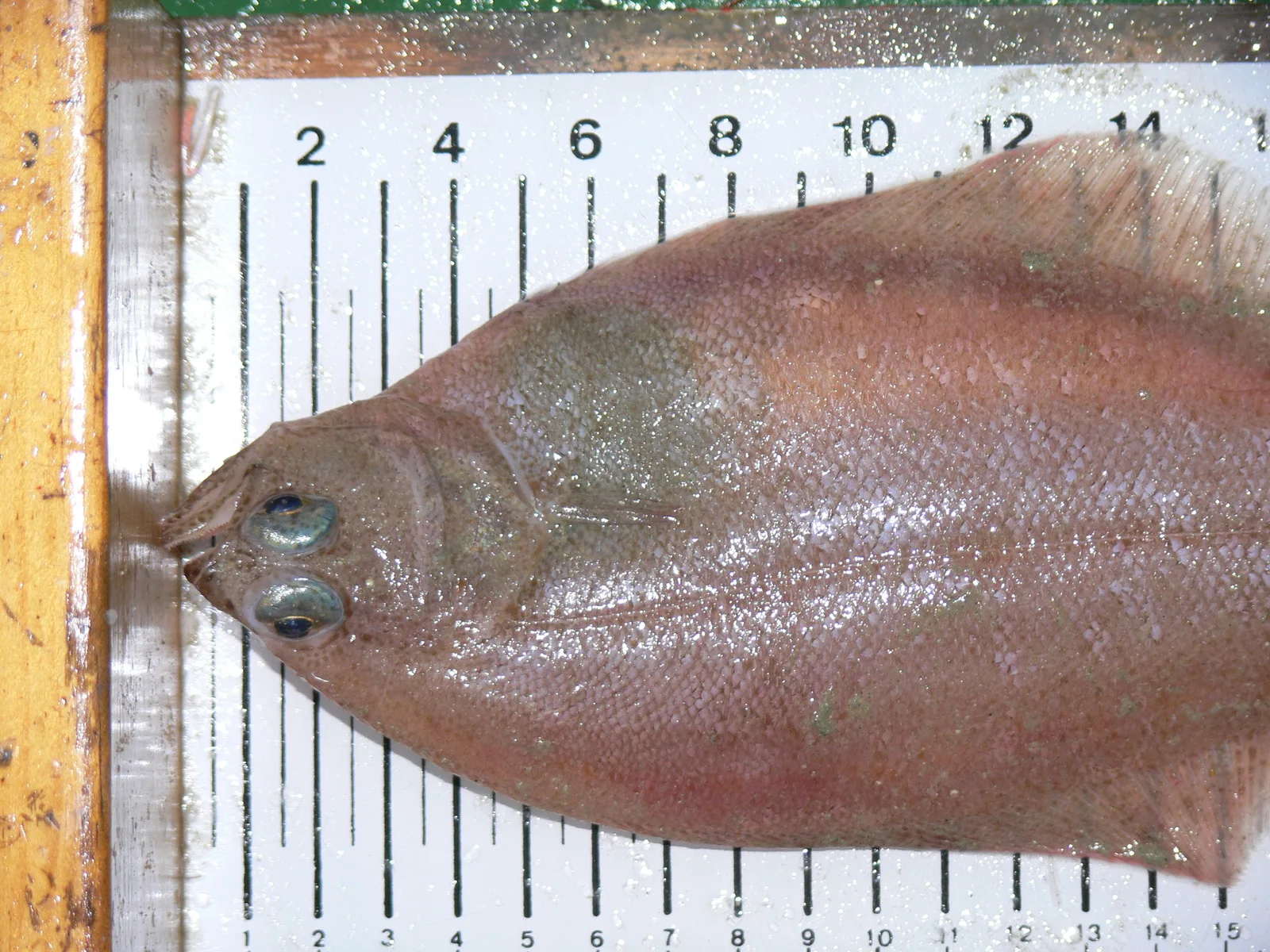
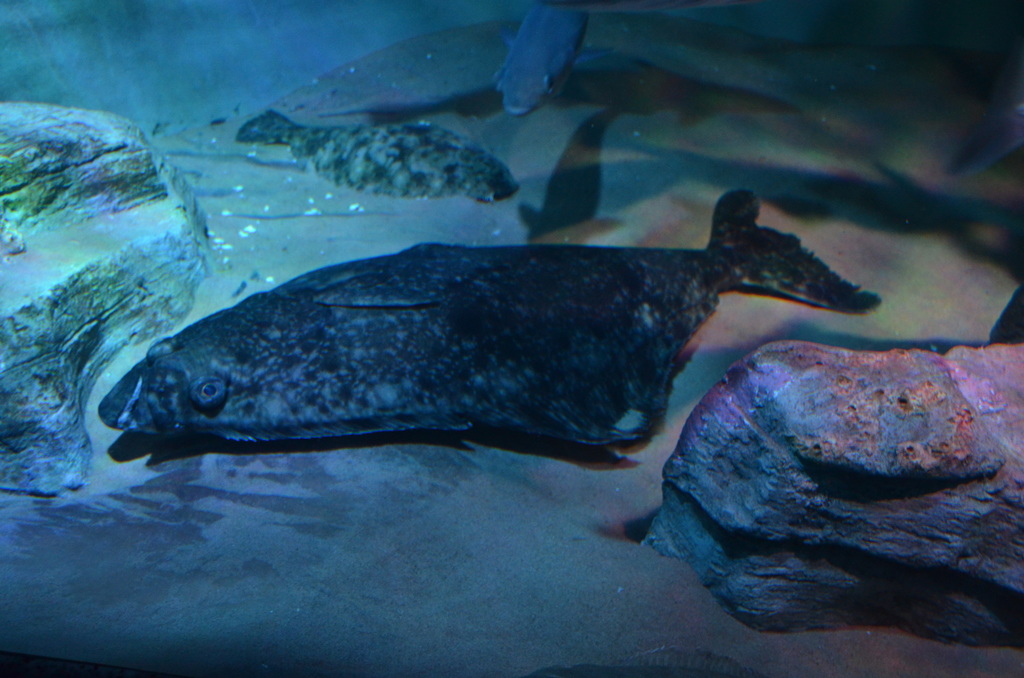
Three labels on this page do not line up. The environment row says marine; the spawning table includes the Baltic Sea. The habitat keyword says sandy; the Baltic is not the North Sea. The maximum length is 40 cm; the summary says most specimens never pass 20 cm. None of these contradictions needs to be resolved to fish for common dab, but each one changes what a bait, a depth, and a size limit mean.
Three labels that do not line up
The environment row says "Marine; demersal; oceanodromous"; its depth field runs 20–150 metres, and the temperate envelope runs from 72°N to 43°N. The habitat keyword in the species table is sandy, and the summary repeats that the fish lives on sandy bottoms in the North Sea down to about 100 metres.
Then the spawning table adds the Baltic Sea, with a five-month window from April to August. The Baltic is a brackish basin, not a marine one, and its bottom is not the North Sea's sand. The record does not flag the contradiction; it simply lists both. A reader who takes "marine" as a hard filter will delete a real population, and a reader who takes "sandy" as a hard filter will delete the same one.
The Baltic row
The Baltic row gives April through August and names the sea. The other rows give the Barents Sea in June and July, the North Sea in April to June, and the sea off Brittany and southern England from January to August.
Four rows, four geographies, and one species. The January-to-August row off Brittany is the longest; the Barents row is the shortest and the northernmost. If the species spawns from early spring in the south to late summer in the north, the table is describing a cline, not a season. That reading is available from the rows, but the page never states it, so it stays an inference rather than a fact.
Twenty centimetres is the fish, forty is the record
The maximum is 40 cm SL and 1 kg, and the oldest reported fish was 12 years old. The summary says the species reaches 40 cm and a kilogram, "though most specimens grow no longer than 20 centimetres". That is the most useful sentence in either source, and it is also the one that changes the meaning of the 40 cm figure. Forty centimetres is the tail of the distribution; twenty is the body of it. A survey that reports a 38 cm dab is reporting an exceptional fish, not a typical one, and a size limit set near 40 cm would protect almost nothing.
The maturity range is 11 to 25
First maturity is given as 21.5 cm, spanning 11–25 cm. A range that wide is not a threshold; it is a summary of many samples, probably spanning latitudes and years.
The midpoint of 21.5 cm sits above the summary's "most specimens" figure of 20 cm. Read together, the two sources imply that a large share of the population may never reach the recorded first-maturity length, or that the 20 cm sentence describes a different part of the range than the maturity sample. The record leaves that choice open. For release, the conservative line is the bottom of the maturity range, 11 cm, which is so low that it is useless; the practical line has to come from a local rule, not from this record.
Sandy down to a hundred, or a hundred fifty
FishBase records 20–150 metres. The summary says sandy bottoms down to about 100 metres.
The 50 metre difference is small in absolute terms and large in how it is read. One is a recorded maximum, the other is a habitat description. The fish can occur at 150 metres without being described as a sandy-bottom fish at that depth. Neither source gives a usual depth band, so neither supports a claim about where the densest concentration sits.
GBIF's distribution layer returns 36 records across nine countries — Belgium, Denmark, France, the UK, Ireland, the Netherlands, Norway, Poland and Sweden — all marked native, and it names the Baltic Sea among the localities. That is the Baltic population the spawning table implies, appearing in a second source. The iNaturalist taxon page carries 389 observations.
A spawning table with four geographies
The table runs from January to August, but no single row covers that span except the one off Brittany and southern England. The Baltic row starts in April, the Barents row in June, the North Sea row in April.
That is a seasonal signal spread across latitude and water body, not a single peak. The table does not name a month that applies everywhere, and a reader planning a trip should match the row to the sea in front of them. The 12-year maximum age is separate: it says the species can live long enough to spawn in many seasons, not that every fish does.
Commercial and gamefish at twenty centimetres
The human-use line marks the species as commercial and as a gamefish. The summary calls it edible.
A 20 cm typical fish that is both sold and pursued is not the same animal as the 40 cm record. The commercial label is easy to understand: the species enters markets. The gamefish label is harder, because the same sources say most fish are small. Both labels can be true if the sport is about numbers rather than size, but which one the page means is not stated.
Which label to trust on the day
Take the Baltic population as a separate case and do not apply North Sea depth or substrate rules to it. Expect 20 cm, take 40 cm as a record, and never read the 11–25 cm maturity range as a release line.
The only defensible depth statement is the 20–150 metre envelope, with the sandy description strongest in the North Sea. Where the two disagree, the disagreement is the information: this is a fish whose labels were written for different seas.
Regulations before you keep it
These are the published regulations for this fish. Read the number first. The notice below it is the actual regulation.
Minimum size2
The minimum size for Common dab in Spain is ≥23 cm.
| Limanda (Limanda limanda) | 23 |
The minimum size for Common dab in France is ≥20 cm.
| LIMANDE | Limanda limanda | 20 cm |
Every record above names its source and the date it was retrieved. See the regulation register for the full list, or how to read these regulations.
Where these facts come from
Check these pages before you rely on a size, range or protection status.
-
FishBase — Limanda limanda
— FishBase · T2
-
GBIF — Limanda limanda occurrence records
— GBIF · T2
-
IUCN Red List — Limanda limanda
— IUCN · T1
-
Photo record — iNaturalist
— iNaturalist · T3