
Pacific barrelfish
Pacific barrelfish is a deep, near-bottom fish of the Northwest Pacific, recorded off central and southern Japan. It lives far down the slope, from 150 to 1,537 m, and its diet of zooplankton and algae is unusual for a fish of that depth. Adults reach 90 cm TL and 10.2 kg.
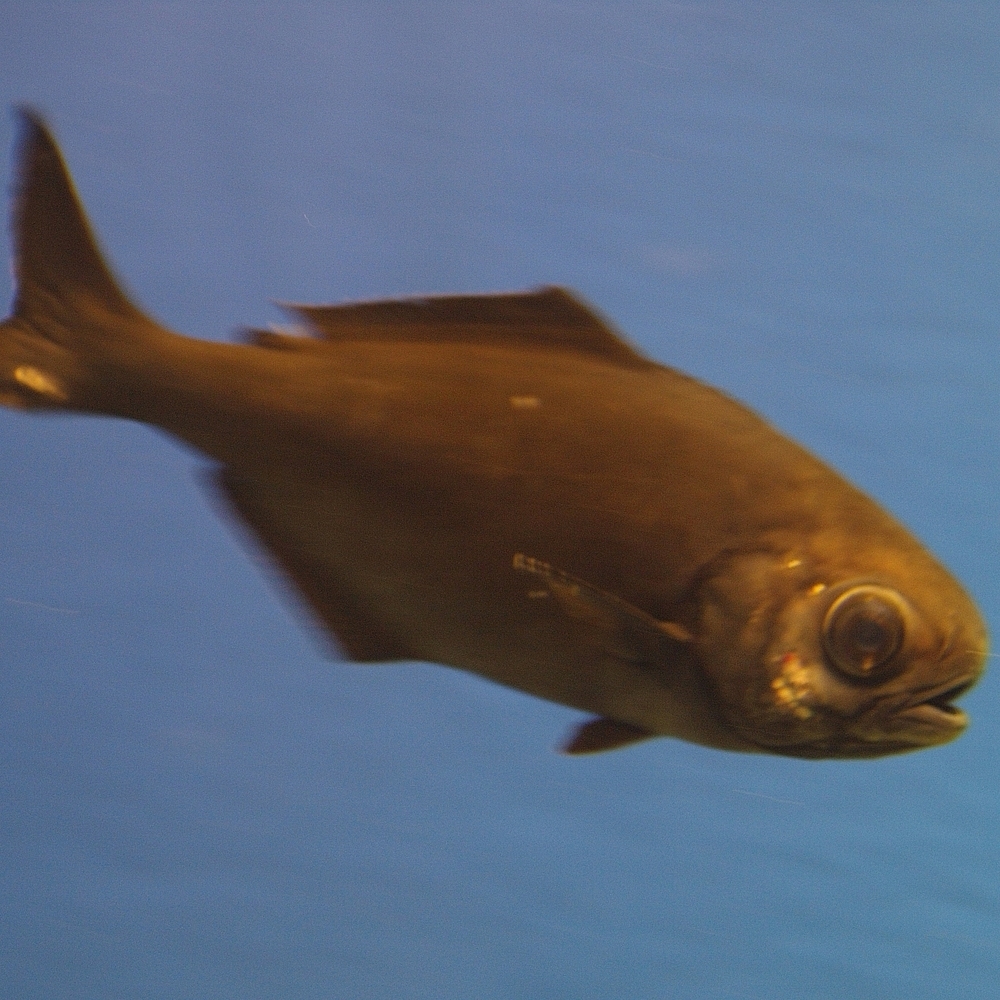
Pacific barrelfish (Hyperoglyphe japonica) is a fish of the family Centrolophidae. FishBase gives its range as: Northwest Pacific: central and southern Japan. Larvae found in Taiwan Strait. It is recorded from 150 to 1537 m, in temperate water. The recorded maxima are 90 cm TL, 10.2 kg. Diet includes zooplankton and algae. IUCN status: Not Evaluated (NE). Chinese name: .
Identification
Hyperoglyphe japonica carries one size figure: a maximum of 90 cm TL and a published maximum weight of 10.2 kg. Plan for the individual the sounder marks, not for a published average: both figures describe a big fish, not a typical one.
The two English handles, Japanese butterfish and Pacific barrelfish, are market names. At least one unrelated family also sells a butterfish, so check a landing rule against the scientific name rather than the name on the ice.
Habitat and distribution
The environment line reads marine, benthopelagic, oceanodromous, 150–1537 m, temperate. That vertical span is very wide. The number to fish is the one you find on the sounder, not a printed preference. The written range is the Northwest Pacific: central and southern Japan, with larvae taken in the Taiwan Strait.
The country table widens the picture to Korea, Taiwan region and Hawaii. GBIF's single distribution row is the North Pacific as a whole, and OBIS returns 58 records. Those records include Chiba on Honshu, a fish market in Taiwan region, Korean material, and seamount or guyot stations in the central North Pacific such as Ladd Seamount and Kinmei Guyot, with one station in the Hawaiian Islands. A benthopelagic fish recorded on isolated seamounts is following structure, not a coastline.
Photographs are rare: iNaturalist holds four observations, which fits an animal that lives below the depth most divers work.
Season and fishing approach
Read the season from water temperature and from what the boats are landing. The method follows depth instead. Start at the shallow end of the range, work the edge of the drop-off, and continue down until the sounder marks fish; at this scale the difference between 150 m and 600 m is a different rig, not a different cast.
Use an electric reel or a heavy manual outfit, braid, and enough sinker to reach bottom in current. Squid strips on a glow bead are the practical bait. The diet entry of zooplankton and algae describes what the fish strains from the water, not what will stay on a hook at 400 m. Keep the drift slow and vertical, and note the exact depth of each take, because that is the only depth data this fishery will give you.
Edibility and regulations
FishBase lists commercial landings and a gamefish rating. Its Red List status is NE, which is an assessment status rather than a management measure: the rule that binds a landing is issued by the Japanese national or prefectural authority for the water you are fishing.
The market name is where mistakes happen. A bag or size rule written for another "butterfish" will not fit this species. Check the text against Hyperoglyphe japonica.
Where these facts come from
Check these pages before you rely on a size, range or protection status.
- FishBase — Hyperoglyphe japonica — FishBase · T2
- GBIF — Hyperoglyphe japonica occurrence records — GBIF · T2
- IUCN Red List — Hyperoglyphe japonica — IUCN · T1
- Photo record — iNaturalist — iNaturalist · T3
Fish in the same water
These fish live in the same place.
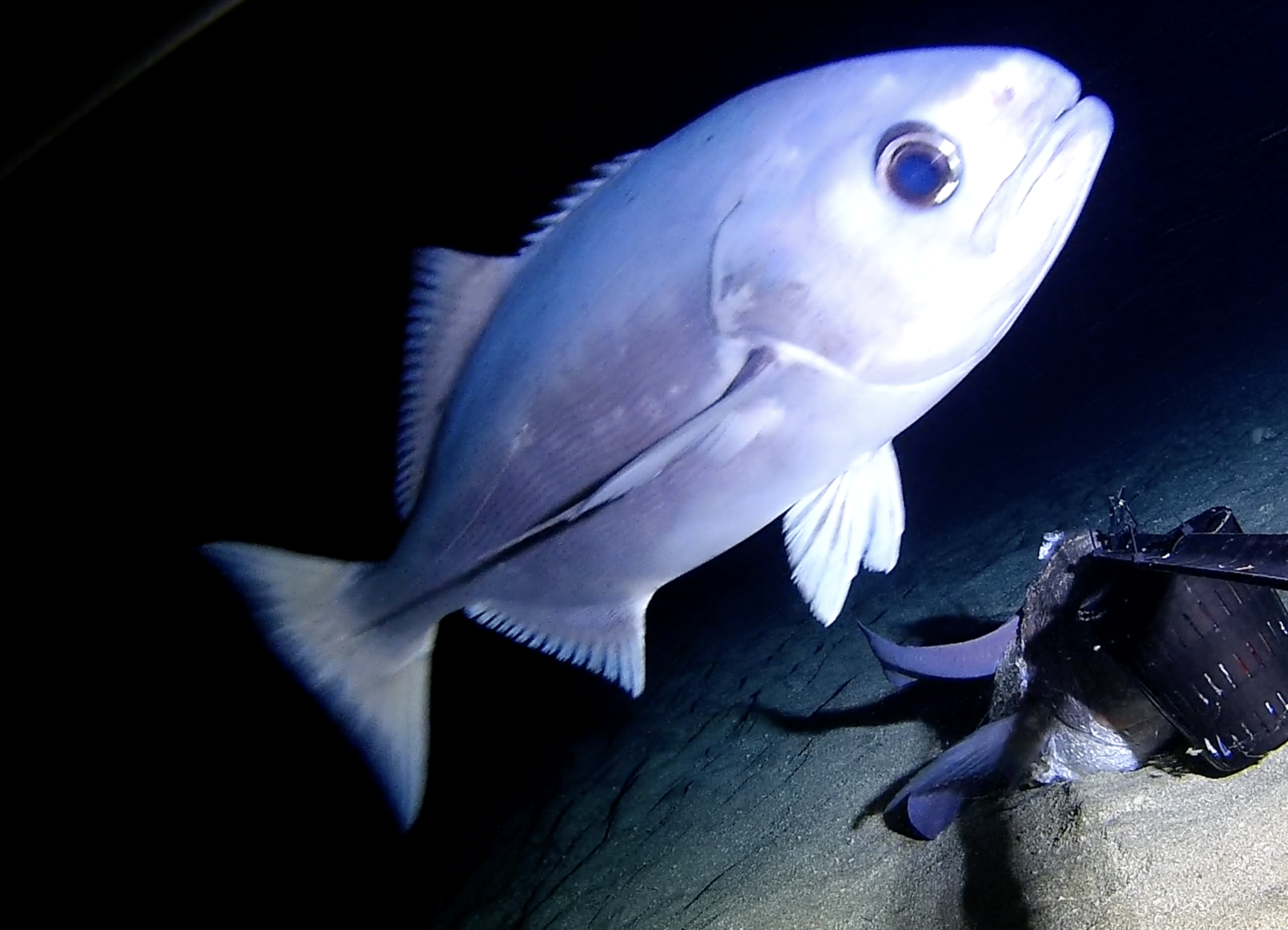
Bluenose
- Family
- Centrolophidae
- Depth
- 40–1500 m
- Season
- Feb, Mar, Apr, May, Jun, Jul
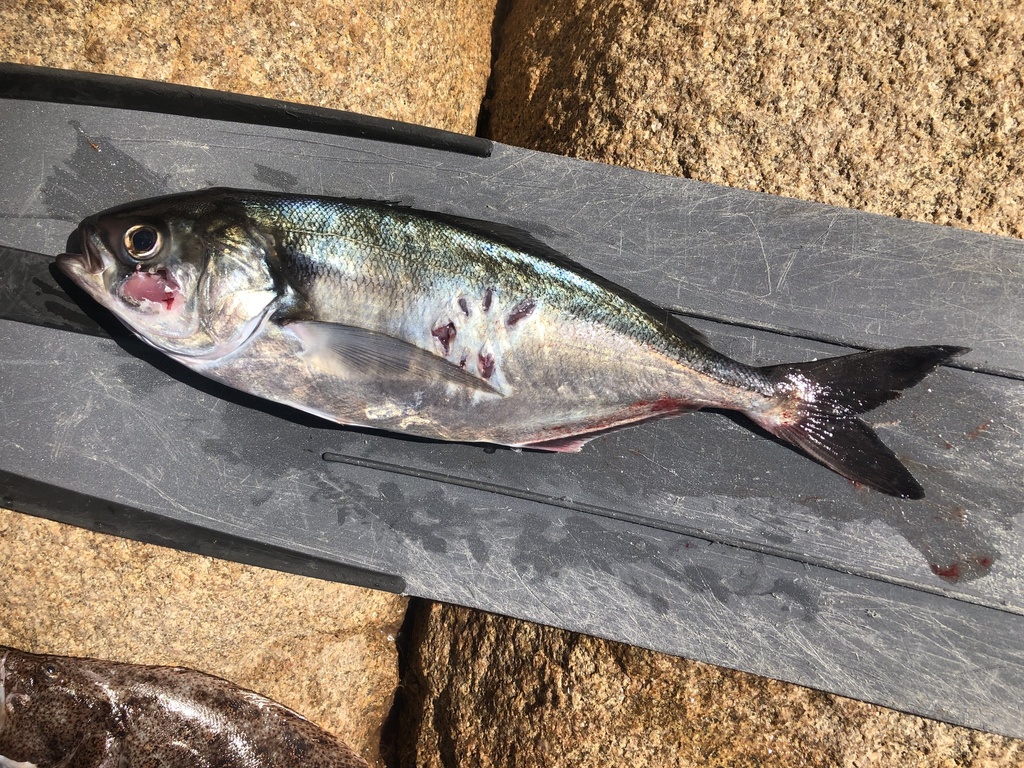
Cojinoba
- Family
- Centrolophidae
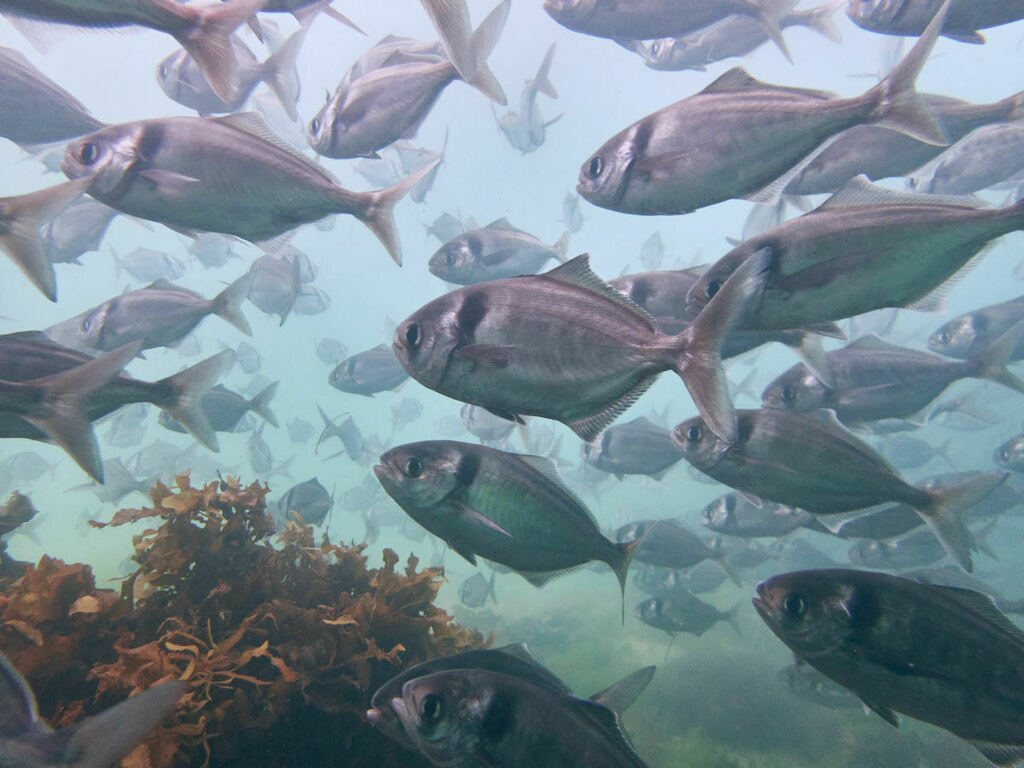
Silver warehou
- Family
- Centrolophidae
- Depth
- 22–400 m
- Season
- Jun, Jul, Aug, Sep, Oct, Nov
Guides for this water
Technique, gear and safety guides that fit Pacific barrelfish.