
Warsaw grouper
Warsaw grouper is the largest western Atlantic grouper, recorded to 230 cm and 198.1 kg with a maximum age of 91 years. It lives on rocky bottom from 55 to 525 m, spawns off Cuba in April and May, and is managed under a federal limit of 1 fish per boat per day with no minimum size.
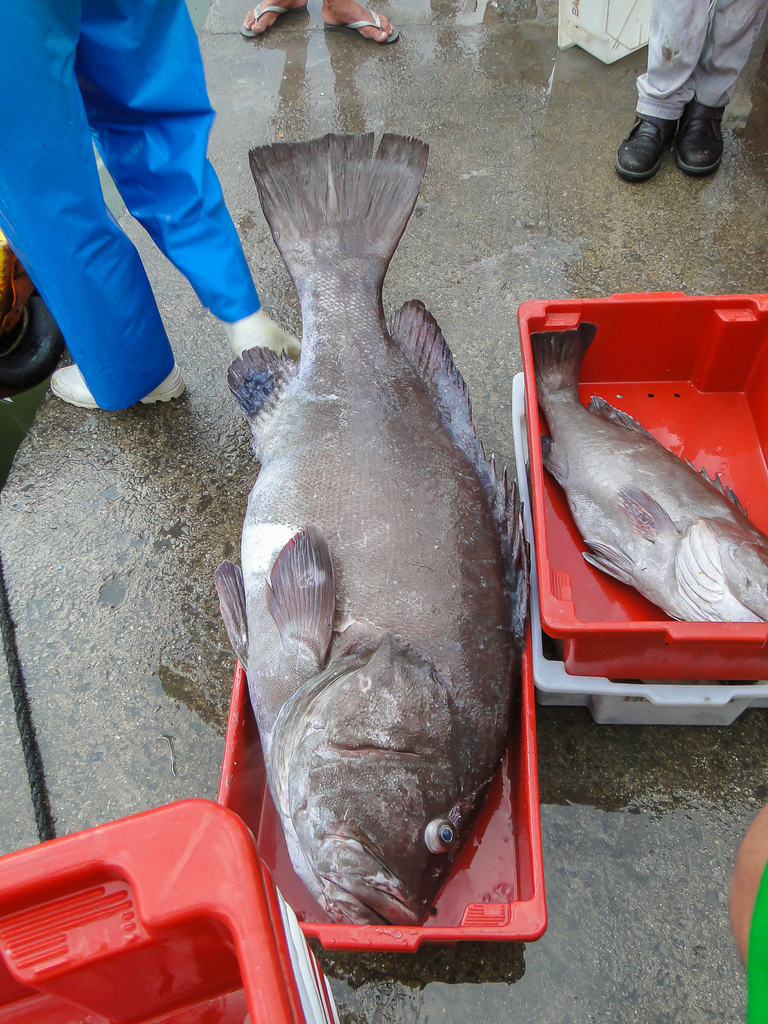
Warsaw grouper is the largest western Atlantic grouper, recorded to 230 cm and 198.1 kg with a maximum age of 91 years. It lives on rocky bottom from 55 to 525 m, spawns off Cuba in April and May, and is managed under a federal limit of 1 fish per boat per day with no minimum size.
Identification
Warsaw grouper is the giant of the genus: a thick, heavy-bodied fish in dark brown to grey-brown, with a broad head and a heavy jaw. It has neither the yellow fin edges of a yellowedge nor the white spots of a snowy.
FishBase gives 230 cm total length, 198.1 kg and a maximum age of 91 years, with 13 to 15 dorsal soft rays and three anal spines and nine soft rays. A two-metre warsaw is an old fish.
Distribution and Habitat
The range runs from Massachusetts through the Gulf of Mexico to Cuba, Trinidad and southern Brazil, and FishBase describes it as rare in the West Indies.
Depth is 55 to 525 m over rocky bottom, a wider band than most deep groupers. Smaller fish turn up shallower; the true giants come off the slope.
Habits and Diet
Adults are solitary and sit tight to rock, ambushing whatever passes. The diet is fish-led, which is why a whole fish or a large cut bait beats a small piece.
It is slow and long-lived: 91 years is the recorded maximum, and a 150 cm fish may be older than the boat. That is why the bag is one fish per boat, not one per angler.
Fishing Methods
Deep dropping with heavy tackle is standard, but warsaw also take baits on the upper slope in 55 to 150 m. A whole squid, a bonito flake or a whole fish is better than a cocktail.
Expect a heavy, slow bite rather than a run. Let the fish turn with the bait, then wind hard and keep the rod loaded; a big warsaw uses bulk and current, not speed.
Gear and Approach
Use 80 to 130 lb braid, a 100 lb leader, an 8/0 to 12/0 circle hook and a reel with drag and capacity for a 100 kg fish. A short, powerful rod lifts better than a long deep-drop stick.
Plan the release before the bite. A 100 kg warsaw cannot be lifted aboard safely; use a descending device or release at the gunwale, and cut the leader if the fish is too large to handle. Leave the big females in the water.
Seasonal Window
FishBase records spawning in April and May off Cuba. Gulf timing is not documented, so plan around weather rather than a spawning month.
Summer and autumn give the calmest deep-drop days; winter fronts in the northern Gulf close the window. Current, not moon phase, decides whether 200 m is fishable.
Edibility and Handling
Warsaw is good eating, though a large fish is coarse and a smaller one is better on the table. The recreational value of a giant is in the release.
Bleed and ice any fish kept. Fillets from a 30 kg fish are thick and need trimming; steaks and chowder suit the darker meat.
Regulations and Conservation
In the federal Gulf EEZ, grouper fall under a 4 fish aggregate per person per day, and warsaw are limited to 1 per boat per day. Warsaw have no federal minimum size and no dedicated federal closure, so the boat limit is the whole constraint. Deep-water grouper landings are largely an individual quota fishery, and the recreational sector works inside the same aggregate. Federal documents have used Gulf of America since 2025.
Florida sets no separate minimum, counts warsaw in the 4 fish aggregate and applies 1 per person and 1 per boat per day on the Atlantic side. Louisiana and Mississippi use a 4 fish aggregate with 1 warsaw per boat per day and no state minimum; Louisiana recommends a descending device. Alabama uses a 4 fish aggregate, lists no warsaw minimum and applies a 20 fish reef-fish aggregate where no other bag applies. Texas lists no warsaw in state water; beyond 9 nautical miles federal rules apply.
IUCN lists warsaw as Near Threatened, assessed 21 November 2016, with pressure from longline and trap effort, a 91 year lifespan and the loss of large adults. Rules change yearly; check current notices.
How to catch it
Deep dropping
100
Boat bottom fishing
55 150
Boat bottom fishing
Where these facts come from
Check these pages before you rely on a size, range or protection status.
- FishBase — Hyporthodus nigritus — FishBase · T2
- GBIF — Hyporthodus nigritus occurrence records — GBIF · T2
- IUCN Red List — Hyporthodus nigritus — IUCN · T1
- Photo record — iNaturalist — iNaturalist · T3
Fish in the same water
These fish live in the same place.
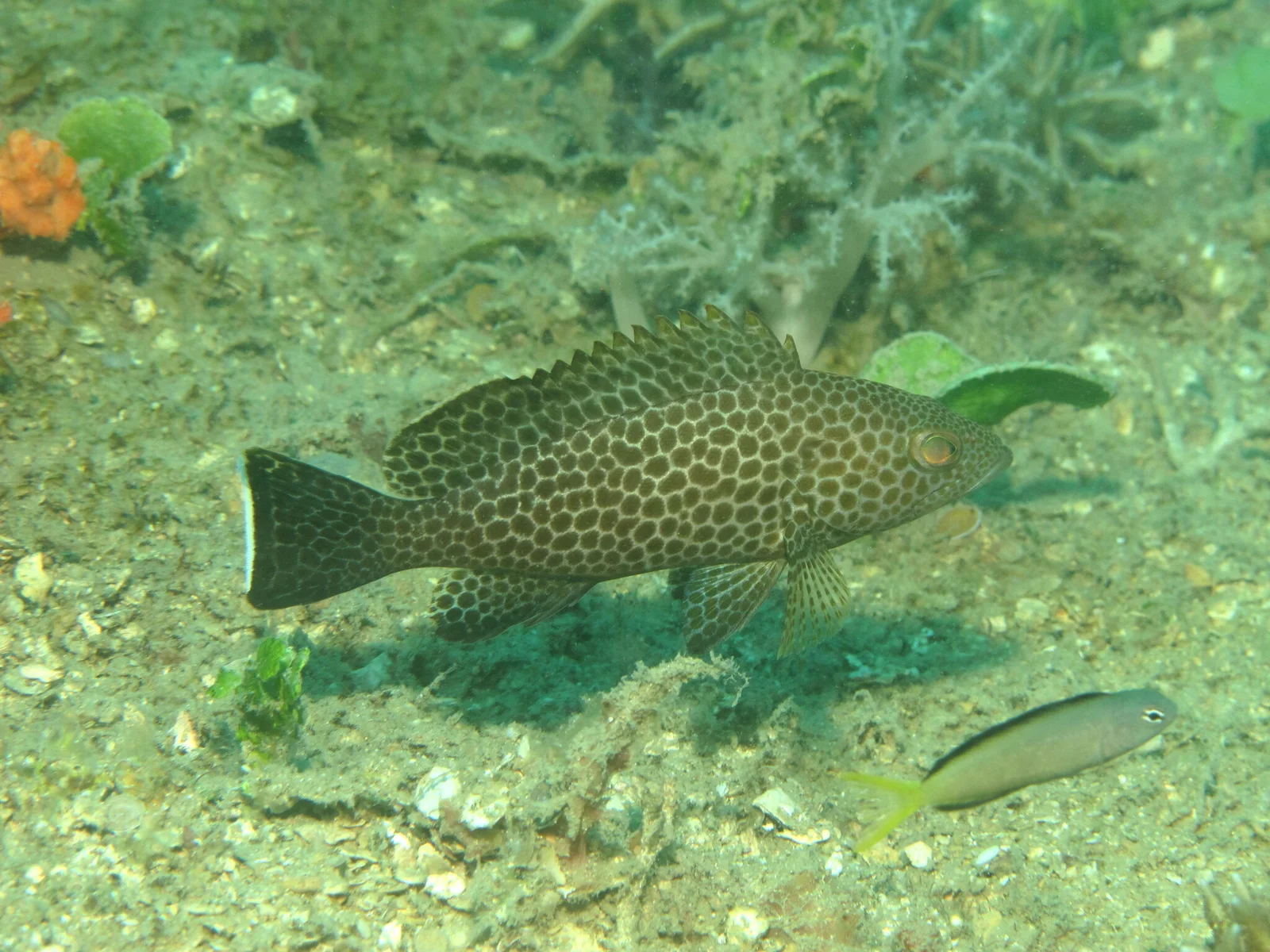
Areolate grouper
- Family
- Epinephelidae
- Depth
- 6–200 m
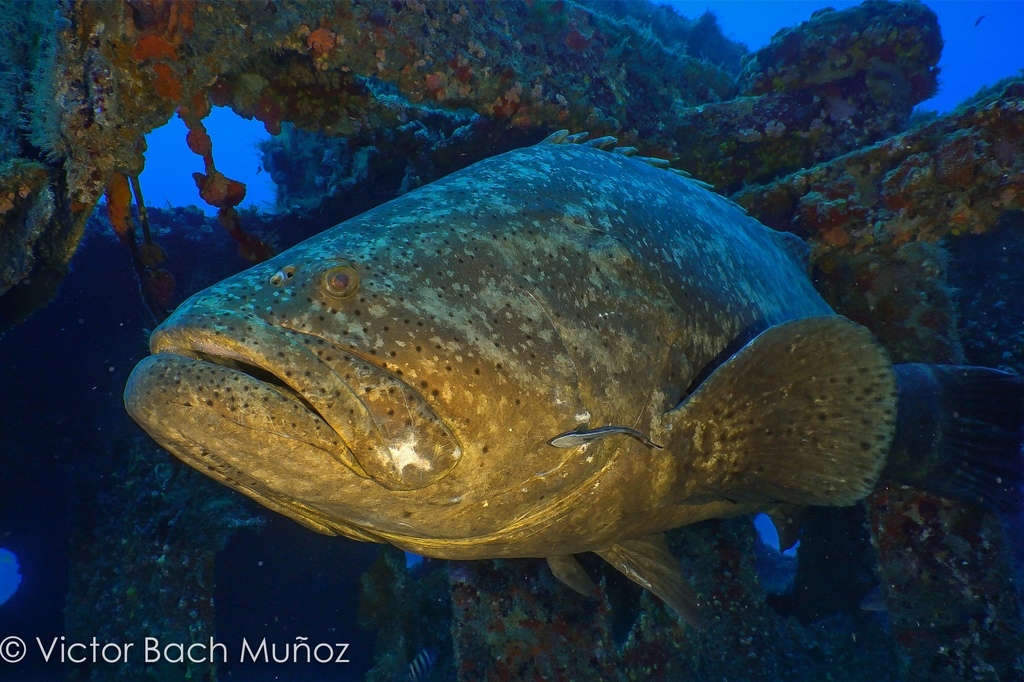
Atlantic goliath grouper
- Family
- Epinephelidae
- Depth
- 0–100 m
- Season
- Jan, Feb, Jun, Jul, Aug, Sep

Black grouper
- Family
- Epinephelidae
- Depth
- 60–250 m
- Season
- Jan, Feb, Mar, Apr, May, Jun, Jul, Aug, Sep, Oct, Nov, Dec
Guides for this water
Technique, gear and safety guides that fit Warsaw grouper.