
Hawaiian flagtail
The fin formula is ten dorsal spines with eleven or twelve soft rays, and three anal spines with eleven or twelve soft rays. The body is silvery, with a coarse silver-and-black network over the upper head, and the rear edge of the tail is blackish, a mark that shows clearly when the fish turns.
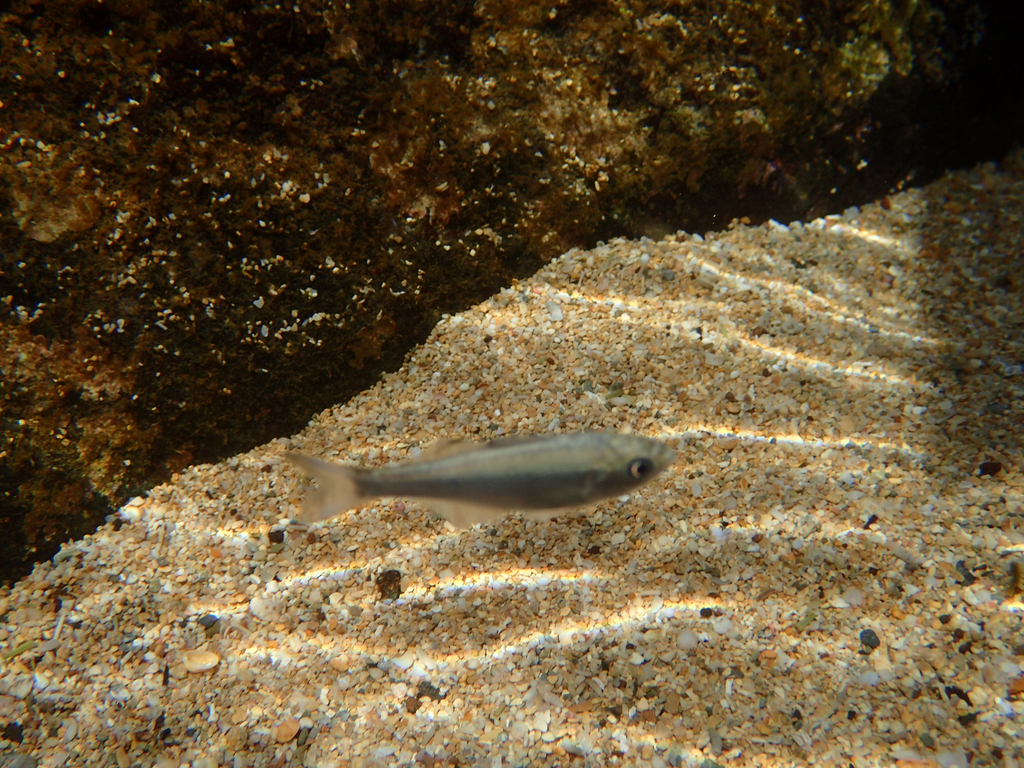
The fin formula is ten dorsal spines with eleven or twelve soft rays, and three anal spines with eleven or twelve soft rays. The body is silvery, with a coarse silver-and-black network over the upper head, and the rear edge of the tail is blackish, a mark that shows clearly when the fish turns. Standard length is 2.6 to 2.9 times the body depth, and the dorsal profile of the head is nearly straight rather than strongly arched. The eye is moderate, its orbit fitting three to three and a quarter times into the head length. There are ten to twenty serrae on the preorbital, the third anal spine is longer than the second, and the pelvic spine is short relative to the head. None of these counts is dramatic on its own; together they separate āholehole from the other silvery species sharing the same shoreline.
Islands, not continents
FishBase describes the range as the Pacific Ocean, widely distributed around oceanic islands, which is a habitat statement as much as a geographic one. The country list runs from Hawaii, Johnston Island and Wake Island across Kiribati, the Marshall Islands, the Cook Islands and Fiji to French Polynesia, the Society Islands, the Tuamotu Islands and Pitcairn, with Japan at the northern edge. GBIF holds 442 occurrences, led by 328 from the United States and 66 from French Polynesia, followed by small counts from the Cook Islands, the Marshall Islands, Kiribati, Fiji, UM, France, the Northern Mariana Islands and Taiwan. The depth band is 0 to 20 m, which is the whole fishable shoreline rather than a slice of it. The species is amphidromous, and a study of otolith strontium and calcium profiles found that use of stream habitats is facultative rather than obligatory. In plain terms, some fish go up streams and some do not, so a stream mouth is a good place to look but not the only place.
A fish without a spawning calendar
No spawning months are recorded, so the season column is left empty rather than guessed. The latitudinal range is very wide, from 35°N to 60°S, and the species is tropical; in Hawaii the practical window is set by water clarity and access rather than by a temperature threshold. Because the fish uses stream mouths, rainfall matters: runoff colours the shallows and shifts the fresh-salt boundary, and fishing that boundary is more productive than casting into clear water beside it. This is a working pattern from the habitat description, not a recorded migration date. The five-inch minimum applies all year, so a run of small fish is a reason to move, not to keep them.
Bread, shrimp and a small hook
FishBase records the species as taken with hook and line using bread or shrimp, which is unusually specific and worth following. Bread floats and breaks down, so it is best pinched on a small hook and allowed to sink slowly at the edge of a channel; shrimp stays on the hook better when the current is running. The mouth is small, and the fish is wary in clear shallow water, so a light leader and a bait that covers the hook point matter more than casting distance. A small float drifted along a channel edge keeps the bait at a natural depth and shows a take before the fish feels weight. At night, harbour lights draw fish, but keep the light off the water surface and fish the darker edge rather than the bright centre. The diet includes fishes, invertebrates and insects, so a worm is a reasonable third option when bread and shrimp are ignored.
Light tackle, small hooks
The recorded maximum is 25 cm, with no weight or age given, so there is no reason to fish heavy. A light spinning rod, a small reel and a fine main line are enough, and the light line also lets a small bait sink naturally. Use a small hook, roughly matched to a piece of bread or a single shrimp, and a leader light enough that a snag breaks at the hook rather than at the rod tip. A small float or a split shot is the whole rig; adding weight makes the bait sink too fast for a fish that feeds in shallow, quiet water. Carry a small net, because the fish is lively at the surface and a 25 cm fish on a fine hook is easily lost at the ledge. The same outfit handles the estuary, the rocky shoreline and the harbour wall, which is the point of fishing for āholehole.
Five inches and a permit
Hawaii sets a minimum size of 5 inches for āholehole, so measure anything close and release the small ones. A recreational non-resident must hold an NRMFL, while selling catch requires a CML. Estuaries and protected areas carry their own rules, and the boundary lines follow DAR maps and current notices rather than signs on the beach. Because the species moves between fresh and salt water, a fish taken at a stream mouth may be covered by both estuarine and marine provisions; when in doubt, treat the stricter rule as the one that applies. There is no recorded commercial size rule specific to this species beyond the five-inch minimum, and no bag limit is given in the packet, so the general regulations govern the trip.
What the record does not cover
The entry draws on FishBase for taxonomy, range, size, depth, diet and life history, on GBIF for occurrences and on the DAR regulations for size and permits. iNaturalist holds 334 observations, a useful sign of how often the fish is seen by shore visitors but not a population count. Weight, maximum age and length at maturity beyond the approximate 18 cm figure are not recorded, and the IUCN status is Not Evaluated. Because spawning months are missing, both the season field and the monthly array stay empty. Regulations and reserve boundaries change, so confirm the current DAR notice before keeping a fish.
How to catch it
Shore fishing
Fished with the listed approach, matched to the recorded depth and size.
Boat fishing
Fished with the listed approach, matched to the recorded depth and size.
Where these facts come from
Check these pages before you rely on a size, range or protection status.
- FishBase — Kuhlia sandvicensis — FishBase · T2
- GBIF — Kuhlia sandvicensis occurrence records — GBIF · T2
- IUCN Red List — Kuhlia sandvicensis — IUCN · T1
- Photo record — iNaturalist — iNaturalist · T3
Fish in the same water
These fish live in the same place.
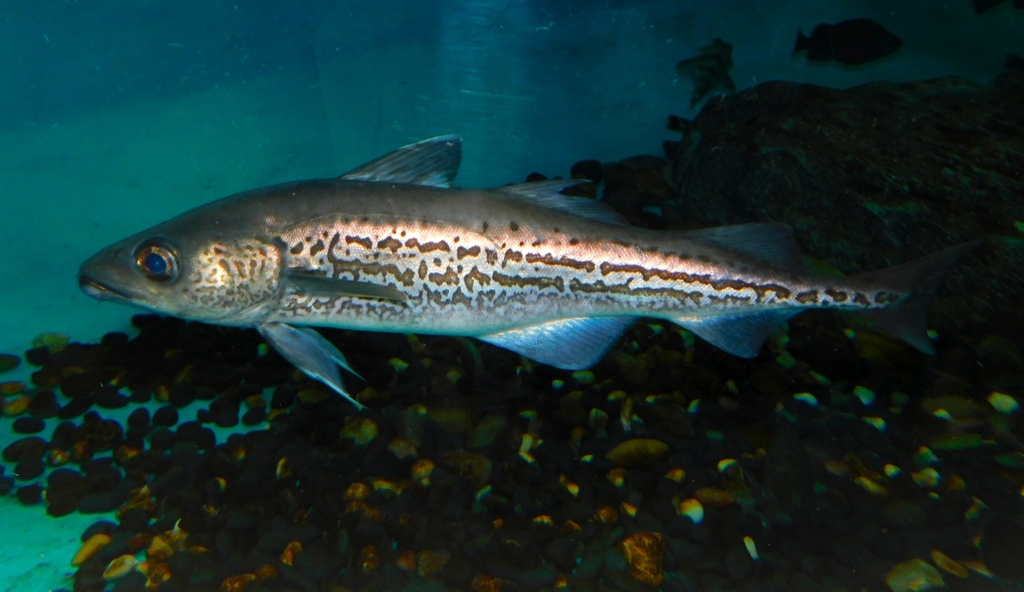
Alaska pollock
- Family
- Gadidae
- Depth
- 0–1280 m
- Season
- Jan, Feb, Mar, Apr, May, Jun, Jul, Aug

Albacore
- Family
- Scombridae
- Depth
- 0–600 m
- Season
- Jan, Feb, Mar, Apr, May, Jun, Jul, Aug, Oct, Nov, Dec
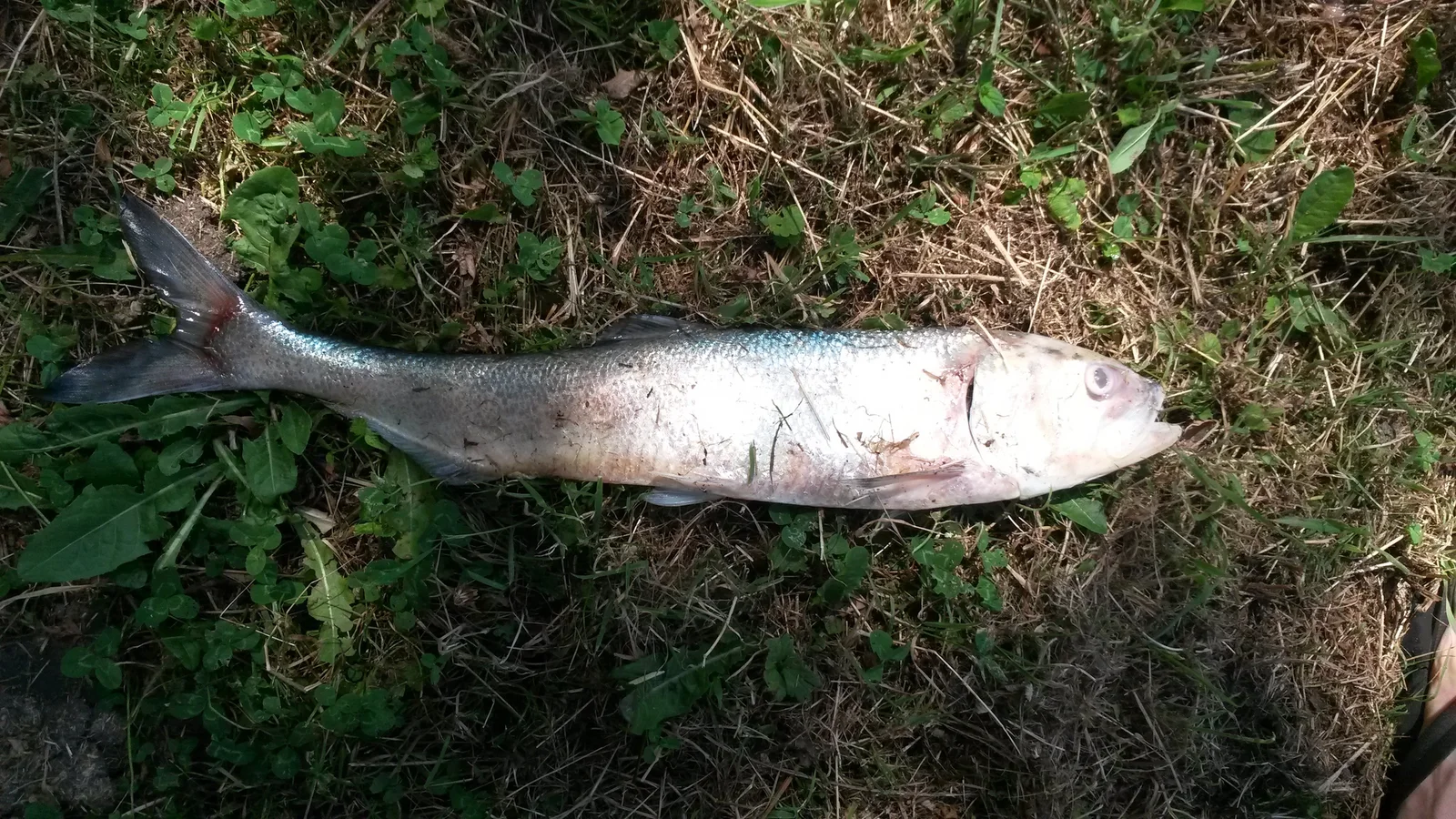
Allis shad
- Family
- Alosidae
- Depth
- 10–400 m
- Season
- Apr, May, Jun, Jul
Guides for this water
Technique, gear and safety guides that fit Hawaiian flagtail.