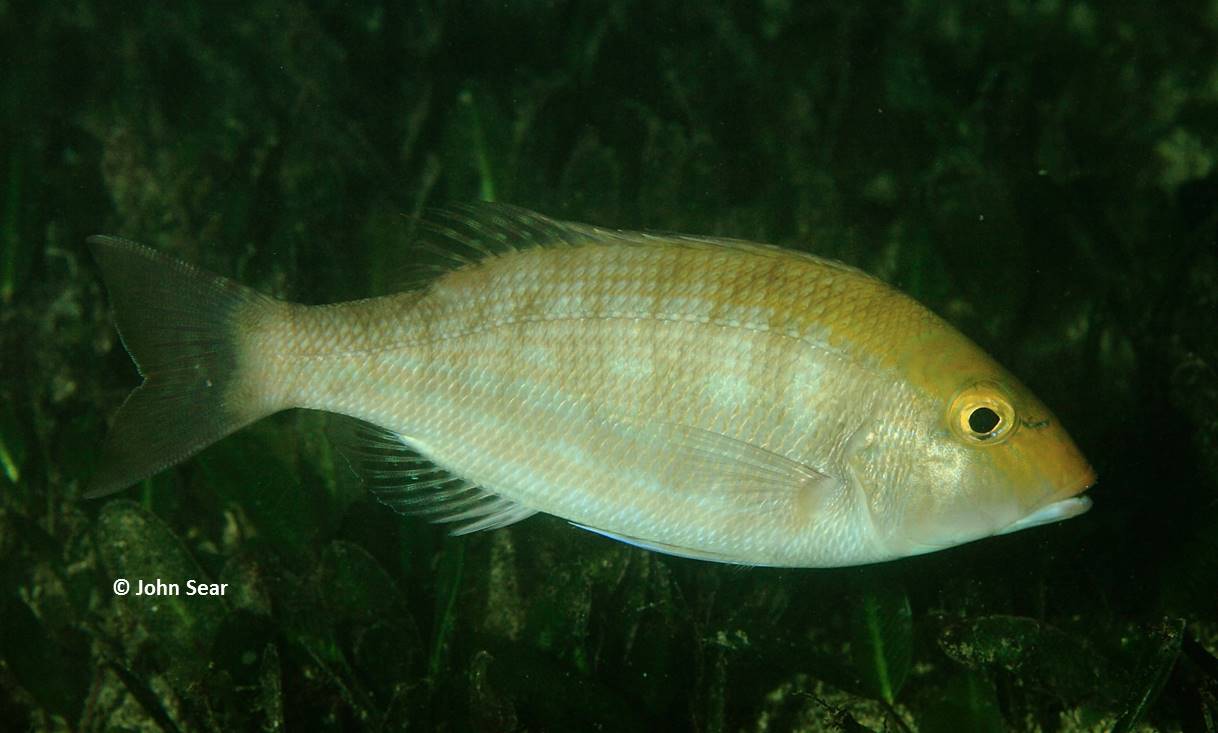
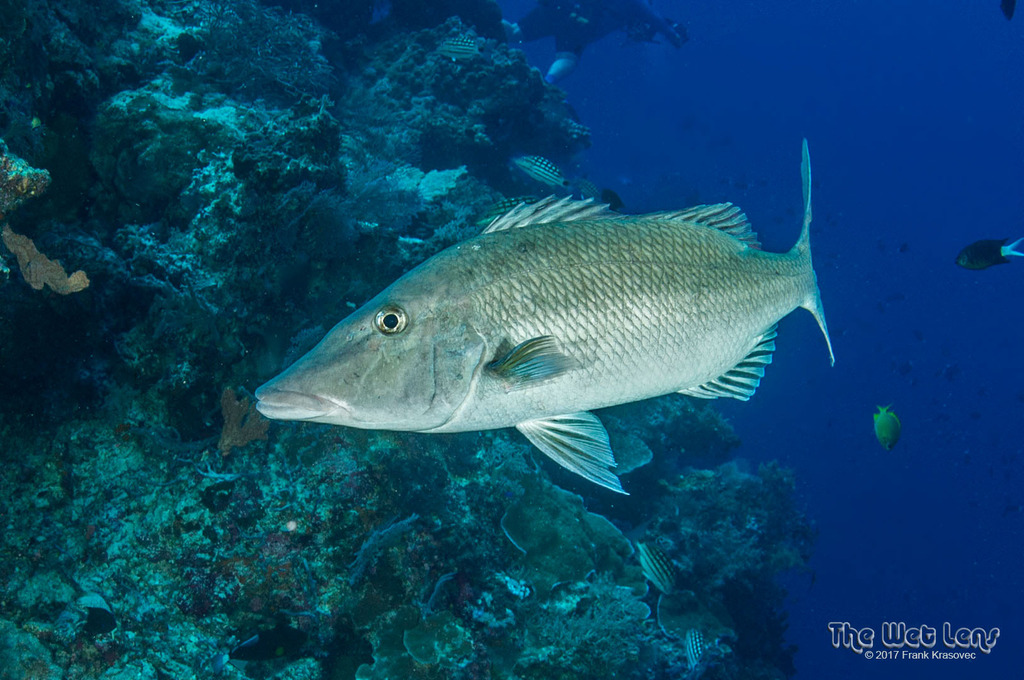
≥38 cm
Australia — Queensland · AU-QLD
Queensland sets a 38 cm minimum size for redthroat emperor (sweetlip emperor).
Redthroat emperor (sweetlip emperor) | Min: 38cm | Limit: 8

The redthroat emperor reaches 90 cm and 9.6 kg, spawns on more than one schedule along the Queensland coast, and is caught mainly by handline. It is also a recorded ciguatera risk, which matters more than the size limit on the days the toxin is present.

The redthroat emperor reaches 90 cm and 9.6 kg, spawns on more than one schedule along the Queensland coast, and is caught mainly by handline. It is also a recorded ciguatera risk, which matters more than the size limit on the days the toxin is present.
The maximum length is 90.0 cm TL, the common length 40.0 cm TL, the maximum published weight 9.6 kg, and the maximum reported age 22 years. The common length is less than half the maximum, so a 40 cm fish is an ordinary catch and a 90 cm fish is a rare one.
The dorsal fin has 10 spines and 9 soft rays; the anal fin has 3 spines and 8 soft rays, and the body is described as fusiform with an oval cross-section. Whether that formula separates the species from its congeners is not stated. The red throat that gives the fish its name is the field mark most often quoted; the page itself publishes no colour description.
The maturity estimate is 36.1 cm, and the published range runs from an unstated lower bound to 42.2 cm. That makes 42.2 cm the only figure above which the page places a fish beyond the maturity range. A 40 cm fish, the common size, sits between the estimate and the upper bound rather than safely above both.
For a release decision, the useful line is the upper bound, not the estimate. The page gives no lower bound, so 36.1 cm cannot be treated as a minimum. With a 22-year lifespan, a fish that reaches 90 cm has been in the water far longer than most of the boats fishing for it.
Adults live on coral reefs during the day and feed occasionally in sand and rubble between coral heads. At night they move out over the sandy sea floor and forage actively, usually in small schools. Juveniles live in shallow inshore water such as seagrass and mangrove areas, and move into deeper water as they age.
The diet is crustaceans, echinoderms, molluscs and fish, with crabs and sea urchins predominating. That is a hard-shelled diet, and it explains why the fishing is done on the bottom with bait rather than on the surface. The daytime reef and the nighttime sand are two different marks on the same piece of ground.
GBIF holds 12,366 records: 11,899 from Australia, 108 from South Africa, 72 from Namibia, 43 from Japan, 27 from the Philippines, 23 from New Caledonia, 19 from Indonesia and 17 from Papua New Guinea. FishBase gives the range as the western Pacific: the Ryukyu Islands, the eastern Philippines, northern Australia and New Caledonia.
The range text carries a warning: records outside that distribution probably refer to Lethrinus olivaceus. The biology note repeats it, saying much of the published information for this species was based on misidentifications and referred to L. olivaceus. That is a reason to read old accounts with care; the GBIF count is a record count, not a confirmed range map.
The depth range is 5–30 m, the species is reef-associated and non-migratory, and the climate is tropical. The coordinates run from 27°N to 34°S and 113°E to 168°E. Brackish water is flagged alongside marine, which fits the seagrass and mangrove nursery grounds.
A 30 m ceiling keeps the whole fishery inside recreational range. The habitat keywords — reef, sandy, coastal, seagrass — describe a fish that can be found on the reef edge, over sand between coral heads, and in shallow coastal ground. No preferred temperature is published, so depth and habitat are the only placement tools on the page.
The spawning table has five regional rows. Northern Australia is marked July–August; Okinawa, Japan, February–July; Queensland at Cairns and Townsville all twelve months; north-central Queensland off Townsville June–July; and southern Queensland October–November.
The union of those rows covers every month, but no single region does. The Queensland rows alone show three different windows on one coast. That is what a long coastline does to a spawning table, and it is why a statewide closed season cannot be inferred from these months. No temperature figure is published.
The methods list gives boat bottom fishing as mainstream, with shore casting and jigging as secondary. FishBase's biology note is more specific: the species is caught primarily by handline. It is one of the favourite food and sport fishes around the Great Barrier Reef, and a major food fish in New Caledonia.
The threat field records ciguatera poisoning. That is not a reason to avoid the species everywhere; it is a reason to ask locally before keeping a big fish from a reef known for it. The page publishes no handling or cooking method that removes the toxin, and none should be assumed. Fillets are marketed fresh or frozen.
Recreational fishing in Australia is managed by each state and territory: NSW through DPIRD Fisheries, Queensland through DAF, Western Australia through DPIRD, Victoria through VFA, Tasmania through NRE Tas, South Australia through PIRSA and the Northern Territory through DPIR. Bag and possession limits, minimum sizes and gear rules differ between them, and a fish legal in one state may be undersized in the next.
Above the states, the Great Barrier Reef Marine Park is zoned by GBRMPA, and no-take and sanctuary zones are closed to fishing. Australian Marine Parks, managed by Parks Australia, add another set of Commonwealth zones offshore. Some of the Queensland spawning rows above sit inside those waters, so the zoning map matters as much as the size rule.
No bag number, size limit or closed date is given here. Check the current state rule for the port you leave from, and check the GBRMPA and Australian Marine Parks zoning before anchoring. The species is a minor commercial catch and a declared gamefish, so both sectors are working the same reef.
These are the published regulations for this fish. Read the number first. The notice below it is the actual regulation.
Queensland sets a 38 cm minimum size for redthroat emperor (sweetlip emperor).
Redthroat emperor (sweetlip emperor) | Min: 38cm | Limit: 8
Queensland sets a possession limit of 8 Redthroat emperor.
A possession limit is the total number of fish you may keep at any time, including fish at home or in the freezer; it is not a daily take limit.
Redthroat emperor (sweetlip emperor) | Min: 38cm | Limit: 8
Every record above names its source and the date it was retrieved. See the regulation register for the full list, or how to read these regulations.
Check these pages before you rely on a size, range or protection status.
These fish live in the same place.
Technique, gear and safety guides that fit Redthroat emperor.