
Tripletail
Tripletail is a deep-bodied, oddly built fish of tropical and subtropical waters in every ocean, named for the rounded rear dorsal and anal fins that make it look as if it has three tails. It lives in the top 70 m and feeds on crustaceans and fish. Adults reach 110 cm TL and 19.2 kg. May to July is the season.

Tripletail (Lobotes surinamensis) is a fish of the family Lobotidae. FishBase gives its range as: Tropical and subtropical waters of all oceans. Western Atlantic: New England and Bermuda southward to Argentina ; and Falkland Islands. Eastern Atlantic: presumably along the coast from the Straits of Gibraltar to the Gulf of Guinea, including Madeira, although reliable records still lacking from Angola, the Canary Islands, and Cape Verde Islands; and Mediterranean. Fin counts are 11–12 dorsal spines, 15–16 dorsal soft rays, and three anal spines with 11–12 soft rays. It is recorded from 0 to 70 m, in subtropical water. The recorded maxima are 110 cm TL, 19.2 kg. Diet includes crustaceans and fishes. IUCN status: Least Concern (LC). Chinese name: .
Identification
The body is deep and compressed. Fin counts are 11–12 dorsal spines, 15–16 dorsal soft rays, and three anal spines with 11–12 soft rays. The rear dorsal and anal fins are rounded and set far back, so the fish appears to carry three tails — the source of the name tripletail. Maximum length is 110 cm total, common length 80 cm, maximum published weight 19.2 kg. The eye sits high on a blunt head, and the mouth is large enough to take a whole baitfish. At 110 cm and 19.2 kg the record is a heavy fish for a body this thin; the 80 cm common length is the one to plan around.
Habitat and distribution
Tropical and subtropical water in all three oceans. In the western Atlantic the range runs from New England and Bermuda to Argentina, with the Falkland Islands also recorded. The eastern Atlantic record is patchier, from the Strait of Gibraltar to the Gulf of Guinea, including Madeira, and the Mediterranean. In the Indo-Pacific it runs from East Africa through Southeast Asia to Taiwan region, southern Japan, northern Australia and Fiji. Depth is 0–70 m, and the fish is benthopelagic, brackish-tolerant and oceanodromous. Muddy ground and estuaries are the bottom keywords. The country and territory list runs across every ocean basin, which is another way of saying the species is not tied to one coastline.
Season and fishing approach
Spawning is recorded from May to July, with Brazilian fish spawning in May and June off Ceará and North Carolina fish in June and July. The names do more for the angler than any calendar. Flasher, sleepfish, buoy fish and jumping cod are all behaviour tags, and juveniles are known for floating on their sides beside flotsam. That habit tells you where to look: buoy lines, weed rafts, pallets and tide lines, not the open reef. The 80 cm common length is the size to expect, and a live bait or a surface lure worked along a current seam is the natural presentation. A fish hanging at the surface takes a surface offering, while one holding beside structure takes a slow jig. The 19.2 kg maximum belongs to an old fish in warm water, not to the average encounter.
Edibility and regulations
Commercial fisheries take it, and it is also a gamefish and a commercial aquarium species. IUCN status is Least Concern, assessed 23 August 2012. CITES records it as Not Evaluated; CMS records the same. The naming tangle has a regulatory consequence: local rules are written under local names, and a fish called black grunt in one port and tripletail in another may sit in different species groups. Size limits decide what goes in the box, closures decide when the rod may be aimed at the species. With dozens of range states in the country list, no single number travels.
Where these facts come from
Check these pages before you rely on a size, range or protection status.
- FishBase — Lobotes surinamensis — FishBase · T2
- GBIF — Lobotes surinamensis occurrence records — GBIF · T2
- IUCN Red List — Lobotes surinamensis — IUCN · T1
- Photo record — iNaturalist — iNaturalist · T3
Fish in the same water
These fish live in the same place.
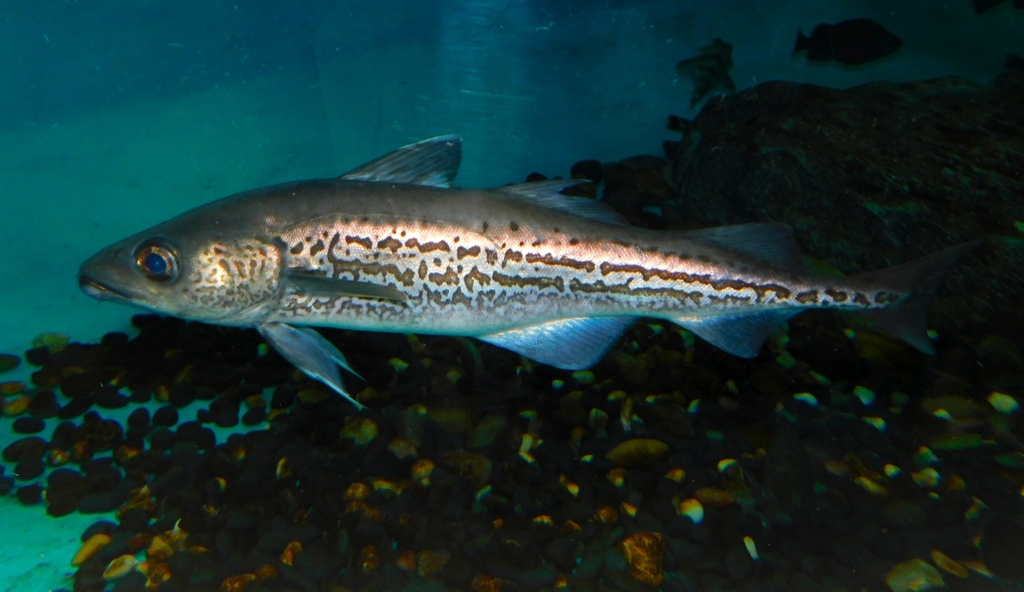
Alaska pollock
- Family
- Gadidae
- Depth
- 0–1280 m
- Season
- Jan, Feb, Mar, Apr, May, Jun, Jul, Aug

Albacore
- Family
- Scombridae
- Depth
- 0–600 m
- Season
- Jan, Feb, Mar, Apr, May, Jun, Jul, Aug, Oct, Nov, Dec
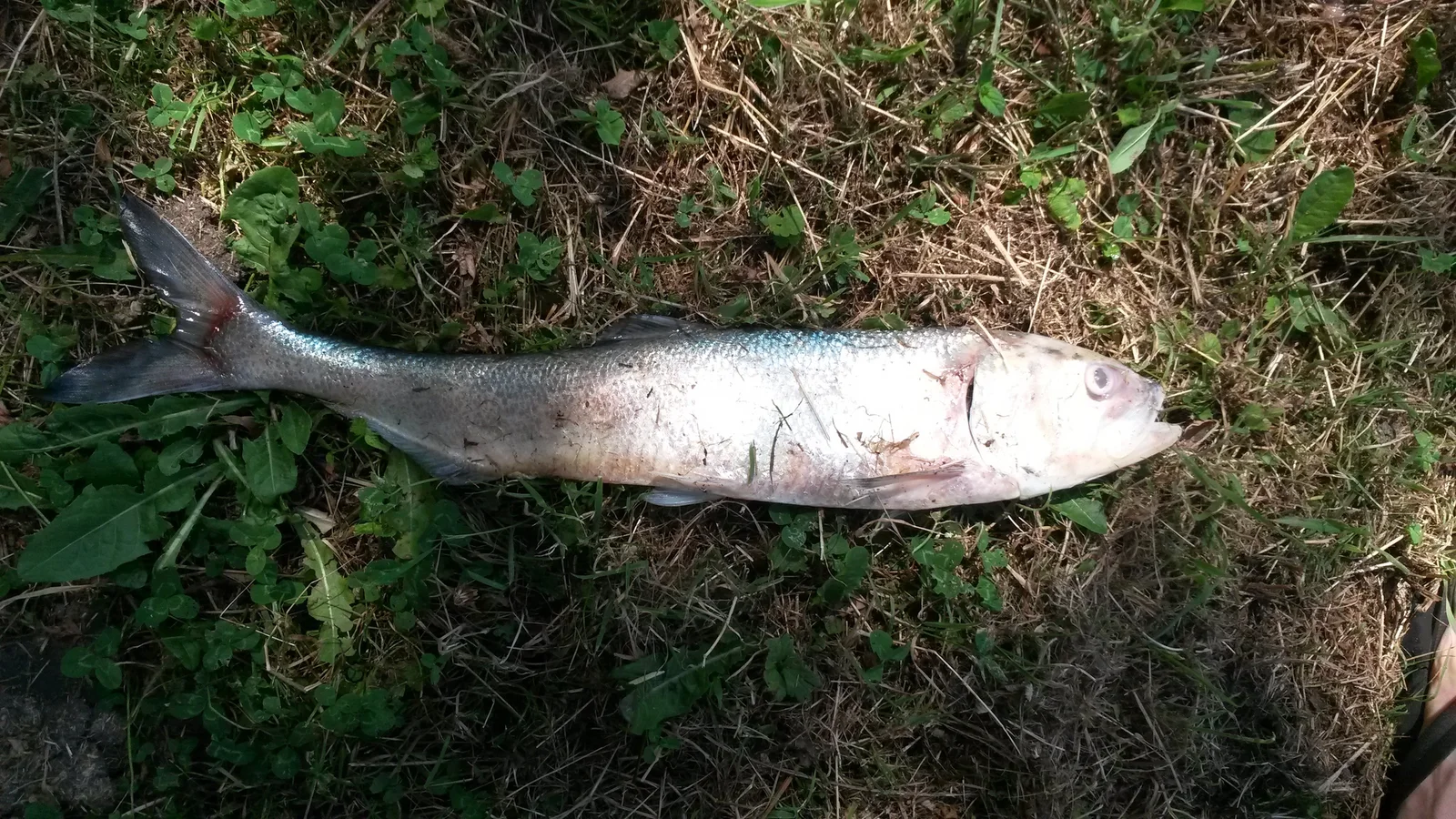
Allis shad
- Family
- Alosidae
- Depth
- 10–400 m
- Season
- Apr, May, Jun, Jul
Guides for this water
Technique, gear and safety guides that fit Tripletail.