
Deep-water Cape hake
A South African auction sheet may print one word for this fish, and that word is not the name on the record. The binomial is settled and the authority is settled; what moves around is the trade name, and because two Cape hakes answer to it, the name is the part that misleads a buyer, a regulator and a tag. This article follows the names rather than the biology.

A South African auction sheet may print one word for this fish, and that word is not the name on the record. The binomial is settled and the authority is settled; what moves around is the trade name, and because two Cape hakes answer to it, the name is the part that misleads a buyer, a regulator and a tag. This article follows the names rather than the biology.
The counter word is "hake"
Namibian landing slips index this fish under "hake" alone, while the FAO string carries "deep-water" and a Cape qualifier. The shortest name travels furthest and carries the least information: a slip that says only "hake" cannot be assigned to either Cape species without the tow depth or the port's own convention. When a regulation or a landing figure has to be matched to one species, the binomial is the only safe key — the trade name will pull the neighbouring row.
Where each variant sits in the registers
The variants are not separate taxa; they are entries in different registers. One FAO name serves international documents, national vernacular rows serve Namibia and South Africa, and a United Kingdom row sits beside them. iNaturalist renders the FAO string in title case. The Chinese column keeps two glyph sets, and , for the same animal. Underneath all of it sits a single authority string, Merluccius paradoxus Franca, 1960, accepted on the WoRMS register.
No synonyms, and still the wrong drawer
The synonym list is empty, and the original combination carries the same epithet, so the name has never been recombined into another genus. An editor who checks only the synonymy finds nothing broken and moves on. The failure is one level down, in the vernacular column: "Hake" is a category rather than a lookup key, "Deepwater hake" is the unhyphenated Namibian and South African spelling, and "Deep-water Cape hake" is the FAO string. A query that misses this record is a trade-name query, not a taxonomic one, and the fix is to search the binomial before the counter word.
Shallow and deep are two species
The pair of qualifiers is taxonomic, not a size class. The shallow half is Merluccius capensis, a separate species on the same shelf edge; this fish is the deep half, and its FAO name carries the word that separates them. Filleted and boxed, both arrive as "hake", and the only words separating them are adjectives. A landing figure filed under the bare word cannot be split back into species without the tow depth or the port's own convention. "Cape" in the FAO name is geography, the grounds off the Cape of Good Hope, and it does no species work at all.
Depth, and two different rulers
The environment block gives 200–1000 m, usually from 400 m downwards, bathydemersal and non-migratory, between 17°S and 38°S and 10°E and 48°E. The size block gives 115 cm TL maximum, 60.0 cm SL common, and a maturity point at 47.8 cm. That last figure is a release line rather than a mean: under 47.8 cm it goes back; past that line it counts as adult stock, and the country's rule decides. Total length includes the caudal fin, standard length does not, so the maximum and the common figure are not on the same ruler, and 60 cm SL is a longer animal than 60 cm TL suggests. The body itself is diagnostic: 42–50 dorsal soft rays, 38–41 anal soft rays, head 25–30% of SL, gill rakers short and thick with blunt tips.
What the record measures instead of a season
No season is given for this stock, so a trip has to be planned from feeding and pace rather than from a spawning calendar. What is recorded is diet: it lives near the bottom on fishes, mysids, euphausiids and squid; juveniles take mainly euphausiids, and large individuals eat each other. Trophic level is 3.8; resilience is low, with a population doubling time of 4.5–14 years at K 0.09–0.12; fishing vulnerability is 65 of 100. A slow demersal stock of that shape is fished the same way in most months, and the season then comes from the national rule rather than from a table.
Why both maps print Indo-West Pacific
GBIF's distribution record mixes ocean-level labels from ITIS with finer entries from WoRMS, and Madagascar appears twice. FishBase's prose runs from Cape Frio in Namibia south to the Agulhas Bank and east to East London, then adds the Madagascar Ridge at 33°S, 44°E. The Wikipedia summary thins the range around the southern coast into the Indian Ocean and puts the greatest abundance in the Benguela Current. The Indian Ocean entries therefore rest on one ridge point at 44°E, and "Indo-West Pacific" is an ocean-level tag picked up from ITIS, not a second centre of abundance.
Lookup order: binomial first, trade name second
Read a document in this order. First the binomial and authority: Merluccius paradoxus Franca, 1960, accepted and marine only on WoRMS. Second the trade name, to see whether the document meant this species or its shallow-water neighbour. Third the area label, because it is the loosest field in the file. No international listing applies, so the restriction, if any, is national and sits with the countries in the landing list. iNaturalist holds three observations, too few to use as a range check. If the paper says only "hake", ask for the tow depth; if it prints "Deepwater hake" without the hyphen, the document came through a Namibian or South African desk; if it says , the document came through a Chinese market.
Where these facts come from
Check these pages before you rely on a size, range or protection status.
- FishBase — Merluccius paradoxus — FishBase · T2
- GBIF — Merluccius paradoxus occurrence records — GBIF · T2
- IUCN Red List — Merluccius paradoxus — IUCN · T1
- Photo record — iNaturalist — iNaturalist · T3
Fish in the same water
These fish live in the same place.
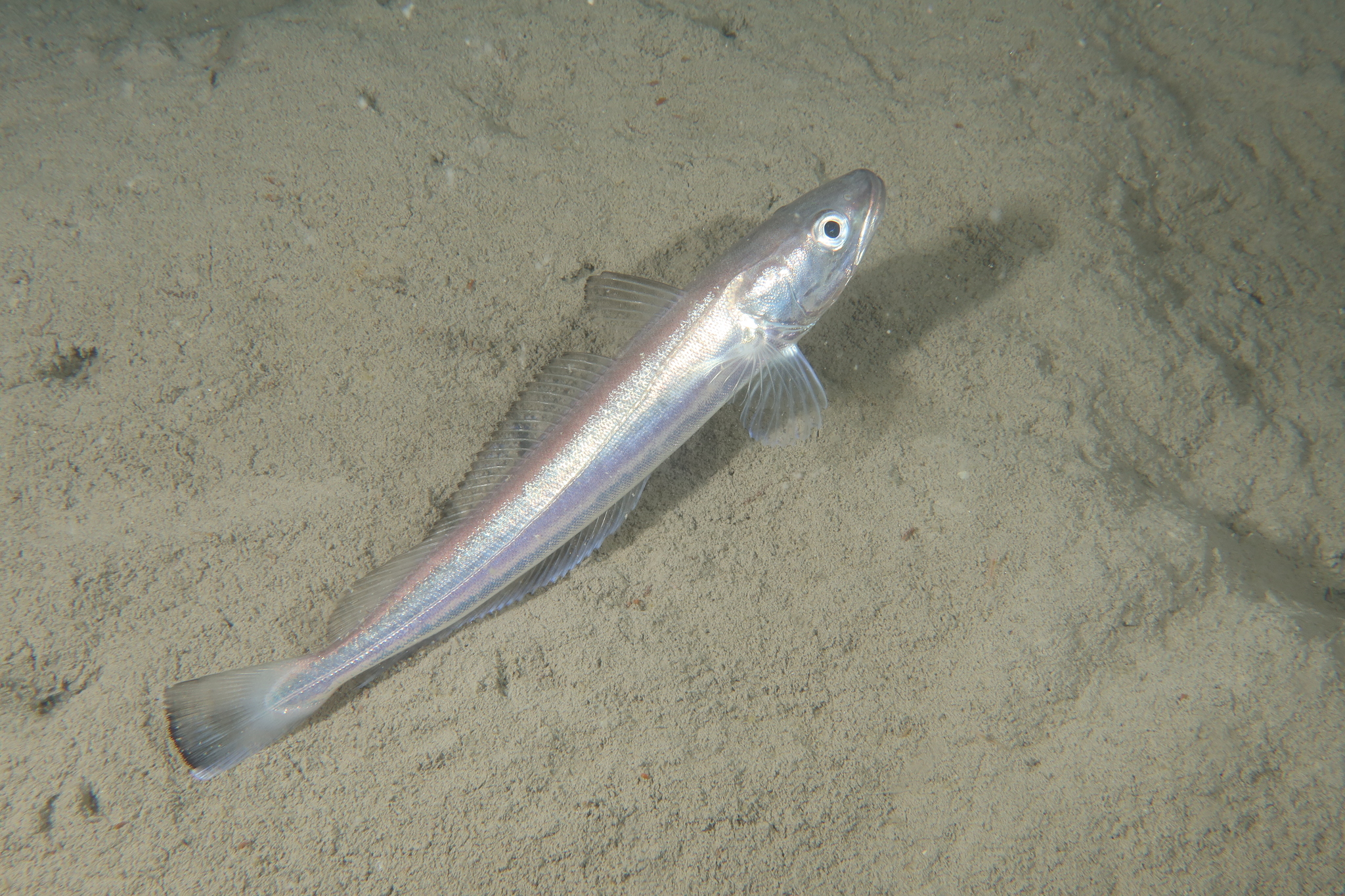
European hake
- Family
- Merlucciidae
- Depth
- 18–1075 m
- Season
- Jan, Feb, Mar, Apr, May, Jun, Jul, Aug, Sep, Oct, Nov, Dec
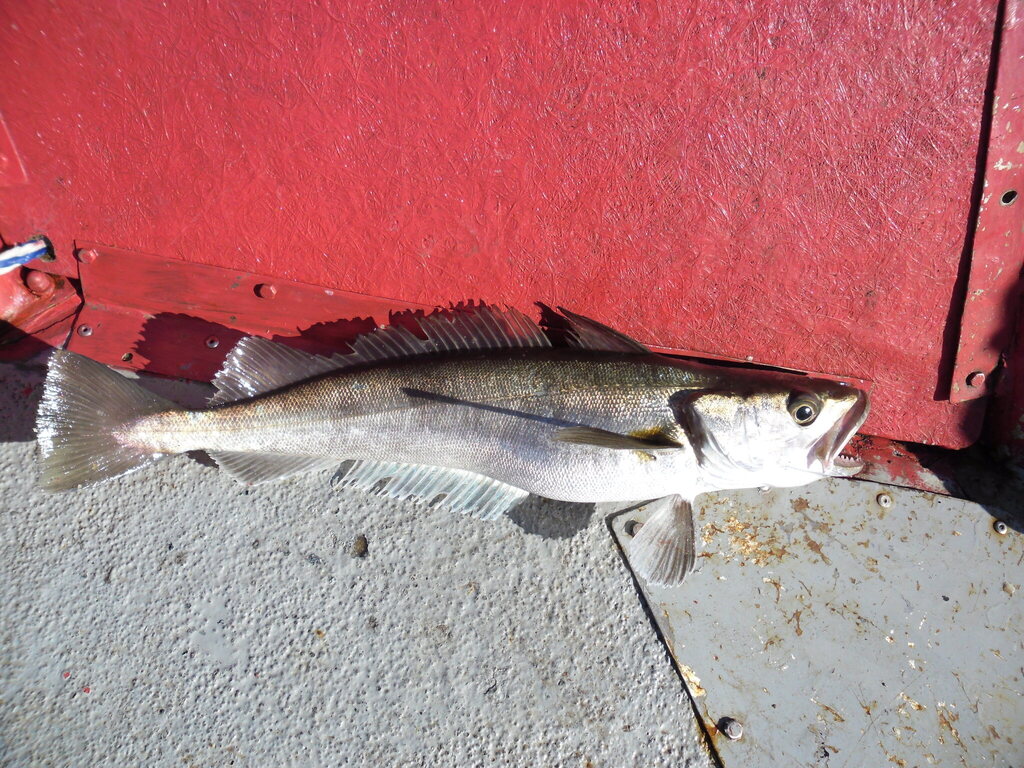
Shallow-water Cape hake
- Family
- Merlucciidae
- Depth
- 50–1000 m
- Season
- Jan, Feb, Mar, Apr, May, Jun, Jul, Aug, Sep, Oct, Nov, Dec

Silver hake
- Family
- Merlucciidae
- Depth
- 55–914 m
- Season
- May, Jun, Jul, Aug, Sep, Oct
Guides for this water
Technique, gear and safety guides that fit Deep-water Cape hake.