
Gulf grouper
Gulf grouper is a large epinephelid of the eastern central Pacific, from La Jolla in California to Mazatlán in Mexico. It lives from 5 to 30 m in subtropical water, reaches 198 cm TL and 91 kg, and feeds on fish.
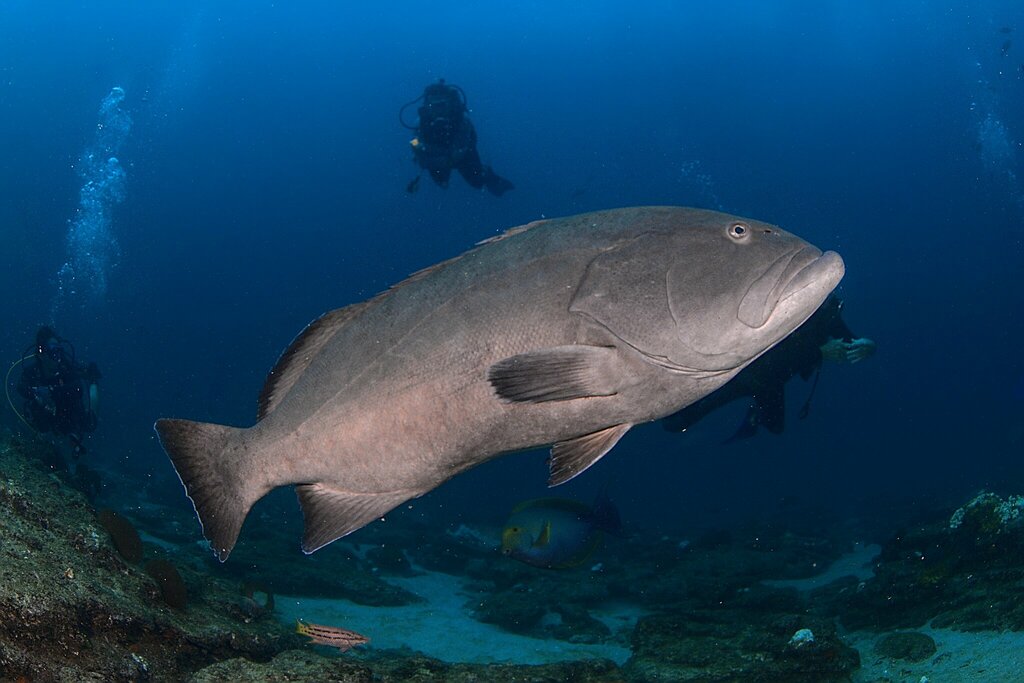
Gulf grouper (Mycteroperca jordani) is a fish of the family Epinephelidae. FishBase gives its range as: Eastern Central Pacific: southern La Jolla, California, USA to Mazatlan, Mexico. It is recorded from 5 to 30 m, in subtropical water. The recorded maxima are 198 cm TL, 91 kg. Diet includes fishes. IUCN status: Endangered (EN). Chinese name: .
Identification
The record gives 198 cm and 91 kg. Those are the largest published figures for the species, and they are not the fish most anglers will meet. There is no common length on the same page, and no length at maturity, and no reported age. A record with a ceiling but no middle is a poor guide to tackle: it tells you what the species can become, not what is in front of you.
Count the dorsal rays to separate it from its congeners: 16 or 17 soft rays behind the spiny section, with an anal fin built from three spines plus ten or eleven soft rays. In cross-section the body is oval rather than flattened. The English name is a geographic trap. "Gulf grouper" refers to the Gulf of California, but the written range starts at La Jolla, well north of that gulf, and runs to Mazatlán. The fish is not confined to the gulf that names it, which matters when you are checking which state or country's rule applies.
The useful comparison is not this fish against another grouper. It is this fish against its own record. The 198 cm animal is an outlier from a population that NOAA describes as severely reduced, and the number in front of you on a line is almost certainly a fraction of it.
Habitat and behaviour
The gulf grouper is reef-associated, 5 to 30 m, in subtropical water between 33°N and 23°N. The substrate words are rocky and kelp, and together they describe an edge rather than a zone: rock gives the ambush point, kelp gives the cover. Fish sit where the two meet, not in the middle of a kelp bed and not on bare rock.
The diet is fishes. That is a narrow answer compared with the mixed crustacean diets of its relatives, and it points to a fish-eater that expects a moving target. A dead bait on a static rig is a weaker offer here than a live fish or a lure with a swimming action.
The behaviour that matters most is not feeding but recovery. A grouper that reaches 91 kg does not replace itself quickly, and NOAA's account of the fishery describes a collapse rather than a cycle. The habitat can still hold fish; the question is how many were removed before the rules changed.
Seasonal window
The range sits in subtropical water, 33°N to 23°N. The northern end is seasonal in the way temperate water always is: the kelp edge and the shallow rock are comfortable in the warm months and less so in the cold. That does not make winter a closed season; it makes the deep end of the 5–30 m band the winter end.
Because there is no dated spawning event in the record, there is no aggregation to build a trip around. The season here is a comfort window for the angler and a movement window for the fish, not a breeding calendar. Plan by water temperature and kelp condition, and treat any local closed season as a separate rule that has to be looked up.
Gear and approach
The 198 cm ceiling argues for heavy tackle, but the missing common length means there is no mid-range figure to calibrate against. The practical compromise is a medium-heavy outfit that can land a 60–90 cm fish quickly and still survive a bigger one: 40–60 lb leader, a reel with a reliable drag, and a rod with enough butt to turn a fish away from the rock.
Where take is banned, gear choice changes purpose. Heavy tackle is then a welfare tool, not a trophy tool: it shortens the fight, keeps the fish off the rocks, and gets it back into the water before exhaustion. Circle hooks, a long-handled dehooker, and a wet mat belong in the boat.
Edibility and regulations
NOAA Fisheries states that all harvest of gulf grouper is prohibited in US waters, and that the species is listed as Endangered under the US Endangered Species Act as a foreign species. The same page records the shape of the collapse: the artisanal share of the catch was roughly 45% in 1960, about 10% by the 1970s, and under 1% after that. Those are the numbers that explain why the keep limit is zero rather than a size.
On the Mexican side the fishery is artisanal and recreational, and the operative figure has to come from CONAPESCA, not from this page. The Red List assessment is Endangered, dated 20 November 2016. That ranking and the US harvest ban are two different instruments from two different bodies; neither one is a statement about Mexican law.
Where to look
Three distribution records sit under this taxon at GBIF: an East Pacific ITIS claim, a worldwide IUCN layer, and a Mexican national checklist. None is a survey. The written range is more specific: southern La Jolla, California, to Mazatlán, Mexico. iNaturalist holds 105 observations under taxon 106307, which is enough to show where divers and anglers carry cameras, not enough to map density.
The northern part of that range is US water, where the answer is release. The fishable part is Mexico. Either way, the depth band is 5–30 m and the target is the rock-kelp seam.
The number that matters
Three numbers carry this fish, and they answer different questions. 198 cm is what the species can reach; zero is what US law allows you to keep; and the fall from roughly 45% to under 1% is why the first number is now a museum figure rather than a fishing expectation. A record with no common length tells you the species, not the trip. The rule tells you the trip. Read them in that order, and the 198 cm fish stops being a target and becomes a benchmark for what was lost.
Where these facts come from
Check these pages before you rely on a size, range or protection status.
- FishBase — Mycteroperca jordani — FishBase · T2
- GBIF — Mycteroperca jordani occurrence records — GBIF · T2
- IUCN Red List — Mycteroperca jordani — IUCN · T1
- Photo record — iNaturalist — iNaturalist · T3
Fish in the same water
These fish live in the same place.
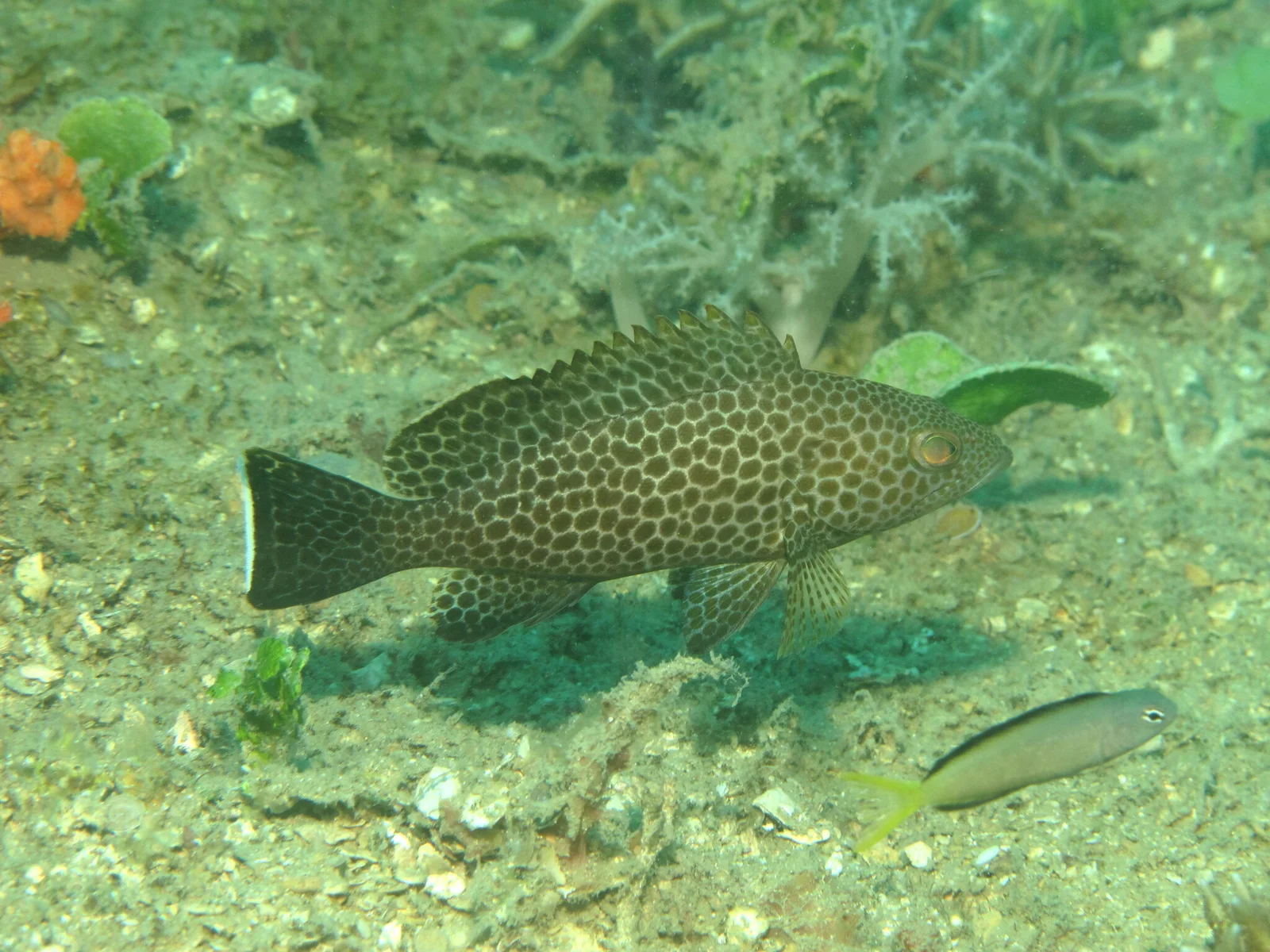
Areolate grouper
- Family
- Epinephelidae
- Depth
- 6–200 m
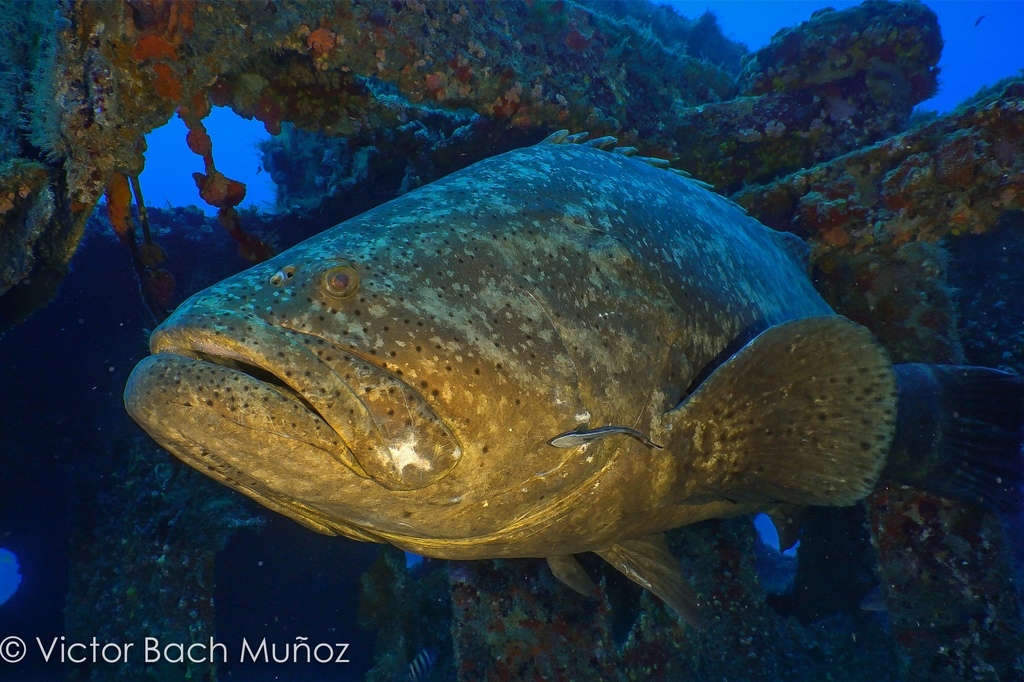
Atlantic goliath grouper
- Family
- Epinephelidae
- Depth
- 0–100 m
- Season
- Jan, Feb, Jun, Jul, Aug, Sep

Black grouper
- Family
- Epinephelidae
- Depth
- 60–250 m
- Season
- Jan, Feb, Mar, Apr, May, Jun, Jul, Aug, Sep, Oct, Nov, Dec
Guides for this water
Technique, gear and safety guides that fit Gulf grouper.