
Gag
Gag grouper is a deep-shelf fish, mostly taken between 30 and 160 m, so the decisive piece of kit is not the rod but the release: a descending device for fish hooked deep, because one returned at the surface may not survive. The 63 cm spawning threshold is the biological release line, and the 2 August to 30 April closure is one jurisdiction's rule, not a range-wide spawning season.
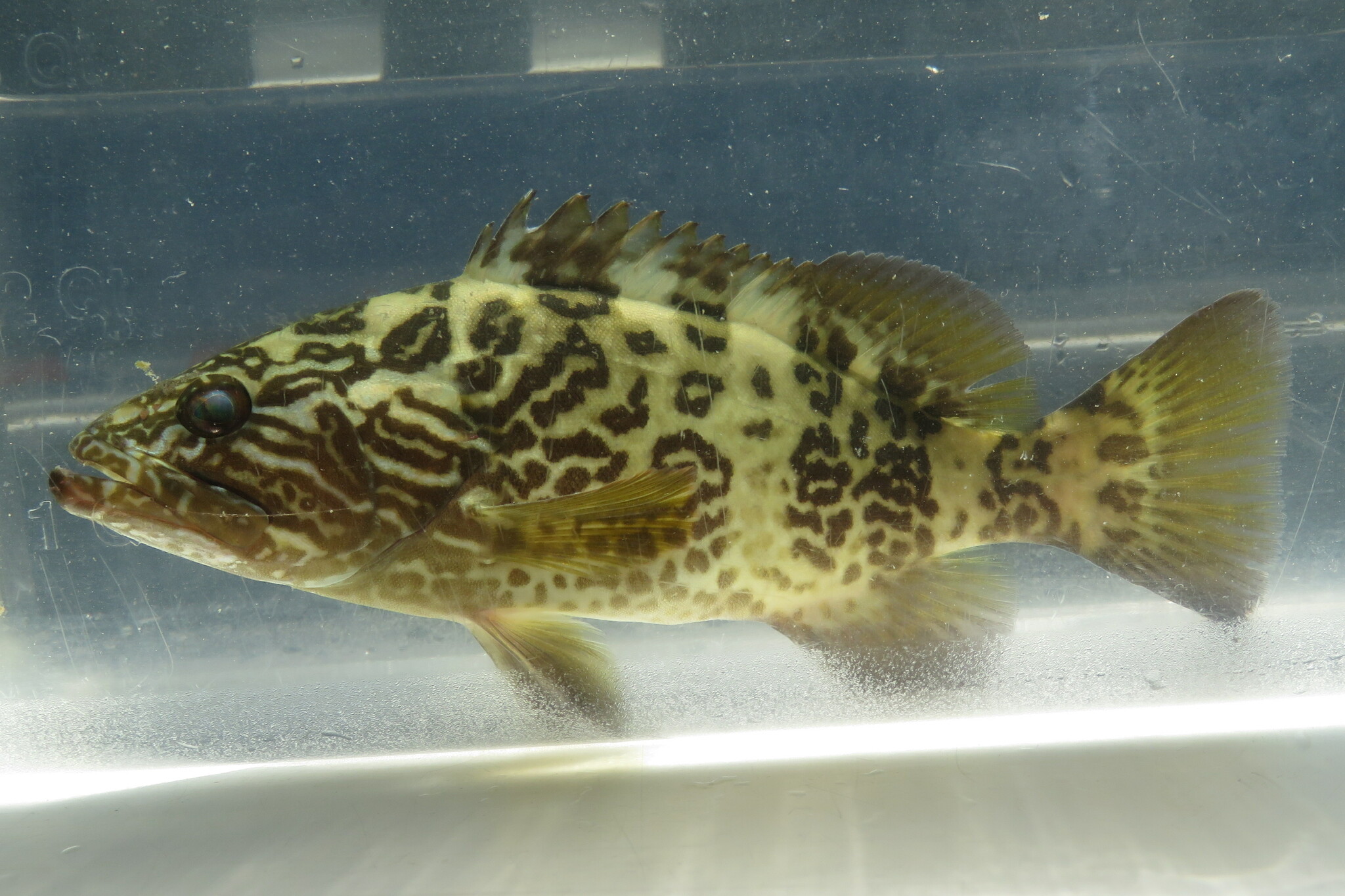
Gag grouper is a deep-shelf fish, mostly taken between 30 and 160 m, so the decisive piece of kit is not the rod but the release: a descending device for fish hooked deep, because one returned at the surface may not survive. The 63 cm spawning threshold is the biological release line, and the 2 August to 30 April closure is one jurisdiction's rule, not a range-wide spawning season.
Identification
The record for this fish carries a brackish tag, a reef-associated tag, an oceanodromous tag, a habitat list that includes estuary and seagrass, and a depth band of 30 to 160 m. Those labels cannot all describe one fish in one place at one moment. Seagrass and estuary are shallow water; the depth band starts at 30 m. Read as a single scene, the record contradicts itself. Read as a set of labels for different parts of the life cycle, it becomes useful: the shallow words and the deep band are not the same address, and the article's job is to say which label applies to the trip you are planning.
Top figures are 145 cm and 36.5 kg; a typical adult is nearer 50 cm, and the oldest aged fish was 31 years. The spawning threshold is 63 cm. That converts into a release rule: anything shorter has yet to breed and belongs back in the water.
A count of 11 dorsal spines and 15 to 17 dorsal soft rays, plus three anal spines and 10 or 11 anal soft rays, is the meristic signature. The English name is gag grouper, and "gag" alone is the name used in the fishery. It is a commercial name as much as a common name, which is why the same fish appears in market reports and in bag-limit tables.
Habitat and behaviour
The environment line is brackish, reef-associated and oceanodromous, 30 to 160 m. The habitat words are rocky, estuary, coastal and seagrass. The only coherent reading is that these describe different places used at different times, not a single dive site. An angler working the 30–160 m band is not fishing the estuary or the seagrass; an angler in the estuary is not fishing the adult band. The label that matters depends on which trip is being planned.
The diet is crustaceans, fishes and molluscs. That is the broadest diet in this group, and it supports cut bait, squid, live fish and crab. The oceanodromous tag also matters: this is not a fish that stays on one patch, so a mark that produced last month is not guaranteed to produce next month.
Seasonal window
The dated spawning record is December to May on the Campeche Bank, Mexico. That is one population and one area, not a range-wide season. The South Atlantic recreational closure runs from 2 August to 30 April, and it ends a day before the Mexican spawning window closes. The two instruments come from different jurisdictions and describe different populations; reading the closure as a spawning protection would be a mistake, because it does not cover the last month of the spawn.
The practical rule is to separate the two questions. When may you fish? That is the closure. When is the local fish spawning? That is a local question, and the Campeche Bank record answers it for one place only.
Gear and approach
A 145 cm ceiling and a 50 cm common length point to medium-heavy tackle with a heavy sinker and 40–60 lb leader. The rod needs enough power to lift a fish from 60 m, and the reel needs enough capacity to get the bait back down after a release. Use circle hooks, keep a dehooker at hand, and add a descending device for fish hooked deep.
The release line is 63 cm. The South Atlantic minimum is 24 inches, about 61 cm, so the legal floor sits just below the biological one: a fish at the minimum is legal to keep and right at the edge of spawning. The bag is one fish per angler and two per vessel, which means the trip should be planned around a single fish rather than a box.
Edibility and regulations
The South Atlantic Fishery Management Council sets the recreational rules for gag grouper in its area: the season is closed from 2 August to 30 April, the minimum size is 24 inches total length, the bag limit is one fish per angler, the vessel limit is two, and the aggregate limit is three. Those are two kinds of instrument. The season closure decides whether you may fish at all; the minimum size and the bag limits decide what you may keep.
Vulnerable is the category from the 21 November 2016 assessment. The use line reads highly commercial and gamefish. The commercial label explains the tight recreational bag: the same stock supports a market fishery, and the recreational allocation is a small slice of the total.
Where to look
The GBIF distributions endpoint returns 20 records for the taxon: Western Atlantic, Nearctic, Neotropical, a global declaration, the Gulf of Mexico, Bermuda and Brazil. Those are jurisdictional declarations, not marks. The written range is Bermuda and Massachusetts to Florida, the Gulf of Mexico, Yucatán and Brazil. iNaturalist holds 1006 observations under taxon 106308, a large set that reflects how heavily this fish is photographed and targeted.
Look on rocky ground in the upper part of the 30–160 m band. In the South Atlantic, plan around the closure; in the Gulf of Mexico and Mexico, the Campeche Bank record is the spawning reference, and the local authority is the source of the season.
What the labels describe
Five labels on one record answer five different questions, and none of them is the whole fish. Brackish, estuary and seagrass describe the shallow end of the life cycle; 30–160 m describes the adult fishing band; December to May describes one spawning population at Campeche Bank; 2 August to 30 April describes one jurisdiction's recreational closure; 24 inches describes the legal floor, and 63 cm describes the biological one. An angler who treats any single label as the whole truth will fish the wrong depth, plan the wrong month, or keep a fish that has not spawned. The labels are not a contradiction; they are a set of instructions that have to be sorted before the trip.
Where these facts come from
Check these pages before you rely on a size, range or protection status.
- FishBase — Mycteroperca microlepis — FishBase · T2
- GBIF — Mycteroperca microlepis occurrence records — GBIF · T2
- IUCN Red List — Mycteroperca microlepis — IUCN · T1
- Photo record — iNaturalist — iNaturalist · T3
Fish in the same water
These fish live in the same place.
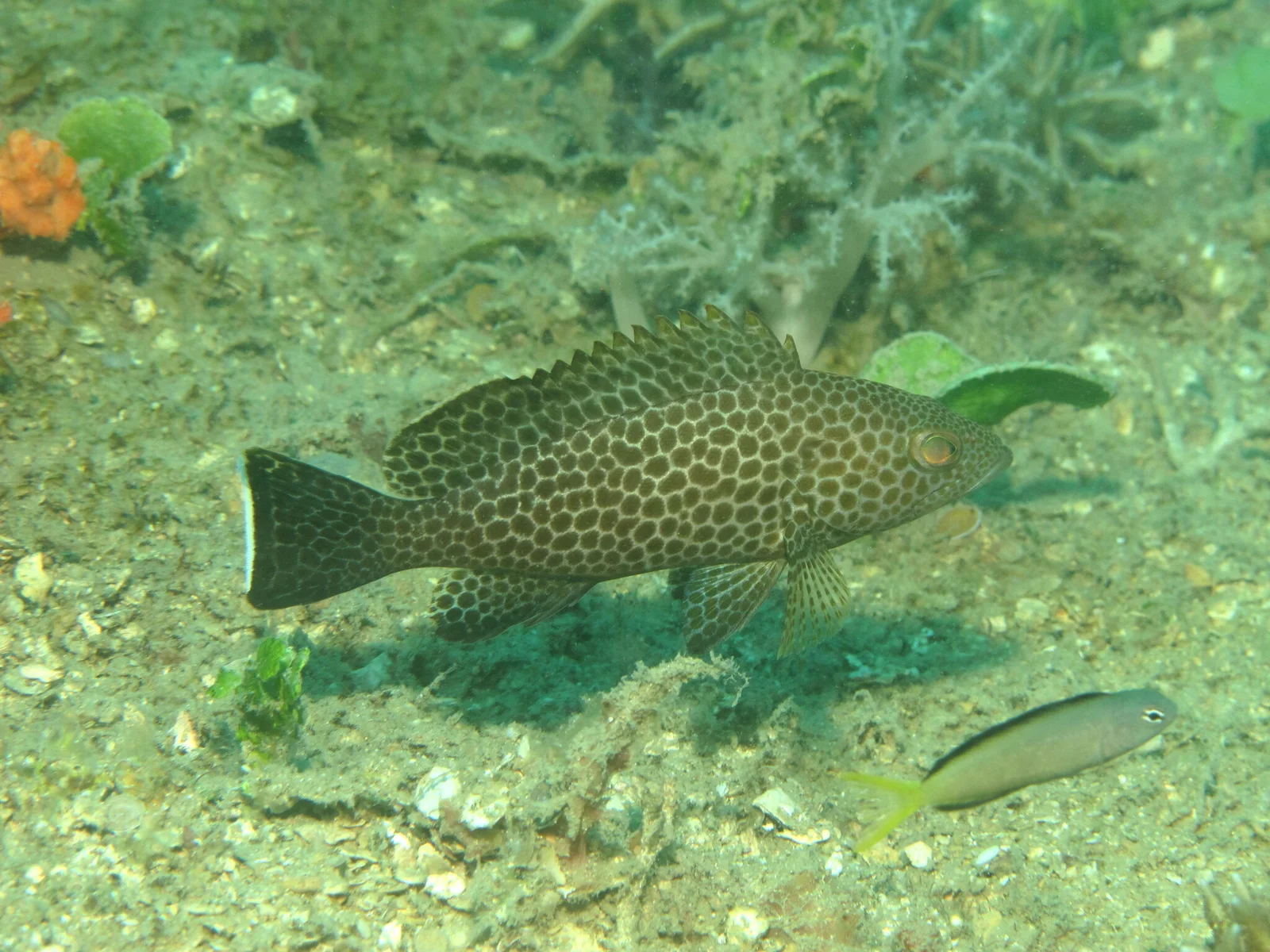
Areolate grouper
- Family
- Epinephelidae
- Depth
- 6–200 m
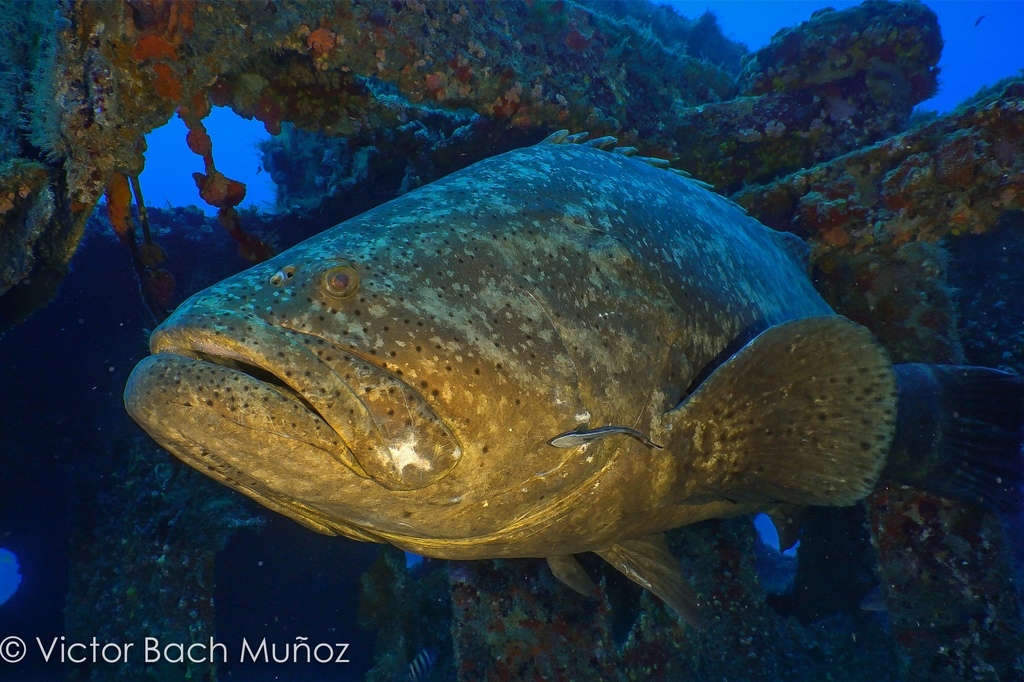
Atlantic goliath grouper
- Family
- Epinephelidae
- Depth
- 0–100 m
- Season
- Jan, Feb, Jun, Jul, Aug, Sep

Black grouper
- Family
- Epinephelidae
- Depth
- 60–250 m
- Season
- Jan, Feb, Mar, Apr, May, Jun, Jul, Aug, Sep, Oct, Nov, Dec
Guides for this water
Technique, gear and safety guides that fit Gag.