
Scamp
Scamp is an Epinephelidae grouper of deep Gulf and southeastern US reef, found on ledges and high-relief rock from 30 to 100 m. It is slender, brown to yellow-brown and covered in small dark spots, reaches 107 cm and 14.2 kg, and is taken on live or cut bait fished tight to structure.
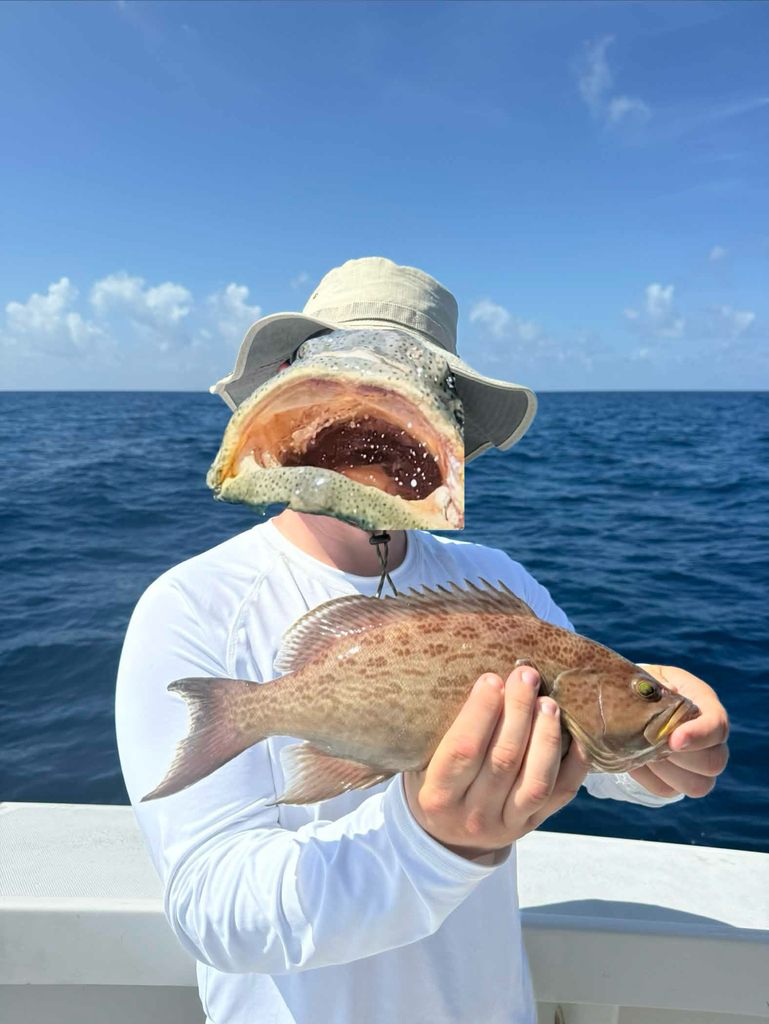
Scamp is an Epinephelidae grouper of deep Gulf and southeastern US reef, found on ledges and high-relief rock from 30 to 100 m. It is slender, brown to yellow-brown and covered in small dark spots, reaches 107 cm and 14.2 kg, and is taken on live or cut bait fished tight to structure.
Identification
Scamp is an elongated Mycteroperca grouper with a pointed snout and a brown to yellow-brown body covered in small dark spots. The spots run across the head, body and fins and stay visible after death, which makes them the most reliable mark on the cleaning table.
FishBase gives 107 cm total length, 14.2 kg and a maximum age of 21 years, with 30 cm a common length and maturity at about 33 cm. A legal 16 inch fish is therefore close to first maturity.
Yellowmouth grouper has a yellow mouth lining and lacks the spotting; yellowfin grouper carries bright yellow margins on the pectoral and dorsal fins. Scamp has neither, and the spots separate it from both at a glance.
Distribution and Habitat
FishBase records scamp from the Gulf of Mexico and the US east coast from North Carolina to Key West, and along the southern shore of the Caribbean Sea. Juveniles occasionally reach as far north as Massachusetts.
Depth is 30 to 100 m, on ledges and high-relief rocky bottom in the eastern Gulf and on low-profile bottom off North Carolina. Off east Florida it is the most abundant grouper in living Oculina coral at 70 to 100 m.
Juveniles are shallow, around jetties and in mangrove areas. Adults move inshore when bottom temperature falls below 8.6°C, a pattern recorded in the species account.
Habits and Diet
Scamp are structure fish. They hold on ledges, rock relief and coral, and ambush prey rather than cruise open water. A good mark on the sounder is often the difference between a box of fish and a blank day.
The Oculina beds off east Florida show how tightly the species ties to living bottom. Those beds are fragile and slow to recover, which is why deep-reef management is strict.
Temperature is the useful behavioural clue. A cold snap pushes fish shallower or inshore, and the bite improves once warming starts again rather than during the coldest days.
Fishing Methods
Bottom fishing with live or cut bait over marked ledges is the standard method. Drifting across live bottom covers more ground than anchoring, and drift speed tells you how much lead is needed to stay in contact.
Vertical jigs and heavy bucktails take fish when current is strong and bait is hard to hold down. A slow lift and drop just off the structure works better than a fast, mechanical rhythm.
Release matters. Fish from 30 to 100 m often suffer barotrauma, so carry a venting tool or descending device for anything you do not keep. Circle hooks reduce gut hooking.
Gear and Approach
Use 30 to 50 lb braid, a 40 to 60 lb fluorocarbon leader, a 5/0 to 7/0 circle hook and enough lead to hold bottom, often 6 to 12 oz in Gulf current. A 6 to 7 ft heavy rod with a conventional reel handles that load.
An electric reel is common past 70 m, not because the fish are huge but because winding 300 ft all day is work. Manual outfits still land plenty of scamp.
Keep the bait pinned to the bottom and the rod in hand. A scamp bite is often a heavy load rather than a run, and waiting for a scream usually means the fish is back in the rocks.
Seasonal Window
Warm months are more productive, and winter fish sit deeper and bite less. The 8.6°C inshore movement is the clearest seasonal signal in the record.
Spawning is not documented in the fact base for this species, so no month range is given here. Gulf pressure peaks in summer, when small boats can reach 30 to 100 m on calm days.
Offshore, current is the daily variable rather than tide. Fish the top of the tide and the first of the ebb while current runs, and expect a slow hour at slack.
Edibility and Handling
Scamp is a highly commercial species and a fine table fish: white, firm, sweet flesh that holds up to frying, grilling or baking. It is one of the groupers that justifies the fuel bill.
Bleed and ice immediately, because grouper quality falls fast if the fish sits warm on deck. Fillets are thick, so cook them through without drying the edges, and keep whole fish buried in ice until you clean them.
FishBase lists no ciguatera reports and no threat to humans for scamp, another reason it is prized where it is common.
Regulations and Conservation
In the federal Gulf EEZ, grouper are managed under an aggregate bag of 4 per person per day, excluding goliath grouper, with gag and red grouper each limited to 2. Scamp have a 16 inch total length minimum, yellowfin grouper 20 inches, and yellowmouth grouper no federal minimum size.
From 1 January 2027, recreational fishing for the other shallow-water groupers, including scamp, yellowfin, yellowmouth and black grouper, closes in federal waters from 1 January to 30 June each year. That closure does not apply in 2026, and the current NOAA announcement governs.
Florida's Gulf side uses a 4 fish aggregate; scamp are 16 inches, except 20 inches in Atlantic-side and Monroe County waters, while yellowfin and yellowmouth are 20 inches. Louisiana uses a 4 fish aggregate with scamp at 16 inches and yellowfin and yellowmouth at 20, and closes scamp and yellowmouth from 1 February to 31 March in state water deeper than 20 fathoms. Mississippi uses a 4 fish aggregate with scamp at 16 inches total length and yellowfin at 20, no state minimum for yellowmouth, and a separate warsaw limit of 1 per boat per day. Alabama uses a 4 fish aggregate with scamp at 16 inches and yellowfin at 20. Texas lists only black grouper and gag, so scamp is not separately regulated and federal rules apply beyond 9 nautical miles.
The IUCN Red List lists scamp as Data Deficient, assessed 22 November 2016, so stock status is not well resolved despite close management.
How to catch it
Boat bottom fishing
Boat bottom fishing
Jigging
Where these facts come from
Check these pages before you rely on a size, range or protection status.
- FishBase — Mycteroperca phenax — FishBase · T2
- GBIF — Mycteroperca phenax occurrence records — GBIF · T2
- IUCN Red List — Mycteroperca phenax — IUCN · T1
- Photo record — iNaturalist — iNaturalist · T3
Fish in the same water
These fish live in the same place.
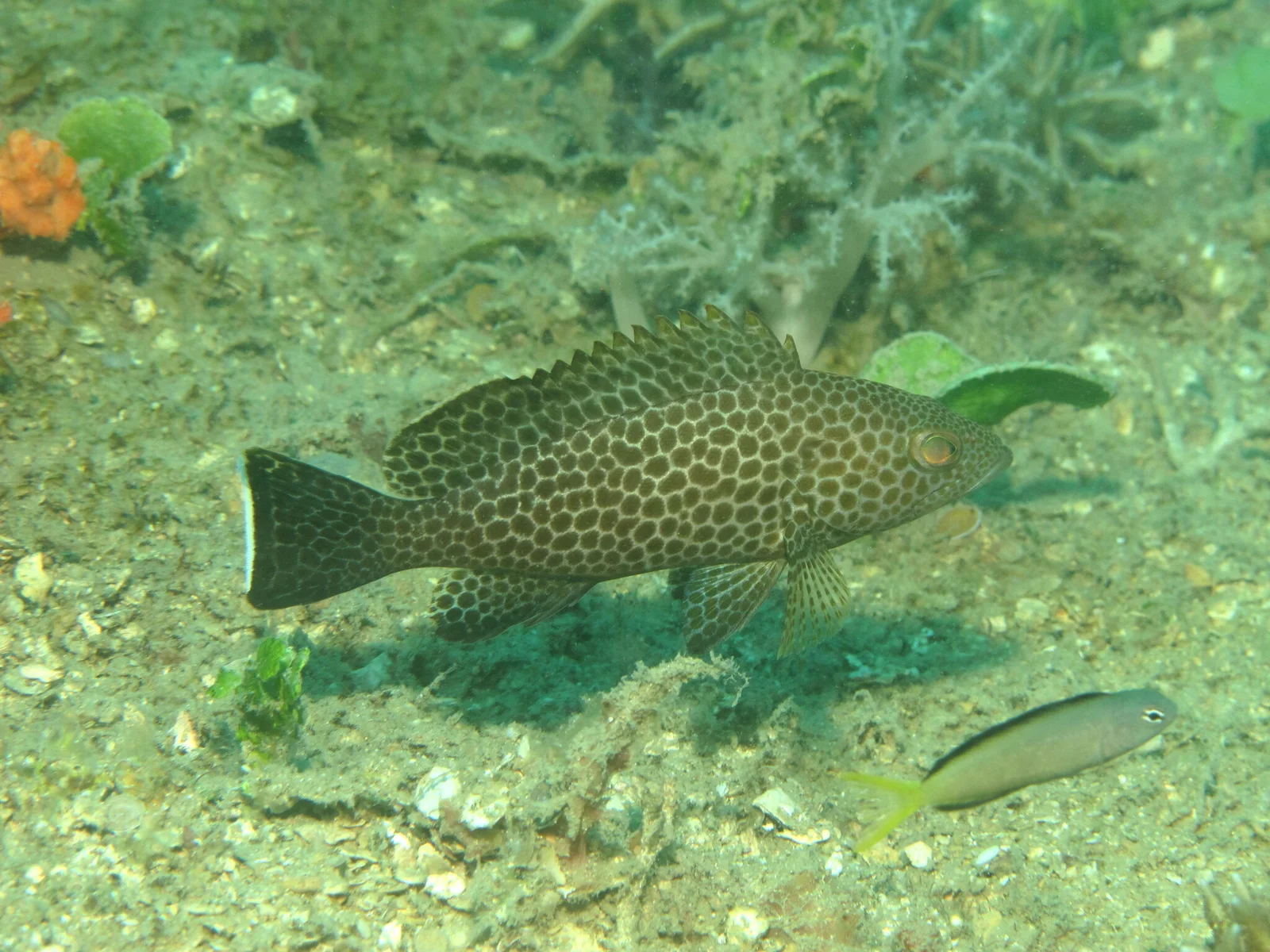
Areolate grouper
- Family
- Epinephelidae
- Depth
- 6–200 m
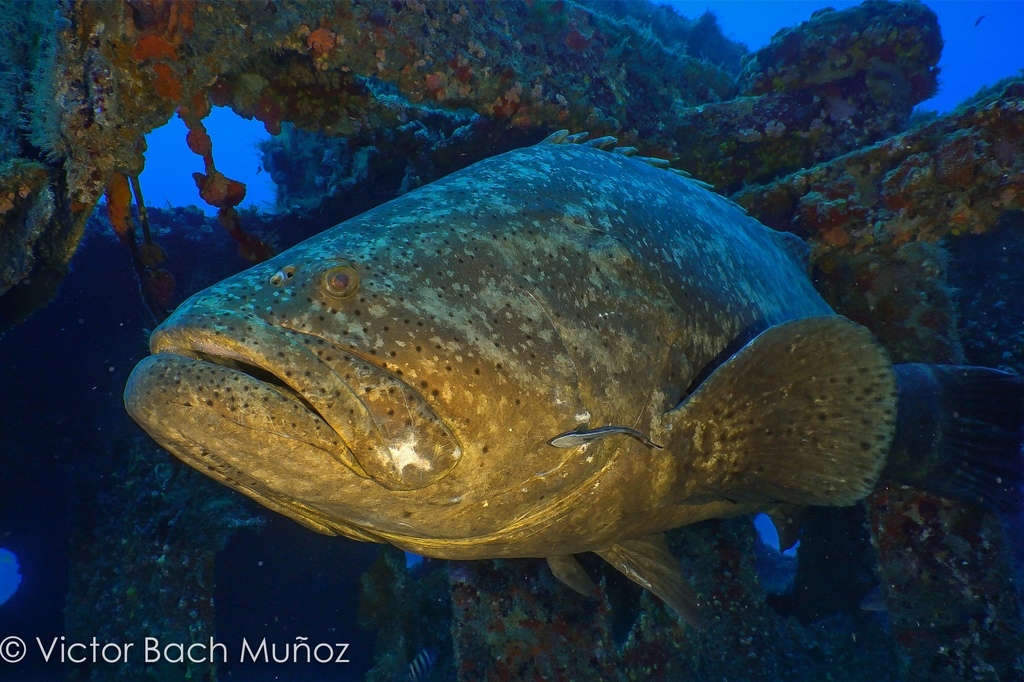
Atlantic goliath grouper
- Family
- Epinephelidae
- Depth
- 0–100 m
- Season
- Jan, Feb, Jun, Jul, Aug, Sep

Black grouper
- Family
- Epinephelidae
- Depth
- 60–250 m
- Season
- Jan, Feb, Mar, Apr, May, Jun, Jul, Aug, Sep, Oct, Nov, Dec
Guides for this water
Technique, gear and safety guides that fit Scamp.