
Tiger grouper
Tiger grouper is an Epinephelidae grouper of coral and rock from 10 to 40 m, ranging from southern Florida and the Gulf to Brazil. It is olive to grey-brown with broad dark bars, reaches 101 cm and 10 kg, and has become common on the Flower Garden Banks off Texas.
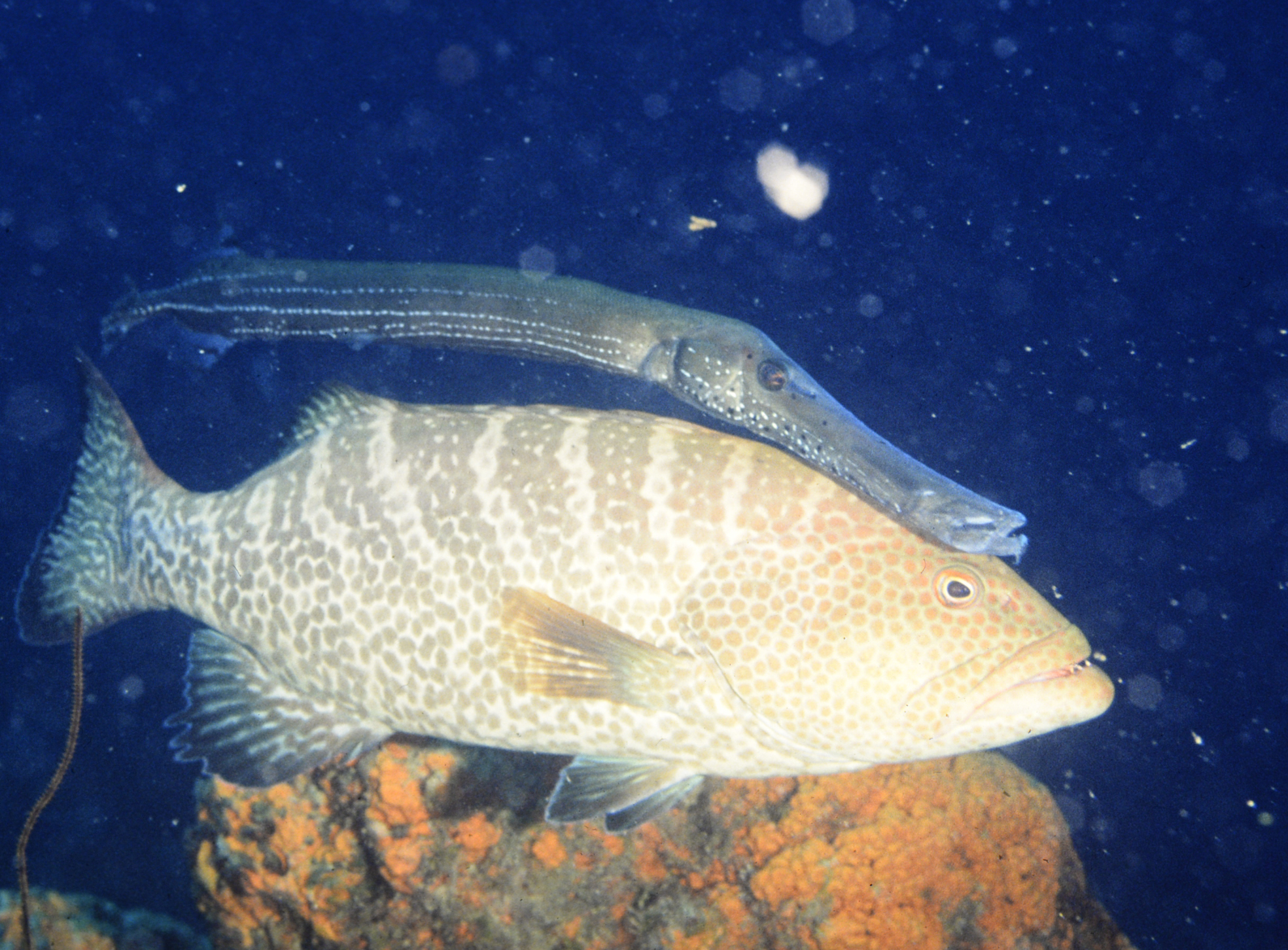
Tiger grouper is an Epinephelidae grouper of coral and rock from 10 to 40 m, ranging from southern Florida and the Gulf to Brazil. It is olive to grey-brown with broad dark bars, reaches 101 cm and 10 kg, and has become common on the Flower Garden Banks off Texas.
Identification
Tiger grouper is olive to grey-brown with broad dark vertical bars across the flank, giving the banded look that names it. Fins and the lower head often carry a yellow tinge, and the bars stay visible on a fresh fish. FishBase gives 101 cm total length, a common 40 cm, 10 kg and maturity at about 46 cm.
Distribution and Habitat
Recorded from southern Florida and the Gulf of Mexico to Brazil, and once considered a transient in the northwestern Gulf; FishBase now describes it as recently abundant on the Flower Garden Banks off Texas. It lives on coral and rocky reef from 10 to 40 m.
Habits and Diet
A solitary ambush predator that hides among coral and sponges and is unusually easy to approach. It feeds almost entirely on fishes and frequents cleaning stations, where a careful angler can often spot one before it moves. The species is a protogynous hermaphrodite: Bermuda fish under 37 cm were all female and fish over 45 cm all male.
Fishing Methods and Gear
Fish live bait slowly along coral edges and ledges, letting it sink naturally rather than casting far. Thirty pound braid, a 40 lb leader, a 4/0 to 6/0 circle hook and 1 to 3 oz of lead are enough; the skill is a quiet approach and a bait that looks like it belongs there. Strike firmly and pull away from the reef at once.
Seasonal Window
Spawning is recorded from March to May in Cuba, which puts the reproductive window in spring. Warm months are the practical season, and the change of tide around reef is more useful than any calendar date.
Edibility and Handling
A good food fish with white, firm flesh, but FishBase records ciguatera reports. Bleed and ice it promptly, avoid fish from known outbreak areas, and skip the head and viscera. Large fish are the most likely to carry toxin and are also the key breeders.
Regulations and Conservation
In the federal Gulf EEZ, grouper fall under a 4 fish aggregate per person per day, with warsaw grouper limited to 1 per boat per day; tiger grouper has no federal minimum size and no species-specific closure. Florida sets no state minimum and counts it in the 4 fish aggregate. Louisiana uses the same 4 fish aggregate with warsaw at 1 per boat per day. Mississippi uses a 4 fish aggregate and does not list tiger grouper separately. Alabama counts it in its 4 fish grouper aggregate, and non-grouper reef fish there also fall under a 20 fish aggregate. Texas does not list the species in state water, so federal rules apply beyond 9 nautical miles. The IUCN Red List lists tiger grouper as Data Deficient, assessed 21 November 2016. Rules change yearly, so confirm the current notices before you go.
How to catch it
Bait fishing
Drift fishing
Where these facts come from
Check these pages before you rely on a size, range or protection status.
- FishBase — Mycteroperca tigris — FishBase · T2
- GBIF — Mycteroperca tigris occurrence records — GBIF · T2
- IUCN Red List — Mycteroperca tigris — IUCN · T1
- Photo record — iNaturalist — iNaturalist · T3
Fish in the same water
These fish live in the same place.
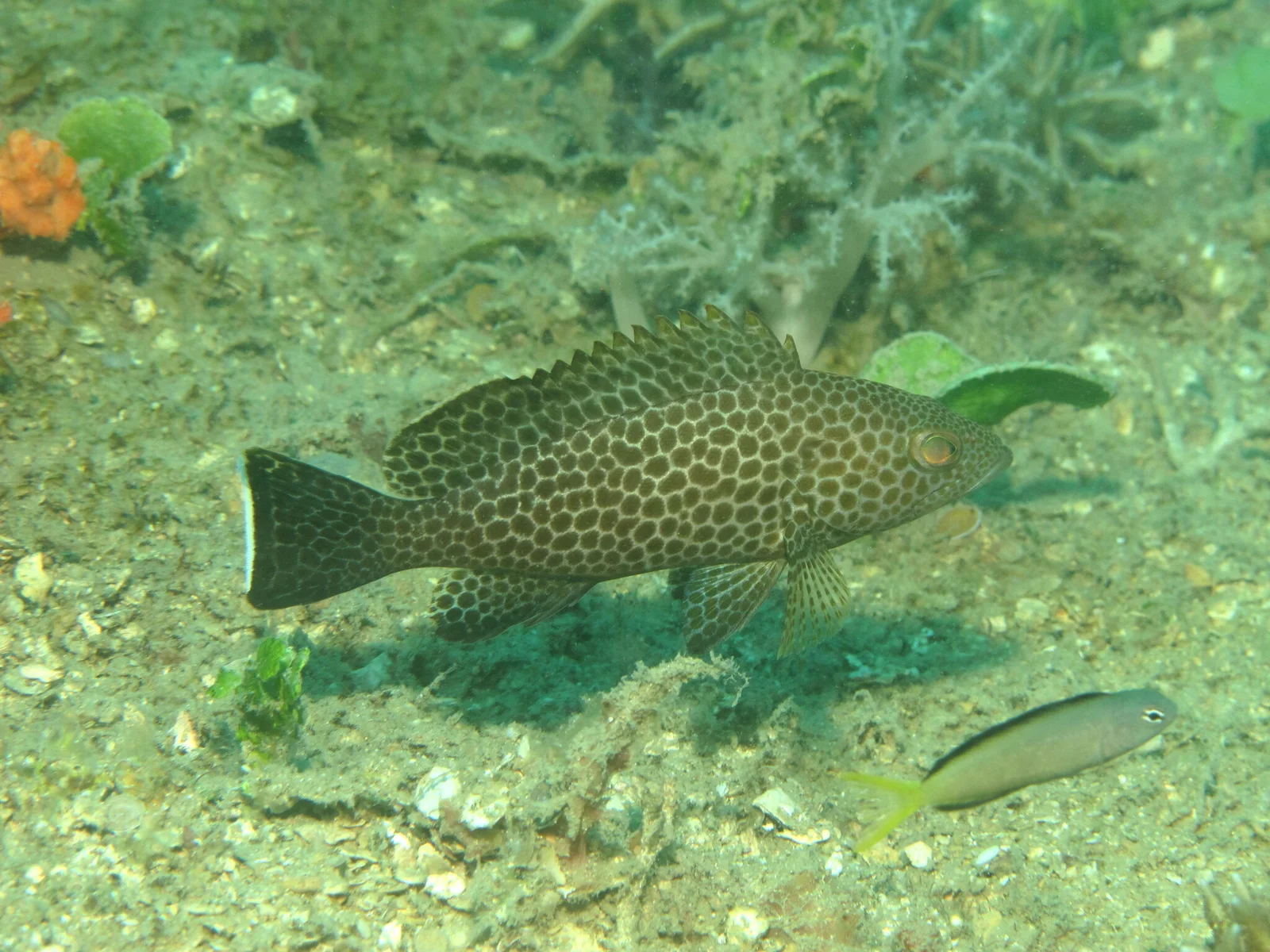
Areolate grouper
- Family
- Epinephelidae
- Depth
- 6–200 m
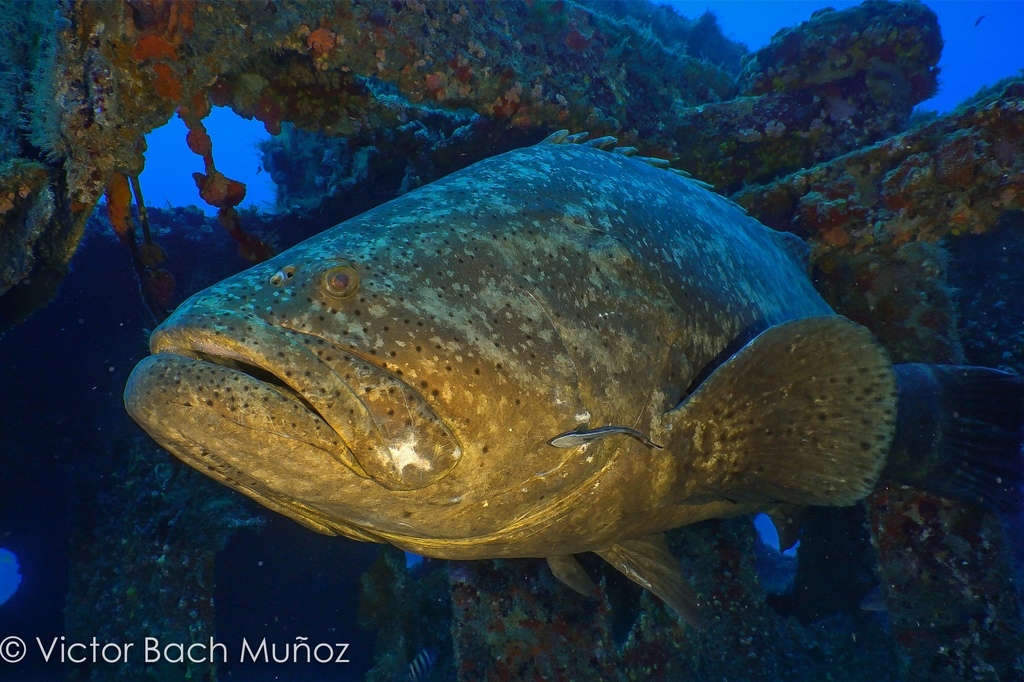
Atlantic goliath grouper
- Family
- Epinephelidae
- Depth
- 0–100 m
- Season
- Jan, Feb, Jun, Jul, Aug, Sep

Black grouper
- Family
- Epinephelidae
- Depth
- 60–250 m
- Season
- Jan, Feb, Mar, Apr, May, Jun, Jul, Aug, Sep, Oct, Nov, Dec
Guides for this water
Technique, gear and safety guides that fit Tiger grouper.