
Pink salmon
Pink salmon is the smallest of the Pacific salmon, running from the Mackenzie River delta in Canada down to the Sacramento drainage in California. At sea it is silver with a green-blue back, turning dark olive and blotchy once it enters fresh water. It is recorded from the surface to 250 m and grows to 76 cm TL and 7 kg. The season runs July to November, and it lives only about three years.
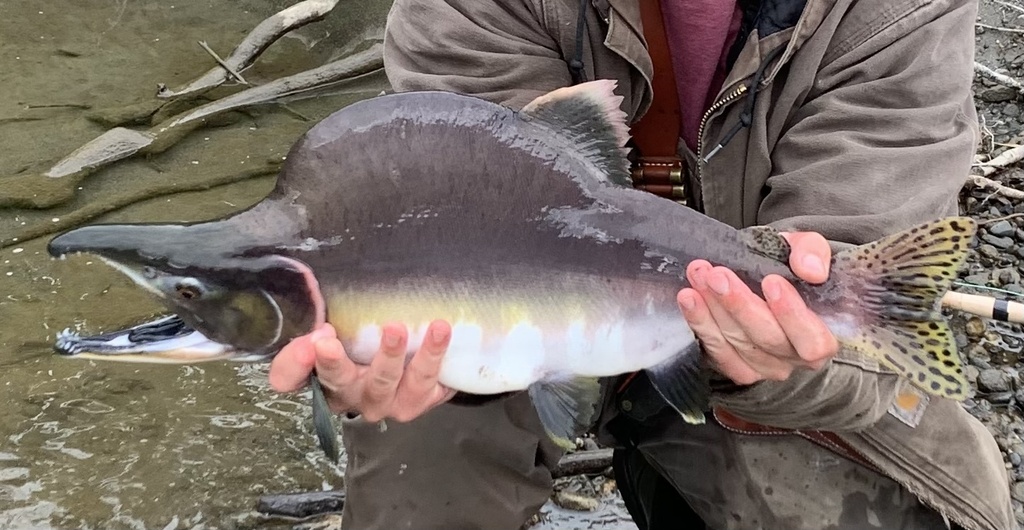
Pink salmon (Oncorhynchus gorbuscha) is a fish of the family Salmonidae. FishBase gives its range as: Arctic and Pacific drainages from Mackenzie River delta, Northwest , Canada to Sacramento River drainage, in California, USA; occasionally as far as La Jolla, southern California; also in northeast Asia. On Asia side, from North Korea to Jana and Lena drainages in Artic Russia. In Bering Sea north of about 40°N and from Bering Strait northeast to Point Barrow and northwest to Lena estuary. At sea the body is bright silver with a greenish-blue back; as fish enter fresh water they turn dull olive with dark blotches, and males develop a pronounced hump and a hooked jaw. It is recorded from 0 to 250 m, in subtropical water. The recorded maxima are 76 cm TL, 7 kg, 3 years. Diet includes fishes. IUCN status: Least Concern (LC). Chinese name: .
Identification
Pink salmon is the smallest of the Pacific salmon, and the easiest way to place it is by its clock: the species completes its life in two years, so every fish you catch is either from an odd-year or an even-year line. Adults run 20–25 inches and 3.5–5 pounds. At sea the body is bright silver with a greenish-blue back; as fish enter fresh water they turn dull olive with dark blotches, and males develop a pronounced hump and a hooked jaw. FishBase gives a maximum of 76 cm total length, a typical size near 50 cm and an age ceiling of three years. The small size and the hump are usually enough to separate it from chum and coho at the same river mouth.
Habitat and behaviour
Pink salmon spend about 18 months at sea, feeding in the North Pacific before returning to the stream where they hatched. They do not feed in fresh water; once in the river their energy goes into upstream movement and spawning, and both sexes die after the eggs are laid. Spawning takes place in gravel, usually in the lower reaches, and the eggs incubate through the winter before fry emerge in spring and move straight to salt water. That direct seaward migration is unusual among salmon and explains why pink fry are rarely a target for freshwater anglers.
Runs and escapement
The two-year cycle produces the species' best-known quirk: odd-year and even-year runs are largely separate breeding populations, and some streams carry only one of the two lines. A strong return in an odd year therefore says nothing about what will happen in the following even year, even on the same beach. Managers set escapement goals per system and open or close fisheries according to how many fish have passed the counting point, so the run size in a given week matters more than the date. For an angler, that means local advice and in-season updates beat any long-range forecast.
Seasonal window
Spawning runs from June into late October, with the peak usually in late summer. Fish enter the rivers in waves, and a heavy rain or a rising tide can pull a new group in overnight. Eggs incubate for five to eight months, so the next generation leaves the gravel around the following spring. The practical window for rod-and-line fishing is the few weeks when fresh, bright fish are still in tidewater; once fish have been in the river for a while their colours darken and their flesh softens. A falling tide pulls fish out of the creeks and concentrates them at the mouth, so the first hours of the ebb are usually the most productive part of the day.
Gear and approach
An 8–12 lb rod with 10–15 lb line handles pink salmon easily. Spoons of 1/4–1/2 oz in silver, pink or orange, small hoochies behind a dodger, and weighted flies all work. Fish early and late, when travelling schools are close to the surface. Keep the lure moving: pinks respond to a steady retrieve more than to a stop-and-go action. Land fish quickly, bleed them if you intend to keep them, and handle released fish in the water.
Edibility and regulations
Pink salmon has paler, softer flesh than coho or chinook and smokes, cans or grills better than it stores; it does not keep as well as the firmer species. Alaska manages pink salmon sport fisheries by area, so the bag limit and any terminal-area restrictions come from the current area regulation rather than from a single statewide figure. Retention is set by those bag limits and by any mark or hatchery rules. Angling itself can also be limited by in-season emergency orders, which are issued when escapement targets are not being met. NOAA lists overfishing status as unknown, though management measures exist.
Where to look
Prince William Sound, Southeast Alaska and the Kenai Peninsula all have accessible pink runs, with fish concentrating at creek mouths and tidewater eddies. The species also ranges across the North Pacific to Kamchatka and Japan, and south along the American coast. iNaturalist holds 3,065 observations, many of them spawning fish in shallow streams. Look for gravel riffles below a lake or a beaver pond, and for birds working the surface where fry are leaving.
Where these facts come from
Check these pages before you rely on a size, range or protection status.
- FishBase — Oncorhynchus gorbuscha — FishBase · T2
- GBIF — Oncorhynchus gorbuscha occurrence records — GBIF · T2
- IUCN Red List — Oncorhynchus gorbuscha — IUCN · T1
- Photo record — iNaturalist — iNaturalist · T3
Fish in the same water
These fish live in the same place.
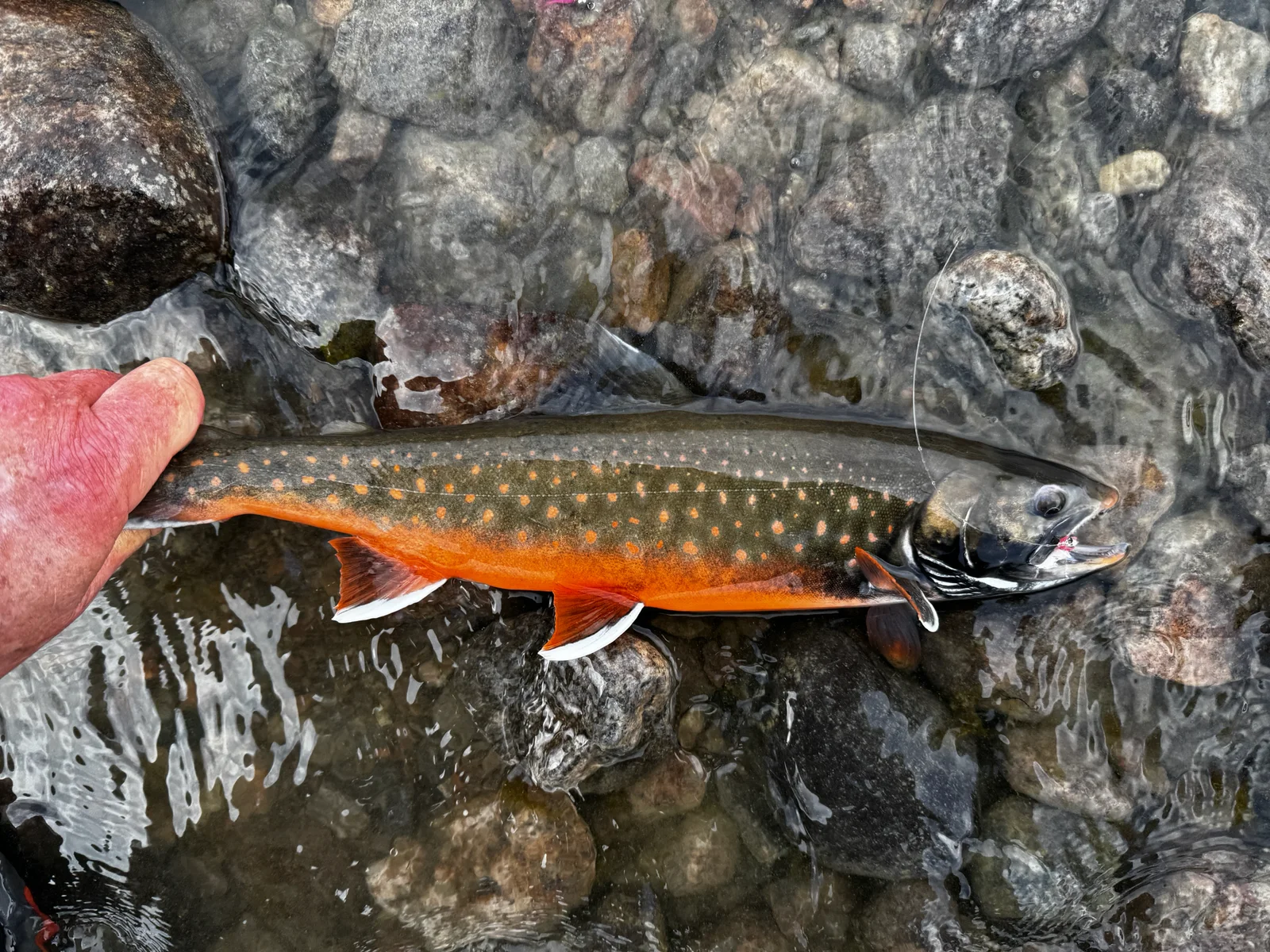
Arctic char
- Family
- Salmonidae
- Depth
- 0–70 m
- Season
- Jan, Feb, Mar, Aug, Sep, Oct, Nov, Dec
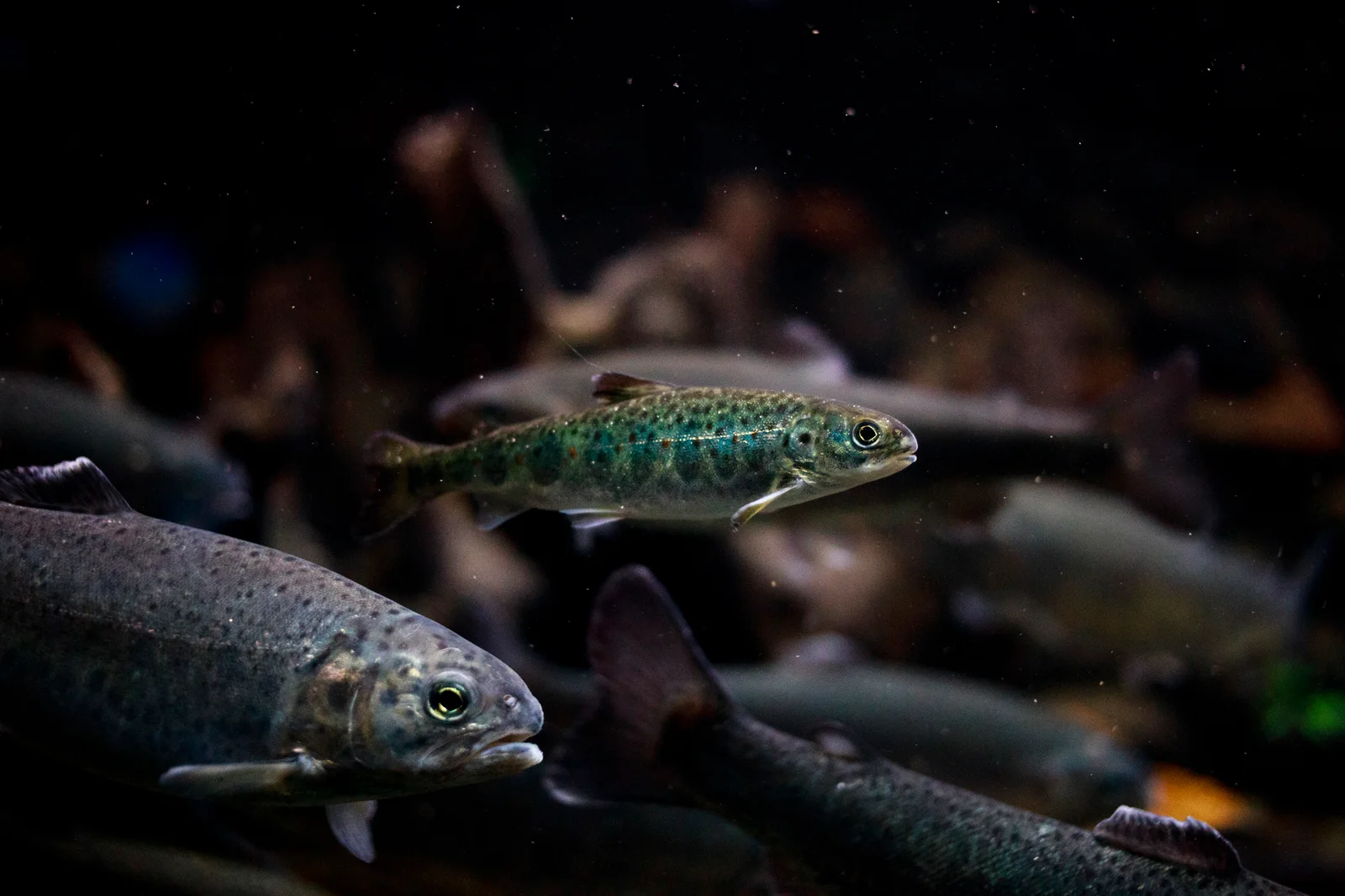
Atlantic salmon
- Family
- Salmonidae
- Depth
- 0–210 m
- Season
- Jan, Jun, Jul, Aug, Sep, Oct, Nov, Dec
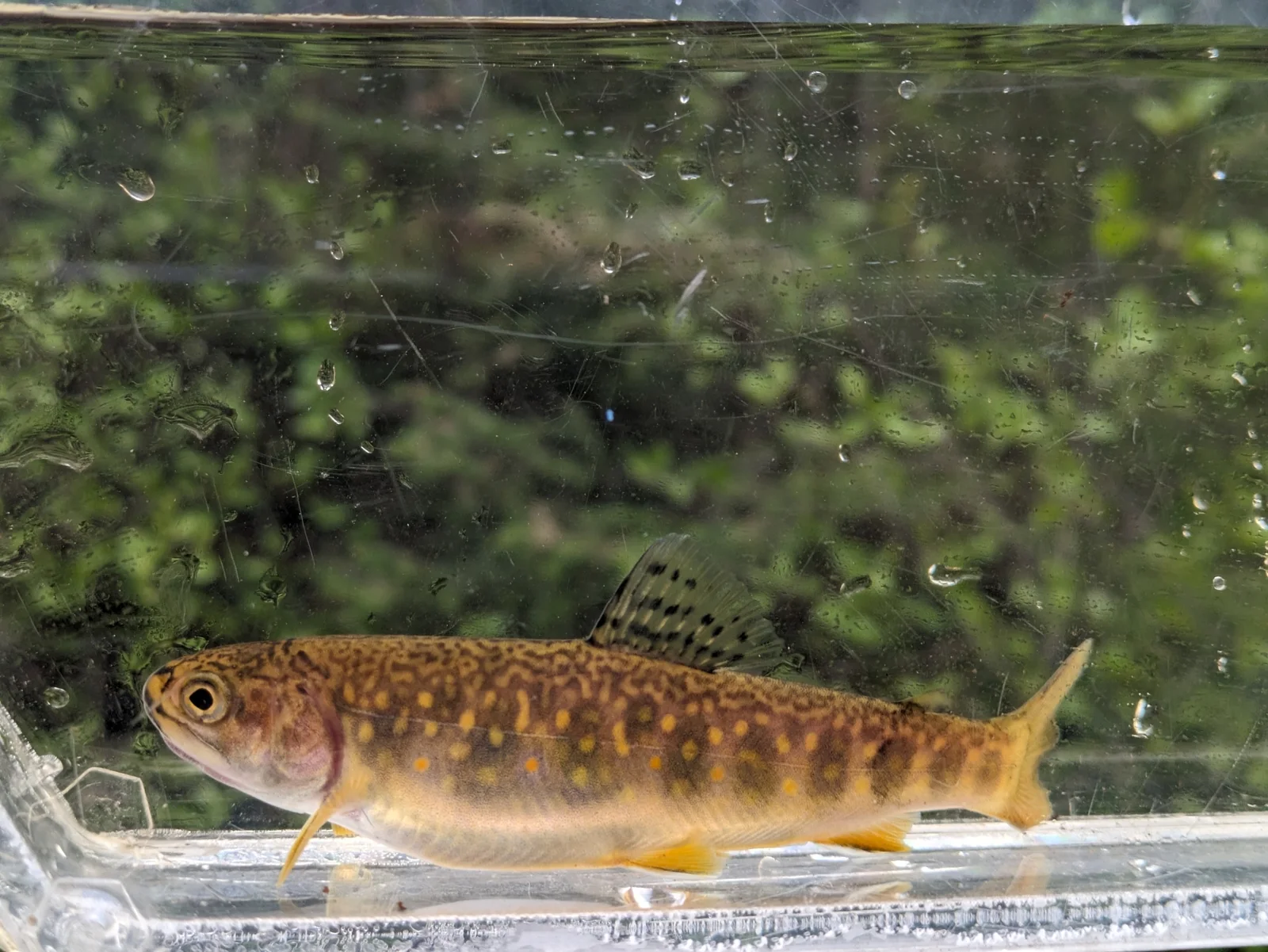
Brook trout
- Family
- Salmonidae
- Depth
- 15–27 m
- Season
- Aug, Sep, Oct, Nov, Dec
Guides for this water
Technique, gear and safety guides that fit Pink salmon.