
Chum salmon
Chum salmon is the most widely distributed of the Pacific salmon, found from Korea and Japan through the Okhotsk and Bering Seas and down the American coast to San Diego. Adults reach 100 cm FL and 18.1 kg and feed on fish. It is recorded from the surface to 250 m in water of 0 to 24 degrees C. The season runs May to December, and the adult body is built for long migration rather than for looks.
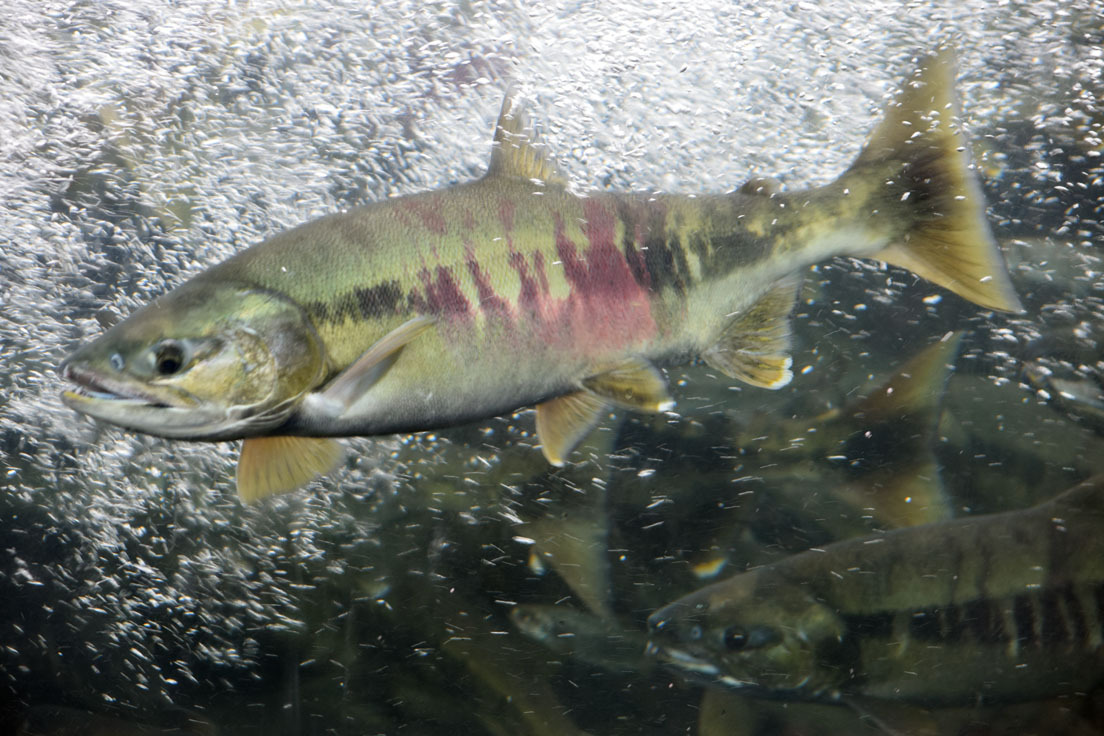
Chum salmon (Oncorhynchus keta) is a fish of the family Salmonidae. FishBase gives its range as: North Pacific: Korea , Japan, Okhotsk and Bering Sea , Arctic Alaska south to San Diego, California, USA. Asia: Iran. Entering fresh water, both sexes change colour; males turn dark olive to brown with wavy red-purple vertical bars and grow a hooked snout lined with large canine teeth, while females become brown-grey with a broad dark horizontal bar. It is recorded from 0 to 250 m, in temperate water at 0–24 °C. The recorded maxima are 100 cm FL, 18.1 kg, 7 years. Diet includes fishes. IUCN status: Least Concern (LC). Chinese name: .
Identification
Chum salmon is the most widely distributed of all the Pacific salmon, and adults are built for distance rather than for looks. At sea the back is metallic bluish-green with fine speckles, and the tail is more deeply forked than in the other Pacific species and carries no spots. Average fish run 24–28 inches and 10–13 pounds, with males usually larger. FishBase records a maximum of 100 cm and 18.1 kg, and ages up to seven years. NOAA gives a wider upper bound, 3.6 feet and 30–35 pounds, against a usual weight of 8–15 pounds. Entering fresh water, both sexes change colour; males turn dark olive to brown with wavy red-purple vertical bars and grow a hooked snout lined with large canine teeth, while females become brown-grey with a broad dark horizontal bar. Those teeth are why the species is called dog salmon, and they are used against other males on the spawning grounds.
Range and habitat
Chum salmon occur throughout Alaska but are scarce north of Kotzebue Sound. The species runs along both coasts of the North Pacific, from the Sacramento River and Kyushu northward, and along the Arctic coast to the Mackenzie and Anderson rivers in Canada and the Lena in Russia. On the American West Coast it reaches as far south as Yaquina Bay, Oregon. FishBase lists twelve countries and territories for the species, including Japan, both Koreas, China and Iran. At sea, most Alaska fish stay in the eastern Chukchi and Bering seas and the Gulf of Alaska. iNaturalist holds 3,311 observations.
Most stocks spawn in the lower reaches of rivers, within about 60 miles of the ocean, though Yukon River fish travel up to 2,000 miles to the headwaters. They favour small to medium, slow-flowing, spring-fed side channels and ground where upwelling currents keep the eggs oxygenated, but also use large muddy rivers and the mouths of streams below the high-tide line.
Life cycle
Two races share the range: summer chum enter rivers earlier and fall chum later. A female cuts a redd in the gravel, deposits her eggs, and guards the site until she can no longer hold position in the current. Embryos hatch after three to four months, and the alevins stay in the gravel for another 60–90 days absorbing yolk before they emerge. Fry leave fresh water within days or weeks, at only one to two inches, spend several months in shallow nearshore water and eelgrass beds, then disperse into the open North Pacific. They feed on copepods, fishes, mollusks, squid and tunicates, and reach twelve pounds or more over three to four years, with the fastest growth in the final year at sea. Adults stop feeding on the spawning run and their digestive tract degrades, so the whole upstream effort is fuelled by stored fat and muscle. Every fish dies after spawning.
Seasonal window
NOAA puts spawning between late summer and March, peaking in early winter when river flows are high. Fish usually spawn at three to six years of age. ADF&G separates the earlier summer chum from the later fall chum, which is why two rivers a few hundred miles apart can be at completely different stages in the same week. The run arrives in pulses, and rising water pulls fish into the lower river and the creek mouths. For an angler the usable window on bright fish is short: chum lose condition quickly once they have been in fresh water for days, and a fish that has started to colour is no longer worth keeping.
Gear and approach
A 9–10 foot rod rated for 10–20 lb line matches fish that average 10–13 pounds and can reach twice that. Reels need a smooth drag and enough capacity for a fish that may run well into the backing in tidewater. Spoons in silver, chartreuse and pink, and flies tied with bright marabou or bunny strip, are the usual choices. Fish low and slow in cold water, and keep the lure in the strike zone rather than making long, high casts. Chum have hard mouths, so a firm hook-set matters; land fish quickly, bleed those you keep, and release the rest without lifting them clear of the water.
Edibility and regulations
Chum flesh is firmer and less oily than king or coho, ranges from orange to pale pink, and smokes, cans or dries well. In Arctic, Northwest and Interior Alaska it is highly prized as a traditional dried winter food, even though it is often ranked below other salmon elsewhere. Commercially, Alaska chum harvests have more than doubled since the 1980s as the hatchery programme expanded and foreign sales grew. Bag limits and terminal-area rules are set by area, so the current regulation, not a statewide figure, decides what may be retained. On the West Coast, some chum populations are also protected under the Endangered Species Act, which can close retention even where fishing is otherwise open. NOAA records the overfishing status as unknown, although rules are in force. Its IUCN status is Least Concern, dated 23 July 2020.
Where to look
Southeast Alaska, Prince William Sound and the lower Yukon all hold large runs, and fish concentrate at creek mouths and in spring-fed side channels. The species is scarce north of Kotzebue Sound, so a trip north of that line is not a chum trip. Look for slow, clear water with gravel and a steady upwelling, and for the mouths of streams where the tide still reaches the bed. Because chum often spawn close to salt water, the best fishing is frequently within sight of the estuary rather than miles upstream.
Where these facts come from
Check these pages before you rely on a size, range or protection status.
- FishBase — Oncorhynchus keta — FishBase · T2
- GBIF — Oncorhynchus keta occurrence records — GBIF · T2
- IUCN Red List — Oncorhynchus keta — IUCN · T1
- Photo record — iNaturalist — iNaturalist · T3
Fish in the same water
These fish live in the same place.
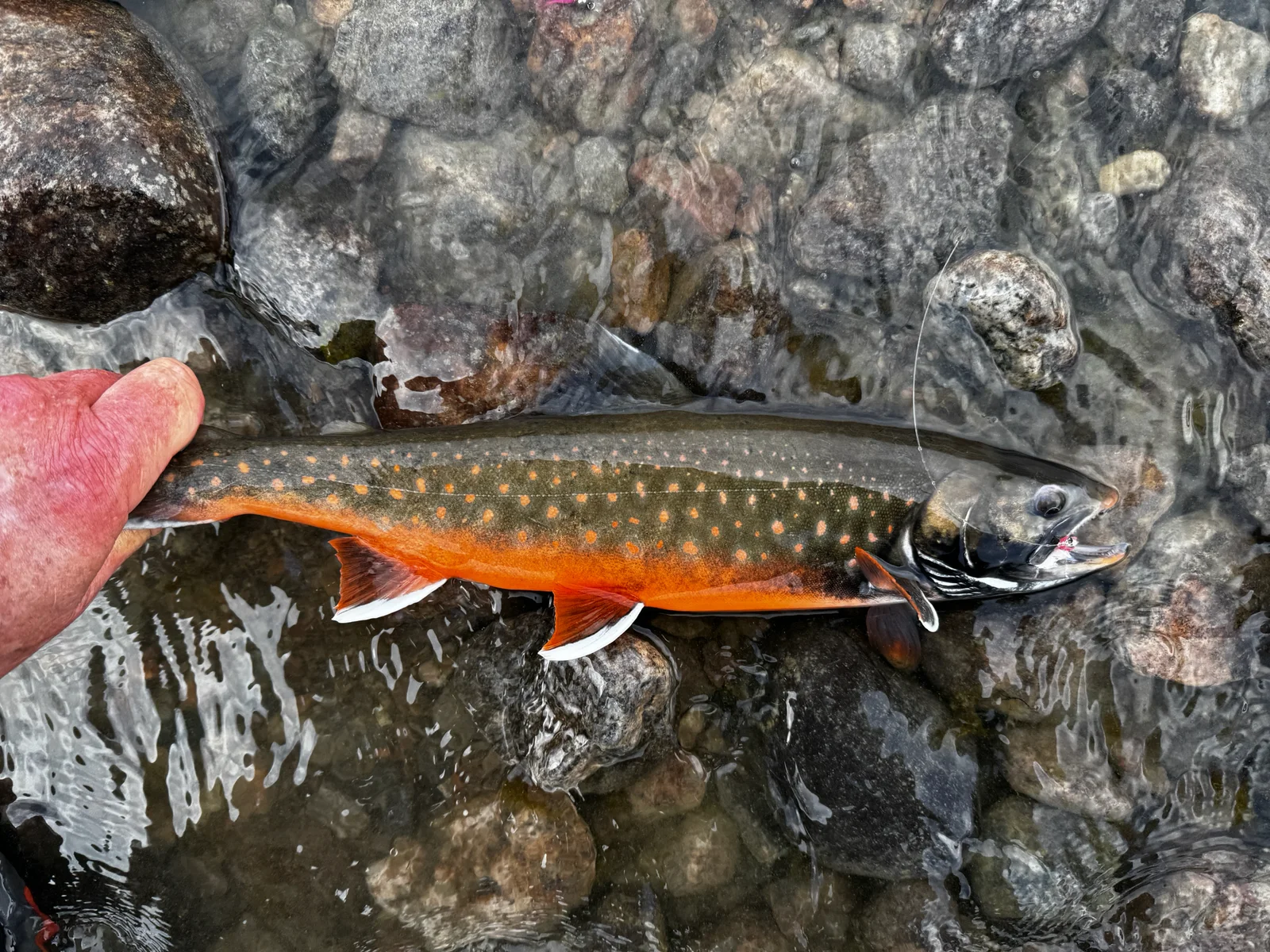
Arctic char
- Family
- Salmonidae
- Depth
- 0–70 m
- Season
- Jan, Feb, Mar, Aug, Sep, Oct, Nov, Dec
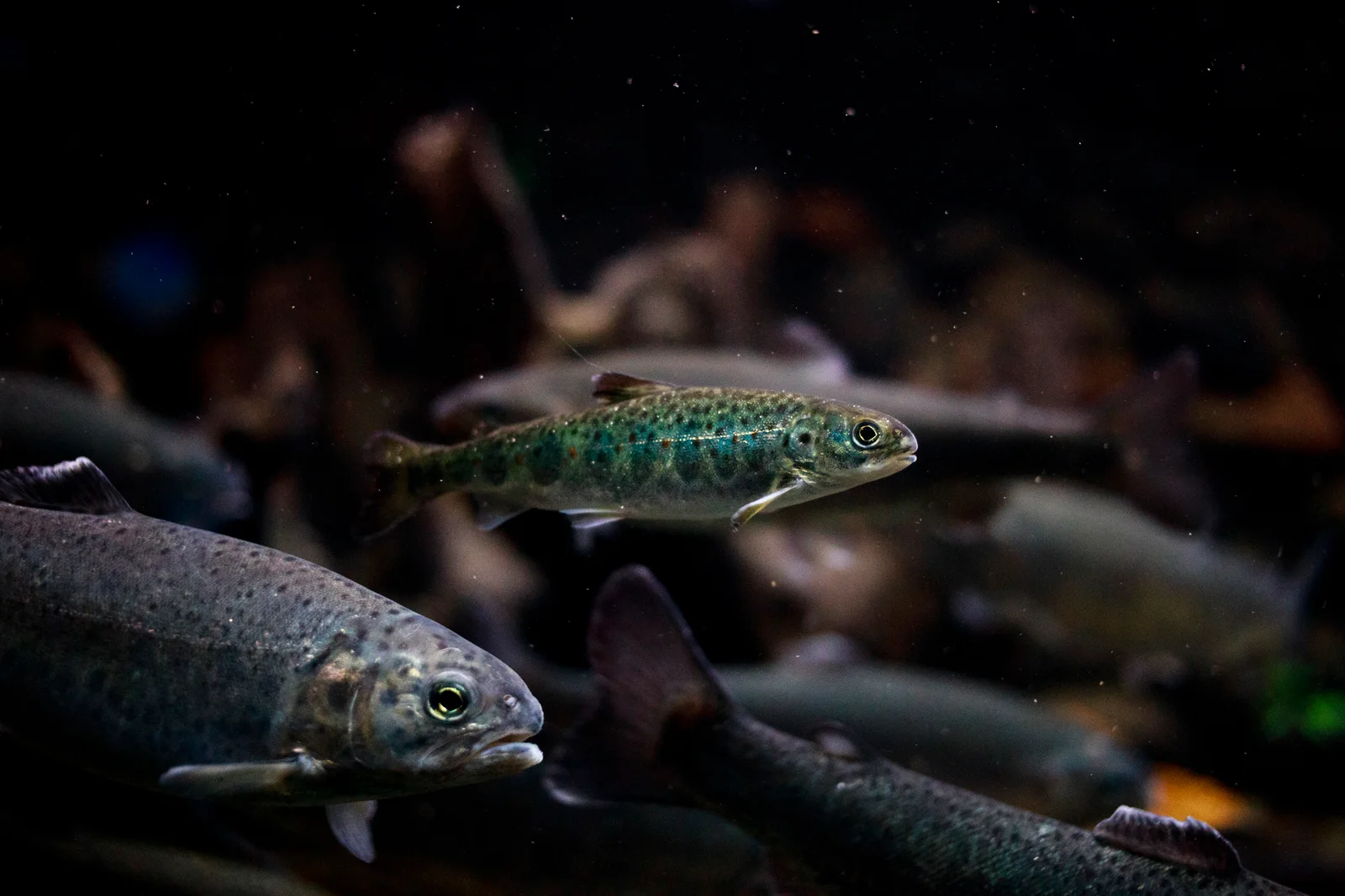
Atlantic salmon
- Family
- Salmonidae
- Depth
- 0–210 m
- Season
- Jan, Jun, Jul, Aug, Sep, Oct, Nov, Dec
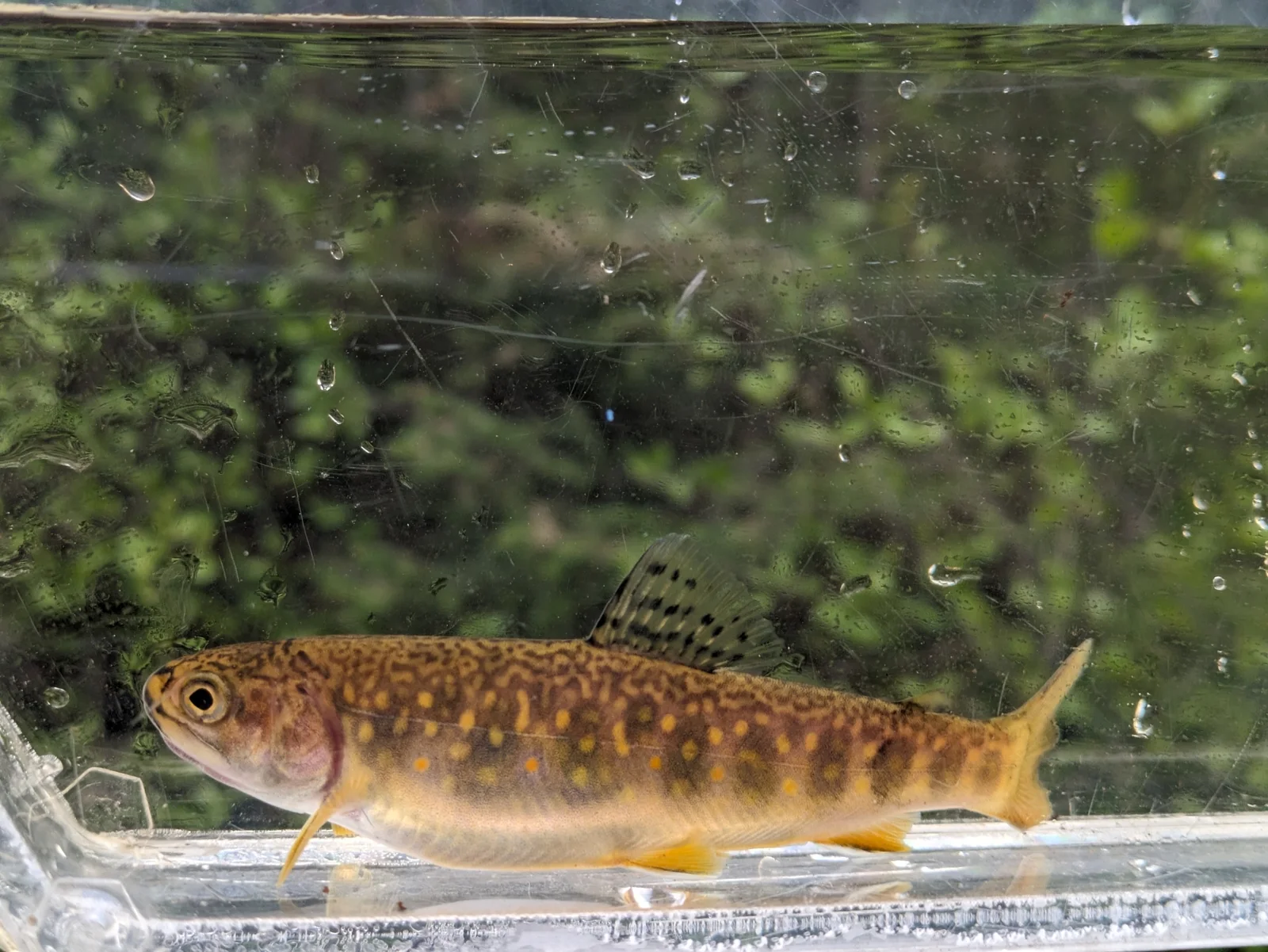
Brook trout
- Family
- Salmonidae
- Depth
- 15–27 m
- Season
- Aug, Sep, Oct, Nov, Dec
Guides for this water
Technique, gear and safety guides that fit Chum salmon.