
Masu salmon
A northwest Pacific salmon with two life histories: the sea-run form, sakura-masu, and the resident river form, yamame. It hatches in rivers, spends a year in fresh water, a year at sea, and spawns from late August to early October. Its flesh is the reddest in its genus and it is a high-value fish in Japan; Russian Far East rules are strict about it.

A northwest Pacific salmon with two life histories: the sea-run form, sakura-masu, and the resident river form, yamame. It hatches in rivers, spends a year in fresh water, a year at sea, and spawns from late August to early October. Its flesh is the reddest in its genus and it is a high-value fish in Japan; Russian Far East rules are strict about it.
One species, two life histories
The body is fusiform with a fairly large mouth and developed jaw teeth. The sea-run form is silver with a bluish back, and breeding males develop red-brown patches and dark vertical bands. The resident form, yamame, carries clear oval parr marks and a narrower caudal peduncle.
Against other salmon and trout in the genus, the adult is small. FishBase gives a maximum of 79 cm total length and 10 kg, with ordinary fish far below that.
In western Japan, amago and satsuki-masu are treated as subspecies with slightly different markings and life histories. Identifying to species from body markings alone is error-prone, so the article treats the fish as a species complex and does not promote a subspecies to a separate species.
River, sea, river
FishBase records the northwest Pacific, Japan and adjacent waters. The Japanese record runs north of Yamaguchi on the Sea of Japan side, north of Shizuoka on the Pacific side of Honshu, Kyushu except Oita Prefecture, and Kasasa in Minamisatsuma, Kagoshima, with separate records from the Sea of Japan and the Sea of Okhotsk.
The fish is anadromous. Fry eat insects and annelids in the river; at sea they take plankton and sand lance; older fish prey on squid, fish and krill. Depth runs from 0 to 200 m.
Connectivity between river and coast matters more to this species than any choice of mark, because a blocked or degraded river removes the fish regardless of how good the coast looks.
Two runs, and two fishing windows
Spawning runs from late August to early October, and the eggs hatch in November and December. Juveniles spend a year in fresh water, go to sea the following spring, spend a year at sea, and return at age two in early summer, June to July or September to October. They stay in the river three to four months before spawning.
The run is earlier in the south and later in the north: from about March in Honshu and about April in Hokkaido.
That produces two fishing windows. Spring to early summer is the sea-run return and the estuary period; autumn is the upstream spawning run. Winter is not empty of fish, but river closures and rules protecting spawners are tighter then, so local rules come before any plan.
Lures in the river, a licence at sea
River lure fishing uses 5 to 9 cm minnows, spoons and small soft plastics, with upstream fish responding reliably to spoons and fish-shaped minnows. In small streams a short rod places the lure precisely into pools and beside rock shadows. Bait anglers use river insects, earthworms and salmon roe.
Sea-run fish in the estuary and along the coast can be taken on a light salt rod with a small metal jig or minnow. Boat fishing in Hokkaido runs under a dedicated sakura-masu licence system, and the licence has to be obtained first; this is not ordinary recreational fishing.
Tackle by water type
For streams, a 1.5 to 1.8 m UL or L lure rod, PE 0.4 to 0.6, leader 6 to 8 lb. For the middle and lower river, a 2.1 to 2.7 m ML rod, PE 0.8, leader 8 to 10 lb. Single or barbless hooks make release easier.
The sea-run fish are larger, so leader goes to 10 to 12 lb. Use bright colours in the turbid estuary and natural colours in clear water. In streams, avoid walking over spawning redds; the eggs are buried in gravel and a boot does real damage.
Red flesh, and rules that change at the border
The flesh is the reddest in the genus, finely textured, with fat mixed into the muscle fibres, and it eats soft and sweet. The Japanese guide advises freezing before eating it raw; the thick skin suits salt-grilling and simmering, while sauteing and frying work better with the skin removed. The season is winter to spring.
In Japan there is no nationwide recreational size. In the Shiribeshi sea area of Hokkaido, boat fishing for sakura-masu is licensed, and the sea-area fishery adjustment committee sets the size band that may be taken; the material shows a combination of 50 cm and 60 cm, and the instruction for the current year governs. Rivers add prefectural inland-water rules and cooperative rules, and some waters require the release of yamame below 15 cm.
In Russia, the Far East basin rules prohibit sima in the Primorye subzone, with an exception for recreational and sport fishing on a putyovka, a paid permit; Pacific salmon generally are fished on permits.
What is deferred, and why
Taxonomy, distribution, depth and length come from FishBase. The life-history timetable, Japanese range and eating assessment come from the market guide. The Hokkaido boat licence and size band come from the Shiribeshi committee instruction. The Russian prohibition and permit exception come from item 66.1 of the Far East basin rules. The inland-water framework comes from the Fisheries Agency.
River rules differ by prefecture. Only checked examples appear here, and they are not generalised into a national rule. Two items remain deferred: closed seasons and sizes for sakura-masu and yamame in rivers outside Hokkaido, and the exact years and bounds of the Shiribeshi size band, which is adjusted annually and must be read from the text in force in the year of the trip.
How to catch it
Lure fishing
Fished with the listed approach, matched to the recorded depth and size.
Fly fishing
Fished with the listed approach, matched to the recorded depth and size.
Shore casting
Fished with the listed approach, matched to the recorded depth and size.
Boat fishing
Fished with the listed approach, matched to the recorded depth and size.
Where these facts come from
Check these pages before you rely on a size, range or protection status.
- FishBase — Oncorhynchus masou — FishBase · T2
- GBIF — Oncorhynchus masou occurrence records — GBIF · T2
- IUCN Red List — Oncorhynchus masou — IUCN · T1
- Photo record — iNaturalist — iNaturalist · T3
Fish in the same water
These fish live in the same place.

Whitespotted char
- Family
- Salmoniformes
- Depth
- 0–50 m
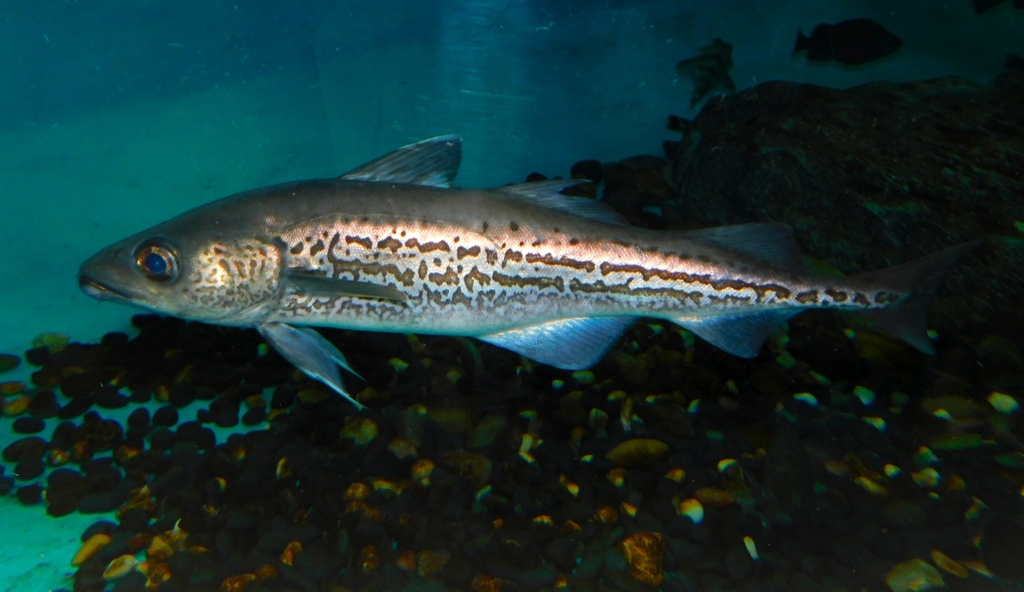
Alaska pollock
- Family
- Gadidae
- Depth
- 0–1280 m
- Season
- Jan, Feb, Mar, Apr, May, Jun, Jul, Aug

Albacore
- Family
- Scombridae
- Depth
- 0–600 m
- Season
- Jan, Feb, Mar, Apr, May, Jun, Jul, Aug, Oct, Nov, Dec
Guides for this water
Technique, gear and safety guides that fit Masu salmon.